Does a metal roof need maintenance?
Yes, though far less than shingles. Panel makers advise a yearly inspection and gentle cleaning, clear valleys and gutters, and a check of screws, seams, flashing and sealant, with a contractor's closer look about every two years. Screw-down roofs need their fasteners watched and eventually replaced. Many warranties require upkeep, so keep records, and leave the roof work to a roofer.
Free to ask. Local shops send quotes, and you pay only when you book one.
By Kasra Taheri, Founder, LoclisPublished
Researched and drafted with AI, then checked claim by claim against the sources listed below before it was published. Prices and rules change; the dates beside each source say when it was last checked.
This is a job for a licensed pro in Virginia
This page explains what the work involves, the permits, what a licensed pro does and what drives the cost. It does not give step-by-step instructions, because this work needs a licence, a permit or both, and doing it wrong can injure someone. Before you hire, check the licence on Virginia's DPOR record.
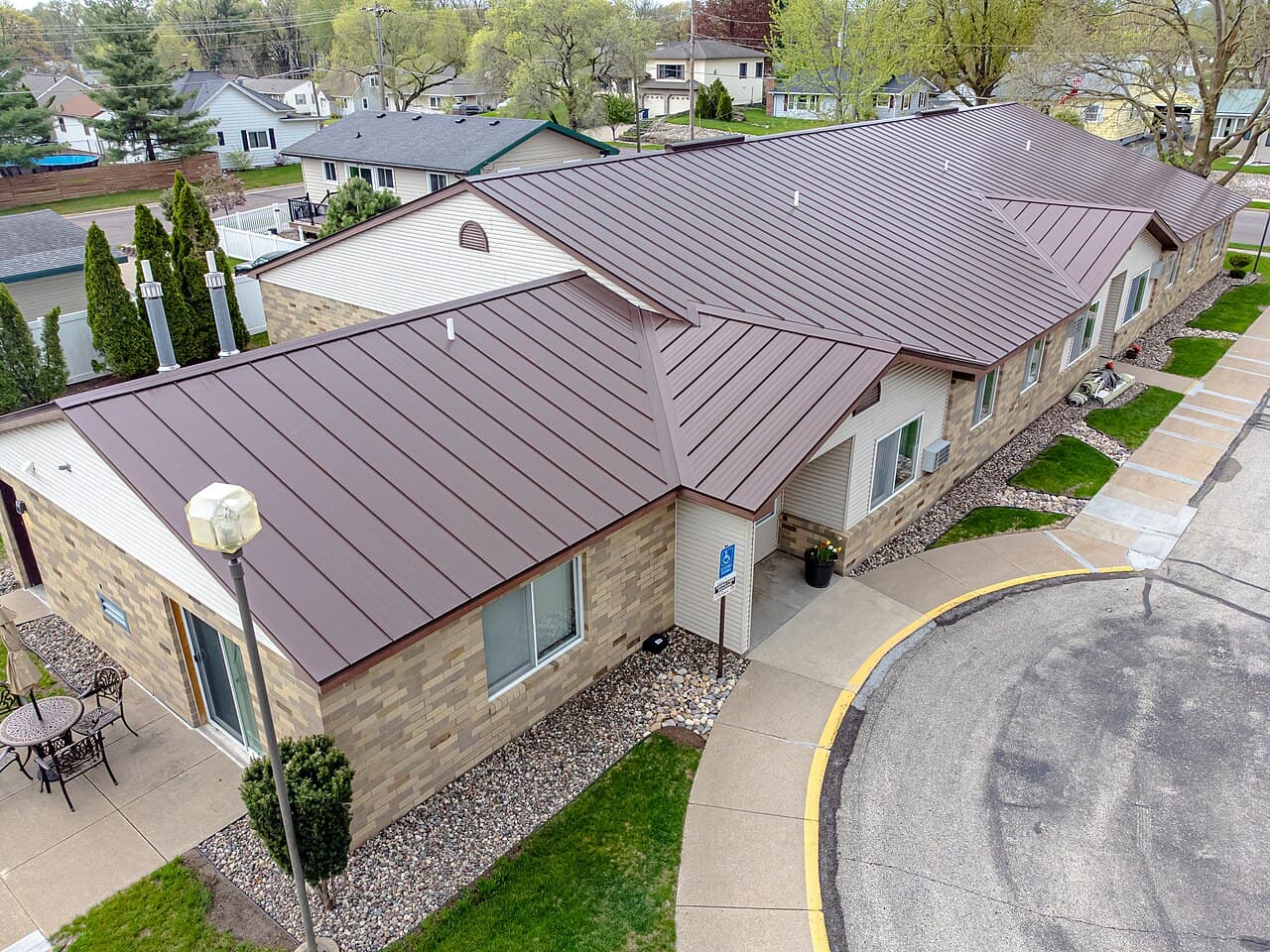
A metal roof does need maintenance, but not much: a yearly look and gentle cleaning, clear valleys and gutters, and a check of the screws, seams, flashing and sealant. McElroy Metal, a panel maker, says a thorough cleaning and inspection once a year is about all a metal roof requires.[1] The catch is that most of that work happens on the roof itself, so the practical plan for a homeowner is to watch from the ground, keep records, and have a roofer do the rest.
How often
Sheffield Metals, a metal supplier, says a home in a milder climate might need surface maintenance only once a year or every 18 months, while a roof in the shade or under trees may need it more often.[2] It adds that it is common practice to have professional structural maintenance done at least once every two years.[2] If your roof sits under oaks or pines, as many Virginia roofs do, plan on more frequent visits than an open roof would need.
Read your warranties before you set a schedule: some warranties list required maintenance to keep the warranty valid.[2] Also plan a check after any storm that drops branches or hail on the roof.
What a roofer checks
Flashing and penetrations. These are where most metal roofs leak. Pipes, chimneys and vents are protected by flashings, boots or collars that should be intact, secure and not cracked,[1] and UV rays break down rubber flashings such as vent pipe boots over time.[2]
Screws on a screw-down roof. McElroy explains that because metal continually expands and contracts, screws can come loose,[1] and it recommends having all screws replaced by a professional every 25 to 30 years.[1] Sheffield notes that the EPDM washers on gasketed screws break down from UV exposure over time, and that replacing the fastener may be the best fix.[2] Standing seam roofs hide their clips, so this matters less there.
Seams and panels. Sheffield says seams should be checked to make sure the panels have not loosened or moved and that enough space has been left for thermal movement.[2]
Sealant. Some sealants last a long time, but others need to be touched up or replaced in spots.[2]
Valleys, gutters and debris. Debris and water collect in valleys, and leaves left there can stain or scratch the paint.[1][2] Sheffield warns that clogged gutters and drains create standing water that can cause premature corrosion on nearly every metal roof material.[2]
Things that damage a metal roof
Trees. Sheffield notes that branches touching the roof can scratch or scuff the paint, which is typically not covered by a paint warranty.[2] Keep limbs trimmed well back; for big trees, hire a tree service.
Other metals and materials. According to Sheffield, Galvalume performs best when not in contact with copper, bricks, treated lumber, iron and concrete.[2] Watch for runoff too: Metal Sales notes that condensate from air conditioning units typically contains dissolved copper,[5] so an AC line that drips onto the roof should be rerouted.
New holes. Satellite dishes, solar mounts and vent pipes added later are common leak points. Sheffield advises that any penetration added to a metal roof should be handled by a professional roofing contractor,[2] not by the satellite installer or a plumber.
Cleaning, and what not to use
Metal Sales' care guidance says plain water from a hose or pressure sprayer is often adequate, with a mild detergent solution and a soft brush or cloth for heavier dirt.[4] It is firm on one point: "Do not use wire brushes, abrasives, or cleaning tools which will scratch the coating surface."[4] Sheffield's list of things never to use on a metal roof is longer: steel wool, wire brushes, sandpaper, high-pressure power washers, scouring powders, paint removers and paint thinners.[3] Because the two makers differ on pressure spraying, ask whoever cleans your roof to follow your panel maker's own care guide.
Cleaning is not only cosmetic. Sheffield notes that most metal roofing paint warranties do not cover excessive chalking in the presence of pollutants,[3] which is a reason to keep the surface clean. For scratches, touching up paint without following the manufacturer's recommendations can make a blemish worse or void the warranty.[2]
What you can do from the ground
- Look the roof over with binoculars in spring and fall for screws standing proud, lifted trim, scratches, rust spots or debris in valleys.
- Check the attic and top-floor ceilings for stains after a hard rain.
- Keep gutters flowing; see how often gutters should be cleaned.
- Keep the paperwork. McElroy advises owners to keep records of everything, from the installation to every maintenance or inspection visit and repair,[6] which helps if you ever file a warranty claim.
For a fuller ground-level checklist, see how to check a roof for damage from the ground and how often a roof should be inspected.
When to call a licensed pro
Call a roofer for the yearly or two-yearly inspection, for cleaning the roof surface, and any time you see loose screws, lifted panels, damaged flashing, rust or a leak. Roof work is dangerous: Falls are the leading cause of work-related injuries and deaths among roofers,[7] and Sheffield warns that metal roofs are very slippery when wet.[2] In Virginia, roofing contracting is the licensed specialty for repairing the materials that form a watertight, weather-resistant roof surface.[8] Check a roofer using DPOR's License Lookup or by calling (804) 367-8511.[9] If the roof is still under the installer's workmanship warranty, call that installer first.
If you are hearing noises or seeing leaks, read why a metal roof makes popping noises and why a metal roof leaks at the screws, or browse more exterior answers and metal roof repair. Loclis lists licensed businesses from Virginia's DPOR register, including exterior contractors in Blacksburg.
Book a metal roof inspection or repair, and licensed local roofers send quotes or offer an estimate visit.
Common questions
- How often should a metal roof be inspected?
- Panel makers suggest a cleaning and inspection about once a year, more often under trees, and Sheffield Metals says a contractor's structural check at least every two years is common practice. Also have it looked at after any storm that brings down branches or hail.
- Do the screws on a metal roof need replacing?
- On a screw-down roof, yes, eventually. The metal's movement and the sun wear on the rubber washers, so screws can loosen or leak. McElroy Metal recommends a professional replace all of them every 25 to 30 years, and Sheffield advises checking exposed fasteners every year.
- Can I pressure wash my metal roof?
- Check your panel maker's care guide first. Metal Sales says plain water from a hose or pressure sprayer is often enough, while Sheffield Metals lists high-pressure power washers among the tools never to use. Washing also means working on a slippery roof, so it is a job for a roofer or roof-cleaning professional.
- Does a metal roof need to be repainted?
- Not for decades in most cases. Good factory finishes last many years, and a cleaning often restores the look of a dull, chalky roof. Scratches can be touched up with the maker's paint, but only as the manufacturer directs, or the warranty can be voided.
- What maintenance can I do without going on the roof?
- Look the roof over from the ground with binoculars twice a year, check the attic and ceilings for stains after heavy rain, have overhanging branches trimmed back, keep the air conditioner's condensate line from dripping on the roof, and keep every inspection and repair record with the warranty.
Sources
- [1] Do Metal Roofs Require a Lot of Maintenance?, McElroy Metal. Checked October 27, 2026.
- [2] Metal Roofing Maintenance: How to Best Care for Your Metal Roof, Sheffield Metals. Checked October 27, 2026.
- [3] How to Clean a Painted Metal Roof: Best Methods, Solutions, & More, Sheffield Metals. Checked October 27, 2026.
- [4] Residential Design Manual (2024), Metal Sales Manufacturing Corporation. Checked October 27, 2026.
- [5] Post Frame Installation Guide (10/25), Metal Sales Manufacturing Corporation. Checked October 27, 2026.
- [6] What Warranties or Guarantees are Typically Offered For Metal Roofing, and What Do They Cover?, McElroy Metal. Checked October 27, 2026.
- [7] Protecting Roofing Workers (OSHA 3755-05 2015), U.S. Occupational Safety and Health Administration. Checked October 27, 2026.
- [8] 18VAC50-22-30, Definitions of specialty services, Virginia Board for Contractors (Virginia Administrative Code). Checked October 27, 2026.
- [9] Disaster Recovery: Avoiding Fraud, Virginia Department of Professional and Occupational Regulation. Checked October 27, 2026.
Want a pro to handle it?
Describe the job once. Licensed local businesses send quotes, and you pay only when you book one.
Get a quote for Roofing