How is an old hot tub taken apart and hauled away?
First the power is cut and the hard-wired circuit is disconnected by an electrician, and the tub is drained to wherever your locality allows. Then the crew either rolls the tub out whole, lifts it out with a crane, or cuts it into sections where it sits. Metal parts usually go for scrap and the rest goes to a landfill or transfer station.
Free to ask. Local shops send quotes, and you pay only when you book one.
By Kasra Taheri, Founder, LoclisPublished
Researched and drafted with AI, then checked claim by claim against the sources listed below before it was published. Prices and rules change; the dates beside each source say when it was last checked.
This is a job for a licensed pro in Virginia
This page explains what the work involves, the permits, what a licensed pro does and what drives the cost. It does not give step-by-step instructions, because this work needs a licence, a permit or both, and doing it wrong can injure someone. Before you hire, check the licence on Virginia's DPOR record.
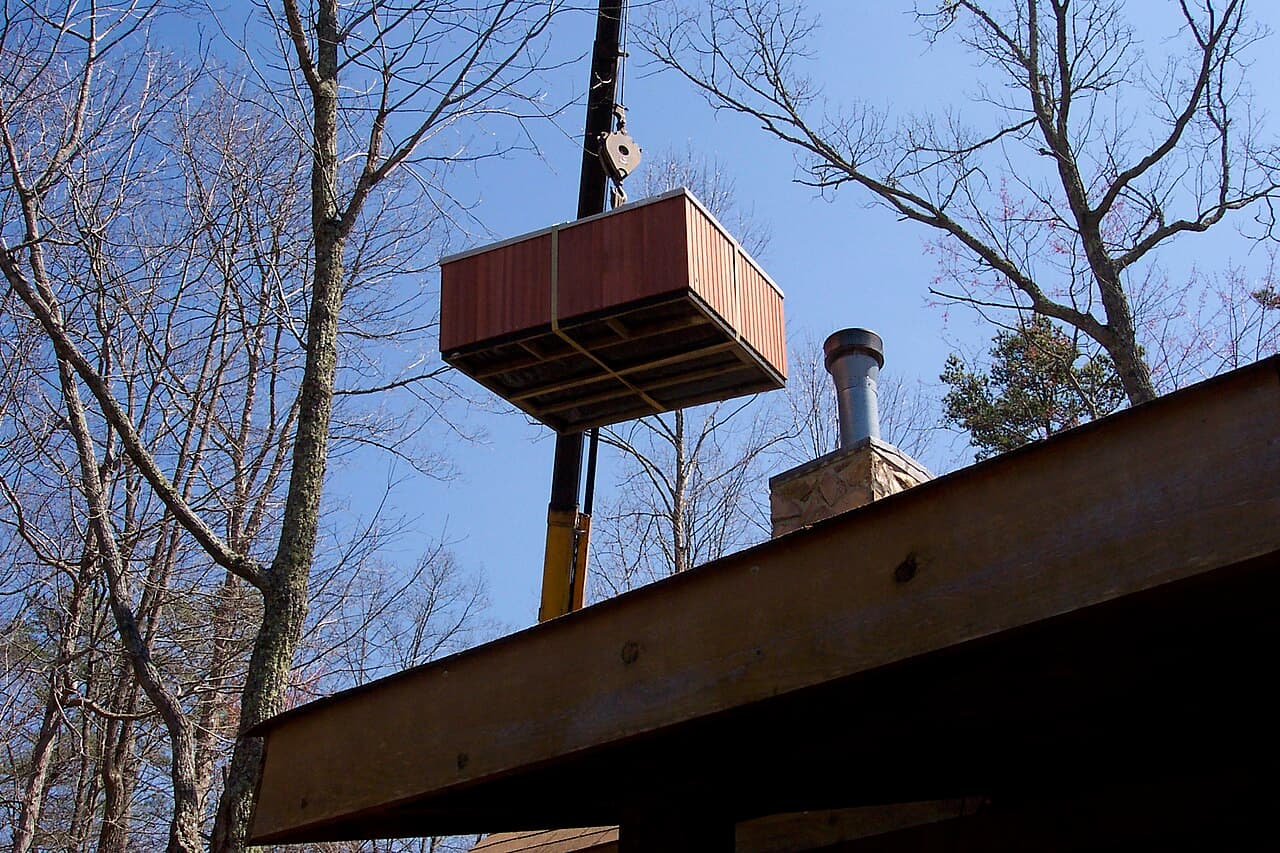
An old hot tub leaves in one of two ways: whole, on a cart or by crane, when there is a clear path out, or in pieces when there is not. Before either, the power is cut and the hard-wired circuit is disconnected and made safe by an electrician, and the tub is drained somewhere your locality allows. Then the crew loads the shell, cabinet and equipment and takes them to a landfill, transfer station or scrap yard.
What you are getting rid of
A hot tub is bigger and heavier than it looks with the cover on. Most are a molded acrylic or plastic shell backed with foam insulation, set in a wood or synthetic cabinet on a base, with pumps, a heater, a control pack and plumbing inside the cabinet.
Cal Spas' pre-delivery guide notes that the average spa holds about 500 gallons of water, and the water alone weighs 4,165 pounds, for about 5,000 pounds in all when the spa is full.[1] Empty, the tub is far lighter, but it is still a large, awkward object that moves on a cart, not by hand. The same guide says 8-foot spas need at least a 44-inch-wide gate and 9 feet of overhead clearance on the way in.[1] A tub that came in that way needs roughly the same path to leave whole.
Power and water come first
A full-size hot tub is usually wired in, with no plug to pull. Cal Spas states that all of its 240-volt spas must be permanently connected, or hard wired, to the power supply,[1] and that the circuit must be installed by an electrical contractor and approved by a local building or electrical inspector.[1]
Taking the tub off that circuit, and then either removing the circuit back to the panel or ending it safely, is electrical work. Virginia's Board for Contractors regulates the individual tradesmen who work in the electrical trade, and state certification of the trade is mandatory, not optional.[3] Many removal companies bring in an electrician for this part, or ask you to have it done before they arrive. Ask which way yours works.
Draining comes next. In the manufacturer's procedure, the power is turned off at the breaker before a spa is drained,[2] and the water runs out through the spa's drain valve into a garden hose.[2] A crew in a hurry may use a pump instead.
Where that water ends up matters. Spa water is usually sanitized with chlorine or bromine,[2] and local stormwater rules for pool water are the ones to follow. Prince William County's ordinance allows only de-chlorinated, pH neutral, chemical-free, clean water to be slowly discharged to the storm drain system.[5] The county suggests letting untreated water sit for about 10 days so the chlorine or bromine dissipates, testing that none is detectable, and discharging into a heavily vegetated area at a controlled rate.[5] Stafford County lists chlorinated pool water as an illicit discharge, and knowingly producing one is a Class 1 misdemeanor with fines of $250 to $1,000 under the county code.[6] Rules differ by locality, so ask your county or city how it wants spa water handled, and tell the removal company before the day.
Whole, by crane, or in pieces
If the tub can roll out on a cart through a gate or along a side yard, it often leaves in one piece and goes onto a trailer. That is usually the quickest job, and it is the only way the tub can be reused.
When there is no route, a crane is one answer. Cal Spas says a crane is necessary for delivery when an adequate delivery route cannot be provided, and that all swim spas require a crane to install because of their size and weight.[1] A tub on a raised deck or behind a house with no side access can need the same equipment to come out.
The other answer is to break the tub down where it sits. Crews commonly take off the cover, steps and cabinet panels, take out the equipment, and cut the shell and frame into sections that fit through a gate and into a truck. It is noisy work with power saws, and a good crew sweeps up the foam and shell fragments before it leaves.
A tub that is sunk into a deck, enclosed in a gazebo, or set into the ground is a bigger job, because something built around it has to come apart first. Virginia's definition of a contractor covers anyone who, for a fee, undertakes the removal of any building or structure permanently annexed to real property, and the licence class for a Class C contractor covers single jobs over $1,000 but less than $30,000.[4] If deck boards, framing or concrete are coming out, ask whether the removal company holds a contractor's licence for that work.
Where the pieces go
Pump motors, the heater and any metal frame often go to a scrap yard. The shell, foam, cabinet and cover usually go to a landfill or transfer station as bulky waste, charged by weight.
Curbside collection rarely takes a hot tub. Fairfax County's special pickup collects only items on its accepted list, each less than 6 feet long, in piles no bigger than about 6 feet long, 3 feet wide and 3 feet high.[7] Lumber is scheduled as bulk and appliances and other metal items as metal, in separate piles.[7] A whole tub does not fit those rules, which is why most people pay a hauler. For why municipal trucks turn down large items, see why trash companies won't take bulky items.
What is left behind
When the tub is gone you will usually have a concrete pad and an electrical stub. Cal Spas recommends a 4- to 6-inch cement slab under a spa, extending 12 inches beyond it on all sides,[1] and notes that most owners bury the electrical conduit before the slab is poured so the cable comes up inside the spa.[1] The pad can stay as a patio or come out. See how to restore the yard after a hot tub is removed for what that involves, and what hot tub removal costs in Virginia for what each part adds to the price.
When to call a licensed pro
- The tub is hard wired rather than plugged in. An electrician should disconnect it and remove or safely end the circuit.
- The tub is built into a deck, a gazebo or the ground, so something has to be taken apart or broken out before it can be lifted.
- The only way out is over the house, a fence or a steep slope, which may mean a crane.
- You cannot drain the water anywhere your locality allows.
- You find scorched wiring, a soft or sagging deck under the tub, or rot in the framing around it.
For help finding who does this work, see who will take away an old hot tub, browse more junk removal and moving answers, see hot tub removal businesses, or find junk removal businesses around Blacksburg and electricians around Blacksburg. When you are ready, describe the hot tub and its location on Loclis with photos of the tub, the path out and the electrical disconnect, and businesses quote on the same job.
Common questions
- Do I need an electrician to remove a hot tub?
- Usually, yes. A 240-volt tub is hard wired, so there is no plug to pull, and disconnecting it and making the leftover circuit safe is electrical work. Virginia requires electricians to hold a state tradesman licence, which you can check on DPOR's License Lookup.
- Can I drain the hot tub onto the lawn or into the street?
- It depends on your locality. Prince William County allows only de-chlorinated, pH neutral, chemical-free water to be slowly discharged to the storm drain system, and Stafford County treats chlorinated pool water as an illicit discharge. Ask your county or city before draining.
- Can a hot tub go out with my regular bulk trash pickup?
- Not whole, in most places. Fairfax County's special pickup, for example, takes only listed items under 6 feet long. A tub that has been cut up may be easier to dispose of, but a landfill or transfer station is the usual destination.
- Does the deck have to be cut to get the tub out?
- Sometimes. A tub sunk into a deck may need boards or framing removed around it, which is construction work rather than hauling. Ask whether the removal company does that work and holds a contractor's licence for it, or whether you need a separate contractor.
- What happens to the concrete pad?
- It stays unless you pay to have it removed. Many people keep it as a patio or a base for a shed. Breaking it out and regrading is a separate job; see the guide to restoring the yard after a hot tub is removed.
Sources
- [1] Pre-Delivery Guide 2024, Cal Spas. Checked October 27, 2026.
- [2] Patio and Patio Plus Owner's Manual 2025, Cal Spas. Checked October 27, 2026.
- [3] Tradesmen Program, Virginia Department of Professional and Occupational Regulation. Checked October 27, 2026.
- [4] Code of Virginia § 54.1-1100. Definitions, Virginia General Assembly, Legislative Information System. Checked October 27, 2026.
- [5] Stormwater Pollution Reduction, Prince William County Department of Public Works. Checked October 27, 2026.
- [6] Illicit Discharge, Detection, and Elimination Program brochure, Stafford County Department of Development Services. Checked October 27, 2026.
- [7] Special Pickup, Fairfax County Department of Public Works and Environmental Services. Checked October 27, 2026.
Want a pro to handle it?
Describe the job once. Licensed local businesses send quotes, and you pay only when you book one.
Get a quote from a local pro