How much does hot tub removal cost in Virginia?
There is no published statewide price. A quote depends on the tub's size, how hard it is to get out, whether it must be cut up or craned, the electrician's disconnect, and disposal. Disposal is the one dated public number: in Fairfax County, for July 2026 to June 2027, unbagged bulk trash costs $98 a ton with a $39 minimum.
Free to ask. Local shops send quotes, and you pay only when you book one.
By Kasra Taheri, Founder, LoclisPublished
Researched and drafted with AI, then checked claim by claim against the sources listed below before it was published. Prices and rules change; the dates beside each source say when it was last checked.
This is a job for a licensed pro in Virginia
This page explains what the work involves, the permits, what a licensed pro does and what drives the cost. It does not give step-by-step instructions, because this work needs a licence, a permit or both, and doing it wrong can injure someone. Before you hire, check the licence on Virginia's DPOR record.
There is no published price list for hot tub removal in Virginia. Each quote depends on the tub, the path out of your yard, and what has to happen before it can move: an electrician to disconnect it, water to drain, sometimes a deck to open up or a crane to book. Disposal fees at the landfill are the one part that public agencies publish and date. Here is what drives the price and how to get quotes you can compare.
What a hot tub removal quote is made of
Size and weight. A larger tub takes more cutting, more labor and more truck space. Cal Spas' pre-delivery guide notes that the average spa holds about 500 gallons, and that water alone weighs 4,165 pounds, for about 5,000 pounds in all when the spa is full.[3] A tub that still has water in it, or water frozen in its lines, is a slower job than one that has been drained.
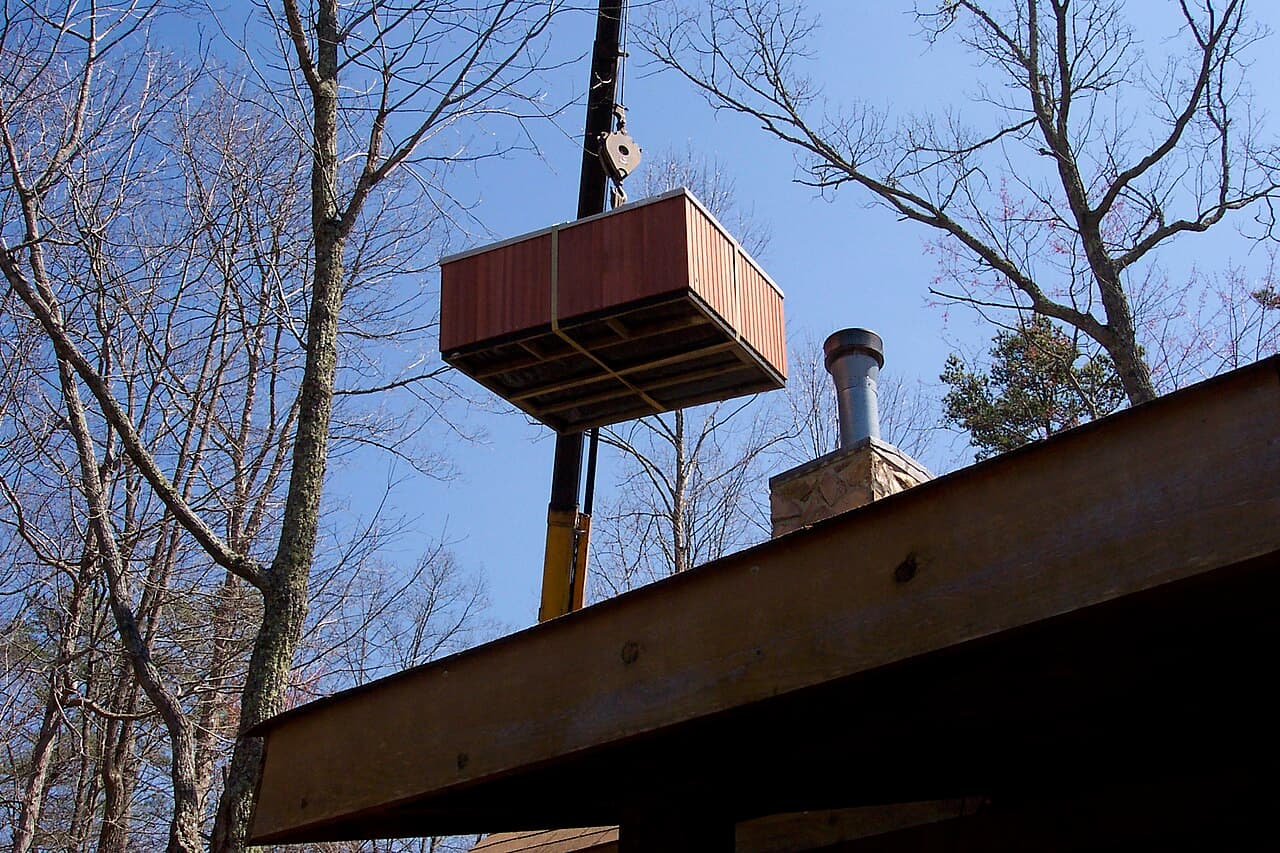
Access. This is often the biggest variable. Cal Spas says 8-foot spas need at least a 44-inch-wide gate and 9 feet of overhead clearance[3] to come in on a cart. A tub that cannot leave the same way has to be cut into pieces or lifted out. The guide says a crane is necessary when an adequate delivery route cannot be provided, and that the crane's cost is not included with a standard spa delivery.[3] It also says all swim spas require a crane to install because of their size and weight.[3] Expect the same on the way out: a crane is a separate line on the bill.
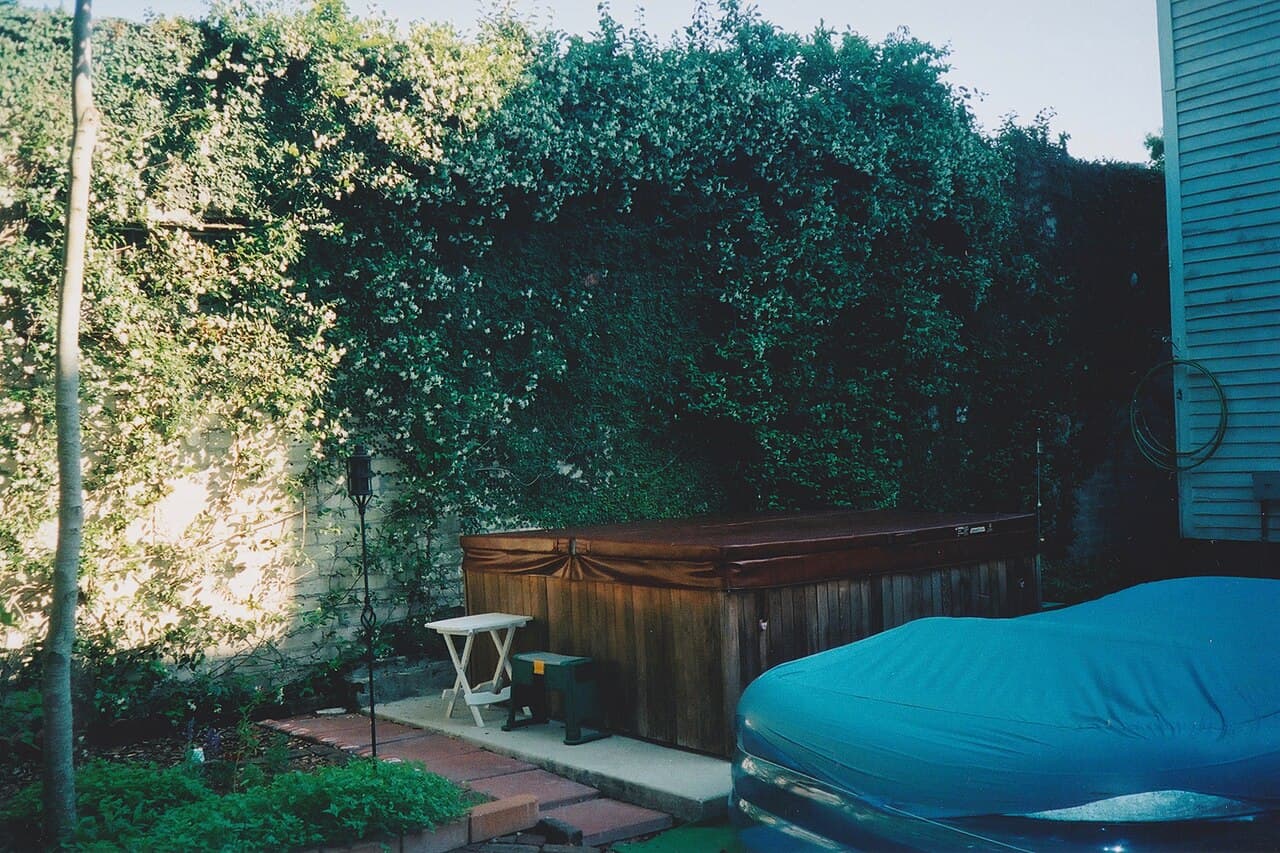
Whole or cut up. Rolling a tub out whole is usually the quickest job. Cutting it into sections takes longer and produces more debris to load and sweep up.
What it is built into. A free-standing tub on a pad is the simple case. A tub sunk into a deck, enclosed in a gazebo, or set into the ground means carpentry or demolition before any lifting, and that work may need a contractor's licence. Under Virginia law, the licence class for a Class C contractor covers single jobs over $1,000 but less than $30,000.[5]
The electrical disconnect. Cal Spas says all of its 240-volt spas must be hard wired to the power supply, on a circuit installed by an electrical contractor and approved by a local building or electrical inspector.[3] Removing the tub means someone has to disconnect that circuit and make it safe, and Virginia's Board for Contractors regulates the individual tradesmen who work in the electrical trade.[4] Some removal companies include an electrician; many expect you to hire one first. It is often a separate bill.
Disposal. Haulers pay the landfill or transfer station by weight, and pass it on. The scrap value of the motors and heater sometimes offsets a little of it.
Public disposal fees, as published
These are what the public and haulers pay at county facilities. They are not removal prices, but they show what the disposal part of a quote is built on.
Fairfax County's residential disposal fees for July 2026 to June 2027 charge $98 a ton for unbagged bulk trash, with a $39 minimum,[1] and bulk waste fees are prorated on the actual weight of the load.[1] The county's tipping fee for haulers at its I-95 and I-66 facilities is $98 per ton for Fiscal Year 2027, which runs July 2026 to June 2027.[2] An empty hot tub weighs a fraction of the filled figure above, so for a single tub the dump fee is usually a small part of the price. Most of what you pay for is the crew's time, the truck and the difficulty of the job.
If you also want the concrete pad gone, that is heavier material at a higher rate. Fairfax County residents can drop off brick, concrete, dirt and rock only in small amounts, up to 2 cubic yards a day per household, at $109 a ton with a $49 minimum.[1] A pad is usually quoted as a separate job; see how to restore the yard after a hot tub is removed.
What to ask for in a written quote
- One all-in price that names what is included: labor, cutting, loading, hauling and disposal.
- Whether the electrical disconnect is included, and if so, who does it and their licence number.
- Whether the tub needs to be empty when the crew arrives, and who drains it.
- Whether a crane, extra crew or deck work is needed, priced as separate lines.
- What happens to the pad, the steps, the cover and any leftover wiring.
- Cleanup: whether they rake up foam and shell fragments and repair lawn ruts from the cart or truck.
- What changes the price on the day, and by how much.
Photos make quotes comparable: the whole tub with the cover off, the path to the street with gate widths, any stairs, and the electrical disconnect box.
Paying for it
Virginia law requires all licensed contractors to provide a written contract for residential work.[6] DPOR's consumer guide suggests, as a rule of thumb, an initial deposit of no more than 10 percent of the total price or $1,000, whichever is less.[6] For a simple haul-away, many companies take payment when the job is done. For more on judging a hauler, see what to ask a junk removal company before booking, and for general hauling prices, how much junk removal costs in Virginia.
When to call a licensed pro
- The tub is hard wired. An electrician should disconnect it and remove or safely end the circuit before the crew starts.
- The tub is built into a deck, gazebo or the ground, so carpentry or demolition comes first.
- The only way out is over a fence, the house or a slope, and a crane is likely.
- You want the concrete pad broken out and the area regraded.
To see how the work itself is done, read how an old hot tub is taken apart and hauled away, and for the kinds of businesses that do it, who will take away an old hot tub. Browse more junk removal and moving answers, see hot tub removal businesses, or find junk removal businesses around Blacksburg. To get prices you can compare, describe the tub and the path out on Loclis with photos, and businesses quote on the same job.
Common questions
- Why do hot tub removal quotes vary so much?
- Because the jobs differ. A small tub that rolls out through a wide gate is a short job. A large tub behind the house, on a raised deck or sunk into the ground may need cutting up, a crane, or carpentry first, plus an electrician for the hard-wired circuit.
- Is the dump fee a big part of the price?
- Usually not. Fairfax County charged $98 a ton for unbagged bulk trash for July 2026 to June 2027, with a $39 minimum, and an empty tub is a fraction of a ton. Labor, equipment, access and the electrical disconnect tend to matter more.
- Does the quote include disconnecting the electricity?
- Not always. Many removal companies expect the tub to be disconnected before they arrive, or subcontract an electrician and bill for it. Ask, and get it in writing.
- Will it cost more to remove the concrete pad?
- Yes, if you want it gone. Breaking out concrete and hauling it is heavy work, and disposal is by weight. Fairfax County charged residents $109 a ton, with a $49 minimum, for small loads of brick, concrete, dirt and rock for July 2026 to June 2027.
- Can I save money if the tub still works?
- Sometimes. A working tub may find a buyer or a taker who pays a hot tub mover to collect it, which can cost you less than having it cut up and hauled. Advertise it before you book a removal.
Sources
- [1] Residential Disposal Fees and Regulations, Fairfax County Department of Public Works and Environmental Services. Checked October 27, 2026.
- [2] Solid Waste Commercial Disposal Rates Schedule, Fairfax County Department of Public Works and Environmental Services. Checked October 27, 2026.
- [3] Pre-Delivery Guide 2024, Cal Spas. Checked October 27, 2026.
- [4] Tradesmen Program, Virginia Department of Professional and Occupational Regulation. Checked October 27, 2026.
- [5] Code of Virginia § 54.1-1100. Definitions, Virginia General Assembly, Legislative Information System. Checked October 27, 2026.
- [6] What You Should Know Before You Hire a Contractor, Virginia Department of Professional and Occupational Regulation. Checked October 27, 2026.
Want a pro to handle it?
Describe the job once. Licensed local businesses send quotes, and you pay only when you book one.
Get a quote from a local pro