How do I restore the yard after a hot tub is removed?
Start with what the tub left behind: have an electrician deal with the old circuit, then decide whether the concrete pad stays as a patio or comes out, with a VA 811 locate request before any digging. Bare, compacted ground then needs a soil test, loosening and seed or sod at the right season, which in Virginia is late summer to mid-fall for cool-season grass.
Free to ask. Local shops send quotes, and you pay only when you book one.
By Kasra Taheri, Founder, LoclisPublished
Researched and drafted with AI, then checked claim by claim against the sources listed below before it was published. Prices and rules change; the dates beside each source say when it was last checked.
This is a job for a licensed pro in Virginia
This page explains what the work involves, the permits, what a licensed pro does and what drives the cost. It does not give step-by-step instructions, because this work needs a licence, a permit or both, and doing it wrong can injure someone. Before you hire, check the licence on Virginia's DPOR record.
Restoring the yard after a hot tub comes out is two jobs. The first is dealing with what the tub left behind: an electrical circuit and, usually, a concrete pad. The second is bringing the ground back to lawn or garden, which mostly comes down to loosening compacted soil, testing it, and seeding or sodding in the right season. A landscaper can do the second job; the first needs an electrician and sometimes a concrete contractor.
The leftover electrical line
A hot tub's power usually arrives underground. Cal Spas' pre-delivery guide notes that most spa owners bury the electrical conduit before the slab is poured, so the cable comes up through the slab into the spa.[1] The guide also says the spa circuit must be installed by an electrical contractor and approved by a local building or electrical inspector.[1]
When the tub goes, that circuit does not go with it. Someone has to remove it back to the panel or end it safely, and Virginia's Board for Contractors regulates the individual tradesmen who work in the electrical trade.[2] Have this done before anyone digs, breaks concrete or plants over the spot, and ask the electrician to tell you where the line ran. Pass that on to whoever digs there later.
Keep the pad or take it out
Many hot tubs sit on concrete. Cal Spas recommends a 4- to 6-inch cement slab under a spa, extending 12 inches beyond it on all sides.[1] That is a solid, level slab, and plenty of homeowners keep it as a small patio, a grill area or a base for a shed or storage box.
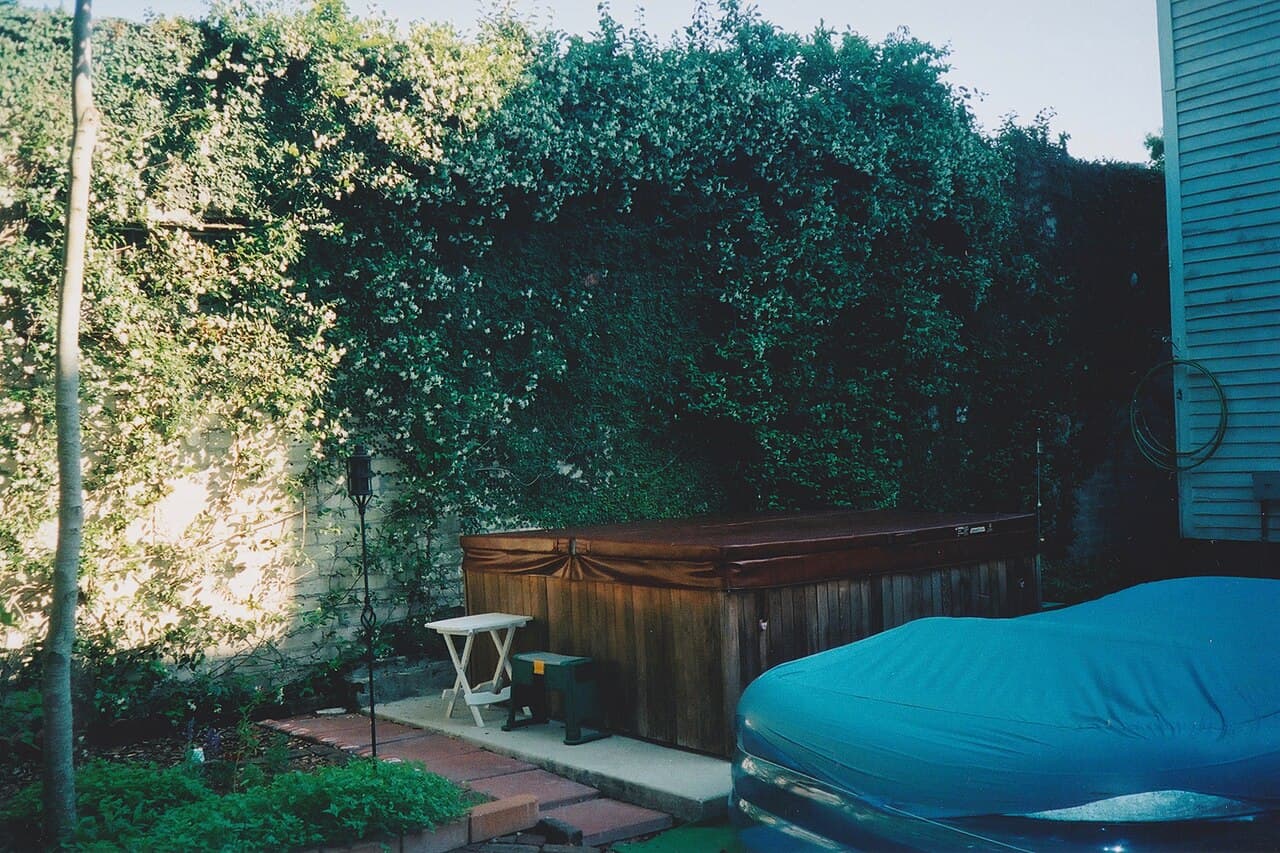
If you want grass or a garden there instead, the slab has to be broken out, hauled away and the hole filled and graded. That is work with heavy tools and a real risk of hitting buried lines. Virginia's Underground Utility Damage Prevention Act says: "No person shall make or begin any excavation or demolition without first submitting a locate request to the notification center"[3] and the same law defines excavation broadly, as any operation in which earth, rock or other material in the ground is moved, removed or otherwise displaced by tools or equipment, including grading, trenching and digging.[4] A contractor doing the work should submit the VA 811 request and wait for the markings.
Concrete is heavy to dispose of. Fairfax County residents can drop off brick, concrete, dirt and rock only in small amounts, up to 2 cubic yards a day per household, at $109 a ton with a $49 minimum, for July 2026 to June 2027.[5] Most people have the contractor who breaks the slab haul it as part of the price. For what a new slab or patio would cost if you want to rebuild, see how much a concrete slab costs in Virginia.
Bringing the lawn back
Ground that sat under a tub, or that a cart and crew crossed on removal day, is often packed hard and bare. Virginia Cooperative Extension explains why that matters: "Compaction physically restricts root penetration and reduces soil oxygen levels required for root development."[6] Seed scattered over compacted soil rarely takes, which is why this part is usually hired out as a small landscaping job.
Here is what a good landscaper's plan for the patch covers, and what to ask for in the quote.
- A soil test first. Virginia Cooperative Extension says the first step toward correcting a problem lawn or establishing new turf is a soil test,[6] and that many of Virginia's soils are very acid and probably need lime.[6] The results tell the landscaper what the patch needs instead of guessing.
- Preparing the ground. Loosening compacted soil, working in whatever the test calls for, and bringing in topsoil where a pad was removed so the patch sits level with the lawn around it.
- The right grass for the season. The new grass should match what is already in your lawn. For cool-season lawns such as tall fescue and Kentucky bluegrass, Extension is plain: "Late summer to mid-fall is the best time to establish cool-season turfgrass."[6] For warm-season lawns such as bermudagrass and zoysiagrass, Extension says warm-season grasses should not be planted in the fall unless the job is sod in early to mid-fall,[6] and that sod can be established year round as long as soils are not frozen and supplemental irrigation is available.[7]
- Who waters. New grass has to be kept watered while it establishes, avoiding so much water that it washes away or drowns the seed.[6] Ask whether the quote includes follow-up visits or whether the watering is left to you.
If the hot tub spot becomes a garden bed instead, the same soil test and loosening apply. For feeding the lawn afterward, see when to fertilize a lawn in Virginia, and for the first mowings of a fescue patch, what height to mow fescue in Virginia.
When to call a licensed pro
- The hot tub's circuit is still in place, buried or above ground. A licensed electrician should remove it or end it safely before any digging.
- You want the concrete pad broken out. That means heavy equipment, a VA 811 locate request and concrete disposal by weight.
- The removal left ruts, a sunken hole or a low spot that holds water near the house.
- A deck, gazebo or fence around the old tub was damaged or partly taken apart on removal day.
For the removal itself, see how an old hot tub is taken apart and hauled away and how much hot tub removal costs in Virginia. Browse more junk removal and moving answers, or find lawn and landscaping businesses around Blacksburg and electricians around Blacksburg. When you are ready, describe the hot tub and what you want done with the space on Loclis with photos, and businesses quote on the same job.
Common questions
- Should I keep the hot tub pad or remove it?
- Keep it if it is level and uncracked and you have a use for it, such as a patio, a grill area or a shed base. Remove it if you want lawn or garden there. Removal is heavy work, needs a VA 811 locate request first, and adds disposal by weight.
- Why won't grass grow where the hot tub was?
- Usually compaction, poor soil or the wrong season. Ground under a tub or a cart path is often packed hard, and Virginia Cooperative Extension notes that compaction restricts roots and reduces soil oxygen. A soil test and loosening the soil before seeding fix most of it.
- When is the best time to seed the bare spot in Virginia?
- For cool-season grasses such as tall fescue, Virginia Cooperative Extension calls late summer to mid-fall the best time. Warm-season grasses such as bermudagrass should not be planted in fall unless the job is sod in early to mid-fall.
- Do I need to call 811 just to regrade a small patch?
- Virginia's law requires a locate request before any excavation, and it defines excavation to include grading and digging with tools or equipment. Breaking out a pad and regrading are covered. Also tell the contractor where the old spa circuit runs.
- What should I do with the old electrical line?
- Have a licensed electrician deal with it. Leaving a buried circuit in place without making it safe puts the next person who digs there at risk. Ask the electrician to remove it or end it properly at the panel and note what was done.
Sources
- [1] Pre-Delivery Guide 2024, Cal Spas. Checked October 27, 2026.
- [2] Tradesmen Program, Virginia Department of Professional and Occupational Regulation. Checked October 27, 2026.
- [3] Code of Virginia § 56-265.17. Notice of excavation or demolition required, Virginia General Assembly, Legislative Information System. Checked October 27, 2026.
- [4] Code of Virginia § 56-265.15. Definitions, Virginia General Assembly, Legislative Information System. Checked October 27, 2026.
- [5] Residential Disposal Fees and Regulations, Fairfax County Department of Public Works and Environmental Services. Checked October 27, 2026.
- [6] Fall Lawn Care (430-520), Virginia Cooperative Extension. Checked October 27, 2026.
- [7] Maintenance Calendar for Warm-Season Turfgrasses in Virginia (430-522), Virginia Cooperative Extension. Checked October 27, 2026.
Want a pro to handle it?
Describe the job once. Licensed local businesses send quotes, and you pay only when you book one.
Get a quote from a local pro