How long does attic insulation last?
Attic insulation has no set expiry date. It keeps working for as long as it stays dry, clean of pests and at its full depth, and in many attics it can simply be topped up. It is time to replace it, not add to it, when it is wet, moldy, smelly or contains animal waste. Check it once a year from the attic hatch.
Free to ask. Local shops send quotes, and you pay only when you book one.
By Kasra Taheri, Founder, LoclisPublished
Researched and drafted with AI, then checked claim by claim against the sources listed below before it was published. Prices and rules change; the dates beside each source say when it was last checked.
Step by step
Read when to stop and call a pro, further down this page, before you start.
Step 1: Pick a cool morning
Go up when the attic is not hot, once a year, and wear a dust mask, gloves and safety glasses.
Step 2: Look across the attic from the hatch
Check whether the insulation is level with or below the joists, which means you probably need more.[2]
Step 3: Look for low spots
Check along the eaves and around the hatch, where insulation is often thin or pushed aside.[2]
Step 4: Look for damage
Look for wet or stained insulation, mold, a musty smell and droppings, which are reasons to replace rather than add.[1]
Step 5: Check the vents
Make sure insulation is not packed against the soffit vents at the eaves.[5]
Step 6: Measure the depth
Use a tape measure to read the depth in inches, or read the R-value printed on existing batts.[2]
Step 7: Fluff or rake loose spots level
Gently move loose fill back into place where it has shifted or been pushed aside, and leave dusty but dry insulation where it is.[4]
Step 8: Add on top if it is short
If the layer is thin, add new unfaced insulation over the old rather than tearing it out.[1]
Attic insulation does not have an expiry date you can count on. Dry, undisturbed insulation keeps doing its job, and the question that matters is its condition and depth, not its age. Replace it when it is wet, moldy, smelly or full of animal waste. Otherwise, check it once a year and top it up if it is thin.
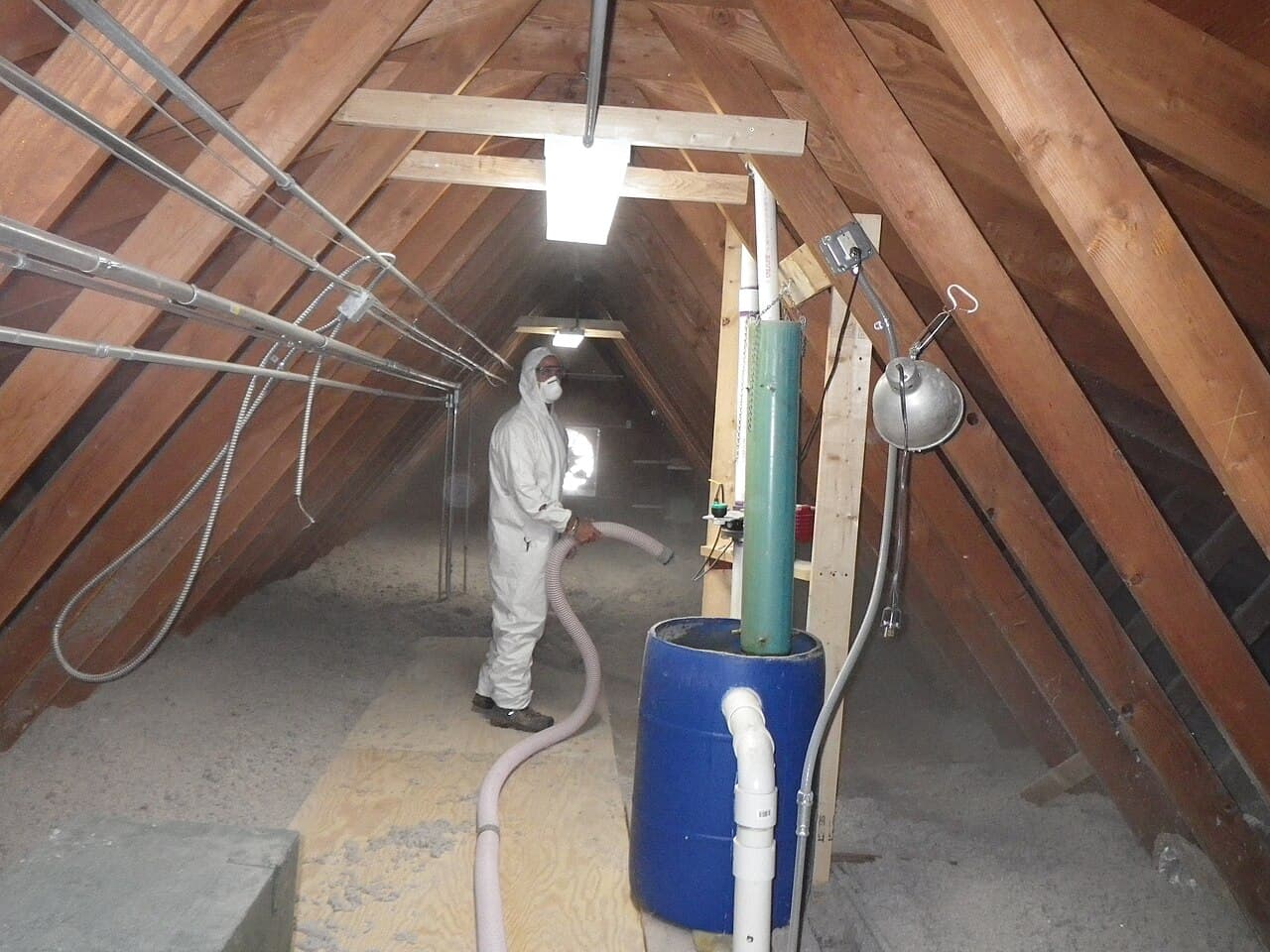
What actually ends the life of attic insulation
Moisture, pests and compression do the damage, not the calendar.
Moisture. Most building codes require roof and soffit vents to exhaust humidity and moisture that could cause insulation or other building materials to deteriorate.[5] A roof leak, a bathroom fan that dumps into the attic, or blocked vents can all wet the insulation. ENERGY STAR lists these as conditions for a professional to correct before any insulating work: Wet or damp insulation, indicating a leaky roof, and Moldy or rotted attic rafters or floor joists, indicating moisture problems.[3]
Pests and contamination. The line between topping up and replacing is clear. Unless your old insulation is wet, moldy, smelly, or contains animal waste, contractors can just add new insulation on top.[1] Droppings or nesting mean the damaged section has to come out and the way in has to be closed.
Compression and gaps. Insulation loses value when it is squashed. At tight spots such as the eaves, the insulation is compressed to fit the space, diminishing its R-value.[6] Foot traffic, stored boxes and wiring pushed through can do the same, and wind blowing in at the soffits can push loose fill aside.
What does not wear it out
Dirt. Darkened insulation near gaps in the ceiling is usually just a sign of air leaking from the house. Although the insulation is dirty, it is still okay to use.[4] The fix is to seal the gaps and move on. After sealing the areas, just push the insulation back into place.[4]
Age on its own. It is usually not necessary to remove existing insulation.[1] If an older attic is dry and just shallow, adding new unfaced insulation over the top is the normal fix. The depth to aim for is in how to add insulation to an attic, and the code view is in what Virginia's energy code requires.
A yearly check that takes ten minutes
Pick a cool morning, wear a dust mask, gloves and safety glasses, and look from the hatch. Looking across your attic, if the insulation is level with or below the attic floor joists, you probably need to add more insulation.[2] It is important that the insulation be evenly distributed with no low spots; sometimes there is enough insulation in the middle of the attic and very little along the eaves.[2]
To measure, follow this ENERGY STAR advice. Either read the R-value printed on the batts of your existing insulation or use a measuring tape to measure the depth of the insulation (inches).[2] If you need to step into the attic, remember: Walk on joists or truss chords, not exposed ceiling drywall or insulation, to avoid falling through the ceiling.[3]
Also look at the soffit vents. Nothing should be packed against them. If you see stains, a musty smell or droppings, take photos and read the next section.
Stop and call a pro if
- The insulation is wet, moldy, smelly or has animal waste in it. Replacement and pest work are for a contractor.[1]
- The attic has vermiculite. Do not disturb vermiculite insulation unless you have had it tested by an approved lab to be sure that it does not contain asbestos.[3]
- You see old wiring. ENERGY STAR flags knob and tube wiring (pre-1930), which can be a fire hazard when in contact with insulation.[3] Have an electrician look at it first.
- The framing is stained, soft or rotted. That points to a moisture problem to fix before any new insulation goes down.[3]
- You cannot reach the area without stepping on the ceiling.
Getting help in Virginia
For prices, see how much attic insulation costs in Virginia. If the real complaint is heat upstairs, read why your upstairs is hot in summer. More guides are in home repair answers, and you can browse insulation repair providers on Loclis.
When you want a crew to inspect or top up the attic, describe your attic and local contractors will quote it.
Common questions
- Does attic insulation expire?
- There is no expiry date to count down to. Unless your old insulation is wet, moldy, smelly, or contains animal waste, contractors can just add new insulation on top.[^es-hire] The things to watch are moisture, pests, and whether the layer is still deep and even.[^es-check]
- Is dirty or darkened insulation still good?
- Usually yes. Insulation that has darkened from dusty air leaking through gaps is not ruined: although the insulation is dirty, it is still okay to use.[^es-diy] Seal the leaks and push it back into place.
- Do I need to remove old insulation before adding more?
- Usually not. It is usually not necessary to remove existing insulation.[^es-hire]
- What shortens the life of attic insulation?
- Moisture is the main enemy. Most building codes require roof and soffit vents to exhaust humidity and moisture that could cause insulation or other building materials to deteriorate.[^vce-vent] Roof leaks and bath or kitchen vents ending in the attic are the usual sources.[^es-air]
- How do I know I need more insulation rather than a replacement?
- If it is dry and clean but thin, add more. Looking across your attic, if the insulation is level with or below the attic floor joists, you probably need to add more insulation.[^es-check] If it is damaged, a contractor should remove the affected part first.
Sources
- [1] How to Hire an Attic Insulation Contractor, ENERGY STAR, U.S. Environmental Protection Agency. Checked October 28, 2026.
- [2] What to Look For: DIY Checks and Inspections, ENERGY STAR, U.S. Environmental Protection Agency. Checked October 28, 2026.
- [3] Attic Air Sealing Project, ENERGY STAR, U.S. Environmental Protection Agency. Checked October 28, 2026.
- [4] A Do-It-Yourself Guide to Sealing and Insulating with ENERGY STAR (July 2016), ENERGY STAR, U.S. Environmental Protection Agency. Checked October 28, 2026.
- [5] ENERGY SERIES: What about Ventilation? (2908-9024), Virginia Cooperative Extension, Virginia Tech. Checked October 28, 2026.
- [6] Ceilings and Attics: Install Insulation and Provide Ventilation, U.S. Department of Energy, Oak Ridge National Laboratory. Checked October 28, 2026.
Want a pro to handle it?
Describe the job once. Licensed local businesses send quotes, and you pay only when you book one.
Get a quote for Home Repair