How much does attic insulation cost in Virginia?
No dated public price list covers attic insulation in Virginia, so any per-square-foot figure is a guess. The bill depends on attic size, how much you have now, the R-value you want, the material, air sealing, access and any cleanup. Get at least three written quotes that spell out the same scope.
Free to ask. Local shops send quotes, and you pay only when you book one.
By Kasra Taheri, Founder, LoclisPublished
Researched and drafted with AI, then checked claim by claim against the sources listed below before it was published. Prices and rules change; the dates beside each source say when it was last checked.
Step by step
Read when to stop and call a pro, further down this page, before you start.
Step 1: Measure the attic floor
Note the approximate length and width in feet and how you reach the attic: hatch, pull-down stairs or door.[1]
Step 2: Note what is there
Record how many inches of insulation you have now, and take phone photos if you can safely put your head up into the attic.[1]
Step 3: Collect three written quotes
Ask for at least three written bids that use the same specifications.[2]
Step 4: Compare the scope line by line
Check that each quote includes air sealing and rafter vents, not only insulation.[1]
Step 5: Question the low bid
Ask a much lower bidder what has been left out.[2]
Step 6: Ask for the paperwork
Ask for documentation of how much insulation was added and the new R-value.[1]
What drives the price
Attic size and how much you have. A small attic with some insulation already in it is a cheaper job than a large, bare one. Measure the floor and note the current depth before you call anyone.
The R-value you add. The target depends on the climate zone and the code in force. What Virginia's energy code requires explains the numbers; a higher target means more material and more labour.
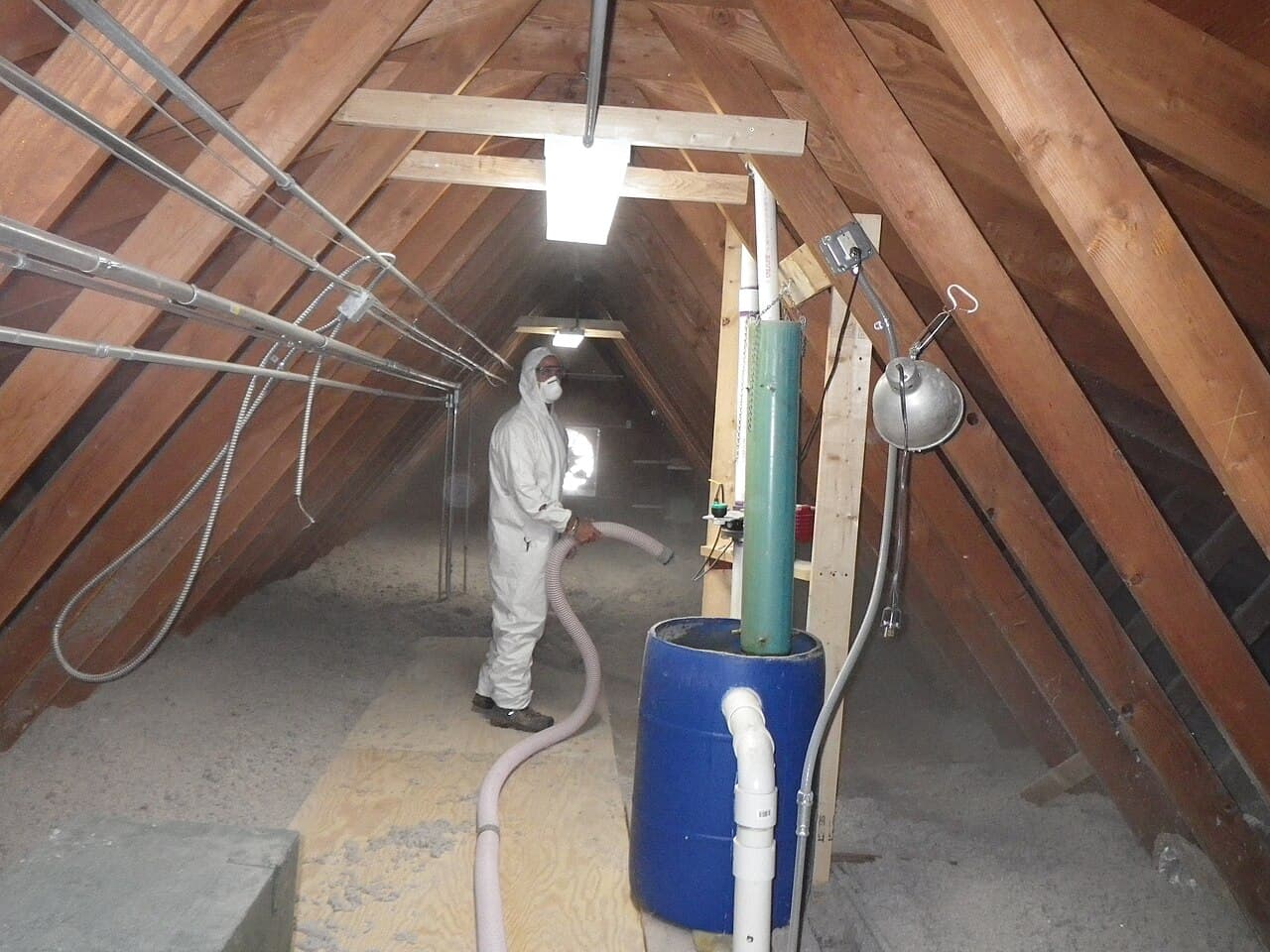
Material and method. Most contractors use blown-in, loose fill insulation for attic floors.[1] Rolled batts need no machine but take longer to lay.
Air sealing. Contractors should seal air leaks in the attic floor before adding insulation, so a good quote lists it as a line item.[1] A quote with no sealing is cheaper for a reason.
Rafter vents. Any project estimate should also include installing insulation baffles (rafter vents).[1] If a quote leaves them out, the crew may block the soffit vents.
Access and cleanup. A tight hatch, a long hose run, ducts that must be protected and a dusty old attic all add time. Ask whether removal of old insulation is included. Unless your old insulation is wet, moldy, smelly, or contains animal waste, contractors can just add new insulation on top.[1]
Surprises. Wet insulation, animal waste or old wiring change the scope and sometimes the price. Ask how the contractor will handle each before work starts.
How to get a number you can use
Many contractors will want to conduct a site visit for a more accurate cost and scope of work estimate.[1] Send your measurements and photos first so the visit is short.
DPOR's guide puts it plainly. It is advisable to get at least three written bids or estimates using identical plans and specifications.[2] Put the same list in front of each bidder: the R-value or depth to reach, air sealing, rafter vents, cleanup, and what happens to any old insulation. Then compare line by line.
Beware of any bid substantially lower than the others.[2] It often leaves something out, so ask what.
The contractor is required to provide you with documentation at the end of the job to show how much insulation has been added and what the new insulation R-value is for your attic.[1] Ask for that in the quote.
Licences and rebates
Virginia treats insulation as its own contractor specialty: the service that provides for the installation, repair, improvement, or removal of materials classified as insulating media used for the sole purpose of temperature control or sound control of residential and commercial buildings.[4] A Class C licence covers jobs over $1,000 but less than $30,000, and a larger single contract needs a higher class.[3] Check any licence number on the DPOR site before you sign.
Under its planned HEAR program, Virginia Energy lists these rebate caps: Insulation, air sealing, and ventilation: Up to $1,600.[5] When we checked on October 27, 2026, the rebate was not yet open, and Virginia Energy cannot provide an estimated date on when Home Energy Rebates will be available.[5] Do not count on it in your budget.
Stop and call a pro if
- The existing insulation is wet or smells. Water means a roof or moisture problem that has to be fixed before any insulation goes down.
- The attic has vermiculite. It may contain asbestos and should not be disturbed until it has been tested. Our how-to guide lists the stop signs.
- There is old knob and tube wiring. Have a licensed electrician look at it before it is buried.
- You cannot reach the joists safely. Hire a crew rather than crawl across the ceiling.
Getting help in Virginia
More guides are in home repair answers, and you can see insulation repair pages on Loclis.
When you are ready, describe your attic and local contractors will quote it.
Common questions
- Why will no one quote a price per square foot?
- Because the square footage is only part of it. Quotes move with the R-value you add, the material, the air sealing, access to the attic and what the crew finds. Many contractors want a site visit before they give a firm number.[^es-hire]
- Is blown-in or rolled insulation cheaper?
- It depends on the attic and the labour. Most contractors use blown-in, loose fill for attic floors because it is quick to install with the right equipment.[^es-hire] Ask for both options in writing if you are unsure.
- Does the quote need to include removing old insulation?
- Usually not. Unless the old insulation is wet, moldy, smelly or contains animal waste, new insulation can go on top, which keeps the cost down.[^es-hire]
- Are there Virginia rebates for attic insulation?
- Virginia Energy lists up to $1,600 for insulation, air sealing and ventilation under its planned HEAR rebate, but when we checked on October 27, 2026 the program was not yet available and no launch date had been given.[^va-energy]
- Does the contractor need a Virginia licence?
- Contractors need a licence for work valued at $1,000 or more, and insulation has its own specialty. Ask for the licence number and check it with DPOR.[^dpor-guide][^va-18vac50-22-30]
Sources
- [1] How to Hire an Attic Insulation Contractor, ENERGY STAR, U.S. Environmental Protection Agency. Checked October 27, 2026.
- [2] What You Should Know Before You Hire a Contractor, Virginia Board for Contractors, DPOR. Checked October 27, 2026.
- [3] Va. Code § 54.1-1100, Definitions (contractors), Code of Virginia, Virginia General Assembly. Checked October 27, 2026.
- [4] 18VAC50-22-30. Definitions of specialty services, Virginia Administrative Code, Board for Contractors. Checked October 27, 2026.
- [5] Home Energy Rebates Frequently Asked Questions, Virginia Department of Energy. Checked October 27, 2026.
Want a pro to handle it?
Describe the job once. Licensed local businesses send quotes, and you pay only when you book one.
Get a quote for Home Repair