Why is my upstairs so hot in summer?
Heat from the sun and the attic settles into the top floor, and anything that weakens the ceiling barrier or the cooling supply shows up there first: thin or uneven attic insulation, air leaks into the attic, leaky or crushed ducts in the attic, blocked soffit vents, and sun-facing windows. Check those before you assume the air conditioner is too small.
Free to ask. Local shops send quotes, and you pay only when you book one.
By Kasra Taheri, Founder, LoclisPublished
Researched and drafted with AI, then checked claim by claim against the sources listed below before it was published. Prices and rules change; the dates beside each source say when it was last checked.
Step by step
Read when to stop and call a pro, further down this page, before you start.
Step 1: Find out when and where it is hot
Put a thermometer in the hottest upstairs room and one downstairs, and note the readings in the afternoon and again late evening.
Step 3: Check the eaves for blocked vents
Look for insulation or debris stuffed against the soffit vents at the eaves, and clear it back by hand so air can move.[6]
Step 4: Open registers and change the filter
Make sure upstairs supply registers and the return grille are open and unblocked, and replace a clogged air filter.
Step 5: Look at the ducts you can see
From the hatch, look for flexible ducts that are kinked, crushed or pulled off their connections, and for gaps at joints.[4]
Step 6: Seal accessible duct joints
Seal leaks you can reach with mastic sealant or metal tape, never duct tape.[4]
Step 7: Shade the sun-side windows
Close blinds or shades on the windows that get direct afternoon sun before the heat arrives, not after.
Step 8: Run the ceiling fans in summer mode
Set ceiling fans to turn counterclockwise in the summer and turn them off in empty rooms.[8]
Step 9: Compare the readings
After a few days, read both thermometers again to see whether the gap has narrowed.
Most hot upstairs rooms come down to heat entering from the attic or sun-facing windows faster than the air conditioner can deliver cool air to that floor. Check the attic insulation, the ducts that run through the attic, the eave vents and the windows before you assume the system is too small. Several of those checks take an hour and cost nothing.
Start by measuring the problem
Put a thermometer in the hottest upstairs room and one downstairs, and compare them in the late afternoon and again at bedtime. A room that is hot only in the afternoon points to the roof and the sun. A room that never cools off even at night points more toward ducts or airflow. Write down which rooms are worst, because the pattern is the clue.
The usual causes, in the order to check
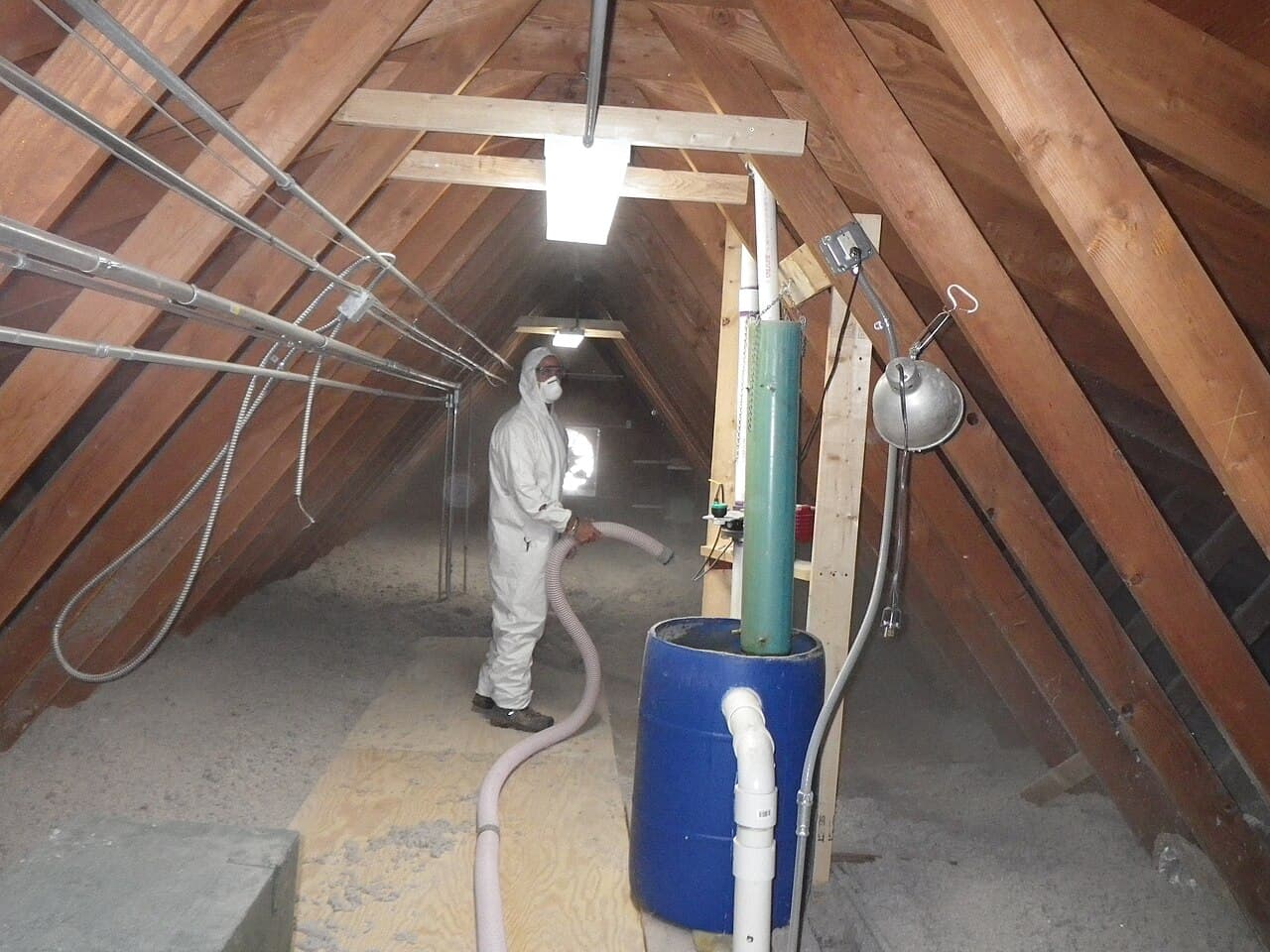
Thin or uneven attic insulation. Look across the attic from the hatch. If the insulation is level with or below your floor joists, you should add more.[1] Look at the eaves too: sometimes there is enough insulation in the middle of the attic and very little along the eaves.[2] For how to add it, see how to add insulation to an attic. For what the code asks of new work, see what Virginia's energy code requires.
Leaky ducts in the attic. If your air handler or ducts sit in the attic, the cool air is travelling through the hottest space in the house. In a typical house, about 20 to 30 percent of the air that moves through the duct system is lost due to leaks, holes, and poorly connected ducts.[4] ENERGY STAR lists these signs of poor duct performance: you have rooms that are difficult to heat and cool, and your ducts are located in an attic, crawlspace, or the garage.[4] Leaks on the return side matter too. Leaking return ducts suck hot/cold unconditioned air into the conditioned space.[5]
Blocked or poorly vented eaves. A combination of continuous ridge vent along the peak of the roof and continuous soffit vents at the eaves provides the most effective ventilation.[6] Insulation pushed against the soffit vents blocks the intake side. Do not rush to add a powered attic fan. Electrically powered roof ventilators are not recommended because they consume more energy than they save.[6]
Sun through the windows. Single-pane windows (windows with only one layer of glass) typically do not have coatings to block solar heat in the summer, increasing air conditioning costs.[7] Shades closed before the afternoon sun hits do more than shades closed after the room is already hot.
Air and equipment. A closed register, a dirty filter or a blocked return grille starves the upstairs of air. A system that runs constantly and still cannot catch up deserves a service visit; see how much AC repair costs in Virginia.
What you can do yourself
Work in the cool of the morning, because an attic in July can be dangerously hot. Stay on the joists, wear a dust mask and gloves, and stop if you feel dizzy.
Clear anything stuffed against the soffit vents by hand. Check that upstairs registers are open and replace a clogged filter. If you can see a flexible duct that has been kinked, crushed or pulled off its connection, reseat it and seal the joint with mastic sealant or metal tape. Never use duct tape, as it is not long-lasting.[4]
Inside, the ENERGY STAR advice is simple. In the summer, use the ceiling fan in the counterclockwise direction.[8] Ceiling fans cool people, not rooms. Switch them off when nobody is there.[8]
Stop and call a pro if
- The insulation is wet or the framing is stained. ENERGY STAR lists this as a reason to hire a professional first: Wet or damp insulation, indicating a leaky roof.[3]
- The attic has little or no ventilation, or exhaust vents end in the attic. ENERGY STAR lists both for professional correction before insulating: Little or no attic ventilation, and Kitchen, bathroom or clothes dryer vents that exhaust moist air directly into the attic space instead of outdoors.[3]
- The ducts are badly damaged, buried, or you cannot reach them. A duct or HVAC contractor can test and seal them.
- The air conditioner runs but the air from the registers is warm. That is an equipment or refrigerant problem for a licensed HVAC contractor, not a home fix.
- You find vermiculite or old knob and tube wiring. Leave them alone and see how to add insulation to an attic.
Getting help in Virginia
If the fixes above are not enough, an energy-minded insulation contractor or HVAC company can find out whether the problem is insulation, ducts or the system itself. More guides are in home repair answers, and you can browse local help at insulation repair providers on Loclis.
When you want a crew to look at the attic, describe your hot room and local contractors will quote it.
Common questions
- Does attic insulation make the upstairs cooler in summer?
- It slows the heat coming down through the ceiling, so a thin or uneven layer is a common cause of a hot top floor. If the insulation is level with or below your floor joists, you should add more.[^es-diy] Make sure it is even, because sometimes there is enough insulation in the middle of the attic and very little along the eaves.[^es-check]
- Will adding attic vents or a powered fan cool the upstairs?
- Usually not by much. The DOE fact sheet recommends a continuous ridge vent along the peak combined with continuous soffit vents, and it says electrically powered roof ventilators are not recommended because they consume more energy than they save.[^doe-attic]
- Could my ducts be the problem?
- Yes, especially if they run through the attic. In a typical house, about 20 to 30 percent of the air that moves through the duct system is lost due to leaks, holes, and poorly connected ducts.[^es-ducts] Leaking return ducts suck hot/cold unconditioned air into the conditioned space.[^vce-ducts]
- Do my windows matter?
- They can. Single-pane windows typically do not have coatings to block solar heat in the summer, increasing air conditioning costs.[^es-storm] Shades on the sunny side are the cheapest first step.
- Is a ceiling fan worth running?
- Yes, in rooms you are using. Ceiling fans cool people, not rooms, so turn them off when nobody is there, and in summer run them counterclockwise.[^es-tips]
Sources
- [1] A Do-It-Yourself Guide to Sealing and Insulating with ENERGY STAR (July 2016), ENERGY STAR, U.S. Environmental Protection Agency. Checked October 28, 2026.
- [2] What to Look For: DIY Checks and Inspections, ENERGY STAR, U.S. Environmental Protection Agency. Checked October 28, 2026.
- [3] Attic Air Sealing Project, ENERGY STAR, U.S. Environmental Protection Agency. Checked October 28, 2026.
- [4] Duct Sealing, ENERGY STAR, U.S. Environmental Protection Agency. Checked October 28, 2026.
- [5] ENERGY SERIES: What About the Ductwork? (BSE-291NP, 2020), Virginia Cooperative Extension, Virginia Tech. Checked October 28, 2026.
- [6] Ceilings and Attics: Install Insulation and Provide Ventilation, U.S. Department of Energy, Oak Ridge National Laboratory. Checked October 28, 2026.
- [7] High Performing Windows or Storm Windows, ENERGY STAR, U.S. Environmental Protection Agency. Checked October 28, 2026.
- [8] Ceiling Fan Installation and Usage Tips, ENERGY STAR, U.S. Environmental Protection Agency. Checked October 28, 2026.
Want a pro to handle it?
Describe the job once. Licensed local businesses send quotes, and you pay only when you book one.
Get a quote for Home Repair