How much attic insulation does Virginia's energy code require?
Under the 2021 Virginia Residential Code, the minimum ceiling insulation in Climate Zones 3 and 4 is R-60, up from R-49 in the 2018 code. The 2024 national code lowered that to R-49, but Virginia is not expected to adopt it until about 2027, so ask your local building department what it will accept.
Free to ask. Local shops send quotes, and you pay only when you book one.
By Kasra Taheri, Founder, LoclisPublished
Researched and drafted with AI, then checked claim by claim against the sources listed below before it was published. Prices and rules change; the dates beside each source say when it was last checked.
Step by step
Read when to stop and call a pro, further down this page, before you start.
Step 1: Find your climate zone
Ask your local building department which climate zone your address is in and which edition of the residential code it enforces.[1]
Step 2: Measure what you have
Note the depth of the insulation across the attic floor and its type, so you can estimate the current R-value.[2]
Step 4: Ask about R-49
If a contractor proposes R-49, ask the building department whether it needs approval as a code modification.[1]
Step 5: Put the target in the contract
Have the written quote state the R-value to be reached and ask for documentation at the end of the job.[3]
Under the 2021 Virginia Residential Code, the minimum insulation R-value for ceilings in Climate Zones 3 and 4 is 60.[1] That is a step up from the 2018 code, and the national 2024 code has since gone back down to 49. Which number applies to your attic is a question for your local building department.
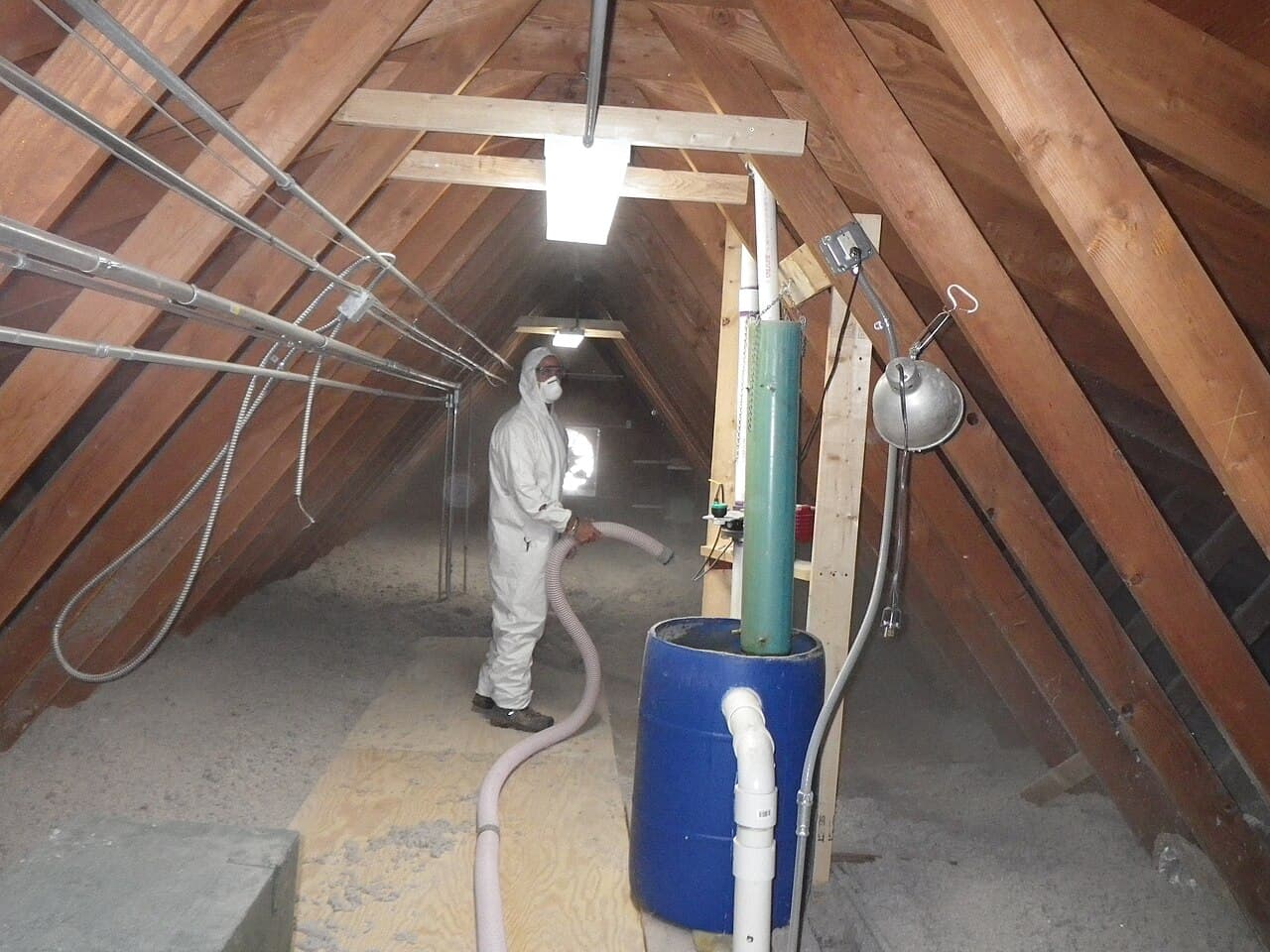
What the Virginia code says
The State Building Codes Office puts the change this way: The minimum insulation R-Value for ceilings in Climate Zones 3 and 4 increased from 49 in the 2018 VRC, to 60 in the 2021 VRC.[1] R-value measures how well insulation resists heat flow. Insulation levels are specified by R-Value. The higher the number, the better the thermal performance.[2]
The newer national residential code moved the other way. In the 2024 International Residential Code (IRC), the minimum insulation R-Value for ceilings in Climate Zones 3 and 4 decreased to 49.[1] The 2021 Virginia code does not include that change. The State Building Codes Office says the 2024 VRC will likely be effective in 2027.[1]
Can you install R-49 now
Possibly. The State Building Codes Office says R-49 ceiling insulation for projects complying with the 2021 VRC may require the approval of a code modification.[1] Ask your local building department: the authority to enforce the VRC falls under the purview of the local building departments.[1] Call yours before you commit to a lower target, and get the answer in writing if a contractor proposes it.
What ENERGY STAR recommends
ENERGY STAR publishes a separate table of recommended levels for retrofits in existing wood-framed homes, by climate zone. This guidance is based on the 2021 International Energy Conservation Code (IECC) Residential Provisions Chapter 4 Table R402.1.3.[2] For an attic with no insulation, it lists R49 in Zone 3 and R60 in Zone 4A and 4B. For an attic that already has 3 to 4 inches, it lists R38 in Zone 3 and R49 in Zone 4A and 4B.[2] Use it as a guide to what is cost-effective, not as the legal minimum for Virginia.
How to make this work for your attic
Start with the zone. Your building department can tell you the climate zone for your address and which code edition it enforces. Then measure what is already in the attic so you know how far you have to go.
When you hire, put the target in the contract. The contractor is required to provide you with documentation at the end of the job to show how much insulation has been added and what the new insulation R-value is for your attic.[3] Keep that sheet with your house records.
If you plan to do the work yourself, the how-to guide walks through sealing, vents and laying the insulation. For budgeting, see what attic insulation costs in Virginia.
Stop and call a pro if
- The building department wants a code modification. Let a contractor or design professional handle the paperwork.
- The attic has vermiculite, wet insulation or old knob and tube wiring. Do not go further until it has been tested, fixed or looked at by a licensed electrician.
- You do not have safe footing. Walk on joists or truss chords, not exposed ceiling drywall or insulation, to avoid falling through the ceiling.[4]
- A gas furnace or water heater vents through the attic. Have an HVAC contractor check combustion safety after any air sealing.
Getting help in Virginia
More guides are in home repair answers, and you can see insulation repair pages on Loclis.
When you are ready, describe your attic and local contractors will quote it.
Common questions
- What R-value does the 2021 Virginia Residential Code set for ceilings?
- R-60 for Climate Zones 3 and 4, up from R-49 in the 2018 code, according to the State Building Codes Office.[^dhcd-faq]
- Can I install R-49 instead of R-60?
- Possibly, but it may require approval of a code modification. Ask the local building department before you buy or sign.[^dhcd-faq]
- When will Virginia adopt the lower R-49 figure?
- The State Building Codes Office expects the 2024 VRC to be effective in 2027, and the process to update the code was expected to begin in spring 2025.[^dhcd-faq]
- Who decides what my project needs?
- Your local building department enforces the code, so it has the final say on how the ceiling insulation requirement applies to your house.[^dhcd-faq]
- Is ENERGY STAR's recommendation the same as the code?
- Not always. ENERGY STAR publishes recommended levels for retrofits by climate zone, based on the 2021 national energy code, while Virginia's code has its own amendments.[^es-r]
Sources
- [1] 2021 Virginia Residential Code Significant Changes: Frequently Asked Questions, State Building Codes Office, Virginia Department of Housing and Community Development. Checked October 27, 2026.
- [2] Recommended Home Insulation R-Values, ENERGY STAR, U.S. Environmental Protection Agency. Checked October 27, 2026.
- [3] How to Hire an Attic Insulation Contractor, ENERGY STAR, U.S. Environmental Protection Agency. Checked October 27, 2026.
- [4] Attic Air Sealing Project, ENERGY STAR, U.S. Environmental Protection Agency. Checked October 27, 2026.
Want a pro to handle it?
Describe the job once. Licensed local businesses send quotes, and you pay only when you book one.
Get a quote for Home Repair