How do I add insulation to my attic?
Seal the big air leaks in the attic floor first, then lay unfaced fiberglass rolls across the joists, or hire a crew to blow in loose fill. Keep insulation off soffit vents, recessed lights and flues, and leave the job alone if you find vermiculite, wet insulation or old knob and tube wiring.
Free to ask. Local shops send quotes, and you pay only when you book one.
By Kasra Taheri, Founder, LoclisPublished
Researched and drafted with AI, then checked claim by claim against the sources listed below before it was published. Prices and rules change; the dates beside each source say when it was last checked.
Step by step
Read when to stop and call a pro, further down this page, before you start.
Step 1: Check what you have
Look across the attic: if the insulation is level with or below the joists, you should add more.[1]
Step 2: Rule out the stop signs
Do not disturb vermiculite until it has been tested, and look for wet insulation, rotted framing and old knob and tube wiring.[2]
Step 3: Seal the big leaks first
Plug open stud cavities, cover dropped soffits and seal behind kneewalls before any new insulation goes down.[2]
Step 5: Set rafter vents
Place rafter vents between the rafters at the eaves so the soffit vents stay clear.[1]
Step 6: Lay unfaced rolls
Lay the second layer of unfaced rolls over and perpendicular to the first, working from the edges toward the attic opening.[1]
Step 7: Check the finished level
Compare the depth you reached with the R-value recommended for your climate zone.[4]
You can add attic insulation yourself if the attic is dry, has safe footing on the joists and contains no vermiculite or old knob and tube wiring. The order matters more than the material: seal the air leaks in the attic floor first, keep the soffit vents open, then add insulation on top of what is there. If you would rather not blow in loose fill, a crew can do that part.
Check what you have
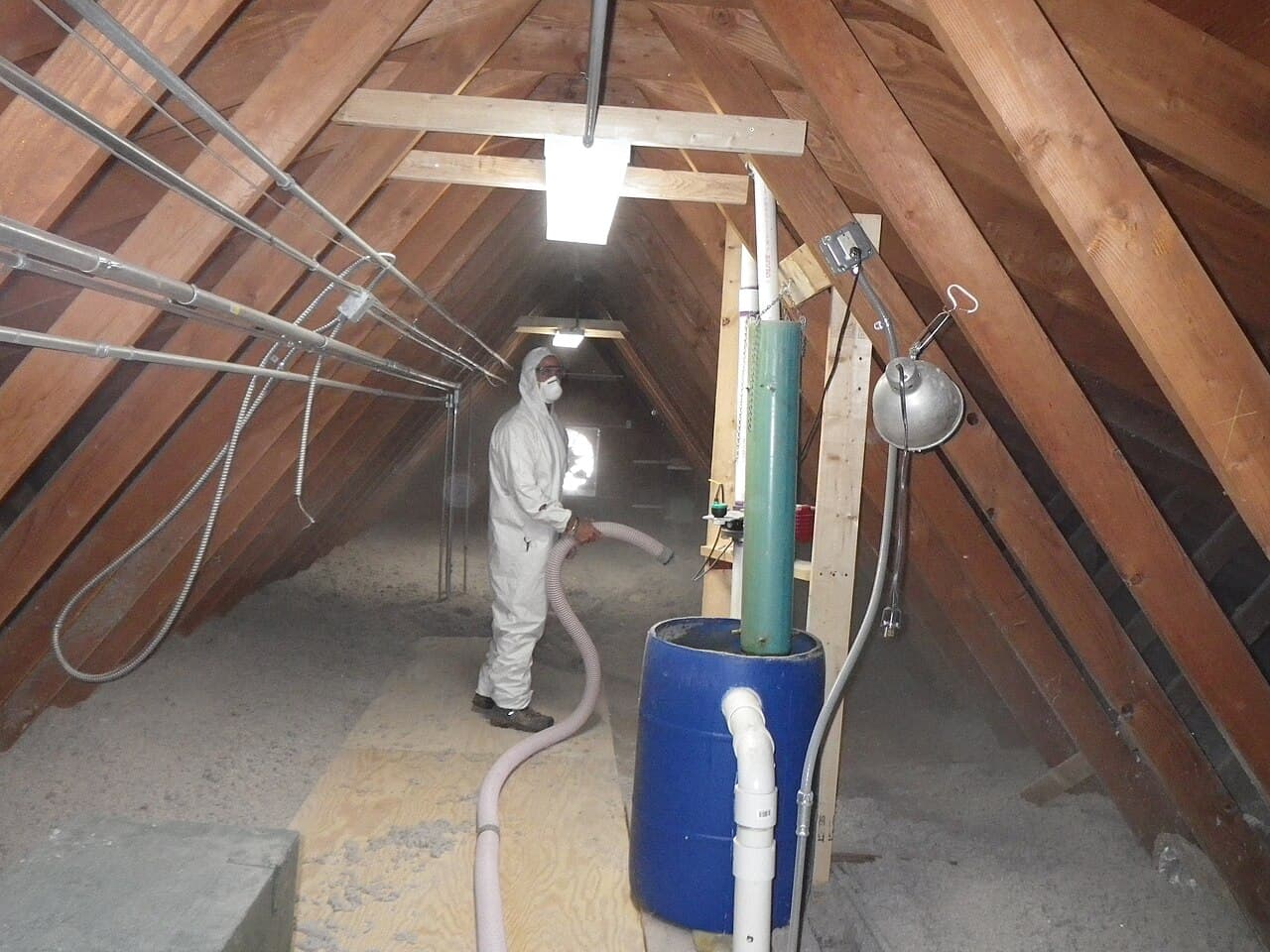
Look across the attic from the hatch. If the insulation is level with or below your floor joists, you should add more.[1] If you cannot see the joists at all and the layer is even, you probably have enough. Look for thin spots along the eaves, because the middle of the attic is often fine while the edges are bare.
Before you start
Stop at any of these and read the last section of this page. Do not disturb vermiculite insulation unless you have had it tested by an approved lab to be sure that it does not contain asbestos.[2] The ENERGY STAR checklist also lists wet or damp insulation, indicating a leaky roof, and knob and tube wiring (pre-1930), which can be a fire hazard when in contact with insulation.[2]
Plan the footing. Walk on joists or truss chords, not exposed ceiling drywall or insulation, to avoid falling through the ceiling.[2] Lay boards across the joists if you need to kneel. Unless your old insulation is wet, moldy, smelly, or contains animal waste, contractors can just add new insulation on top.[3] The same goes for you. Wear a dust mask, gloves, safety glasses and a disposable coverall, and start early in hot weather.
Seal first, then insulate
Contractors should seal air leaks in the attic floor before adding insulation, and the same order applies to you.[3] The big leaks are open stud cavities, dropped soffits over kitchen cabinets or bath vanities, gaps where walls meet the attic floor, and the space behind kneewalls. Stuff open cavities with batt scraps in a bag and cap them with rigid foam or foil, sealed with caulk.
Flues need special care. Building codes usually require 1 inch of clearance from metal flues (2 inches from masonry chimneys) to any combustible material, including insulation.[2] Make a metal dam around the pipe and seal the gap between the flue and the metal flashing with high-temperature caulk. Do not use spray foam.[2] If a gas furnace or water heater vents through this attic, EPA recommends having a professional HVAC contractor conduct combustion safety testing after any air sealing.[3]
Keep the soffit vents open
Never lay insulation over recessed light fixtures or soffit vents.[1] At the eaves, rafter vents (also called baffles) keep a channel open for outside air. Staple them directly to the roof decking between the rafters, then bring the insulation right out to the edge of the floor.[1] Keep all insulation at least 3 inches away from "can" lights, unless they are rated IC (Insulated Ceiling).[1]
Lay the insulation
Rolled fiberglass is the easiest material for a first job. If there is already insulation between the joists, install the second layer over and perpendicular to the first, which covers the tops of the joists, and work from the perimeter toward the attic opening.[1] Use unfaced rolls: make sure the fiberglass batt has no paper or foil backing.[1]
Loose fill goes on faster, and most contractors use blown-in, loose fill insulation for attic floors.[3] The catch is the blowing machine, which is why many homeowners hire this part out.
How much to add
Insulation levels are specified by R-Value.[4] ENERGY STAR publishes a table by climate zone, and Virginia's building code sets its own minimums for new work, covered in what Virginia's energy code requires for attic insulation. Ask your local building department which climate zone and requirements apply to your address.
Stop and call a pro if
- The attic has vermiculite. It may contain asbestos. Do not disturb it until it has been tested by an approved lab.[2]
- You find knob and tube wiring. ENERGY STAR flags it as a fire hazard in contact with insulation.[2] Have a licensed electrician look at it before anything is buried.
- The insulation is wet or the framing is damp or rotted. That points to a roof leak or a moisture problem, and it needs fixing first.[2]
- There is no safe footing. If the joists are out of reach or the ceiling below is not supported, do not crawl across it.
- Fuel-burning equipment vents through the attic. Have an HVAC contractor test combustion safety after air sealing.[3]
Getting help in Virginia
For prices, see how much attic insulation costs in Virginia. More guides are in home repair answers, and you can browse insulation repair providers on Loclis.
When you want a crew, describe your attic and local contractors will quote it.
Common questions
- How do I know if my attic needs more insulation?
- Look across the attic. If the insulation is level with or below the floor joists so you can easily see them, add more. If it is well above the joists and even, you probably have enough.[^es-diy]
- Do I have to remove the old insulation first?
- Usually not. Unless it is wet, moldy, smelly or contains animal waste, new insulation can go on top.[^es-hire]
- Can I use faced insulation over what is already there?
- Use unfaced rolls, with no paper or foil backing, so moisture does not get trapped.[^es-hire]
- Is blown-in insulation a DIY job?
- It can be, but it needs a blowing machine, so many homeowners hire a crew. Most contractors use blown-in loose fill for attic floors.[^es-hire][^es-diy]
- What if my attic has vermiculite?
- Leave it alone. It may contain asbestos and should not be disturbed until an approved lab has tested it.[^es-air]
Sources
- [1] A Do-It-Yourself Guide to Sealing and Insulating with ENERGY STAR (July 2016), ENERGY STAR, U.S. Environmental Protection Agency. Checked October 27, 2026.
- [2] Attic Air Sealing Project, ENERGY STAR, U.S. Environmental Protection Agency. Checked October 27, 2026.
- [3] How to Hire an Attic Insulation Contractor, ENERGY STAR, U.S. Environmental Protection Agency. Checked October 27, 2026.
- [4] Recommended Home Insulation R-Values, ENERGY STAR, U.S. Environmental Protection Agency. Checked October 27, 2026.
Want a pro to handle it?
Describe the job once. Licensed local businesses send quotes, and you pay only when you book one.
Get a quote for Home Repair