How much does concrete repair cost in Virginia?
There is no set price for concrete repair in Virginia. The kind of repair decides most of the cost: sealing cracks is priced by length and is the cheapest, patching and resurfacing are priced by area, and lifting or replacing a slab costs the most. Get three written quotes for the same scope from licensed contractors.
Free to ask. Local shops send quotes, and you pay only when you book one.
By Kasra Taheri, Founder, LoclisUpdated
Researched and drafted with AI, then checked claim by claim against the sources listed below before it was published. Prices and rules change; the dates beside each source say when it was last checked.
Step by step
Read when to stop and call a pro, further down this page, before you start.
Step 1: Measure the damage
Measure the total length of the cracks and the square footage of any flaking or broken surface, and photograph each area next to a tape measure.
Step 2: Note what kind of damage it is
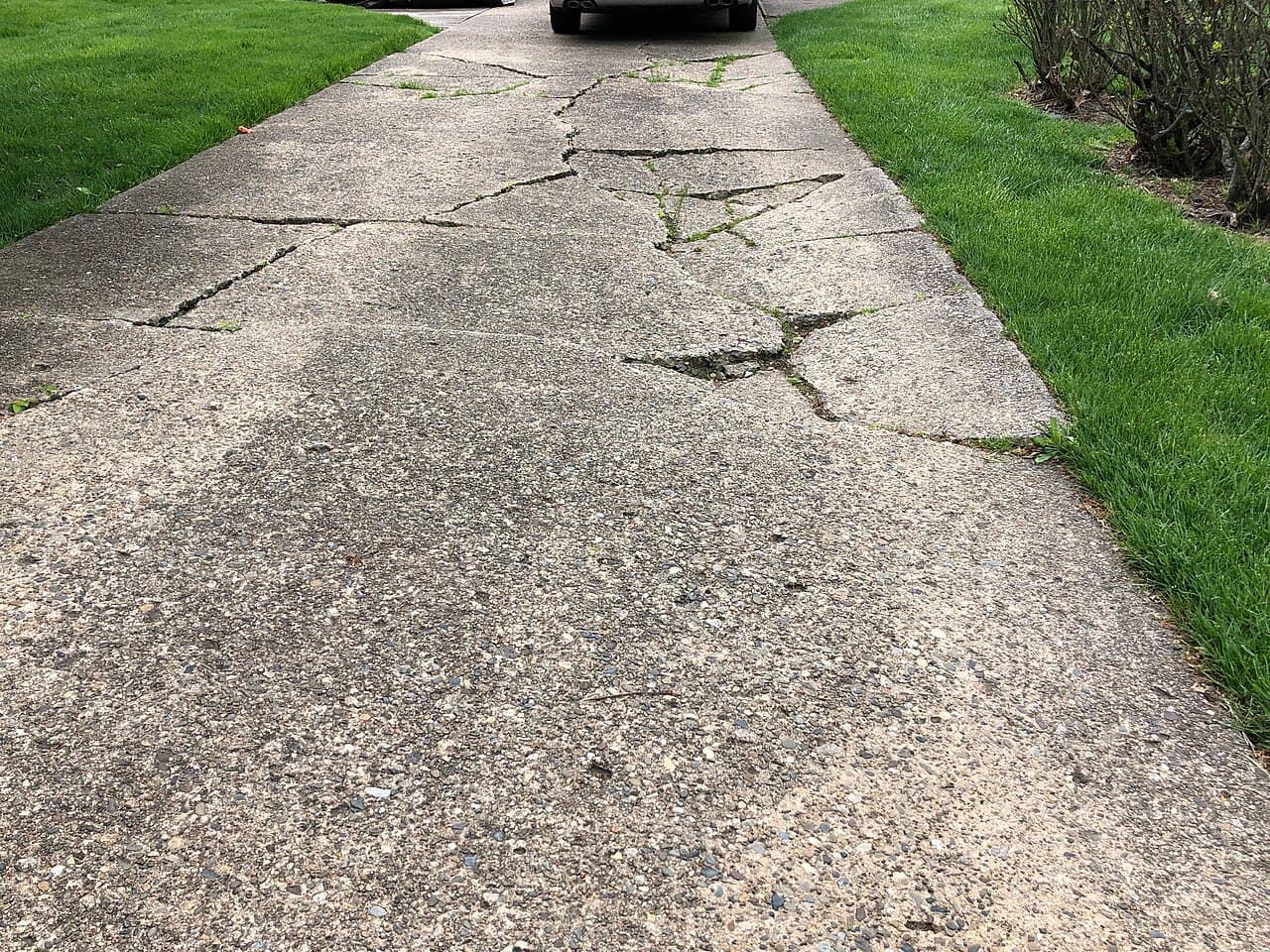
Write down whether you have cracks, flaking, a sunken section or broken pieces, since each one is a different repair with a different price.
Step 3: Check for paint or sealer
Note whether the surface has been painted or sealed, because a cement resurfacer goes only on bare concrete and stripping a coating adds labour.[3]
Step 4: Find out who owns the apron
If the damage reaches the street, ask whether the road and sidewalk belong to VDOT or the locality, since that decides who maintains which part.[6]
Step 5: Write one scope of work
Put the areas, the repair you want and any finish or colour match on one page so every contractor prices the same job.
Step 6: Get three written quotes
Ask at least three contractors for written bids on that same scope, and be wary of one that is far below the others.[9]
Step 8: Read the contract
Before work starts, make sure the written contract states the total cost, the payment schedule and down payment, and the materials and work.[8]
Step 9: Keep the deposit small
Pay an initial deposit of no more than 10% of the total or $1,000, whichever is less, unless special-order items are involved.[9]
There is no set price for concrete repair in Virginia. Contractors price each job from their own costs and what they find on site, and the kind of repair changes the total far more than the town you live in. The useful way to budget is to know which repair your concrete needs, what drives the cost of each one, and how to get written quotes you can compare line by line.
The type of repair sets the price
From the smallest job to the largest:
Sealing cracks. Usually priced by length. The material is a small part of it: one quart of Quikrete's pourable Concrete Crack Seal fills a crack 1/4 inch wide and 1/2 inch deep for about 38 feet,[1] and a 10 oz tube of its Advanced Polymer sealant fills about 12 feet of a joint 1/2 inch wide and 1/4 inch deep.[2] Most of what you pay for is the labour of chiseling, cleaning and backing each crack. The polymer sealant should be kept free of traffic for at least 3 days,[2] so plan to park elsewhere. If you want to do it yourself, how to fix cracks in a concrete driveway walks through it.
Patching spalls, delaminated spots and broken edges. Quikrete says spalled and pitted surfaces can be repaired with its Re-Cap resurfacer mixed to a trowelable consistency, and recommends its Quick-Setting Cement mixed with Concrete Acrylic Fortifier, or its FastSet Repair Mortar, for the edges of broken concrete.[3] The removal of loose concrete is the slow part: Quikrete's prep steps call for washing, sweeping, scraping, chipping or grinding the surface to remove loose concrete before anything goes on.[3]
Resurfacing. Priced by area. Quikrete says badly damaged areas must be repaired and levelled before its Re-Cap resurfacer goes on.[3] For a sense of the material, a 40 lb bag of Quikrete's Re-Cap resurfacer covers about 16 square feet at 1/4 inch thick, or about 65 square feet at 1/16 inch.[3] The labour is in the prep and the timing: cleaning with a 2500 PSI pressure washer, a step Quikrete calls essential to a proper bond,[3] working in sections no larger than about 144 square feet and keeping the existing control and expansion joints,[3] and placing it only with air and concrete between 50 and 90 F.[3] The product allows foot traffic after 8 hours and cars after 24 hours.[3]
Resurfacing has limits. Quikrete warns that old cracks can reappear due to movement in the base concrete,[3] and that the colour of the product varies with the water added, curing conditions and variations in the underlying concrete, so a repair may not match the rest of the slab.[3] Deep, spreading damage, or flaking over rusting steel, is a bigger job than a resurfacer.
Lifting a sunken slab. A specialist job with its own equipment; see slab lifting and leveling.
Replacing the slab. The largest bill: breaking out and hauling the old concrete, fixing the base, and pouring new. What a new concrete slab costs in Virginia covers those drivers, and whether to repair or replace helps you decide which you need.
What else moves the number
Size and access. A few cracks in a walk cost little more than the trip. A long driveway with equipment that has to reach the back of the lot costs more per foot.
Coatings and stains. A cement resurfacer should go only on bare concrete, not on painted or sealed surfaces,[3] so an old sealer or paint has to come off first, and deep oil stains need their own cleaning.
Season. Every product above has a temperature window, which pushes much of this work into spring and fall. Work squeezed into cold weather can need extra protection, which adds to the price.
Approvals. Every Virginia locality is required to use the Uniform Statewide Building Code, which the state adopts so that everyone is subject to the same regulations.[4] Your county or town's building office decides how that code applies to your job. Prince William County lists concrete patio slabs on grade that are not designed to support a future building addition among work that needs no building permit, while noting that zoning or watershed approval will be required.[4] Pittsylvania County lists driveways as needing no building permit unless they are greater than 10,000 square feet.[5] Ask your own county or town's building office before work starts.
The apron by the street. Under VDOT's access rules, maintenance of a private entrance is the owner's job, with a few exceptions.[6] Among them, on highways with curb, gutter and sidewalk belonging to VDOT, VDOT maintains the part of the entrance that extends to the back of the sidewalk, and on highways with ditches it cleans the drainage pipe at the entrance.[6] Find out who owns the road before you pay to fix the piece nearest it.
Getting quotes you can compare
Virginia's Board for Contractors advises getting at least three written bids on the same plans and specifications,[9] and to be wary of any bid far below the others.[9] Its rule of thumb for a deposit is "an initial deposit of no more than 10% of the total price or $1,000, whichever is less."[9]
Ask each contractor to put these in writing:
- The repair method and the product, by name.
- The length of cracks or the square footage covered.
- The prep included: chipping, pressure washing, stain or coating removal.
- How joints will be kept open and resealed.
- When you can walk and drive on it.
- Clean-up and hauling.
- What they will do if a repaired crack opens again.
Match the licence to the price. DPOR's consumer guide says a contractor's licence is required for work valued at $1,000 or more,[9] and the Code of Virginia says Class C contractors work on single contracts over $1,000 but less than $30,000,[7] and larger jobs need a higher class. For residential work, the Board's rules require a written contract that states the total cost, the amount and timing of progress payments including the down payment, and the materials and work it covers.[8] A licence also matters if things go wrong. Virginia's Contractor Transaction Recovery Fund can give relief to consumers who lose money through a licensed residential contractor's "improper or dishonest conduct."[10] A claim needs a Virginia court judgment against the licensed contractor based on that kind of conduct (mere breach of contract does not count), and the contract must be for your own home in Virginia.[10] More questions to ask are in what to ask a concrete contractor before hiring them.
Stop and call a pro if
- A section has sunk, tilted or heaved, which points to the base, not the surface.
- The surface is flaking away over a large area or keeps getting worse each winter.
- You see rust stains or exposed steel.
- The damage reaches the street, a public sidewalk or a curb, where the locality or VDOT may own part of it.
- The slab is attached to the house, such as a stoop or a garage floor, and is pulling away or letting water in.
Getting quotes in Virginia
Loclis lists DPOR-licensed concrete businesses with their licence number and class. Look up concrete contractors in Blacksburg, browse concrete repair, or see all concrete and hardscaping answers. Loclis's own fees are on the pricing page.
Describe the repair once and licensed local concrete businesses quote it.
Common questions
- Is there an average price for concrete repair in Virginia?
- Not one worth relying on. Prices depend on the kind of repair, the size and access, the prep, the season and each contractor's own costs. Three written quotes for the same scope tell you more about your job than any published average.
- Why is crack sealing so much cheaper than resurfacing?
- Crack sealing uses very little material and is priced by length; a 10 oz tube of polymer sealant fills about 12 feet of a typical joint. Resurfacing covers the whole area, needs heavy cleaning and careful timing, and is priced by square foot.
- Do I need a permit to repair a concrete driveway or patio?
- Every Virginia locality uses the same statewide building code, and your county or town's building office decides how it applies to your job. Prince William County lists concrete patio slabs on grade among work that needs no building permit while noting zoning or watershed approval, and Pittsylvania County lists driveways as needing no building permit unless they are greater than 10,000 square feet. Ask as well before any work near the street.
- Does a small concrete repair need a licensed contractor?
- Yes, once it reaches $1,000. DPOR's consumer guide says a contractor's licence is required for work valued at $1,000 or more, in a licence class that fits the contract price. Virginia's Contractor Transaction Recovery Fund also pays only on claims against licensed contractors, and only after a Virginia court judgment for improper or dishonest conduct, not mere breach of contract.
- What should a concrete repair quote include?
- The repair method and product, the length or area covered, the prep, how the joints will be kept, when you can walk and drive on it, clean-up, and the total price. Virginia's Board for Contractors requires a written residential contract that states the total cost, the payment schedule and the materials and work.
Sources
- [1] Concrete Crack Seal, Product No. 8640 (data sheet), The QUIKRETE Companies. Checked October 26, 2026.
- [2] Advanced Polymer Concrete Crack Sealant, Product No. 8620-17 (data sheet), The QUIKRETE Companies. Checked October 26, 2026.
- [3] Re-Cap Concrete Resurfacer, Product No. 1131-47 (data sheet), The QUIKRETE Companies. Checked October 26, 2026.
- [4] Do I Need a Permit?, Prince William County Building Development Division. Checked October 26, 2026.
- [5] Do I Need a Permit, Pittsylvania County Building Inspections. Checked October 26, 2026.
- [6] 24VAC30-73-90. Private entrances, Virginia Administrative Code (VDOT Access Management Regulations). Checked October 26, 2026.
- [7] Code of Virginia § 54.1-1100. Definitions, Code of Virginia. Checked October 26, 2026.
- [8] 18VAC50-22-260. Filing of charges; prohibited acts, Virginia Administrative Code (Board for Contractors). Checked October 26, 2026.
- [9] What You Should Know Before You Hire a Contractor, Virginia Board for Contractors, DPOR. Checked October 26, 2026.
- [10] Contractor Transaction Recovery Fund, Virginia Department of Professional and Occupational Regulation. Checked October 26, 2026.
Want a pro to handle it?
Describe the job once. Licensed local businesses send quotes, and you pay only when you book one.
Get a quote from a local pro