How do I keep concrete from cracking in winter?
Keep water out of the concrete and go easy on deicers. Seal cracks and joints in the fall, apply a breathable water-repellent sealer to dry concrete, and make sure water drains off the slab. In winter, shovel first, use as little deicer as you can, and use clean sand instead on new concrete.
Free to ask. Local shops send quotes, and you pay only when you book one.
By Kasra Taheri, Founder, LoclisUpdated
Researched and drafted with AI, then checked claim by claim against the sources listed below before it was published. Prices and rules change; the dates beside each source say when it was last checked.
Step by step
Read when to stop and call a pro, further down this page, before you start.
Step 1: Walk the slab in early fall
Look over the driveway, walks and steps for open cracks, empty joints and spots where water stands after rain.
Step 2: Seal cracks and joints
Fill open cracks and joints with a concrete crack or joint sealant while the days are still above about 40 F and the surface is dry and frost free.[7]
Step 3: Seal the surface
Apply a breathable penetrating sealer made for concrete to a clean, dry surface, following the data sheet.[3]
Step 4: Send water away
Point downspouts away from the slab and fill low spots beside it, because salt water that does not drain increases freeze-thaw damage.[1]
Step 5: Shovel before you salt
Clear snow promptly so you need less deicer, and keep piles of salty snow off the slab where you can.
Step 6: Use deicer sparingly
Spread a thin, even layer only where people walk, and read the label, since deicers amplify freeze-thaw damage and some can chemically attack concrete.[1]
Step 7: Use sand on new concrete
On new concrete, skip salt and other deicers for about a year and use sand or clean kitty litter for traction.[2]
Step 8: Rinse off road salt
On a mild day, hose off the salt that cars carry onto the driveway and garage slab.
Step 9: Check again in spring
Look for flaking, new cracks and sealant that has split, and repair them before the next winter.
Winter damage to concrete starts with water. The Federal Highway Administration (FHWA) explains that chemical deicers amplify the freeze-thaw damage concrete already suffers, partly because salt solutions leave it more saturated.[1] So the plan is simple: keep water out of the slab, let it drain off, and use as little deicer as you can, of the right kind.
Before the first freeze
Seal cracks and joints. An open crack fills with water and grit, and both make it worse each winter. A flexible polymer sealant such as Quikrete's Advanced Polymer Concrete Crack Sealant is made for sealing horizontal or vertical control joints and expansion joints in sidewalks and driveways,[7] and should not be applied below 40 F or to frozen surfaces.[7] A pourable crack seal is another option for narrow cracks; Quikrete's is applied between 45 and 100 F and kept from freezing.[8] Do it on a dry fall day, before nights start to freeze. How to fix cracks in a concrete driveway covers the prep.
Seal the surface. A penetrating water repellent keeps water and salt out of sound concrete. Euclid describes its Baracade Silane 40 WB as a breathable water repellent that protects concrete against water intrusion, deicing chemicals and freeze-thaw exposure.[3] Timing matters: its data sheet says to cure new concrete a minimum of 7 days, and that the surface must be clean and dry, drying a minimum of 24 hours after rain.[3] Follow the sealer's own label for coverage and recoating.
Make sure water drains off. Quikrete says a driveway should be sloped slightly toward the street, with 1/4 inch per running foot sufficient.[5] FHWA's advice for avoiding freeze-thaw damage at joints is to reduce the ingress of water-salt solutions into joints and quickly drain them away.[1] Point downspouts away from walks and driveways, fill low ground along the edges so meltwater does not sit against the slab, and clear leaves out of joints.
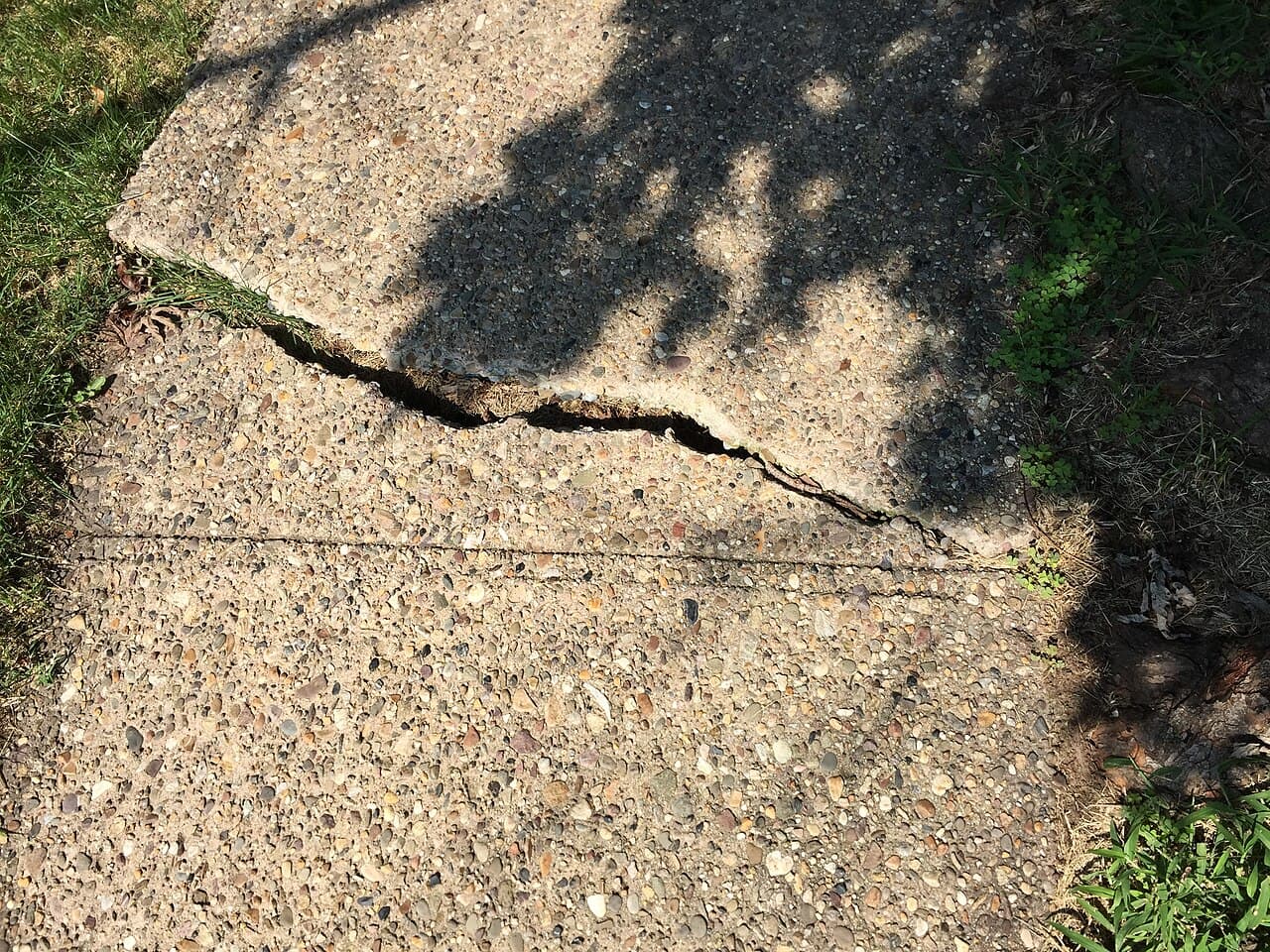
During the winter
Shovel first. The less snow is left to melt, the less deicer you need and the less water soaks into the slab. Clear walks soon after snow stops, before foot traffic packs it into ice.
Pick and use deicer carefully. FHWA reports that calcium chloride, including the calcium chloride that forms when magnesium chloride deicers react in the concrete, can cause a highly expansive reaction that damages the cement paste.[1] Read the label, spread a thin layer only where people walk, and let sand handle the rest.
Rinse off road salt. Cars carry salt and road treatments onto the driveway. On a mild afternoon after a storm, hose it off the driveway and garage slab.
A Virginia rule on deicer sales. A section in the Fertilizer chapter of the Code of Virginia makes it "unlawful for any person to offer for sale any deicing agent containing urea or other forms of nitrogen or phosphorus intended for application to parking lots, roadways, and sidewalks or other paved surfaces in the Commonwealth."[6]
New concrete needs extra care
Concrete poured this year is especially vulnerable. The Town of Berryville tells residents that concrete takes approximately a year to cure and is highly susceptible to chemical damage, especially from deicers, during that time, and asks them to avoid salt and other deicers on it for about a year.[2] It lists sand, sawdust, clean kitty litter and birdseed as less damaging options that improve traction.[2] If you have a new driveway, ask your contractor how it was cured; how long new concrete takes to cure explains the first weeks.
Pouring or patching close to winter
Fresh concrete and fresh patches are at their weakest. Quikrete tells users to protect concrete from freezing during the first 48 hours, with plastic sheeting and insulation blankets if temperatures are expected to fall below 32 F.[4] Patching products have their own limits: Quikrete's Re-Cap resurfacer calls for air and concrete between 50 and 90 F, and for plastic sheeting and insulation blankets if temperatures are expected to fall below 32 F.[9] If a repair can wait until spring, it usually should.
Stop and call a pro if
- A slab has heaved, sunk or tilted over the winter, or a step has pulled away from the house.
- The surface is flaking away in sheets or getting worse each year; see why concrete spalls.
- You see rust stains or exposed steel.
- Water is getting into the basement or garage where a slab meets the house.
- A crack is wider than a sealant is made for, or one side sits higher than the other.
Getting help in Virginia
Loclis lists DPOR-licensed concrete businesses with their licence number and class. Look up concrete contractors in Blacksburg, browse concrete repair or sealing and resurfacing, or see all concrete and hardscaping answers. If the damage is already done, whether to repair or replace cracked concrete helps you decide what to ask for.
Describe the job once and licensed local concrete businesses quote the repair or the sealing.
Common questions
- Is rock salt safe to use on concrete?
- Not entirely. The Federal Highway Administration treats deicers as the most severe freeze-thaw exposure for concrete, and reports that calcium chloride and magnesium chloride can also chemically attack the cement paste. Use as little as you can, keep water from pooling, and skip deicers on new concrete.
- Which deicers should I avoid on concrete?
- Check the product label and avoid heavy use of any of them; FHWA names calcium chloride and magnesium chloride as able to cause an expansive reaction in concrete. Separately, a section of Virginia's fertilizer law bars offering for sale deicers that contain urea or other forms of nitrogen or phosphorus for use on paved surfaces.
- How long should I wait before using salt on a new driveway?
- The Town of Berryville asks residents to avoid salt and other deicers on new concrete for approximately one year, because it is still curing and is highly susceptible to chemical damage. Use sand, sawdust, clean kitty litter or birdseed for traction.
- When should I seal my concrete before winter?
- Once it is clean and dry. Euclid's data sheet for its silane sealer says to cure new concrete a minimum of 7 days and not to apply to a wet surface, which must dry a minimum of 24 hours after rain. Follow the product's instructions.
- Can I pour or patch concrete in late fall?
- It can be done, but it needs planning. Quikrete says to protect concrete from freezing during the first 48 hours, with plastic sheeting and insulation blankets if temperatures are expected to fall below 32 F. Patching products have their own minimum temperatures; its Re-Cap resurfacer calls for air and concrete between 50 and 90 F.
- Does sealing cracks really help in winter?
- It keeps water and grit out of the crack, so there is less water in the slab to freeze. It does not stop a slab that is settling or heaving, which needs a closer look.
Sources
- [1] Chemical Deicers and Concrete Pavement: Impacts and Mitigation (FHWA-HIF-17-008), Federal Highway Administration, U.S. Department of Transportation. Checked October 27, 2026.
- [2] Notice Regarding New Concrete, Town of Berryville, Virginia. Checked October 27, 2026.
- [3] BARACADE SILANE 40 WB technical data sheet, The Euclid Chemical Company. Checked October 27, 2026.
- [4] QUIKRETE Concrete Mix No. 1101 data sheet, The QUIKRETE Companies. Checked October 27, 2026.
- [5] Concrete Driveways and Curbs (project instructions), The QUIKRETE Companies. Checked October 27, 2026.
- [6] Code of Virginia § 3.2-3607.2. Sale of deicing agents, Code of Virginia. Checked October 26, 2026.
- [7] Advanced Polymer Concrete Crack Sealant, Product No. 8620-17 (data sheet), The QUIKRETE Companies. Checked October 26, 2026.
- [8] Concrete Crack Seal, Product No. 8640 (data sheet), The QUIKRETE Companies. Checked October 26, 2026.
- [9] Re-Cap Concrete Resurfacer, Product No. 1131-47 (data sheet), The QUIKRETE Companies. Checked October 26, 2026.
Want a pro to handle it?
Describe the job once. Licensed local businesses send quotes, and you pay only when you book one.
Get a quote from a local pro