How much does emergency roof tarping cost in Virginia?
We could not find a dated Virginia price for emergency tarping from an official source, so any single number would be a guess. The cost depends on the area covered, roof pitch and height, debris and decking, materials and timing. Your homeowners policy may pay the reasonable cost of protecting the roof, so keep receipts, photograph the damage and get written quotes.
Free to ask. Local shops send quotes, and you pay only when you book one.
By Kasra Taheri, Founder, LoclisPublished
Researched and drafted with AI, then checked claim by claim against the sources listed below before it was published. Prices and rules change; the dates beside each source say when it was last checked.
This is a job for a licensed pro in Virginia
This page explains what the work involves, the permits, what a licensed pro does and what drives the cost. It does not give step-by-step instructions, because this work needs a licence, a permit or both, and doing it wrong can injure someone. Before you hire, check the licence on Virginia's DPOR record.
There is no honest single price for emergency roof tarping in Virginia, because we could not find a dated price from a government or manufacturer source, and what it costs depends on the size of the damage, the roof and the crew. What we can tell you is what drives the number, what your insurance usually does about it, and how to get a written quote that you can compare. Start with the insurance side, because it often decides who pays.
Insurance often covers it
The Virginia Bureau of Insurance says, "Insurers expect homeowners to protect their property from further damage and will pay the reasonable costs associated with protecting the property."[1] It also says, "Placing tarps on the roof is a way of protecting your property from further damage."[1] On temporary repairs more generally, it says, "Most homeowners policies cover materials and reasonable labor expenses for temporary and emergency repairs in addition to any final repairs made to your property."[1]
Coverage depends on your policy and on what caused the damage, so ask your agent or insurer. Two practical points from the Bureau: keep every receipt, and take photographs of the damage before any repairs. It advises you to "keep receipts for all of your clean-up expenses"[1] and to "take photographs to show the way things look before you begin cleaning and repairing."[1]
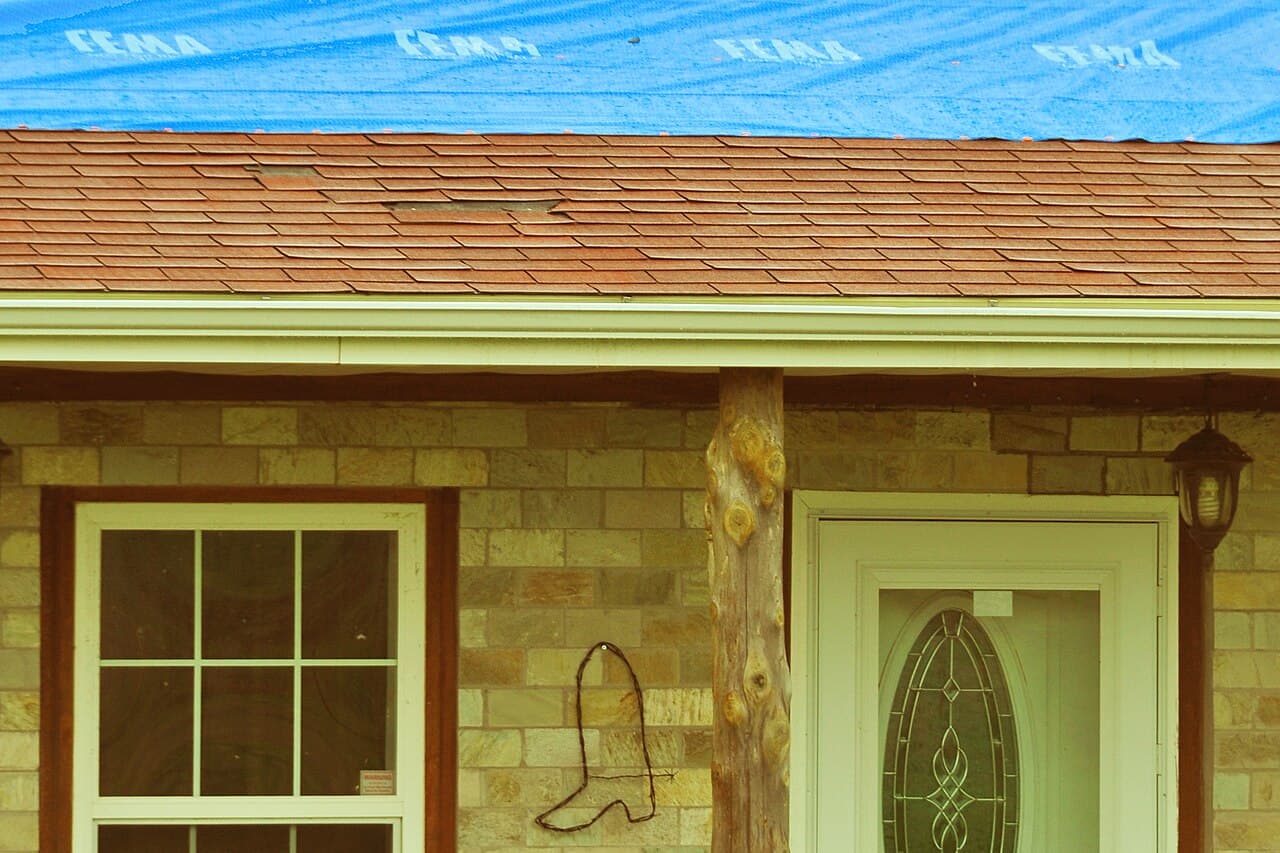
What drives the price
Area to cover. A small hole near the ridge is a smaller job than a whole slope. The crew has to cover the damage and extend well past it on every side.
Pitch and height. A steep or tall roof takes more safety setup and more time on the roof. That is the dangerous part of the job: OSHA says, "Falls are the leading cause of death in the construction industry, accounting for over 3,500 fatalities between 2003 and 2013."[2]
Debris and decking. If a tree is on the roof, or the decking is open and needs boarding first, there is more labor before the tarp goes on. Tree removal may be a separate contractor and a separate bill.
Materials. Heavy-duty sheeting and wood strips cost more than a thin tarp, and they hold up through more wind and weather.
Timing. After a big storm every crew is busy, and emergency or after-hours work may be priced higher. Be wary of anyone who uses the rush to push you. DPOR lists "High-pressure or scare tactics" among scam signals.[4]
How long it stays up. Ask how long the crew expects the tarp to last, and whether they will come back to re-secure it if it loosens before the permanent repair.
Getting a quote you can compare
Ask for a written estimate that says what area is covered, what materials are used, whether debris removal and board-up are included, whether the crew will return if the tarp shifts, and what happens if the permanent repair is done by the same firm. DPOR advises you to get at least three estimates whenever possible.[4]
Virginia's rules for residential contracts require them to state the total cost, the amount of the down payment and the schedule of progress payments, and the contractor's licence number and class.[5] Keep your deposit small. DPOR says to limit it to "10% down or $1,000, whichever is less."[3] The Bureau of Insurance adds that "it is highly unlikely that a reputable contractor would request full payment in advance."[1] DPOR also says not to pay in cash.[4]
If the insurer will want to see the damage first, the Bureau recommends waiting on final repairs until they have advised you in writing,[1] but not on the tarp, which should go on quickly.
When to call a licensed pro
Tarping a damaged roof is work for a licensed roofer. If the work is valued at $1,000 or more, a valid Virginia contractor's licence is required for the category the contractor will work in.[3] A Class C contractor can take a single job over $1,000 but less than $30,000, and a Class B contractor one of $30,000 or more but less than $150,000.[6] Check the licence before you pay: how to check if a contractor is licensed in Virginia. DPOR warns, "Be wary of door-to-door solicitations promising repairs at a discounted price."[4]
For how the work is done, read how a roof is tarped after storm damage; for choosing a crew, who tarps a roof after storm damage. Browse all roofing answers or roofing repair businesses.
To get prices for your roof, describe the damage once and licensed local roofers quote it.
Common questions
- Will my insurance pay for a tarp?
- Often, if your policy covers the damage. The Virginia Bureau of Insurance says insurers will pay the reasonable costs associated with protecting the property, and that placing tarps on the roof is a way of doing it. Call your agent or insurer right away and keep receipts.
- What should a tarping quote include?
- The area to be covered, the materials, whether debris removal and board-up are included, whether the crew returns if the tarp shifts, the total cost, the deposit and payment schedule, and the contractor's licence number and class.
- How much deposit is reasonable?
- DPOR says to limit your deposit to 10% down or $1,000, whichever is less. Do not pay cash and do not pay the whole bill until the work is finished and you are satisfied.
- Should I wait for the adjuster before tarping?
- No. Take photographs, then have the roof covered as soon as you can. The Bureau of Insurance says to make temporary repairs as soon as possible, even if you have not yet seen the company representative. It is final repairs that you should hold until your insurer says to go ahead in writing.
- Is it cheaper to tarp it myself?
- Not usually worth it. Falls are the leading cause of death in construction according to OSHA, and a badly fastened tarp can fail and leave you with more water damage. Ask your insurer whether it compensates work you do yourself before you consider it.
Sources
- [1] Disaster Strikes Insured Homeowners Loss, Bureau of Insurance, Virginia State Corporation Commission. Checked October 27, 2026.
- [2] Protecting Roofing Workers (OSHA 3755), U.S. Occupational Safety and Health Administration. Checked October 27, 2026.
- [3] What You Should Know Before You Hire a Contractor, Virginia Board for Contractors, DPOR. Checked October 27, 2026.
- [4] Disaster Recovery: Avoiding Fraud, Virginia Department of Professional and Occupational Regulation. Checked October 27, 2026.
- [5] 18VAC50-22-260, Filing of charges; prohibited acts, Virginia Board for Contractors (Virginia Administrative Code). Checked October 27, 2026.
- [6] Va. Code § 54.1-1100, Definitions (contractor classes), Code of Virginia. Checked October 27, 2026.
Want a pro to handle it?
Describe the job once. Licensed local businesses send quotes, and you pay only when you book one.
Get a quote for Roofing