How is a roof tarped after storm damage?
A roofer tarps a storm-damaged roof by assessing whether it is safe to work on, clearing debris, and covering the damaged area and the sound roof around it with heavy sheeting that is secured so wind and rain cannot get under it. It is temporary cover, not a repair, and the work happens on a hazardous roof, so it is a job for a licensed roofer.
Free to ask. Local shops send quotes, and you pay only when you book one.
By Kasra Taheri, Founder, LoclisPublished
Researched and drafted with AI, then checked claim by claim against the sources listed below before it was published. Prices and rules change; the dates beside each source say when it was last checked.
This is a job for a licensed pro in Virginia
This page explains what the work involves, the permits, what a licensed pro does and what drives the cost. It does not give step-by-step instructions, because this work needs a licence, a permit or both, and doing it wrong can injure someone. Before you hire, check the licence on Virginia's DPOR record.
A roofer tarps a storm-damaged roof by covering the damaged area, and the dry roof around it, with heavy sheeting that is fastened down along its edges and over the ridge so wind and rain cannot get under it. It is a temporary cover to keep water out until the roof is repaired, not a repair. The Virginia Bureau of Insurance puts it plainly: "Placing tarps on the roof is a way of protecting your property from further damage."[1]
What a crew actually does
A professional crew starts by deciding whether the roof can be worked on at all. They look for sagging, soft decking, and anything that could fail underfoot, and they set up fall protection before anyone steps onto the slope. That matters because OSHA says, "Falls are the leading cause of death in the construction industry, accounting for over 3,500 fatalities between 2003 and 2013."[2] OSHA adds that falls from roofs accounted for nearly 1,200, or 34%, of the fall deaths between 2003 and 2013.[2] A wet, storm-damaged roof adds to the risk.
Next, the crew clears loose debris so it cannot puncture the cover. Where the decking is open, they usually close it with boards first so the tarp has something solid beneath it.
Then the cover goes on. Crews generally use heavy, reinforced sheeting rather than a thin hardware-store tarp, and they extend it well past the damage so that water running down the roof does not get under it. The edges are fixed down securely, not just pinned at the corners, because a loose tarp can lift in wind.
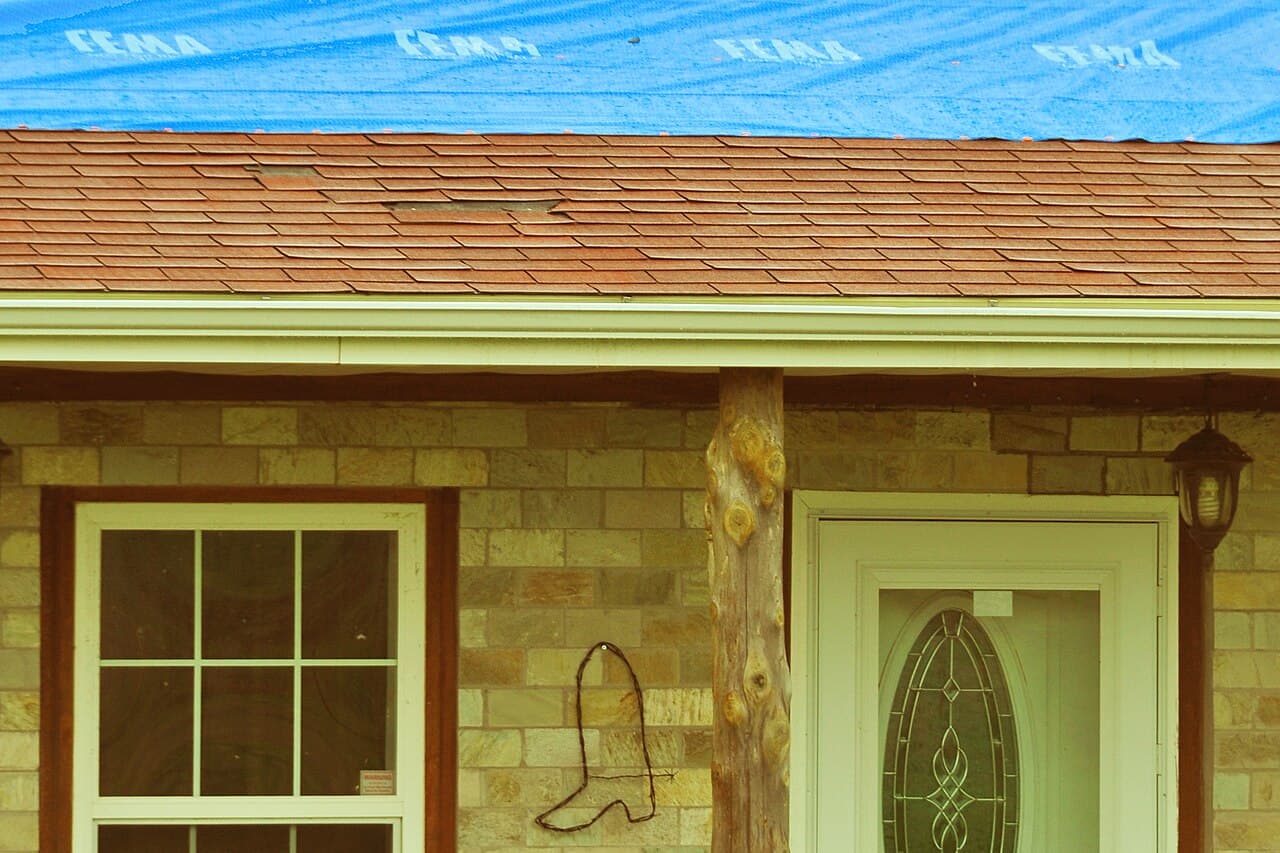
A good tarp job also leaves the roof repairable. A careful crew tells you where it was fastened so the roofer who does the permanent repair can deal with those spots.
Before the crew arrives
You can protect the inside of the house while you wait. The Bureau of Insurance says that to protect your property you should "make all necessary temporary repairs, such as boarding up windows and patching holes in walls or roofs, as soon as possible, even if you have not yet seen the company representative."[1] Tarping the roof is how that advice is carried out, but the roof part is for a pro.
Do these things from the ground and inside:
- Take photographs of the damage before anything is moved or covered. The Bureau advises you to "take photographs to show the way things look before you begin cleaning and repairing."[1]
- Keep every receipt for temporary work. The Bureau also says to "keep receipts for all of your clean-up expenses."[1]
- Move belongings out from under leaks and catch drips with buckets.
- Call your agent or insurer, and keep damaged property for the adjuster. The Bureau says to "save all damaged property for the adjuster to inspect."[1]
If the insurance company cannot visit for days, tarping is still the right call, but permanent repairs are different: "Unless the insurance company has advised you in writing to go ahead and make final repairs, you should wait."[1]
Why this is a licensed-pro job
Tarping is roof work, and roof work is a regulated trade in Virginia. Roofing contracting is the specialty for installing, repairing, removing or improving the materials that form a watertight, weather-resistant surface for roofs and decks.[3] If the work is valued at $1,000 or more, a valid Virginia contractor's licence is required for the category the contractor will work in.[4] Even a small tarp job puts a crew on a damaged roof.
When to call a licensed pro
Call one as soon as you see missing shingles, a hole, a tree on the roof, or water coming through a ceiling. Do not climb up yourself, and do not accept an offer from a stranger who knocks on the door after a storm. Hire a roofer whose licence you have checked; how to check if a contractor is licensed in Virginia explains how. Get the full picture of choosing someone in who tarps a roof after storm damage and what it costs in emergency roof tarping cost in Virginia. For what to do inside the house right now, read what to do when your roof starts leaking.
Browse more roofing answers or local roofing repair businesses. When you are ready, describe the damage once and licensed roofers can respond.
Common questions
- Is a tarp a permanent fix?
- No. It is a temporary cover that keeps water out until a roofer can make the real repair. The Virginia Bureau of Insurance describes it as a way of protecting your property from further damage, and says to hold off on final repairs until your insurer has advised you in writing.
- Can I tarp my own roof?
- It is not worth the risk. OSHA says falls are the leading cause of death in the construction industry, and that falls from roofs accounted for nearly 1,200, or 34%, of the fall deaths between 2003 and 2013. A storm-damaged roof can be wet and weakened, and a badly fastened tarp can blow off. Use buckets and move belongings indoors, and call a licensed roofer.
- Should I photograph the damage before it is tarped?
- Yes. The Bureau of Insurance advises taking photographs to show the way things look before you begin cleaning and repairing, and keeping receipts for your expenses.
- Do I need my insurer's permission before tarping?
- The Bureau of Insurance says to make necessary temporary repairs as soon as possible, even if you have not yet seen the company representative. Still call your agent or insurer right away so they know.
- Will a tarp stop all the leaking?
- It can reduce it a lot, but water can still find its way in around damage or along framing. Keep checking ceilings and attics, and tell the roofer if new stains appear.
Sources
- [1] Disaster Strikes Insured Homeowners Loss, Bureau of Insurance, Virginia State Corporation Commission. Checked October 27, 2026.
- [2] Protecting Roofing Workers (OSHA 3755), U.S. Occupational Safety and Health Administration. Checked October 27, 2026.
- [3] 18VAC50-22-30, Definitions of specialty services, Virginia Board for Contractors (Virginia Administrative Code). Checked October 27, 2026.
- [4] What You Should Know Before You Hire a Contractor, Virginia Board for Contractors, DPOR. Checked October 27, 2026.
Want a pro to handle it?
Describe the job once. Licensed local businesses send quotes, and you pay only when you book one.
Get a quote for Roofing