How much does a flat tire repair cost in Virginia?
No Virginia government source publishes a dated price for a flat tire repair, so any flat figure is a guess. A simple tread puncture is the cheapest kind of repair, and a sidewall puncture cannot be repaired at all. Ask for a written quote that says what the shop will do, and whether a replacement tire would add the state's 50 cent recycling fee.
Free to ask. Local shops send quotes, and you pay only when you book one.
By Kasra Taheri, Founder, LoclisPublished
Researched and drafted with AI, then checked claim by claim against the sources listed below before it was published. Prices and rules change; the dates beside each source say when it was last checked.
Step by step
Read when to stop and call a pro, further down this page, before you start.
Step 1: Find out where the hole is
Look for a nail or screw in the tread, or spray soapy water on the tread and watch for bubbles. A hole in the sidewall means replacement, because Virginia's inspection rules do not permit a plug or patch there.[1]
Step 2: Check the tread depth
A tire already worn near the legal minimum may be better replaced than repaired. Virginia's inspection rules reject a tire with a tread depth below 2/32 of an inch.[1]
Step 3: Describe the problem to each shop
Tell two or three shops the tire size, where the puncture is, and how far you drove on it low on air.
Step 4: Ask what the repair includes
Ask whether the quote covers taking the tire off the wheel, repairing it from the inside, balancing and a pressure check.
Step 5: Ask what happens if it cannot be repaired
Ask for the replacement price for your size, with taxes and fees itemized, before the tire comes off.
Step 6: Get the quote in writing
Ask for a written or texted quote with the total price and what is covered.
Step 7: Check for a road hazard warranty
If you bought the tires with a road hazard plan, ask the original seller whether it covers the repair.
Repair or replace comes first
The biggest cost swing is whether the tire can be repaired at all. Virginia's inspection rules reject a tire with a cut or puncture into the fabric, but that does not include a plug or patch used as a repair.[1] The same rule limits where a repair may be: plugs and patches must be in the tread area only, and they are not permitted in the sidewall.[1]
So a nail in the middle of the tread is often a repair, and a sidewall puncture is always a replacement. A tire that is also worn out is a replacement even if the hole could be fixed.
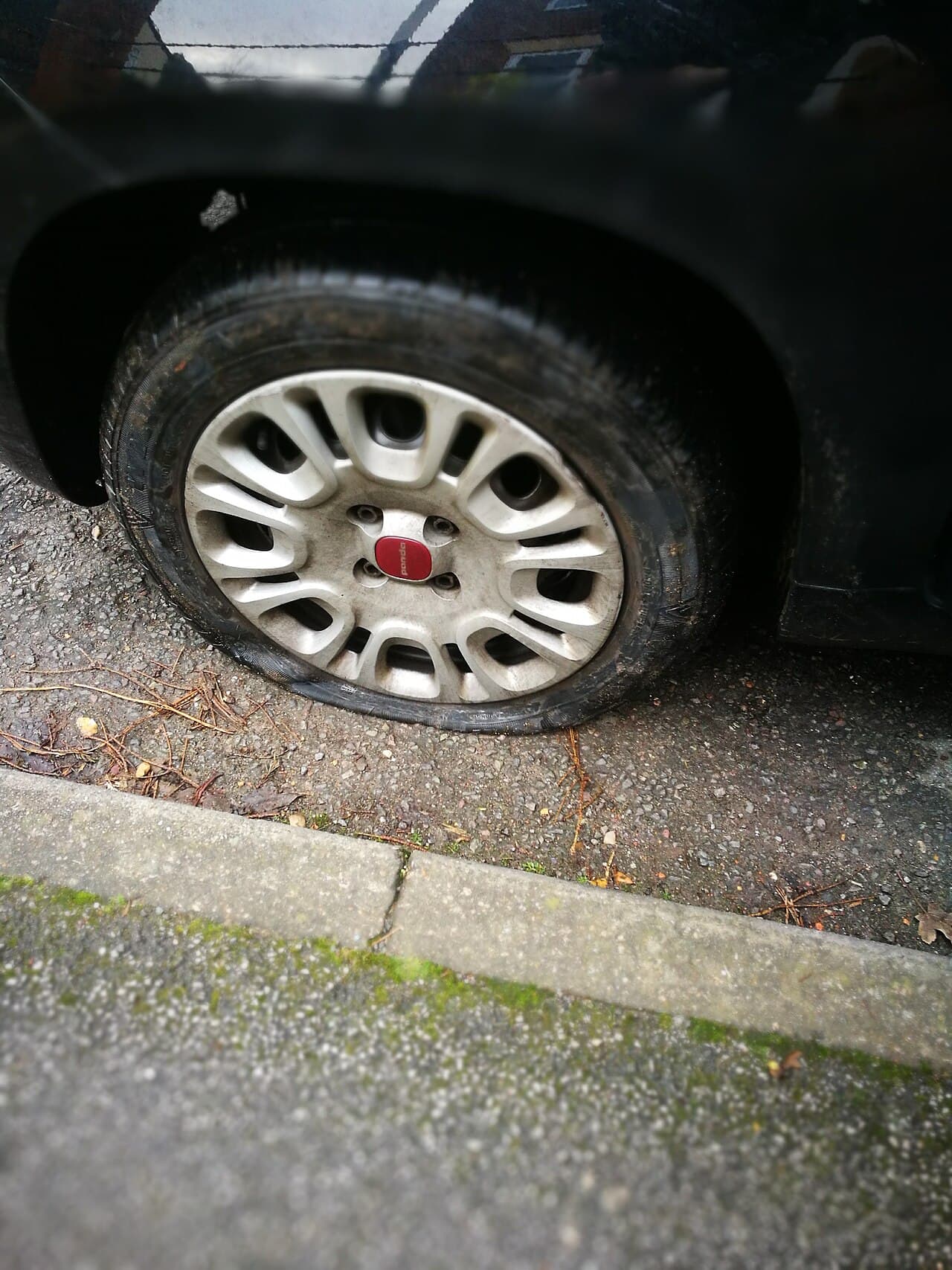
What drives the price
Where the puncture is. Tread: repairable. Sidewall: not. The answer to whether a tire with a nail in it can be patched turns on the same question.
How the repair is done. A shop can push a plug in from outside, or take the tire off the wheel, inspect the inside and repair from the inside. The second takes more labor and tells you more about the tire's condition. Ask which one the quote covers.
What is bundled. Some shops include balancing and a pressure check, and some charge for each. Ask for the total.
Tread life left. Virginia's inspection rules reject a tire with a tread depth below 2/32 of an inch.[1] If your tread is near that, putting money into a repair may only delay a replacement.
Tire size and type. Replacement prices vary widely by size, brand and type, and some tires, such as run-flats or those with sensors, add to the labor.
Damage from driving on it flat. A tire driven flat may be beyond repair. Tell the shop how far you went.
Warranty. If you bought a road hazard plan with the tire, the original seller may cover the repair or replacement. Check before paying.
If the answer is a new tire
A replacement adds mounting, balancing, disposal and tax. Virginia levies a tire recycling fee of $.50 for each new tire sold by a retailer.[2] Ask for the itemized out-the-door price. If only one tire is damaged, ask whether the shop recommends replacing in pairs, and why. That depends on the tread of the other tire on the axle, so ask the shop to show the measurements.
Getting a quote you can compare
- the tire size and the position of the puncture, described the same way to each shop
- whether the tire comes off the wheel, and how it is repaired
- balancing, valve stem and pressure check, shown as included or as separate lines
- the replacement price in your size, itemized, in case the tire cannot be saved
- the shop's policy on a repair that fails
Two or three quotes are plenty. A very low quote may cover an outside plug only.
Stop and call a pro if
- The tire is flat and you cannot change it safely. On a busy road, a soft shoulder or a slope, do not jack the car. Call roadside help.
- The sidewall is cut, bulging or shows cord. The inspection rules reject tires with knots or bulges in the sidewall, exposed fabric or steel cord, or a broken belt.[1] Do not drive on it.
- The tire keeps losing air after a repair. The shop should look at the wheel and valve, too.
- You are being pushed to replace all four tires without being shown tread measurements.
Getting help in Virginia
See more automotive repair answers. For another repair priced from the same line items, see how much a brake job costs in Virginia.
When you are ready, describe the tire problem once and local shops quote it.
Common questions
- Why does this page not give a dollar figure?
- Because no Virginia government source publishes a dated price for tire repair, and prices differ by shop and tire. A figure from a content site would be an undated guess. Compare written quotes for your own tire instead.
- Is it cheaper to repair a tire or replace it?
- Repair is usually the smaller job when the hole is in the tread and the tire is otherwise sound. Replacement is a new tire, mounting and balancing, and a state recycling fee of 50 cents per new tire.
- Can any flat tire be repaired?
- No. Virginia's inspection rules allow plugs and patches in the tread area only, not the sidewall, and they reject tires with exposed cord, bulges or a broken belt. Those tires are replaced.
- Is a plug from the outside enough?
- It is a way to get home. A proper repair has the tire taken off the wheel and inspected inside, then sealed from the inside. Ask the shop which method the quote covers.
- Does the repair need to pass inspection?
- A plug or patch in the tread is not a rejection reason by itself, because the rules say a cut or puncture into the fabric does not include a plug or patch used as a repair. The tire must still meet the other tire rules.
Sources
- [1] 19VAC30-70-130, Tires; wheels; rims, Virginia Administrative Code, Department of State Police. Checked October 27, 2026.
- [2] Code of Virginia § 58.1-641, Imposition of tire recycling fee, Code of Virginia, Virginia General Assembly. Checked October 27, 2026.
Want a pro to handle it?
Describe the job once. Licensed local businesses send quotes, and you pay only when you book one.
Get a quote for Automotive