How much does furniture refinishing cost in Virginia?
There is no standard Virginia price for furniture refinishing. The quote follows the size and detail of the piece, how much old finish must come off, the repairs needed first, whether it is painted, the finish you want and its age and value. Get itemized written quotes for the same scope and compare what each includes.
Free to ask. Local shops send quotes, and you pay only when you book one.
By Kasra Taheri, Founder, LoclisPublished
Researched and drafted with AI, then checked claim by claim against the sources listed below before it was published. Prices and rules change; the dates beside each source say when it was last checked.
Step by step
Read when to stop and call a pro, further down this page, before you start.
Step 1: Photograph the piece
Take photos of the whole piece, the worst damage, the underside and any maker's label.
Step 2: Note what you know
Write down its approximate age, the wood if you know it, whether the top is veneer and whether it is painted.
Step 3: Decide what you want
Choose between restoring the existing finish, a new clear or stained finish, or paint.
Step 4: Check for lead risk
If the piece is painted and made before 1978, flag it to every refinisher.[2]
Step 5: Ask for itemized written quotes
Ask each refinisher to list repairs, stripping, finish, materials, pickup and delivery, timing and what is not included.
Step 6: Ask how the work will be done
Ask which stripper and finish they will use and how they protect the piece and their workers.
Step 7: Compare scope, not only the total
Check that each quote covers the same work before choosing the lower one.
Step 8: Keep the paperwork
Keep the quote and ask for an invoice that lists what was done.
Furniture refinishing has no standard Virginia price. A refinisher quotes each piece from its size, how much finish has to come off, the repairs it needs, the finish you want and whether the piece is valuable, so a small plain table and a large carved sideboard are very different jobs. This guide explains what drives the quote and how to get written quotes you can compare, rather than quoting a figure no one has dated.
What the price follows
Size and detail. A flat tabletop is quicker to strip and finish than a chair with spindles, a carved chest or a piece with many drawers. More surface and more nooks mean more hours.
The existing finish. If the old coat is sound, a cleaning and recoat is a lighter job than taking everything back to bare wood. NPS guidance says refinishing is preferred if the existing finish is either inappropriate or almost completely worn away,[1] and conservators will use the least harmful means of finish removal.[1] A repairer who can restore a finish rather than strip it will often charge less.
Paint and hazards. Stripping paint is slower and carries safety costs. The EPA lists refinishing old furniture among the jobs that can put you in contact with lead.[2] The federal ban on lead-containing paint covers furniture articles for consumer use that bear lead-containing paint, and applies to products manufactured after February 27, 1978.[3] An older painted piece may need extra containment and cleanup, which a refinisher builds into the price.
Repairs that come first. Loose joints, a wobbly leg, missing veneer or sticking drawers are fixed before finishing. Veneered surfaces may split or buckle because the grain orientation of the veneer is different from that of the underlying wood,[1] so veneer repairs are priced separately from plain wood work.
The finish you choose. A natural clear coat, a matched stain and an opaque paint finish take different materials and different numbers of coats. Matching an existing color can take trial samples.
Age and value. For a valuable antique the goal changes from a fresh look to preserving the piece. That slower, more careful approach is quoted higher, and it is worth asking whether a restorer would advise leaving the original finish alone.
Where the work happens. Pickup, delivery and a house call all add to the bill. A heavy piece that must be carried down stairs costs more to move.
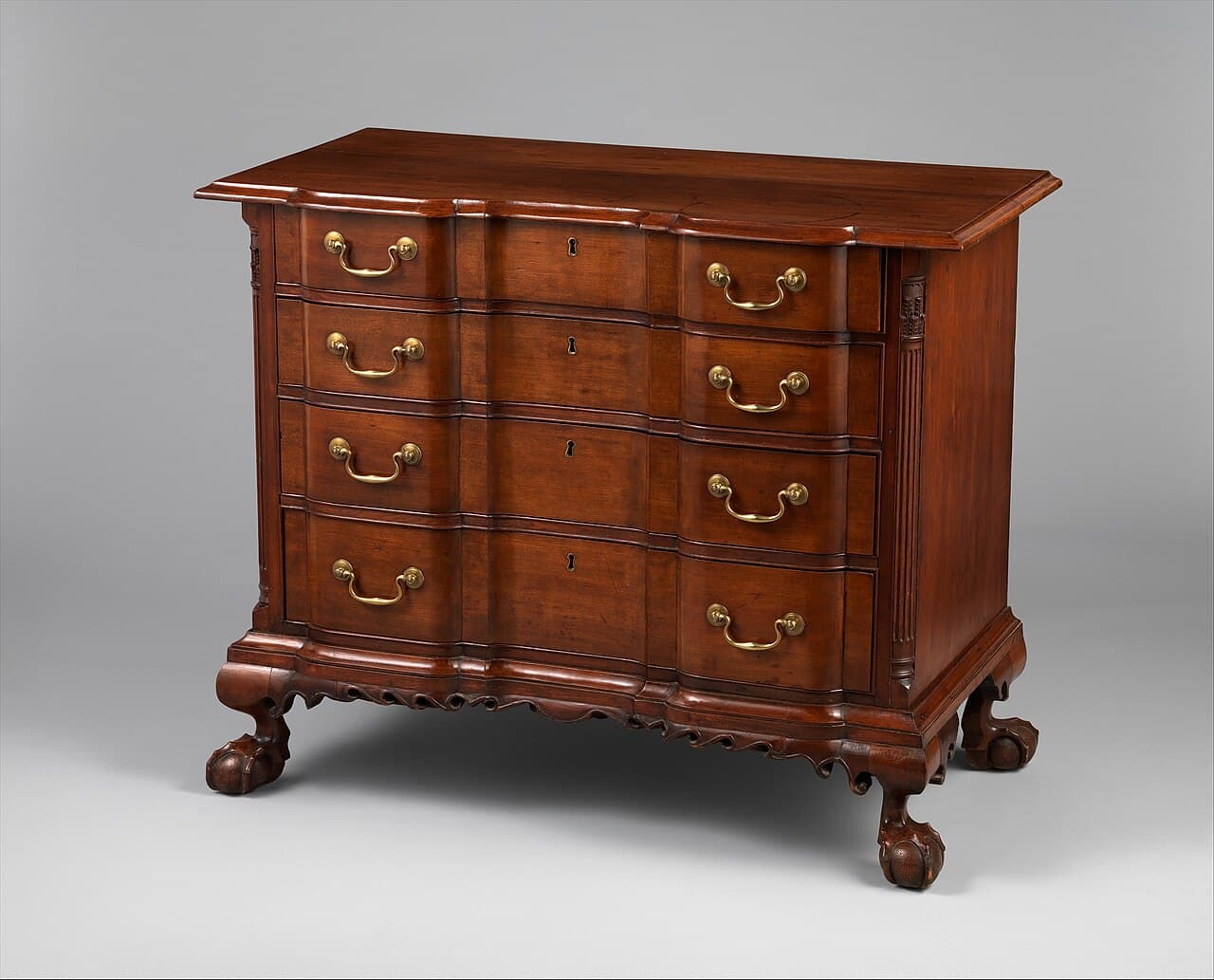
Compare the cost of doing it yourself
Doing it yourself saves labor, but not everything. You pay for stripper, sandpaper, stain, finish, brushes and protective gear, plus a weekend or two. A strong reason to hire is the stripping: the CPSC says that if work must be done indoors under low ventilation conditions, consider having the work done professionally instead of attempting it yourself.[4] Our guide to refinishing a wood dresser walks through the DIY route so you can judge the effort.
Getting a quote you can compare
Send each refinisher the same photos: the whole piece, close-ups of the worst damage, the underside and any maker's label. Say what finish you want and whether it is painted now. Ask for the quote in writing, itemized:
- the repairs, the stripping or sanding, and the finish itself;
- materials, plus pickup and delivery or a house call;
- how long it will take and when the piece will be ready;
- how lead paint, if any, will be handled on an older piece.
Compare scope, not only the total. A lower figure that skips repairs or uses one thin coat is not a lower price for the same job.
The work should also match the bill. Virginia's Consumer Protection Act lists, among prohibited practices, misrepresenting that repairs, alterations, modifications, or services have been performed or parts installed.[5] Keep the quote and ask for an invoice that lists what was done.
Methylene chloride strippers
If a refinisher says they use a particular stripper, ask which one. In March 2019, EPA issued a final rule to prohibit the manufacture (including import), processing, and distribution of methylene chloride for consumer paint and coating removal.[6] The CPSC also notes that strippers with citrus smells or "environmentally friendly" claims may also be hazardous, so a good shop will explain how it protects its workers and your piece.[4]
Stop and call a pro if
- The piece is an antique, a signed piece or an heirloom. Get a restorer's opinion before anything is stripped; poorly done repairs are another common cause of damage to wooden objects.[1]
- The finish is old paint and the piece was made before 1978. Ask how the lead question is handled before anyone sands.
- The veneer is lifting or the frame is cracked. These repairs come before finishing.
- A quote is far above or below the others. Ask what it includes.
Getting help in Virginia
See whether refinishing old furniture is worth it, read about what table repair costs in Virginia, browse refinishing requests, or see more furniture repair answers.
When you are ready, describe the piece once and local furniture refinishers can quote it.
Common questions
- Is there a standard price for refinishing furniture in Virginia?
- No. Refinishing is quoted piece by piece, because size, detail, existing finish, repairs and the finish you choose all change the work. A written itemized quote is the only reliable figure.
- Why does refinishing a painted piece cost more?
- Paint removal is slower, and an older painted piece may contain lead. The federal ban on lead-containing paint on furniture applies to pieces manufactured after February 27, 1978, so an older piece may not be covered. Ask how the refinisher will contain dust and clean up.
- Is it cheaper to refinish furniture myself?
- It saves labor, but you pay for materials and protective gear and take on the stripping. The CPSC advises considering a professional if the work must be done indoors under low ventilation conditions.
- Does refinishing an antique cost more?
- Often, because the aim is to preserve value, which is slower work. Ask a restorer whether the original finish should be kept before anyone strips it.
- What should an itemized quote include?
- The repairs, stripping or sanding, the finish, materials, pickup and delivery or a house call, timing, and what is not included. Compare quotes for the same scope.
Sources
- [1] Museum Handbook, Part I, Appendix N: Curatorial Care of Wooden Objects, National Park Service, U.S. Department of the Interior. Checked October 27, 2026.
- [2] Protect Your Family from Sources of Lead, U.S. Environmental Protection Agency. Checked October 27, 2026.
- [3] 16 CFR Part 1303, Ban of lead-containing paint and certain consumer products bearing lead-containing paint, Consumer Product Safety Commission, Electronic Code of Federal Regulations. Checked October 27, 2026.
- [4] What You Should Know About Using Paint Strippers, U.S. Consumer Product Safety Commission. Checked October 27, 2026.
- [5] Va. Code § 59.1-200, Prohibited practices (Virginia Consumer Protection Act), Code of Virginia, Virginia General Assembly. Checked October 27, 2026.
- [6] Risk Management for Methylene Chloride, U.S. Environmental Protection Agency. Checked October 27, 2026.
Want a pro to handle it?
Describe the job once. Licensed local businesses send quotes, and you pay only when you book one.
Get a quote for Furniture