Why is my furniture finish cloudy or sticky?
A cloudy finish is usually trapped moisture, white wax applied in hot, humid air, or a film of polish, soap or grime. A sticky one is usually a finish that has not cured, a worn finish that has gone tacky, or an oil that never dries. Test a hidden spot with mineral spirits to tell which, and clean before you refinish.
Free to ask. Local shops send quotes, and you pay only when you book one.
By Kasra Taheri, Founder, LoclisPublished
Researched and drafted with AI, then checked claim by claim against the sources listed below before it was published. Prices and rules change; the dates beside each source say when it was last checked.
Step by step
Read when to stop and call a pro, further down this page, before you start.
Step 1: Wipe and look
Dust the piece, then look at it from a low angle under a lamp. Note whether the haze is in the surface, under it, or only where wax or polish was applied.
Step 2: Check the room
Think about the weather and the room. A piece finished or waxed on a hot, humid day, or kept in a damp room, is a prime suspect.[1]
Step 3: Test a hidden spot
On the underside or back, rub a cotton swab dipped in mineral spirits. If the finish does not get tacky and nothing comes off on the swab, the finish is sound.[1]
Step 4: Clean sound finishes
Work in a well-ventilated area, wear vinyl gloves and wipe with a cotton cloth dampened in mineral spirits, turning the cloth often, then dry with a clean cloth.[1]
Step 5: Rewax thinly
Mineral spirits dissolve wax, so rewax the cleaned surface with paste wax, in two thin coats rather than one thick one.[1]
Step 6: Stop liquid polish
Switch from liquid polish to paste wax, because most liquid polishes contain silicones.[1]
Step 7: Give a fresh finish time
If the finish is new, keep the piece in a dry, ventilated room and wait: drying oils may need several weeks to cure.[2]
Step 8: Bin oily rags safely
Put any oily or solvent-wet rags in a tightly sealed metal container.[3]
Step 9: Decide on refinishing
If the finish is still tacky after weeks, or comes off on the swab, plan to strip and refinish it.
Work out which problem you have
A cloudy finish is usually one of three things: wax or polish that went on, or sat, in the wrong conditions, a film of old polish, soap or grime, or moisture and humidity working on the finish. A sticky finish is usually a finish that has not cured, a worn one that has gone tacky, or an oil that was never going to dry. The tests below tell you which, and most of the fixes cost very little.
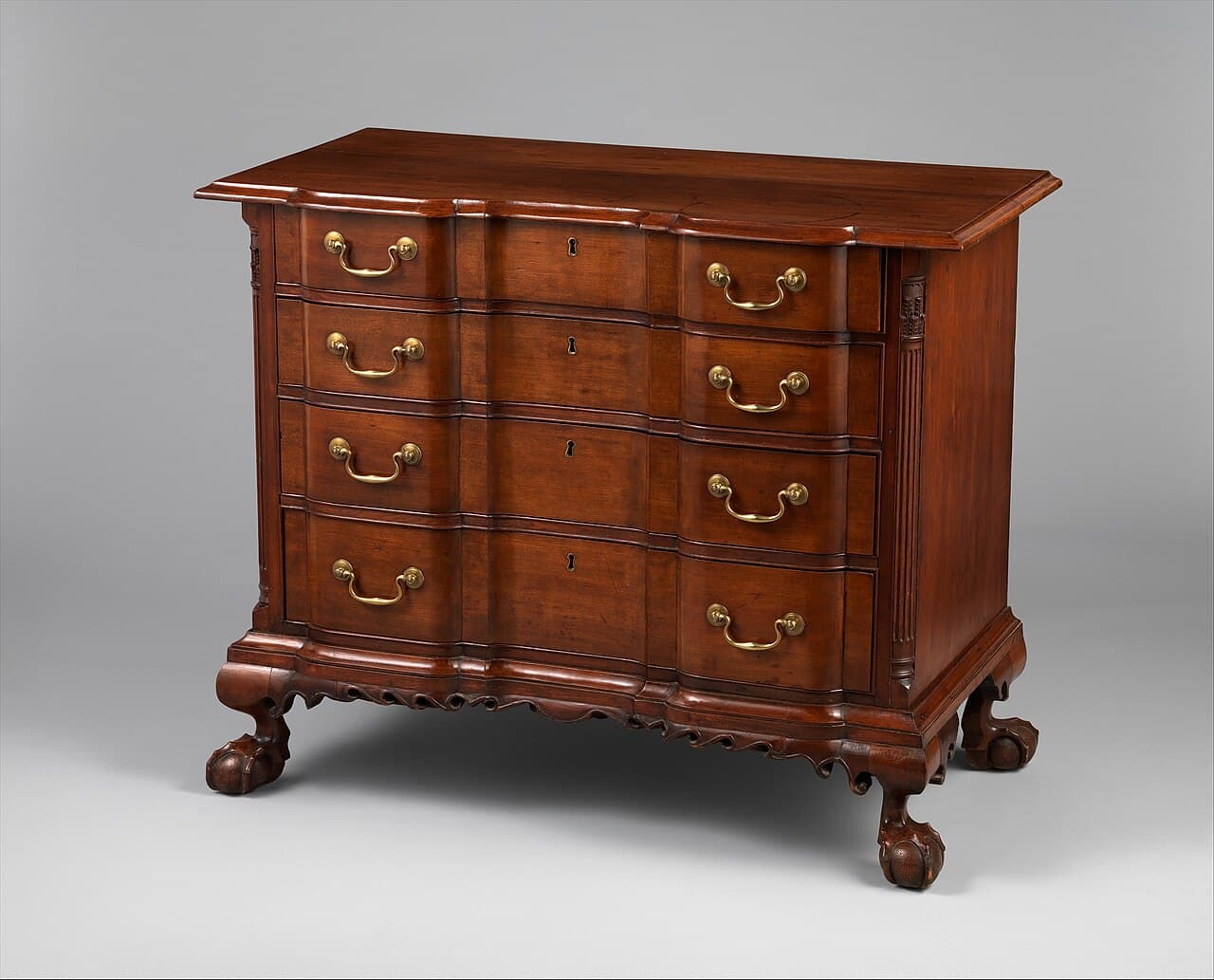
Cloudy: the usual causes
Wax in humid weather. The National Park Service's guidance for caring for wooden objects is blunt about it: "Don't apply wax when it is hot and humid. The wax may turn white and cloudy."[1] If this happens, remove the wax with mineral spirits and rewax when the environment improves.[1]
A damp room. Humid summers can do this. The same source puts comfortable humidity at 50% plus or minus 5% and warns that above 70% mold and insects may become problems. When humidity is this high, glue may weaken, finishes may bloom, hardware will corrode, and wood fibers will swell excessively.[1] Bloom is the milky haze you see over a clear coat. A dehumidifier or air conditioning in the room often helps more than anything you rub on.
Polish and soap buildup. The advice on liquid polishes: Don't use liquid polishes. They do not offer the same protection as paste and most contain silicones. Silicone migrates into the finish and complicates any future conservation treatment.[1] That matters here because a piece that has had spray polish for years can look hazy and then fight a refinisher. Household detergent has a similar fault. Never use detergent because it will leave a film on the surface.[1] Waxing over dirty surfaces will produce a grimy buildup and eventually obscure the color and grain of the wood.[1]
Dust. Because dust is not only abrasive but also attracts moisture, it should be removed periodically.[1] A dull look on a flat surface is sometimes just that.
Sticky: the usual causes
The finish has not cured. A recent job can feel tacky for longer than people expect. Drying oils such as tung, linseed, and walnut can also be used as sealers.[2] Drying oils may require several weeks to cure.[2] A film finish applied too thickly, or in a cold, damp room, can also stay soft. Keep the piece somewhere dry and ventilated and resist handling it.
An oil that never cures. Nondrying oils (vegetable and mineral oils) penetrate wood but do not cure.[2] Cooking oil used as a quick polish does worse than stay greasy. Vegetable oils (such as olive, corn, peanut, and safflower) are food for microorganisms such as mildew or bacteria.[2]
An old finish breaking down. Finishes that form a film, such as varnish or lacquer, are generally the easiest to clean because of the smooth surface.[2] But eventually the finish may crack, chip, and peel.[2] Tackiness on an old surface, especially where hands, hot dishes or sunlight have worked on it, often means the film itself is failing.
The swab test
Before you clean anything, test. On the underside or back of the piece, do what the museum guidance says: First test a small inconspicuous area with a cotton swab dipped in mineral spirits. If the finish does not get tacky and no finish comes off on the swab, you may begin careful cleaning with a cotton cloth dampened with mineral spirits.[1] Only furniture with a sound finish should be cleaned.[1]
If the spot goes tacky or color comes off, stop. The finish is not sound, and cleaning will make it worse. That piece needs stripping and a new finish, which is covered in how to refinish a wood dresser.
Clean, then rewax
For a sound finish, wipe with the mineral-spirits cloth in a ventilated room, turning the cloth often and finishing with a clean dry one. Always rewax the finished surface after cleaning, since mineral spirits will dissolve and remove wax.[1] Apply paste wax sparingly. Wait at least an hour or two for the solvent to evaporate and then buff the wax.[1] It is preferable to apply two thin coats rather than a single thick coat.[1]
Put the used cloth where it cannot start a fire. Store oily and solvent-wet rags in a tightly sealed metal container and then discard them.[3]
Stop and call a pro if
- The swab test lifts finish or turns it tacky. The surface needs stripping, and chemical strippers are hazardous indoors.
- The piece is an antique or has veneer, inlay or a finish you suspect is original. The same museum guidance says not to moisten a damaged, veneered or inlaid surface.
- The haze is under the finish, or white patches go deep into the wood. That is moisture damage that wiping will not reach.
- You see black or green discoloration, or smell mustiness. That can be mildew, and mold from a damp room is a separate problem from the finish.
- You want the piece as new. A good refinisher can match a finish and color you cannot.
Getting help in Virginia
For what a refinisher charges, see how much furniture refinishing costs in Virginia, and for whether the piece is worth the work, is it worth refinishing old furniture. Browse more furniture repair answers or refinishing requests.
When you want someone else to do it, describe the piece and local refinishers quote it.
Common questions
- Why did my wax turn white and cloudy?
- Most often because it went on when the air was hot and humid. Don't apply wax when it is hot and humid: the wax may turn white and cloudy.[^nps-wood] The fix is to remove the wax with mineral spirits and rewax when the environment improves.
- Is a cloudy finish a sign the wood is damaged?
- Not necessarily. Haze from wax, polish or grime sits on the surface and cleans off. Where humidity stays high, finishes may bloom, which is why the cure is a drier room rather than more product.[^nps-wood] If the haze is deep in the finish and survives cleaning, the finish itself needs redoing.
- How long does a new finish stay sticky?
- It depends on the product. Drying oils such as tung and linseed may require several weeks to cure.[^fpl] Check the can for the maker's recoat and cure times, and keep the piece in a dry, ventilated room meanwhile.
- Why is my oiled finish still tacky?
- Nondrying oils, which include vegetable and mineral oils, penetrate wood but do not cure.[^fpl] An oil that never dries will always feel greasy. Wipe off the excess and consider a finish that cures.
- Can I just put another coat over a sticky finish?
- It is better not to. A new coat over a finish that has not cured, or over polish and grime, tends to trap the problem. Clean it, test it, and either wait for it to cure or strip it back first.
Sources
- [1] Museum Handbook, Part I, Appendix N: Curatorial Care of Wooden Objects, National Park Service, U.S. Department of the Interior. Checked October 27, 2026.
- [2] Chapter 16: Finishing Wood, Wood Handbook (FPL-GTR-282), USDA Forest Service, Forest Products Laboratory. Checked October 27, 2026.
- [3] Pictograph: Store Oily and Solvent-Wet Rags in a Metal Container, U.S. Fire Administration, FEMA. Checked October 27, 2026.
Want a pro to handle it?
Describe the job once. Licensed local businesses send quotes, and you pay only when you book one.
Get a quote for Furniture