How much does a gravel driveway cost in Virginia?
There is no reliable statewide price for a gravel driveway. The cost is built from the drive's length, width and depth, the stone, the ground underneath, drainage and the entrance to the road. Get two or three itemized written quotes, check each bidder's DPOR licence, and keep any deposit to 10% or $1,000, whichever is less.
Free to ask. Local shops send quotes, and you pay only when you book one.
By Kasra Taheri, Founder, LoclisPublished
Researched and drafted with AI, then checked claim by claim against the sources listed below before it was published. Prices and rules change; the dates beside each source say when it was last checked.
Step by step
Read when to stop and call a pro, further down this page, before you start.
Step 1: Measure the drive
Measure the length and the width you actually need, and note any slopes, wet spots, ditches and the entrance to the road.
Step 2: Decide new, regravel or repair
Walk the drive after rain: standing water and soft spots point to drainage or base work, not just more stone.[1]
Step 3: Check the entrance
If the drive meets a state road, ask the local VDOT district office whether an entrance permit is needed.[2]
Step 4: Check the licence
Look up each bidder on DPOR's License Lookup before you discuss price.[4]
Step 5: Ask for itemized bids
Send every bidder the same plan and ask for the same line items: ground preparation, stone by layer, drainage, entrance and who calls 811.[4]
Step 6: Compare in writing
Compare stone type and depth for each layer, not just the total, and keep any deposit to 10% or $1,000, whichever is less.[4]
There is no reliable statewide price for a gravel driveway in Virginia, and a figure quoted without a date and a source should not be trusted. What you can know is what the price is made of: length, width and depth, the quality and type of stone, the ground underneath, drainage, and the entrance to the road. Get two or three itemized written quotes for your own drive.
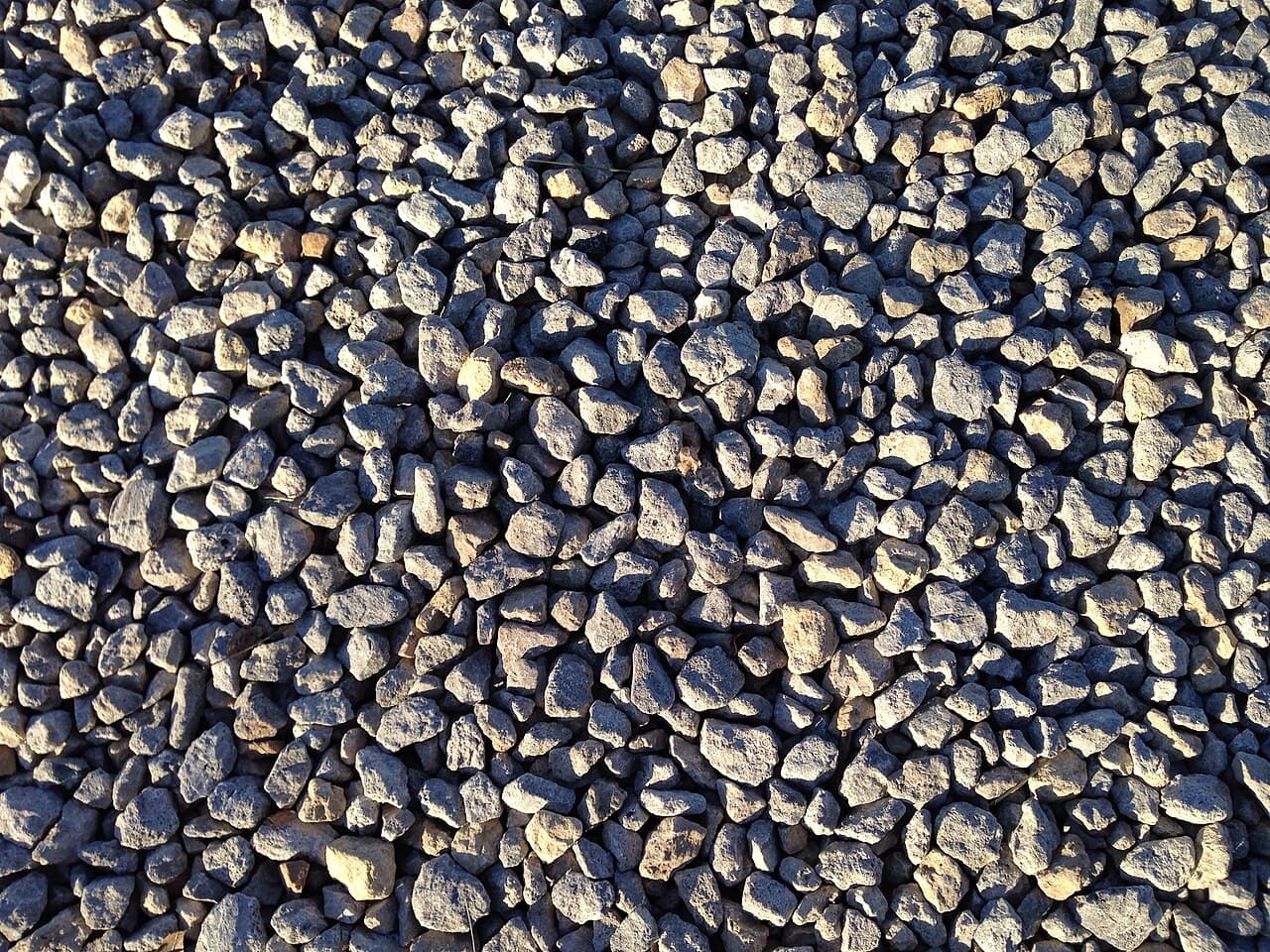
What a quote is paying for
A gravel driveway looks like a pile of stone, but the cost is mostly in what happens before and around the stone. A typical quote covers:
- clearing and stripping the route, and hauling away or spreading what comes off;
- shaping and compacting the ground the stone will sit on;
- the stone itself, delivered, usually by the ton or cubic yard;
- spreading, grading to a crown and compacting it;
- ditches, culverts or other drainage;
- the entrance where the drive meets the road.
Ask for each of these as its own line. A bid that says only "gravel driveway" cannot be compared with one that itemizes.
What drives the price
Size. Length times width sets the area, and depth sets the volume of stone. Federal Highway Administration guidance says that if the total layer will be thicker than 4 inches, the gravel should be placed in separate layers to achieve good compaction.[1] A drive with a coarse base layer and a finer surface layer buys two products and takes at least two passes.
Stone quality. FHWA's gravel guide says that even though higher quality gravel will cost more to purchase, it proves cheaper to maintain over its life.[1] It also says the same gravel is too often used for both base work and surface gravel, and that generally it will be good for one purpose or the other but not both.[1] A quote that names the stone for each layer is a better quote.
The ground underneath. Where the soil support is very poor, a gravel surface will rut and form potholes very quickly.[1] A soft or wet site can need more excavation and more stone, or a different base, before the surface layer goes on.
Drainage. Standing water anywhere in the cross section, ditch included, is one of the major reasons gravel roads fail.[1] If your site needs a ditch, a culvert or regrading to shed water, that is real money and the part of the job that decides how long the drive lasts.
Distance and access. Stone is heavy, so hauling distance and whether trucks can reach the site change the price. Ask the supplier how the quote converts cubic yards to tons, and how much extra it allows for compaction.
The entrance from a state road
If the drive meets a VDOT-maintained road, Virginia's access regulations say the property owner shall obtain an entrance permit.[2] On shoulder and ditch section roads, the owner is responsible for installing the entrance to VDOT policies and standards, and VDOT may install the entrance pipe and stabilize the shoulder at the owner's expense when asked.[2] Grading and installing the driveway from the edge of the pavement to the right-of-way line is the owner's responsibility.[2] Ask any contractor who will handle the permit and whether the entrance work is in the price.
Digging and the 811 call
Anything that breaks ground needs a call first. Virginia 811 says you must contact it for all digging projects, at least 3 working days before excavation, and that using its service is always free.[3] If you hire a contractor, your contractor is responsible for contacting Virginia 811, but you should confirm they have.[3]
Hiring and paying
DPOR says that if the work is valued at $1,000 or more, a valid Virginia contractor's license is required for the license category in which the contractor is to work.[4] Look up the licence on DPOR's License Lookup before you sign. DPOR's hiring guide also says to get written bids or estimates using identical plans and specifications, to insist on a detailed written contract, and to limit your deposit to 10% down or $1,000, whichever is less.[4]
Ways to keep the cost down
Measure the drive and decide the width you need, since every extra foot of width is stone you pay for. Fix drainage first, because a drive that holds water needs repairs sooner. Ask whether your existing base can be reshaped and topped instead of rebuilt. Regravel only the worn lanes if the rest is sound.
Stop and call a pro if
- The route crosses a ditch, stream or low wet ground, or needs a culvert.
- The drive joins a state road, which needs a VDOT entrance permit.[2]
- The job needs real excavation, because it triggers the 811 requirement.[3]
- The quote is $1,000 or more, which calls for a licensed contractor.[4]
Getting help in Virginia
Read what size gravel to use before you compare stone on a quote, and how to fix potholes in a gravel driveway if what you have is a repair rather than a new drive. Browse more excavation answers or see excavation pros on Loclis.
When you are ready, describe the driveway once and licensed local pros quote it.
Common questions
- Is there a typical price per foot for a gravel driveway in Virginia?
- No source we found dates a reliable statewide figure, and prices move with stone, fuel and distance. Quotes are built from the area, depth, stone, ground preparation and drainage, so ask for an itemized written bid for your own drive and compare the lines, not a per-foot number.
- Why is one gravel driveway quote so much higher than another?
- Usually the scope differs: ground preparation, a separate base layer, drainage work, a culvert or the entrance. Ask each bidder to price the same plan with the same line items so the totals are comparable.
- Do I need a permit for a gravel driveway?
- If the drive joins a state-maintained road, Virginia's access regulations require the owner to obtain an entrance permit from VDOT. Localities can have their own rules for grading and land disturbance, so ask your county or town office before work starts.
- Do I need a licensed contractor to build a gravel driveway?
- DPOR says a valid Virginia contractor's license is required for work valued at $1,000 or more, in the license category in which the contractor is to work. Look up the licence before you hire.
- Is a gravel driveway cheaper than asphalt or concrete?
- FHWA says gravel roads have the advantage of lower construction and sometimes lower maintenance costs than paved ones. A gravel drive does need regrading and topping up over time, so compare the long-term cost, not just the first bill.
Sources
- [1] Gravel Roads Construction and Maintenance Guide (August 2015), Federal Highway Administration and South Dakota Local Technical Assistance Program. Checked October 27, 2026.
- [2] 24VAC30-73-90. Private entrances, Virginia Administrative Code, VDOT Access Management Regulations. Checked October 27, 2026.
- [3] Homeowners FAQ, Virginia 811. Checked October 27, 2026.
- [4] What You Should Know Before You Hire a Contractor, Virginia Board for Contractors, DPOR. Checked October 27, 2026.
Want a pro to handle it?
Describe the job once. Licensed local businesses send quotes, and you pay only when you book one.
Get a quote from a local pro