How do I fix potholes in a gravel driveway?
Loosen the hole to at least 1 inch below its bottom, mix the stone with matching crushed gravel that has fines, refill in thin layers, and compact each layer. Reshape the drive so water runs off. Potholes come from standing water, so fix the drainage or they return.
Free to ask. Local shops send quotes, and you pay only when you book one.
By Kasra Taheri, Founder, LoclisPublished
Researched and drafted with AI, then checked claim by claim against the sources listed below before it was published. Prices and rules change; the dates beside each source say when it was last checked.
Step by step
Read when to stop and call a pro, further down this page, before you start.
Step 1: Pick a damp day
Work when the gravel is damp, not soaked or bone dry, so it loosens and packs.[1]
Step 2: Find the water source
Look at where water enters and where it stands: a downspout, a low spot, a blocked ditch or a drive with no crown.[1]
Step 3: Clear the hole
Rake out loose stone and any standing water, and set the loose stone aside to reuse.
Step 4: Loosen below the hole
Dig or rake the hole and its edges to at least 1 inch below the bottom of the depression.[1]
Step 5: Mix and refill
Mix the loosened stone with matching crushed gravel that contains fines, and fill the hole in thin layers, packing each one before adding the next. The guide's limit for new gravel is a loose depth of about 4 inches per layer.[1]
Step 6: Compact each layer
Tamp the fill or drive slowly over it so the surface packs and the crust re-forms; the guide uses wheel compaction or a roller for this.[1]
Step 7: Reshape the slope
Rake the patch slightly higher in the middle so water runs off to the edges, aiming for about 1/2 inch of crown per foot.[1]
Step 8: Recheck after rain
Look again after the first heavy rain and top up any settling or standing water.
Potholes in a gravel driveway are almost always a water problem first and a gravel problem second. Fix the hole by loosening it, refilling it with a matching blend of crushed stone and fines, and packing it in layers, then fix the reason the water sat there, or the hole comes back.
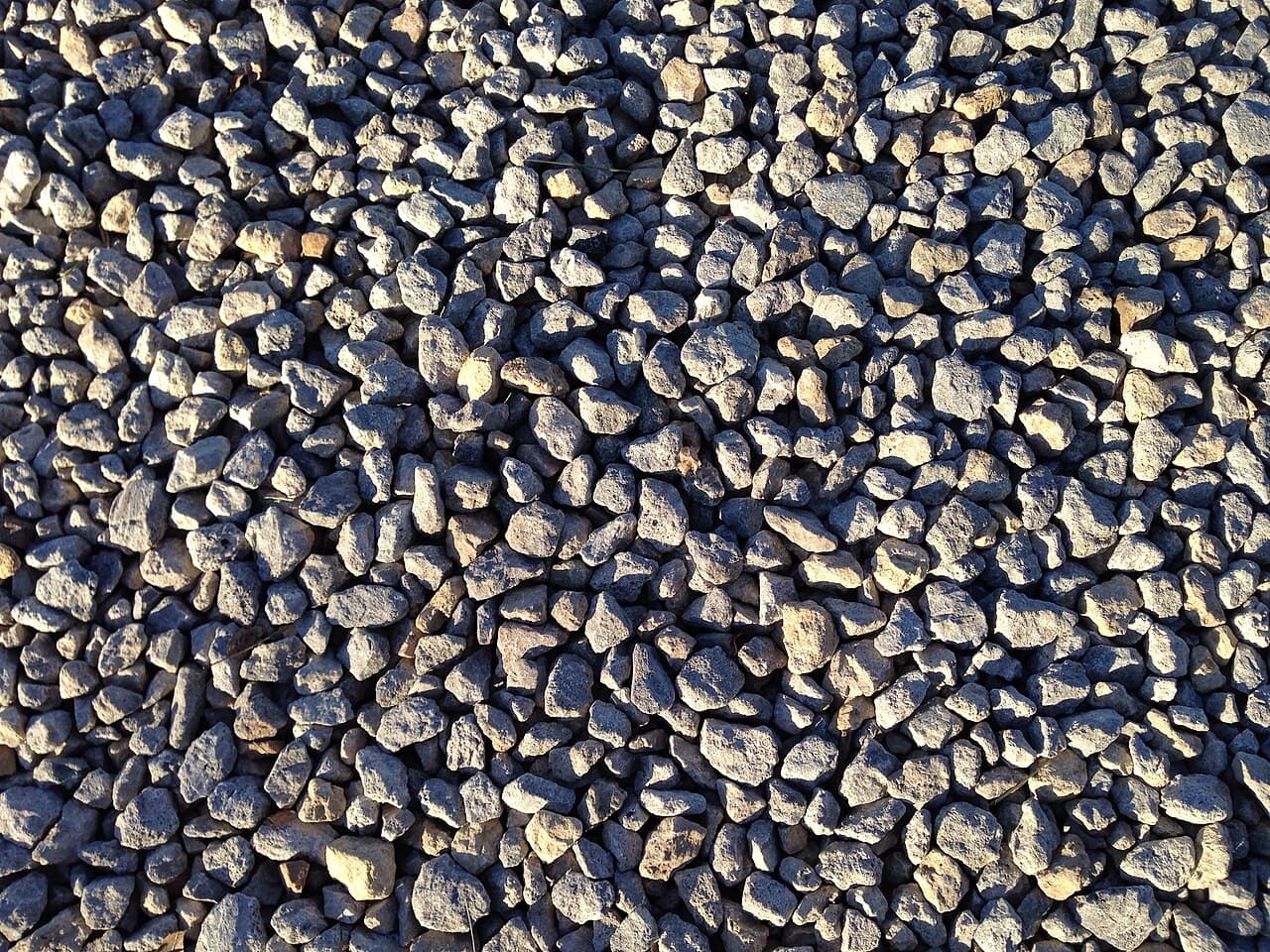
Why potholes form
Federal Highway Administration guidance on gravel roads, which applies just as well to a long driveway, says a gravel surface needs a crown so that "water will drain off the roadway surface during a rain event."[1] Without one, water collects on the surface or in the wheel tracks, softens the crust, and leads to rutting that can reach the soil underneath.[1] Standing water at any point in the cross section, ditch included, is one of the main reasons gravel surfaces fail.[1]
A crown means the middle is higher than the edges. The guide recommends about 1/2 inch of crown per foot, roughly 4 percent, and says not to exceed 6 percent.[1] On a driveway that you cannot grade with a machine, the practical version is a drive that sheds water sideways to a lawn, a ditch or a swale instead of holding a puddle in the tire lanes.
Loose, uneven gravel also matters. Traffic pushes stone away from the sand and fines, and small potholes and an uneven surface develop as it does.[1] Good surface gravel has fractured stone and fine particles with a binding quality, and that kind resists washboarding and the other surface damage.[1]
How to fix them
The method that works is to cut out the hole rather than topping it up. The guide's advice for washboards and potholes is to cut the material to a depth of 1 inch or more below the depressions, then mix and relay it to the proper shape.[1] Where moisture is present it pays to rework the area quickly, because in dry conditions you can only smooth a surface temporarily.[1]
Driving over the loosened material, or rolling it, helps reform the crust.[1] For new surface material the guide says to place it in horizontal layers, generally not exceeding a loose depth of 4 inches.[1]
Use gravel that matches what is already there. A load of clean, single-size stone will not bind to the old surface the way a blend of crushed stone, sand and fines does, and it tends to roll out of the hole again. Ask the supplier for a crushed aggregate with fines.
Fix the water, or the holes return
If the same spot keeps failing after you refill it, look for what is holding water. Common causes are a low spot with no way out, a roof downspout or a field discharging onto the drive, a ditch or culvert that has silted up, and a drive that has lost its crown.
Poor ground underneath is the other cause. FHWA warns that where the soil support is very poor, a gravel surface will rut and form potholes very quickly, and that this takes more than routine maintenance.[1] That is the point at which a contractor should look at the base, not just refill holes.
If the drive meets a paved road, watch the end of it. Potholes can easily develop where gravel meets the pavement edge, and the gravel there should match the paved surface.[1] When you fill one, do not push gravel out onto the road, since loose stone on pavement dangerously reduces skid resistance.[1]
The entrance from a state road
If your driveway joins a state-maintained road, the property owner is responsible for maintaining the private entrance, with limits. Under VDOT's access regulations, on roads with ditches VDOT cleans the drainage pipe at the entrance and may replace it if necessary to preserve the highway.[2] If a pothole is really a failing pipe or a blocked ditch at the road, contact your VDOT district office instead of filling it.
Stop and call a pro if
- The hole keeps coming back within weeks, or the whole drive is rutted. That points to drainage or soft ground under the gravel, which is regrading, ditch or base work.
- You need to dig below the gravel, for example to reshape a ditch or replace a culvert. Virginia 811 says you must contact it at least 3 working days before excavation, and that the service is free.[3]
- The gravel is washing into the road or a ditch in quantity, or water is cutting a channel down the drive.
- The drive meets a state road and the damage is at the pipe, ditch or shoulder.
- The work would cost $1,000 or more. DPOR says a valid Virginia contractor's license is required for work valued at that amount.[4]
Getting help in Virginia
Next, read what size gravel to use for a driveway so the fill matches, and how much a gravel driveway costs in Virginia if regrading is on the table. Browse more excavation answers or see excavation pros on Loclis.
When you are ready, describe the driveway once and local pros quote it.
Common questions
- What do I fill a gravel driveway pothole with?
- Use crushed stone with a mix of sizes down to fines, the same kind as the existing surface, so it locks together. Clean single-size stone usually stays loose. Loosen and reuse the stone that is already in the hole, and add new gravel to bring it up to the surrounding level.
- Why do potholes keep coming back in the same place?
- Usually because water collects there or the ground under that spot is soft. Filling the hole does not change either. Find where the water comes from, give it a way off the drive, and if the base is soft, have a contractor look at it.
- Is it better to patch or regravel the whole driveway?
- A few holes in an otherwise sound drive can be patched. If much of the surface is rutted, thin or washboarded, or the holes keep returning, regrading and adding a new layer is the better repair. Ask for it as a written quote.
- Can I just pour more gravel on top of the pothole?
- It fills the hole for a while, but loose stone on top of a soft spot gets pushed out again. Loosening the hole first and packing the fill in layers gives a patch that lasts longer.
- Who fixes the part of the driveway at the road?
- The owner maintains a private entrance, but on roads with ditches VDOT cleans the drainage pipe at the entrance. If the problem is at the pipe, ditch or shoulder, call your VDOT district office.
Sources
- [1] Gravel Roads Construction and Maintenance Guide (August 2015), Federal Highway Administration and South Dakota Local Technical Assistance Program. Checked October 27, 2026.
- [2] 24VAC30-73-90. Private entrances, Virginia Administrative Code, VDOT Access Management Regulations. Checked October 27, 2026.
- [3] Homeowners FAQ, Virginia 811. Checked October 27, 2026.
- [4] What You Should Know Before You Hire a Contractor, Virginia Board for Contractors, DPOR. Checked October 27, 2026.
Want a pro to handle it?
Describe the job once. Licensed local businesses send quotes, and you pay only when you book one.
Get a quote from a local pro