How often should a gravel driveway be regraded?
There is no fixed interval. Regrade when the crown has worn flat, ruts, holes or edge ridges appear, or water runs down the tracks, and expect a bigger rebuild every so often. Spring is usually best, while the gravel is damp. Heavy use or wet ground means sooner.
Free to ask. Local shops send quotes, and you pay only when you book one.
By Kasra Taheri, Founder, LoclisPublished
Researched and drafted with AI, then checked claim by claim against the sources listed below before it was published. Prices and rules change; the dates beside each source say when it was last checked.
Step by step
Read when to stop and call a pro, further down this page, before you start.
Step 1: Check after spring rain
Walk the drive after the first heavy spring rains and look for standing water, ruts, holes and ridges.
Step 2: Test the crown
Lay a straight board or string across the drive; the middle should sit higher than the edges, about 1/2 inch per foot.[1]
Step 3: Open the edges
Rake any ridge of displaced stone off the shoulder so water can leave the surface.[1]
Step 4: Clear the drainage
Remove debris from the ditch and culvert inlet by hand, and leave the pipe itself to a contractor or VDOT.[2]
Step 5: Loosen and reshape
Work when the gravel is damp, loosen the worn areas, and rake them back into a crowned shape.[1]
Step 6: Pack it down
Drive slowly over the raked gravel or tamp it so the surface re-forms a crust.[1]
Step 7: Top up thin areas
Add crushed stone with fines in layers no thicker than about 4 inches loose, packing each one.[1]
Step 8: Keep a note
Write down the date and what you did, so you can see how fast the drive wears.
There is no calendar interval that suits every gravel driveway. Light use on well-drained ground may need only a light raking each year, while a drive that carries heavy trucks or sits in a wet spot needs attention far more often. Regrade when the drive shows the signs below, and plan on a bigger rebuild every so often, because even a well-kept gravel surface wears.
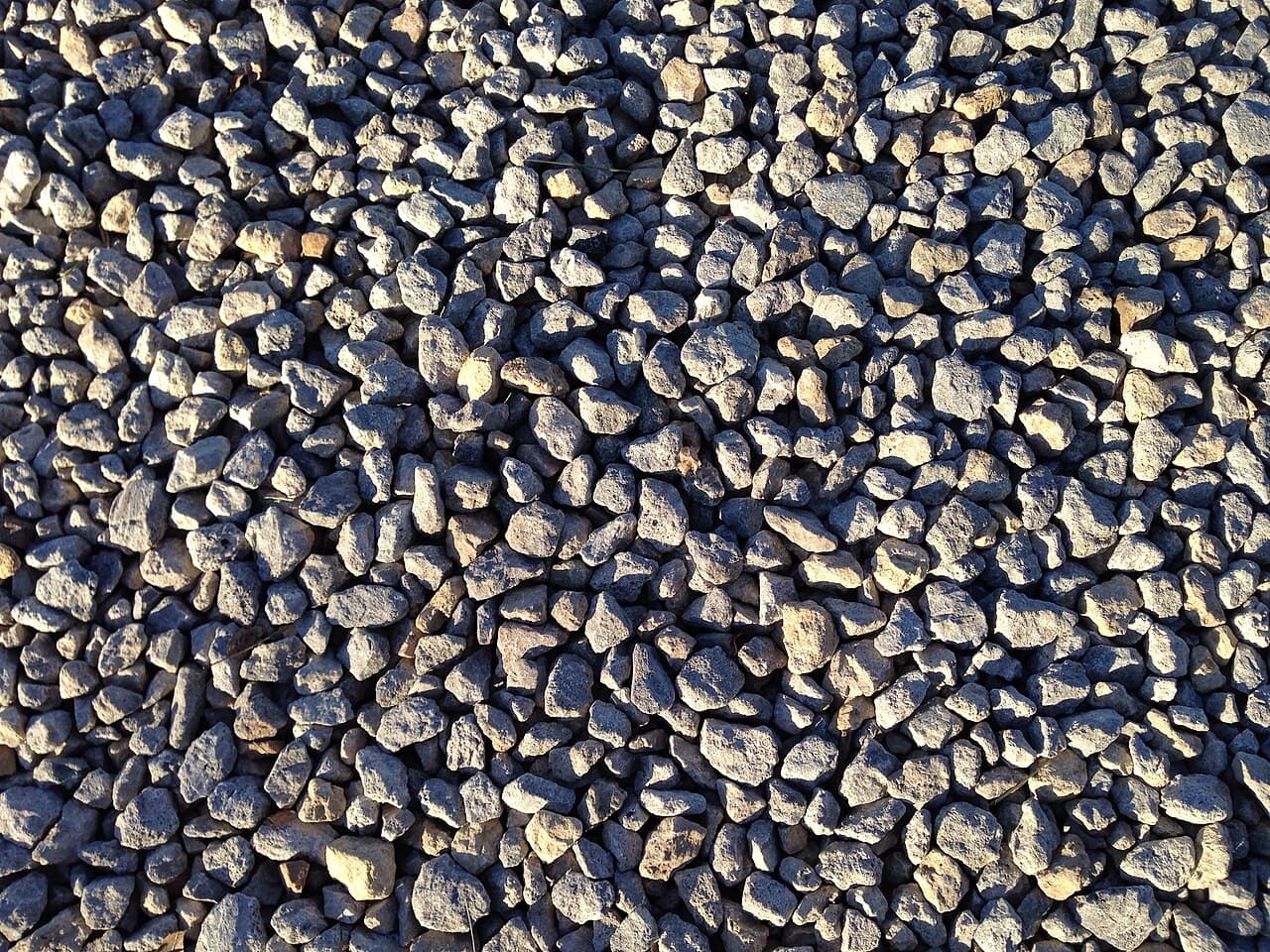
What the guidance says about timing
The Federal Highway Administration's gravel road guide, which applies to a long driveway as well, says gravel roads are generally maintained by routine blading and adding gravel as needed, either by spot graveling or by re-graveling entire sections.[1] "As needed" is the honest answer, and the same guide adds that almost any gravel road will gradually begin to show distress over time that requires more than routine maintenance to correct.[1] At certain intervals, it says, virtually every gravel road requires some major rehabilitation.[1]
How fast that happens depends on traffic, rainfall, the quality of the stone and how well the drive drains. The guide notes that studies have shown as much as one ton of aggregate per mile is lost each year for each vehicle that passes over a road daily, though it adds that this varies with rainfall, gravel quality and other factors.[1] A driveway is short, but the principle holds: more traffic, more stone lost.
Signs it is time to regrade
Rather than counting years, check the drive after the first heavy rains of spring and again in autumn. These are the signs to look for:
- Lost crown. The middle has worn flat or dished. The guide recommends a crown that rises approximately 1/2 inch per foot, or about 4 percent.[1]
- Potholes or washboarding. Ripples across the drive and holes that fill with water. See how to fix potholes in a gravel driveway.
- A ridge along the edge. Displaced stone builds up into berms or secondary ditches along the shoulder line.[1]
- Severe rutting or gravel loss. The guide says that severe rutting, loss of crown, gravel loss and deep secondary ditches, in any combination, call for major reshaping.[1]
- Water running down the tracks instead of off the drive. The cause is covered in why a gravel driveway keeps washing out.
A heavy delivery, a well drill or a loaded dump truck on a wet drive can wreck the shape in a day. The guide says a road can be damaged by heavy hauls, especially in wet weather, and that major reshaping may have to be done immediately.[1] Do not wait for the scheduled spring job.
When to do it
Spring is usually best. The guide says spring is the best time for reshaping the surface and shoulder, as there is minimal vegetative growth and moisture is often present.[1] Moisture matters too: the guide says in dry conditions the surface can only be smoothed temporarily, and that when moisture is present it pays to rework the material by cutting, mixing and relaying it.[1]
Routine care between regradings
- Rake the crown back after the winter, and pull any ridge of stone off the edge so water leaves the drive.
- Keep the ditch and culvert inlet clear. The guide says small culverts can easily become plugged from eroded soil and debris, and recommends inspecting them at reasonable intervals.[1]
- Patch holes early while they are small, using a crushed blend with fines.
- Top up thin spots rather than waiting for bare soil to show. For new surface material the guide says to place it in horizontal layers, generally not exceeding a loose depth of 4 inches.[1]
Before adding any stone, shape the surface first. The guide says it is vital to properly shape the road surface before fresh gravel is placed, and that even if the existing surface is smooth and hard, it is often wise to lightly scarify it to break the crust so new and old material bond.[1] For what to spread, see what size gravel to use for a driveway.
Stop and call a pro if
- The drive is rutted or soft across much of its length. Reshaping a whole drive takes a grader or skid steer and a roller.
- A new ditch, culvert or buried drain is needed. Virginia 811 says you must contact it at least 3 working days before excavation, and that the service is free.[3]
- The damage is at the entrance to a state road. Under VDOT's rules, maintenance of private entrances is by the owner of the entrance, except that on highways with ditches VDOT cleans the drainage pipe at the entrance.[2]
- The work would be valued at $1,000 or more. DPOR says a valid Virginia contractor's license is required for work valued at that amount.[4]
Getting help in Virginia
Ask for a written quote that names the stone, the depth and any drainage work, and compare it with what a gravel driveway costs in Virginia. Browse more excavation answers or see excavation pros on Loclis.
When you are ready, describe the driveway once and local pros quote it.
Common questions
- How often should I add gravel to my driveway?
- There is no set schedule. Add stone when thin spots or exposed soil appear, and expect a larger reshape and new layer when ruts, lost crown or gravel loss build up. Heavier traffic and wetter ground mean sooner.
- What is the best time of year to regrade?
- Spring is usually best, when the ground is damp and plants are not yet growing thickly. Avoid doing major work when heavy rain is forecast, since loosened stone and bare soil wash easily.
- Can I regrade a gravel driveway with a rake?
- For a short drive with minor wear, yes: rake the crown back, clear the edges and fill low spots. A long or deeply rutted drive needs a grader or skid steer, which is a job for a contractor.
- Does regrading remove gravel?
- It moves it. Stone pushed to the edges is pulled back onto the surface. Some is lost for good to dust, edges and runoff, which is why most drives need new stone from time to time.
- Do I need to regrade if the drive looks fine?
- Check the crown and edges once a year anyway. Water damage starts at small flat spots and edge ridges before the surface looks bad.
Sources
- [1] Gravel Roads Construction and Maintenance Guide (August 2015), Federal Highway Administration and South Dakota Local Technical Assistance Program. Checked October 28, 2026.
- [2] 24VAC30-73-90. Private entrances, Virginia Administrative Code, VDOT Access Management Regulations. Checked October 28, 2026.
- [3] Homeowners FAQ, Virginia 811. Checked October 28, 2026.
- [4] What You Should Know Before You Hire a Contractor, Virginia Board for Contractors, DPOR. Checked October 28, 2026.
Want a pro to handle it?
Describe the job once. Licensed local businesses send quotes, and you pay only when you book one.
Get a quote from a local pro