What size gravel should I use for my driveway?
Use two stones: a coarser, cleaner crushed stone for the base, and for the top layer a crushed blend with a 3/4 to 1 inch top size, sand and a small share of fines so it binds. Skip single-size round stone such as pea gravel on the surface. Write the stone, top size and depth for each layer into the quote.
Free to ask. Local shops send quotes, and you pay only when you book one.
By Kasra Taheri, Founder, LoclisPublished
Researched and drafted with AI, then checked claim by claim against the sources listed below before it was published. Prices and rules change; the dates beside each source say when it was last checked.
Step by step
Read when to stop and call a pro, further down this page, before you start.
Step 1: Measure the drive
Measure length and width and note the slope, wet spots and any ditch, so the supplier can size the order.
Step 2: Pick the layers
Plan a coarser crushed stone base and a finer, graded crushed stone surface. If the total depth will exceed 4 inches, plan to place it in separate layers.[1]
Step 3: Ask for the gradation
Ask the supplier for the gradation of the stockpile, including the share of fines, and whether the stone is crushed.[1]
Step 4: Match top size to the layer
Aim for a surface stone with a top size of 3/4 to 1 inch and a base of larger stone.[1]
Step 5: Put it in writing
Write the product name, top size, crushed or not, and depth for each layer into the quote you will compare.
Step 6: Check the licence
If the work is $1,000 or more, confirm the contractor's licence on DPOR's License Lookup.[3]
Use two different stones. For the top layer of a driveway, use crushed stone graded from about 3/4 or 1 inch down through sand to fines, because that mix packs into a firm, smooth surface. For a base layer under it, use coarser, cleaner crushed stone. Avoid single-size round stone such as pea gravel for the driving surface, since it stays loose.
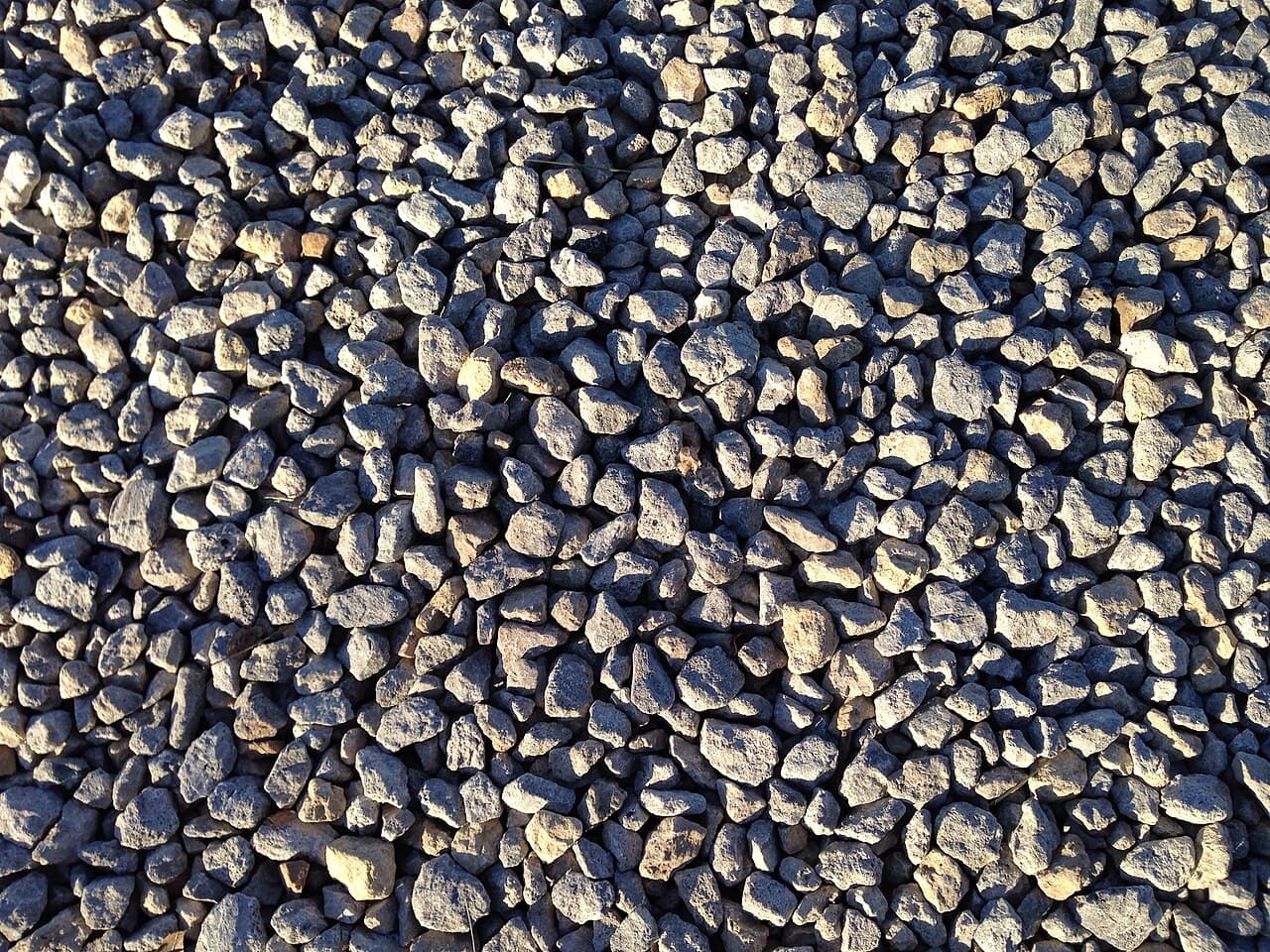
The top layer: a blend, not one size
The size that matters on top is the largest stone in the mix and how the sizes grade down. Federal Highway Administration guidance on gravel roads gives a sample surface aggregate specification for places with more than 20 inches of annual precipitation: 100 percent passing the 1-inch sieve, 45 to 70 percent passing the No. 4 sieve and 3.0 to 12.0 percent passing the No. 200 sieve.[1] For drier places the same sample specification uses a 3/4-inch top size.[1] In plain terms, top size around 3/4 to 1 inch, a good share of sand-size stone, and a small share of fine material.
The fines are not waste. The guide says good surface gravel needs a percentage of plastic material, usually natural clays, which gives the gravel a "binding" characteristic and a smooth driving surface.[1] A clean stone with no fines will not bind and will shift under tires.
Large stone on top causes the opposite problem. Too much large stone leaves a rough driving surface and makes the surface difficult to maintain.[1] That is why a coarse stone that makes excellent base material can perform poorly as a surface.[1]
The base layer: coarser and cleaner
The same guide's example base course has 80 to 100 percent passing the 3/4-inch sieve, only 3 to 12 percent passing the No. 200 sieve, and a plasticity index of 0 to 6, against 4 to 12 for surface gravel.[1] A higher percentage of large stone is needed for strength in the base course.[1] On a driveway that means a base layer of larger crushed stone for strength and drainage, then the finer binding blend on top.
If the finished depth will exceed 4 inches, the guide says the gravel should be placed in separate layers so each one compacts well.[1]
Crushed, not rounded
Crushing matters as much as size. The guide says broken stones embed into a gravel surface much better than rounded, natural-shaped stone, and fractured stone resists movement under loads and gives more stability.[1] River-run or pea gravel can look nice, but it tends to roll under a car and move out of the wheel tracks. Ask for crushed stone, sometimes sold under names such as crusher run or dense-graded aggregate.
What to ask the supplier
Product names vary by quarry, so ask for a specification, not a nickname. Many commercial aggregate suppliers can provide test data from their stockpiles to show the gradation of their material, and may have further data on plasticity index and the percentage of fractured faces.[1] You simply have to ask for it.[1] When you get a quote, write the stone down by layer: product name, top size, whether it is crushed, and the depth to be spread.
Hiring someone to do it
The size question usually turns into a hiring question: you need the stone delivered, spread and compacted. DPOR says that if the work is valued at $1,000 or more, a valid Virginia contractor's license is required for the license category in which the contractor is to work.[3] It also advises getting written bids or estimates using identical plans and specifications.[3] Give every bidder the stone you want for each layer, so you compare like with like.
If the drive meets a state-maintained road, Virginia's access regulations say the property owner shall obtain an entrance permit.[2]
Stop and call a pro if
- The ground is soft or wet. Where the soil support is very poor, a gravel surface will rut and form potholes very quickly, and no stone size fixes that.[1]
- The drive is steep or water runs down it. Drainage and regrading decide whether any stone stays put.
- The drive meets a state road. An entrance permit and pipe work may be involved.[2]
- The work is $1,000 or more. DPOR requires a licensed contractor at that value.[3]
Getting help in Virginia
Next, see how much a gravel driveway costs in Virginia and how to fix potholes in a gravel driveway. Browse more excavation answers or see excavation pros on Loclis.
When you are ready, describe the driveway once and licensed local pros quote it.
Common questions
- Is pea gravel good for a driveway?
- Not for the driving surface. Rounded stone embeds poorly and tends to shift under tires and spread out of the wheel tracks. A crushed stone with sand and fines locks together and stays put much better.
- What is crusher run?
- A common supplier name for crushed stone sold with the fine material left in, so it packs tightly. Names differ between quarries, so ask for the top size and gradation rather than relying on the name alone.
- How thick should the gravel be?
- FHWA's guidance says a layer thicker than 4 inches in total should be placed in separate layers so each compacts well. Ask your contractor for the depth per layer and to name the stone for each.
- Why does my gravel keep washing or spreading out?
- Common causes are stone with no fines to bind it, rounded stone, a drive without a crown, or water running down it. Check the stone and the drainage together.
- Can I buy the gravel myself and have someone spread it?
- You can, but you take on getting the right product and the right amount delivered. If the spreading work is worth $1,000 or more, DPOR says the contractor needs a Virginia licence, so confirm it first.
Sources
- [1] Gravel Roads Construction and Maintenance Guide (August 2015), Federal Highway Administration and South Dakota Local Technical Assistance Program. Checked October 27, 2026.
- [2] 24VAC30-73-90. Private entrances, Virginia Administrative Code, VDOT Access Management Regulations. Checked October 27, 2026.
- [3] What You Should Know Before You Hire a Contractor, Virginia Board for Contractors, DPOR. Checked October 27, 2026.
Want a pro to handle it?
Describe the job once. Licensed local businesses send quotes, and you pay only when you book one.
Get a quote from a local pro