Why does my gravel driveway keep washing out?
Water is running down the drive instead of off it. The usual causes are a lost crown, a ridge of displaced stone along the edge, a blocked ditch or culvert, and runoff from a roof or slope. Restore the crown, open the edges, clear the drainage, then replace the stone.
Free to ask. Local shops send quotes, and you pay only when you book one.
By Kasra Taheri, Founder, LoclisPublished
Researched and drafted with AI, then checked claim by claim against the sources listed below before it was published. Prices and rules change; the dates beside each source say when it was last checked.
Step by step
Read when to stop and call a pro, further down this page, before you start.
Step 1: Watch it rain
Walk the drive during or just after a heavy rain and note where water enters, where it runs and where it leaves.
Step 2: Find the source
Look for downspouts, slopes or neighbouring ground sending water onto the drive, and for blocked ditches or inlets.[1]
Step 3: Open the edge
Rake any ridge of stone or soil along the edge back onto the drive or away, so water can leave the surface.[1]
Step 4: Clear the inlet
Pull leaves and debris from the ditch and the culvert inlet by hand; leave the pipe itself to a contractor or VDOT.[2]
Step 5: Redirect roof water
Send downspouts and any pipe outlets onto lawn or a drainage swale away from the drive.
Step 6: Rebuild the crown
Rake the loosened stone so the middle sits higher than the edges, aiming for about 1/2 inch per foot.[1]
Step 7: Replace lost stone
Add crushed stone with fines in thin layers, packing each one, rather than loose single-size stone.
Step 8: Cover bare soil
Seed and mulch bare ground beside the drive so it stops feeding silt into the ditch.[1]
A gravel driveway washes out when water has nowhere to go but down the drive. The usual causes are a flat or dished surface with no crown, a ridge of displaced stone along the edge that traps water on the drive, a blocked ditch or culvert, and runoff from a roof or slope pouring onto the gravel. Fix the shape and the drainage first, then replace the stone that left.
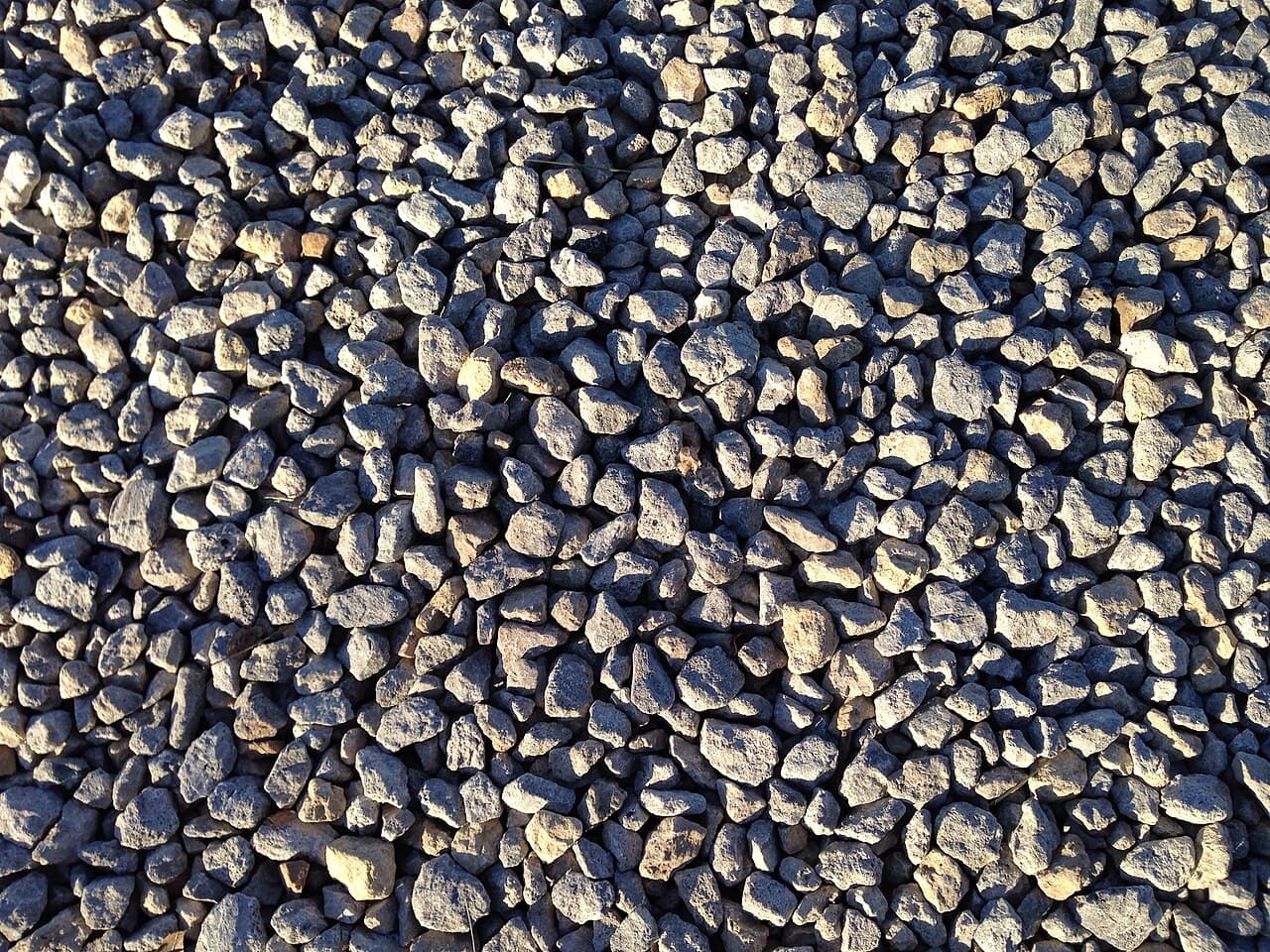
Why the stone leaves
Federal Highway Administration guidance on gravel roads, which fits a long driveway as well, shows how much shape matters. It describes a road in a desert region that performs poorly even though the average annual precipitation is less than 10 inches per year, because it has no crown and no ditches to drain water off the surface.[1] It contrasts that with a road in a region where precipitation exceeds 60 inches, which performs well because an adequate crown and ditches at the edge carry the water away.[1] Rain is rarely the real problem. Where the rain goes is.
The guide recommends a crown that rises approximately 1/2 inch per foot, or about 4 percent, from the edge to the centre.[1] A drive with a flat or dished middle holds water in the tire tracks, and moving water carries off the fines first, then the stone.
The four usual causes
A lost crown. Traffic, plowing and heavy rain push stone sideways. The guide says gravel is displaced by traffic, winter plowing operations and erosion of material during heavy rain.[1] Over time the middle wears down and the drive becomes a trough.
A berm along the edge. The same displaced stone builds up into what the guide calls berms or secondary ditches along the shoulder line.[1] A ridge of stone or soil at the edge stops water leaving the drive, so it runs down the tracks instead. The guide stresses that there should not be a steep drop-off or a ridge of soil to block drainage at the edge.[1]
A blocked ditch or culvert. Small culverts can easily become plugged from eroded soil and debris, and the guide says plugged or collapsed culverts cause serious damage when water flows over the road.[1] If a ditch becomes obstructed from eroded soil or debris, it must be cleaned.[1]
Water arriving from elsewhere. A downspout, a slope above the drive or a neighbour's runoff turns an ordinary drive into a creek bed. Fairfax County's soil and water conservation district describes yard erosion as soil washed off a property by runoff, leaving bare spots, gullies and scouring.[5] If the water is coming from above, redirecting it matters more than any amount of new stone.
Steps you can take yourself
Walk the drive during a heavy rain once. Seeing where water enters, where it runs and where it leaves tells you more than any guess.
On a drive that meets a state road, a short length at the entrance is shared responsibility. The owner maintains a private entrance, but on highways with ditches VDOT cleans the drainage pipe at the entrance and may replace the pipe if necessary to preserve the highway.[2] Clear leaves and loose debris from the inlet, and leave the pipe itself to VDOT.
Adding stone on top of the damage is the common mistake. The guide says it is generally not wise to simply fill problem areas such as lost crown, potholes, high shoulders or severe rutting with new gravel, because it can become very expensive and the gravel will not have uniform layer thickness.[1] Reshape first, then top up with a crushed blend that has fines, as covered in what size gravel to use for a driveway. Where a rut has already turned into holes, follow how to fix potholes in a gravel driveway.
After you have reshaped the drive, bare soil beside it can wash too. The guide suggests seeding, mulching or erosion control blankets on disturbed areas, and keeping slopes and drainage runs short and gentle so water stays slow.[1]
Stop and call a pro if
- The drive washes out again within a season after you have restored the shape. That points to soft ground under the gravel or a drainage problem too big for hand tools.
- Water is cutting a channel down the drive or washing gravel and silt onto a public road. The guide warns that loose stone on pavement dangerously reduces skid resistance.[1]
- The fix needs a new culvert, a regraded ditch or a trench. Virginia 811 says you must contact it at least 3 working days before excavation, and that the service is free.[3]
- The damage is at the pipe, ditch or shoulder of a state road. Contact your VDOT district office rather than reworking it.
- The work would be valued at $1,000 or more. DPOR says a valid Virginia contractor's license is required for work valued at that amount.[4]
Getting help in Virginia
Costs for regrading and new stone vary with length, slope and haul distance, so see how much a gravel driveway costs in Virginia and ask for a written quote that names the stone, the depth and the drainage work. Browse more excavation answers or see excavation pros on Loclis.
When you are ready, describe the driveway once and local pros quote it.
Common questions
- Why does my gravel driveway wash out in the same place every time?
- Water is entering or collecting at that spot: a downspout, a low point, a blocked ditch or a ridge at the edge that traps runoff. Adding stone does not change that. Find the path of the water, give it a way off the drive, then refill.
- Will bigger stone stop the washing?
- Not by itself. Heavier stone resists moving water a little, but clean large stone with no fines does not bind and shifts under tires. A crowned surface that sheds water matters more than stone size.
- Can I stop a washout with a culvert or a French drain?
- Sometimes, when water has to cross or leave the drive. A culvert or buried drain is excavation work, so call 811 first and consider a licensed contractor, especially above $1,000.
- Does grass help on the sides of a gravel driveway?
- Yes. Vegetation on the shoulders and ditch holds soil and slows water. Seed and mulch any ground you disturb while reshaping.
- Who is responsible when the washout is at the road?
- The owner maintains the private entrance, but on roads with ditches VDOT cleans the drainage pipe at the entrance. If the problem is at the pipe, ditch or shoulder, call your VDOT district office.
Sources
- [1] Gravel Roads Construction and Maintenance Guide (August 2015), Federal Highway Administration and South Dakota Local Technical Assistance Program. Checked October 28, 2026.
- [2] 24VAC30-73-90. Private entrances, Virginia Administrative Code, VDOT Access Management Regulations. Checked October 28, 2026.
- [3] Homeowners FAQ, Virginia 811. Checked October 28, 2026.
- [4] What You Should Know Before You Hire a Contractor, Virginia Board for Contractors, DPOR. Checked October 28, 2026.
- [5] Solving Drainage and Erosion Problems: A Guide for Homeowners, Northern Virginia Soil and Water Conservation District, Fairfax County. Checked October 28, 2026.
Want a pro to handle it?
Describe the job once. Licensed local businesses send quotes, and you pay only when you book one.
Get a quote from a local pro