How much does it cost to fix a refrigerant leak in Virginia?
It depends on where the leak is, which refrigerant the system uses and how many pounds it needs. A tightened fitting is a small bill; a replaced coil or line set is a large one. Trane's May 2026 national guide puts evaporator coil work at $1,000 to $5,000 or more, and its 2025 guide puts R-410A at $40 to $90 a pound installed. Get a written, itemised quote.
Free to ask. Local shops send quotes, and you pay only when you book one.
By Kasra Taheri, Founder, LoclisPublished
Researched and drafted with AI, then checked claim by claim against the sources listed below before it was published. Prices and rules change; the dates beside each source say when it was last checked.
This is a job for a licensed pro in Virginia
This page explains what the work involves, the permits, what a licensed pro does and what drives the cost. It does not give step-by-step instructions, because this work needs a licence, a permit or both, and doing it wrong can injure someone. Before you hire, check the licence on Virginia's DPOR record.
The cost of fixing a refrigerant leak depends on three things: where the leak is, which refrigerant your system uses, and how many pounds it takes to recharge. A loose fitting on a mini-split can be a short visit. A leaking indoor coil on an older system can approach the price of new equipment. The ranges below are national and dated; a Virginia quote will reflect local labour rates and your equipment.
What goes into the bill
Every leak repair has the same pieces: the visit, the time to find the leak, the repair itself, the testing and evacuation, and the refrigerant.
The visit and labour. In Trane's national AC repair cost guide, published May 4, 2026, a service fee averages $50 to $200 and hourly rates run $75 to $150 or more.[1] Companies may apply the service fee toward the repair if you hire them for the work.[1]
Finding the leak. Pinpointing a leak can take time,[3] especially when it is inside a coil, so diagnostic time is often the biggest variable on a small repair. Ask how it is billed before the technician starts.
The repair. On a mini-split, a leak at a flare fitting is sometimes fixed simply by tightening the fitting.[3] A pinhole in a copper line is usually cut out and brazed. A corroded coil is replaced. For how each repair is done, see how a refrigerant leak is found and fixed.

Repair costs by part
The same May 2026 Trane guide gives these national ranges for the parts a leak most often involves: an expansion valve at $100 to $700,[1] refrigerant lines at $1,500 to $3,000 or more,[1] a condenser coil at $1,000 to $4,000 or more,[1] and an evaporator coil at $1,000 to $5,000 or more.[1]
Coil jobs cost what they do because of the labour around them. Much of the cost of replacing a coil or compressor is the labour of safely recovering the refrigerant and the steps that follow.[1] A part may be covered by the manufacturer's warranty, but labour and the refrigerant recharge generally are not.[1]
Timing matters too. Emergency rates outside normal business hours can be as much as double to triple the regular hourly rate.[1] If the house can stay safe with fans for a day, a weekday appointment is usually cheaper.
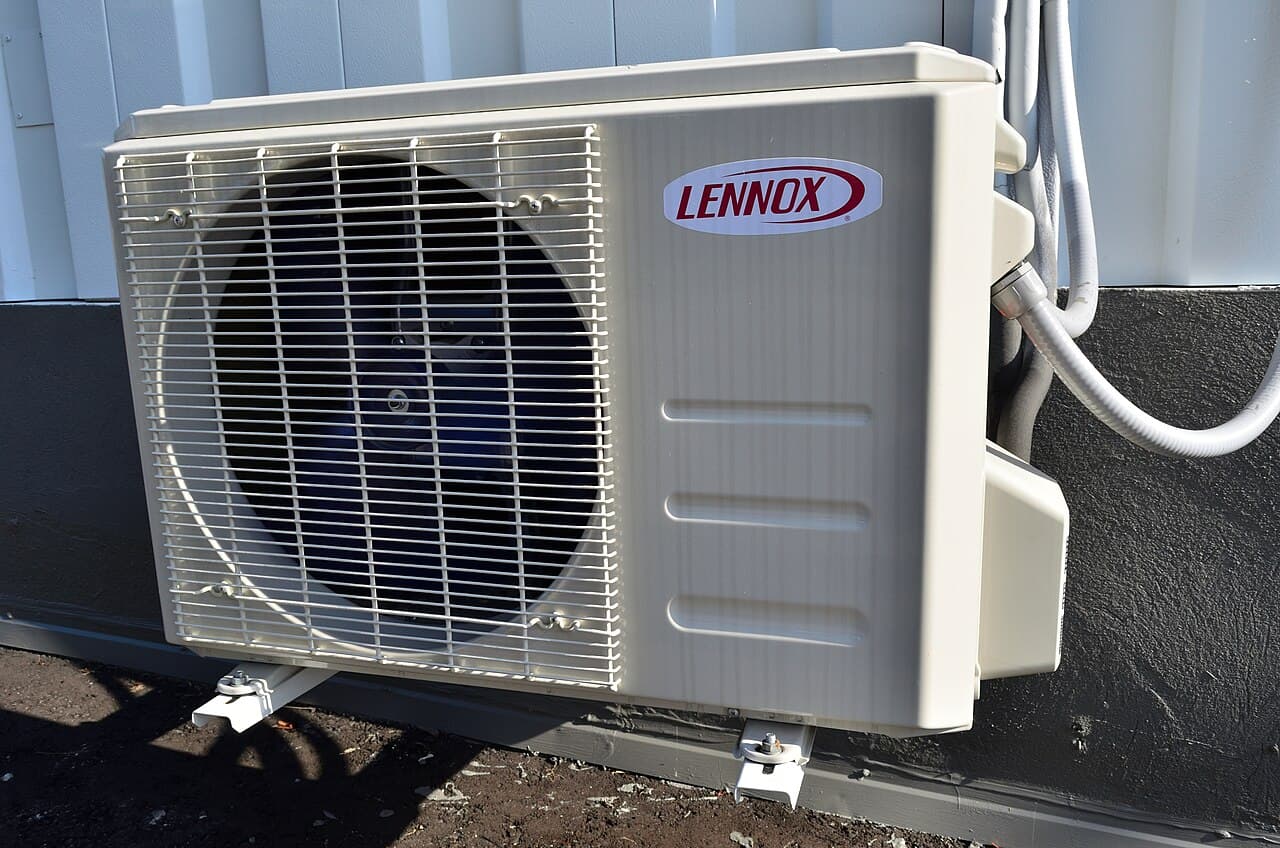
The refrigerant itself
In Trane's refrigerant pricing guide, published April 9, 2025, R-410A cost $40 to $90 a pound installed and R-22 cost $100 to $250 a pound installed in 2025.[2] A full recharge takes 2 to 4 pounds per ton of cooling capacity.[2] The refrigerant line on the bill grows with the size of the system and how much of its charge was lost.
To know which you have, check the label. The refrigerant type is usually listed on the unit's nameplate, which on a central system is on the outdoor condenser.[6]
R-22 costs more because supply is shrinking. No new R-22 has been made or imported into the United States since January 1, 2020; systems are serviced with used R-22 cleaned to the same specifications as new.[6] There are no drop-in replacements for R-22, so a leak repair on an R-22 system is usually recharged with R-22.[6]
R-410A is in a similar position a few years behind. R-410A parts can still be sold to service existing R-410A systems, but the availability of HFCs and components may lessen over time as HFCs are phased down.[7]
Cheap fixes that cost more later
A recharge without a repair is the most common false saving. If your air conditioner leaks, ask the technician to locate and repair the leak instead of topping it off; repairing leaks reduces energy use and helps avoid additional repairs later.[6]
Over-the-counter sealants sold as "stop leak" are not a substitute for finding and repairing the leak.[5] Avoid bargain refrigerants as well. R-22a has been falsely marketed as an R-22 replacement; it is a flammable blend of hydrocarbons such as propane and butane and is not an acceptable refrigerant for a home AC system.[6]
Repair or replace
A large leak on an old system is the point where many owners price a replacement. Trane suggests that if an air conditioner is more than 15 years old and repair bills keep rising, replacing it may be more cost-effective than repairing it.[4]
The rules on refrigerant shape that choice. Under EPA rules, a homeowner can have a faulty component such as a condensing unit or indoor coil replaced with a similar R-410A component, but after January 1, 2026 a whole new system must use a lower-GWP refrigerant, and replacing the condensing unit and indoor coil together counts as a new system.[7] The EPA lists the availability of components, energy efficiency and total maintenance costs as the factors to weigh.[7] For system prices, see what a new HVAC system costs in Virginia and whether to replace the whole AC system or just the condenser.
What to ask for in a written quote
An itemised quote lets you compare two companies fairly. Ask it to show where the leak was found and how it was confirmed, the repair method and parts, the refrigerant type, the number of pounds and the price per pound, whether a nitrogen pressure test and evacuation are included, and the parts and labour warranty on the repair.
Virginia sets rules for the paperwork. A contractor who does residential repair work must use a written contract signed by both sides before work starts or payment is taken, routine maintenance and service contracts excepted.[9] That contract must include when work begins and the estimated completion date, the total cost, the payment schedule and down payment, the contractor's name, address, licence number and class, and a statement that changes must be in writing and signed by all parties.[9]
The licence class tells you what size of job a firm can take on. A Class C contractor licence covers single jobs over $1,000 and under $30,000, and for an HVAC contractor the Board for Contractors requires a master tradesman licence as a condition of that licence.[8]
When to call a licensed pro
Call once you see the signs of a leak, such as warm air, ice on the lines or a hissing sound. Running the system with a leak can do further damage, so shut it off until the repair is made.[4] If you are not sure, read how to tell if your AC is low on refrigerant.
In Virginia, no individual may work, or offer to work, as a tradesman in heating, ventilation and air conditioning for the public for pay without a licence, unless working under the supervision of a tradesman licensed in that specialty.[10][11] Check the business on DPOR's License Lookup[12] before you agree to the work.
Getting quotes
Loclis lists DPOR-licensed HVAC businesses with their licence number and class. Find HVAC businesses in Blacksburg, see refrigerant leak repairs, or browse more HVAC repair answers.
To compare prices on your own repair, describe the problem once and licensed local HVAC businesses send quotes.
Common questions
- Why is R-22 so much more expensive than R-410A?
- No new R-22 has been made or imported into the United States since 2020, so systems are serviced from used refrigerant cleaned to new specifications. In Trane's April 2025 guide, R-22 ran $100 to $250 a pound installed against $40 to $90 for R-410A.
- Is it cheaper to keep recharging than to fix the leak?
- Usually not for long. The new charge escapes through the same leak, so you pay for refrigerant and a service call again. The EPA asks homeowners to have leaks located and repaired instead of topped off, which also helps avoid further repairs and wasted energy.
- Does my warranty cover a leaking coil?
- The part may be covered under the manufacturer's warranty, but labour and the refrigerant recharge generally are not unless you have an extended or labour warranty. Find your model and serial number on the nameplate and ask the company to check the warranty before quoting.
- Should I replace an old R-22 system instead of fixing the leak?
- It is often worth pricing both. R-22 is expensive and no new R-22 is made, and repair bills on an older unit tend to keep rising. Ask for a repair quote and a replacement quote at the same visit so you can compare them.
- Do I need a written contract for a refrigerant leak repair in Virginia?
- For residential repair work, Virginia's Board for Contractors requires a written contract signed by both sides before work starts, though routine maintenance and service contracts are excepted. A coil or line set replacement should come with one; a service call usually comes with a written invoice.
Sources
- [1] What Is the Average Central Air Conditioner Repair Cost?, Trane. Checked October 27, 2026.
- [2] AC Refrigerant Recharge Pricing Guide, Trane. Checked October 27, 2026.
- [3] How to Identify and Fix Mini-Split Refrigerant Issues, Trane. Checked October 27, 2026.
- [4] AC Refrigerant Leak Detection and Repair, Trane. Checked October 27, 2026.
- [5] How to Fix Refrigerant Leak AC Unit Issues: The Ultimate Guide, Bryant Heating & Cooling Systems. Checked October 27, 2026.
- [6] Homeowners and Consumers: Frequently Asked Questions, U.S. Environmental Protection Agency. Checked October 27, 2026.
- [7] Frequent Questions on the Phasedown of Hydrofluorocarbons, U.S. Environmental Protection Agency. Checked October 27, 2026.
- [8] Va. Code § 54.1-1100, Definitions, Code of Virginia, Virginia General Assembly. Checked October 27, 2026.
- [9] 18VAC50-22-260, Filing of charges; prohibited acts, Virginia Administrative Code, Board for Contractors. Checked October 27, 2026.
- [10] Va. Code § 54.1-1129, Necessity for licensure, Code of Virginia, Virginia General Assembly. Checked October 27, 2026.
- [11] Va. Code § 54.1-1128, Definitions, Code of Virginia, Virginia General Assembly. Checked October 27, 2026.
- [12] License Lookup, Virginia Department of Professional and Occupational Regulation. Checked October 27, 2026.
Want a pro to handle it?
Describe the job once. Licensed local businesses send quotes, and you pay only when you book one.
Get a quote for HVAC Repair