Should I replace my whole AC system or just the condenser?
Replace only the condenser when the indoor coil and furnace are fairly new, use the same refrigerant and have worked well. Replace the whole system when the equipment is more than 10 years old, needs repeated repairs or never cooled properly. Federal rules allow either, and manufacturers favour a matched indoor and outdoor pair.
Free to ask. Local shops send quotes, and you pay only when you book one.
By Kasra Taheri, Founder, LoclisPublished
Researched and drafted with AI, then checked claim by claim against the sources listed below before it was published. Prices and rules change; the dates beside each source say when it was last checked.
This is a job for a licensed pro in Virginia
This page explains what the work involves, the permits, what a licensed pro does and what drives the cost. It does not give step-by-step instructions, because this work needs a licence, a permit or both, and doing it wrong can injure someone. Before you hire, check the licence on Virginia's DPOR record.
Replace just the condenser when the indoor coil and furnace or air handler are fairly new, use the same refrigerant, and the system has worked well. Replace the whole system when the equipment is more than 10 years old, has had repeated repairs, or never cooled the house properly. Manufacturers and Virginia Cooperative Extension favour a matched pair, and federal rules allow either choice.
What "just the condenser" means
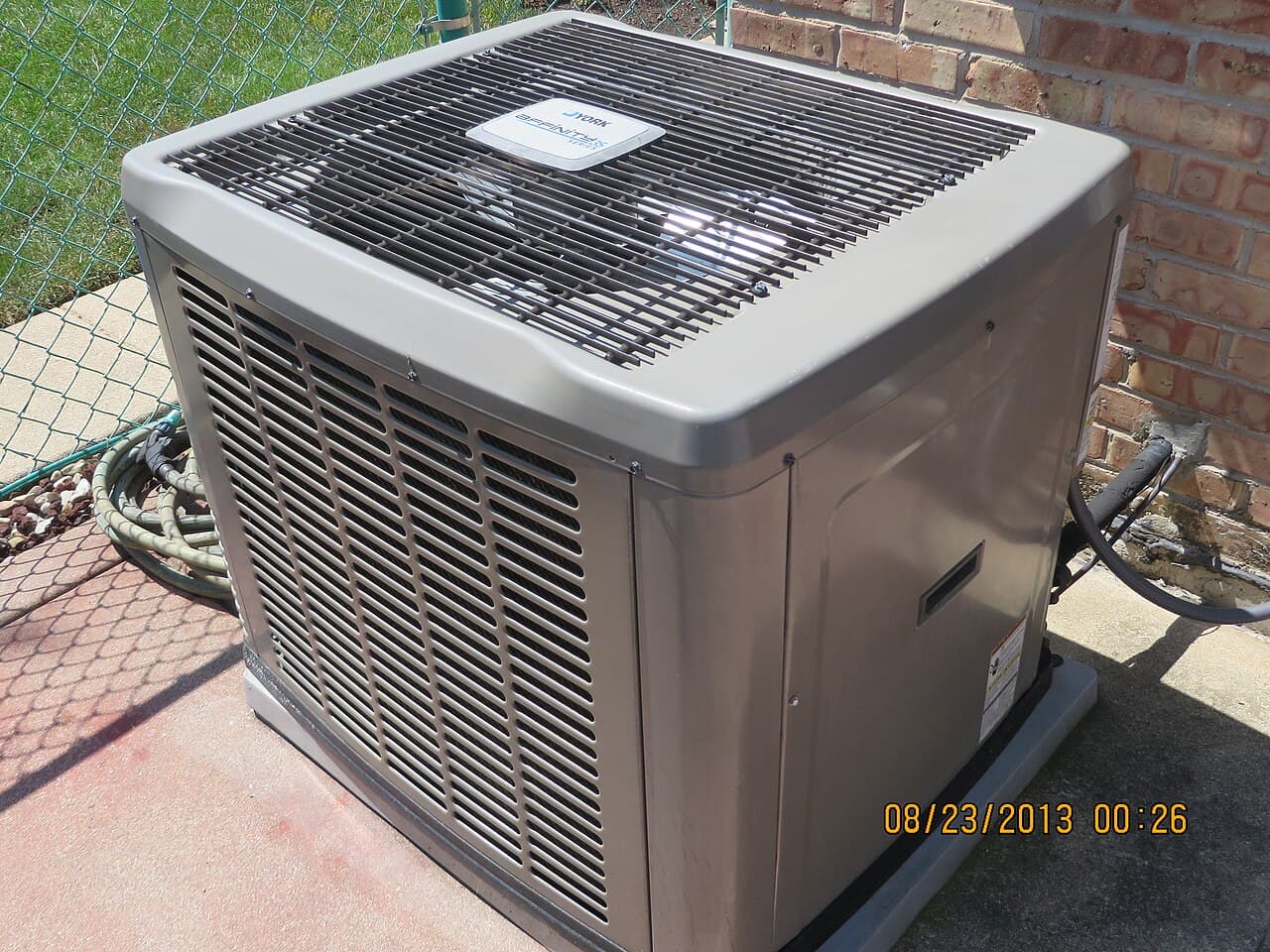
A central air conditioner has two halves. The condensing unit outside holds the condenser coil and the compressor, and the indoor coil, the evaporator, sits on the furnace or air handler.[1] Replacing only the condenser swaps the outdoor half and keeps the indoor coil, the refrigerant lines and the ductwork. Replacing the system swaps both coils and often the furnace or air handler too.
What the rules allow
You can repair your way forward. EPA says homeowners can maintain and repair their systems throughout the equipment's useful life, including replacing a faulty condensing unit with a similar R-410A component.[1] You can also replace the condensing unit now and the indoor coil later.[1]
If both the condensing unit and the indoor coil are replaced together, EPA treats it as a new system even when the refrigerant lines stay,[1] and its answer is that a whole new system installed after January 1, 2026 must use a lower-GWP refrigerant.[1] EPA's May 2026 rule eased that: residential systems made or imported before January 1, 2025 can still be installed until that inventory runs out.[2] In practice, most new matched systems now use a newer refrigerant such as R-454B, which Carrier uses in its new air conditioners.[3]
For an R-22 system, EPA regulations allow you to replace a broken condensing unit, provided the new one meets regional efficiency standards.[4] No refrigerant is a "drop in" substitute for HCFC-22; alternatives do not work well without changes to system components.[4]
When the condenser alone makes sense
- The indoor equipment is young. A coil and furnace a few years old have most of their life left.
- The refrigerant matches. An R-410A indoor coil pairs with an R-410A replacement condenser.
- The failure is sudden, not chronic. Storm damage, a lightning strike or a single failed compressor on an otherwise healthy system.
- The parts are under warranty. Ask the contractor what the manufacturer will cover.
EPA's list of things to weigh when choosing between repairing and moving to a new lower-GWP system is short: availability of components, energy efficiency and total maintenance costs.[1] Ask each contractor to price both options so you can compare them.
When the whole system is the better buy
Age. ENERGY STAR suggests considering replacement when a heat pump or air conditioner is more than 10 years old.[5] Trane says a properly installed Trane HVAC system could last more than 15 years.[6] If the indoor coil is the same age as the dead condenser, it is near the end too.
Repair math. Carrier's rule of thumb is that a system over 10 years old, needing frequent repairs, or facing a repair costing 50% or more of a new system is likely better replaced.[3]
Matching and efficiency. Virginia Cooperative Extension advises replacing both the indoor and outdoor coils on a matched system for maximum efficiency and reliability,[7] and Carrier recommends replacing the indoor and outdoor units together for compatibility, efficiency and warranty coverage.[8] A new condenser paired with an old coil may not reach the efficiency it would have with a matched one.
Comfort problems. If some rooms never cooled, the house felt clammy, or the system short-cycled, the old size may have been wrong. An oversized air conditioner will "short cycle," cooling the house too quickly to remove moisture.[7] Replacing only the outdoor unit locks in the old capacity; a full replacement is the chance to size the system from a load calculation.
Questions to ask the contractor
- What refrigerant does the existing system use, and what will the new equipment use?
- Is the replacement condenser rated to work with my indoor coil, and what will the matched efficiency be?
- How old is the indoor coil, and does it show leaks or corrosion?
- Will the line set be reused, flushed or replaced?
- What does each option cost in writing, and what warranty comes with each?
ENERGY STAR advises getting written, itemized estimates and comparing cost, energy efficiency and warranties,[9] and expecting the contractor to size the system from the size of your house, its insulation and windows.[9]
When to call a licensed pro
Before you decide, for the diagnosis, and for either option. In Virginia, a tradesman includes an individual who does heating, ventilation and air conditioning work for the general public for compensation,[12] and no individual may work or offer to work as a tradesman without a licence, unless supervised by a tradesman licensed in that specialty.[10] An HVAC contractor must also hold a master tradesman licence, and a single contract over $1,000 but less than $30,000 falls in contractor Class C.[11] Check the licence and read what replacing an AC condenser involves, what it costs in Virginia and how long an HVAC system lasts.
Loclis lists DPOR-licensed HVAC businesses with their licence number and class. Find HVAC businesses in Blacksburg, browse condenser repair, or read more HVAC repair answers.
To get both prices for your house, describe the job once and licensed local HVAC businesses quote it.
Common questions
- Can I put a new condenser on my old indoor coil?
- Often, if the refrigerant and capacity match and the coil is sound. EPA allows replacing a faulty condensing unit with a similar R-410A component. The contractor should confirm the pairing is one the manufacturer rates, because a mismatched pair can lose efficiency and warranty coverage.
- Do I have to switch refrigerants if I replace the condenser?
- Not for a like-for-like repair. A replacement condensing unit for an existing R-410A system can still use R-410A, and EPA says components can keep being made to service existing systems. If both coils are replaced, it counts as a new system and generally has to use a lower-GWP refrigerant.
- My system uses R-22. Should I replace only the condenser?
- EPA allows it if the new condensing unit meets regional efficiency standards, but R-22 has not been made or imported since 2020 and there is no drop-in substitute. For an R-22 system, ask the contractor to price a full matched replacement too.
- Is the furnace part of the decision?
- It can be. The indoor coil usually sits on the furnace or air handler, and the blower moves the air for both heating and cooling. If the furnace is old, ask whether doing the coil and furnace with the condenser in one job would cost less than separate jobs.
- Can I replace the condenser now and the indoor coil later?
- Yes. EPA says systems may be repaired over time, so the condensing unit can be replaced first and the indoor coil at a later date. Ask the contractor whether the new condenser will still pair with the coil you plan to install later.
Sources
- [1] Frequent Questions on the Phasedown of Hydrofluorocarbons, U.S. Environmental Protection Agency. Checked October 26, 2026.
- [2] Fact Sheet: Final Rule, Reconsideration of Certain Technology Transitions Requirements (May 2026), U.S. Environmental Protection Agency. Checked October 26, 2026.
- [3] AC Replacement, Carrier. Checked October 26, 2026.
- [4] Homeowners and Consumers: Frequently Asked Questions, U.S. Environmental Protection Agency. Checked October 26, 2026.
- [5] When is it time to replace?, ENERGY STAR, U.S. Environmental Protection Agency. Checked October 26, 2026.
- [6] Trane 2026 HVAC Replacement Cost Guide, Trane Residential. Checked October 26, 2026.
- [7] ENERGY SERIES: What about the Air Conditioning System? (2901-9001), Virginia Cooperative Extension, Virginia Tech. Checked October 26, 2026.
- [8] What Is an AC Condenser?, Carrier. Checked October 26, 2026.
- [9] 10 Tips for Hiring a Heating and Cooling Contractor, ENERGY STAR, U.S. Environmental Protection Agency. Checked October 26, 2026.
- [10] Va. Code § 54.1-1129, Necessity for license (tradesmen), Code of Virginia, Virginia General Assembly. Checked October 26, 2026.
- [11] Va. Code § 54.1-1100, Definitions, Code of Virginia, Virginia General Assembly. Checked October 26, 2026.
- [12] Va. Code § 54.1-1128, Definitions, Code of Virginia, Virginia General Assembly. Checked October 26, 2026.
Want a pro to handle it?
Describe the job once. Licensed local businesses send quotes, and you pay only when you book one.
Get a quote for HVAC Repair