How much does it cost to have garden beds installed in Virginia?
We found no published Virginia rate for garden bed installation, so each job is quoted on its own. In 2022, Virginia Cooperative Extension priced the materials alone for one 4-by-8-foot, 12-inch raised bed at about $95 to $472, depending on the frame. Labor, site preparation, soil delivery, plants, mulch and hauling make up the rest, so ask for each as its own line.
Free to ask. Local shops send quotes, and you pay only when you book one.
By Kasra Taheri, Founder, LoclisPublished
Researched and drafted with AI, then checked claim by claim against the sources listed below before it was published. Prices and rules change; the dates beside each source say when it was last checked.
Step by step
Read when to stop and call a pro, further down this page, before you start.
Step 1: Measure the beds
Measure the length and width of each bed you want and decide how deep the soil should be, so every company prices the same job.
Step 2: Test the soil first
Send a sample to the Virginia Tech Soil Testing Lab so lime and fertilizer are priced from your soil's real numbers.[2]
Step 3: Choose the frame
Pick the frame material early, since Extension's 2022 materials prices for the same bed ran from about $95 to $472.[1]
Step 4: List the plants
Write down the plants, their pot sizes and the spacing you want, because closer spacing means buying more plants.[3]
Step 5: Plan the utility locate
Agree who will contact Virginia 811 at least 3 working days before any digging starts.[7]
Step 6: Get three written bids
Ask at least three businesses to bid in writing on the same plan and specifications.[6]
Step 7: Ask for line items
Ask for labor, frames, soil, plants, mulch, delivery and removal of sod and debris as separate lines on each quote.
Step 8: Check the licence
If the work is valued at $1,000 or more, look up the company's Virginia contractor licence before you sign.[6]
Step 9: Keep the deposit small
Hold the deposit to no more than 10 percent of the price or $1,000, whichever is less.[6]
We found no published Virginia price for having garden beds put in, so every company quotes its own. The one dated public figure is for materials: in 2022, Virginia Cooperative Extension priced a single 4-by-8-foot raised bed, 12 inches deep, at about $95 to $472 depending on the frame. Labor, site preparation, delivery, plants and mulch are on top of that, and they usually decide the total.
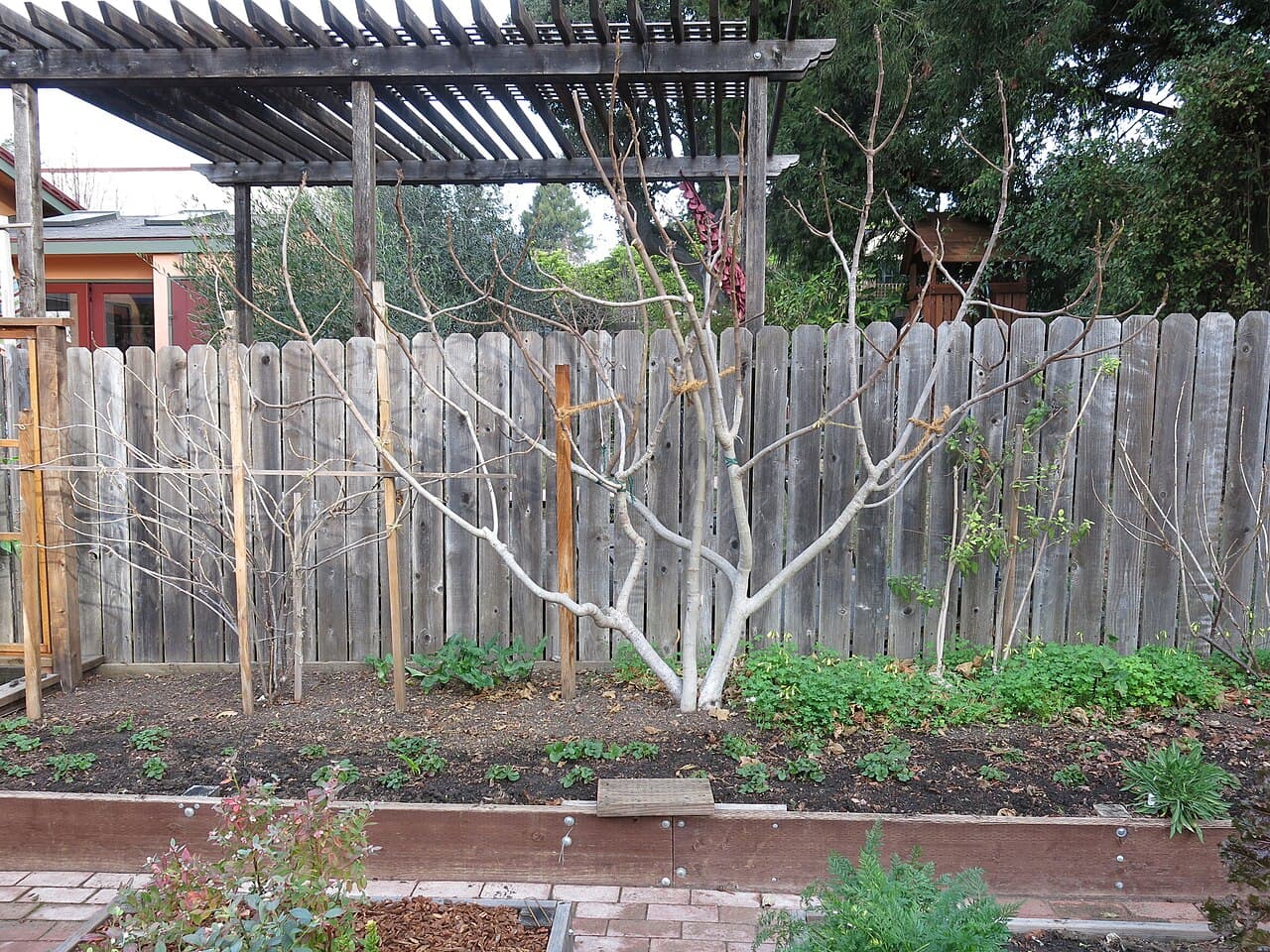
What the materials cost in 2022
Extension's Roanoke County office averaged three price searches in 2022 for one standard bed 4 feet by 8 feet and 12 inches deep.[1] Its totals, materials only:
- Mounded earth, soil raked up from the paths: $0
- Mounded earth covered with woven polypropylene ground cover: $7.70
- Wooden logs with optional rebar: $95.14
- Concrete block: $154.80
- Galvanized metal kit: $176.71
- Untreated wood: $188.09
- Treated wood: $213.43
- Composite decking boards: $220.48
- Retaining wall block: $236.95
- HDPE plastic lumber: $472.13
Fill soil was figured at $2.77 a cubic foot, which came to $88.72 for most of those frames.[1] So on a wooden bed, close to half the materials bill is the soil. Prices will have changed since 2022, so treat these as proportions, not a shopping list. The same publication is frank that raised beds require more work to build and maintain, adding considerable time and expense,[1] which is worth weighing before you pay for frames on ground that already drains well.
What drives an installed price
Size and number of beds. Two small vegetable boxes and a long foundation border are different jobs. Have your measurements ready so every company prices the same thing.
Raised or in the ground. A raised bed is mostly materials and soil delivery. An in-ground bed is mostly labor: cutting out sod, hauling it away and working organic matter into the soil. For a bed of shrubs, Extension describes incorporating 3 to 5 inches of organic matter into the entire bed, to the depth of the root balls.[3] That is a lot of compost on a big bed.
Soil and access. Bulk soil and compost are cheaper by the truckload than by the bag, but someone has to move it. A backyard reached only through a narrow gate, a slope or rocky ground adds hours.
Plants. The plant list is often the biggest line. Larger pots cost more, and for shrubs Extension notes that spacing is a compromise between plants growing together quickly and the cost of buying more plants.[3] Wider spacing costs less now and fills in later.
Mulch. Mulch goes on 2 to 3 inches deep,[3] so measure the bed area and ask how many cubic yards the quote includes.
Soil testing. The Virginia Tech Soil Testing Lab listed its routine soil test at $10.00 for Virginia samples, with organic matter $4.00 and soluble salts $2.00 extra, when we checked on October 26, 2026.[2] A test keeps you from paying for lime or fertilizer the soil does not need.
Utility marking. Someone must contact Virginia 811 at least 3 working days in advance of any digging,[7] and the service that marks buried utility lines is free.[7] There is no locate fee to pass on to you.
Irrigation. Drip lines or sprinklers tied into the house supply are their own trade: in the Board for Contractors' rules, landscape irrigation and outdoor sprinkler systems are a separate specialty.[5]
Licences and contracts on bigger jobs
Virginia law defines Class C contractors as those whose single contract or project is over $1,000 but less than $30,000,[4] and the Board for Contractors' landscape service specialty covers the alteration or improvement of a land area by excavation, clearing, grading, retaining walls for landscaping, or placement of landscaping timbers.[5] DPOR's consumer guide says that if the work you are considering is valued at $1,000 or more, a valid Virginia contractor licence is required for the licence category in which the contractor is to work.[6] Ask for the company's licence number and check it.
DPOR's consumer guide recommends that you get at least three written bids based on the same plans and specifications,[6] and warns that a bid substantially lower than the others probably means a mistake or missing work.[6] Its rule of thumb is a deposit of no more than 10 percent of the total price or $1,000, whichever is less,[6] and it notes that Virginia law requires licensed contractors to give a written contract for residential work.[6]
Getting a quote you can compare
Ask each business to put these on its written quote:
- each bed's size, location and depth of soil
- the frame material, or "in-ground" if there is none
- the soil and compost, by type and cubic yards
- every plant with its pot size and spacing
- the mulch type and depth
- sod removal, debris hauling and cleanup
- who requests the utility locate
- start and finish dates and the payment schedule
If you would rather build the frames yourself and pay only for soil and plants, see how to build a raised garden bed.
Stop and call a pro if
- The site slopes enough that a bed would hold back soil; that is retaining wall work, not a planter.
- Water pools where you want the beds and the fix needs regrading or a drain.
- You want irrigation connected to your water supply.
- The plan includes large shrubs or trees that need equipment to move and set.
Browse the lawn and landscaping answers, see garden bed and planting services, or look up lawn and landscaping businesses around Blacksburg. For written prices on your own plan, describe the job once and local businesses quote it.
Common questions
- Why don't you give an average installed price?
- We found no Virginia agency that publishes one, and garden bed jobs vary too much: one cedar box filled with soil and a long shrub border with dozens of plants are both called garden beds. The dated figures here are materials only; compare written quotes for your own plan.
- What is the cheapest kind of raised bed?
- In Extension's 2022 comparison, a mounded bed of soil raked up from the paths cost nothing in materials, and covering it with woven ground cover added $7.70. Of the framed beds, a wooden log frame was cheapest at $95.14 and HDPE plastic lumber the most expensive at $472.13.
- Does a landscaper need a licence to install garden beds in Virginia?
- DPOR says a valid Virginia contractor licence is required when the work is valued at $1,000 or more.[^dpor-hire] Class C covers single jobs over $1,000 but under $30,000.[^va-54-1-1100] The Board for Contractors' landscape service specialty covers excavation, grading and placing landscaping timbers. Look the company up on DPOR before you sign.
- Is a soil test worth paying for before beds go in?
- Yes, it is inexpensive. The Virginia Tech lab listed its routine test at $10.00 for Virginia samples when we checked on October 26, 2026. The report tells the installer how much lime and fertilizer to add, so you are not paying for amendments the soil does not need.
- What should be in the contract?
- The beds' sizes and locations, the frame material, the soil type and volume, each plant with its size and spacing, mulch depth, cleanup and sod removal, start and finish dates, the total price and the payment schedule. DPOR advises getting every promise in writing.
Sources
- [1] Comparison of Raised Bed Methods, Materials, and Costs (SPES-425), Virginia Cooperative Extension, Roanoke County Office and Virginia Tech. Checked October 26, 2026.
- [2] Sample Submission: Virginia Tech Soil Tests and Their Cost, Virginia Tech Soil Testing Laboratory. Checked October 26, 2026.
- [3] Shrubs: Functions, Planting, and Maintenance (426-701), Virginia Cooperative Extension, Virginia Tech. Checked October 26, 2026.
- [4] Code of Virginia § 54.1-1100. Definitions, Virginia General Assembly, Legislative Information System. Checked October 26, 2026.
- [5] 18VAC50-22-30. Definitions of specialty services, Virginia Administrative Code, Board for Contractors. Checked October 26, 2026.
- [6] What You Should Know Before You Hire a Contractor, Virginia Board for Contractors, Department of Professional and Occupational Regulation. Checked October 26, 2026.
- [7] Homeowners, Virginia 811. Checked October 26, 2026.
Want a pro to handle it?
Describe the job once. Licensed local businesses send quotes, and you pay only when you book one.
Get a quote from a local pro