How do I build a raised garden bed?
Pick a sunny, well-drained spot, contact Virginia 811 before you dig, and build a frame about 4 feet wide and 6 to 12 inches tall from rot-resistant or arsenic-free treated wood, block or metal. Loosen the ground underneath, fill the frame with good garden soil or amended native soil, test the soil, and space plants so their leaves touch at maturity.
Free to ask. Local shops send quotes, and you pay only when you book one.
By Kasra Taheri, Founder, LoclisPublished
Researched and drafted with AI, then checked claim by claim against the sources listed below before it was published. Prices and rules change; the dates beside each source say when it was last checked.
Step by step
Read when to stop and call a pro, further down this page, before you start.
Step 1: Pick a sunny spot
Vegetables require full sunlight, so choose the part of the yard with the most direct sun, close to a hose and away from tree roots.[2]
Step 2: Test the drainage
Dig a hole 6 to 10 inches deep, saturate it, refill it and time it; if it takes longer than 10 hours to drain, a raised bed will help.[2]
Step 3: Contact Virginia 811
Request a free utility locate at least 3 working days before you dig, even for shallow digging.[5]
Step 4: Mark the outline
Lay out a rectangle about 4 feet wide with stakes and string, so you can reach the middle from either side.[1]
Step 5: Clear the ground
Skim off the sod and weeds inside the outline, taking extra care to dig out creeping grasses that would grow up through the new soil.
Step 6: Build the frame
Cut the boards to length, join them at the corners with exterior screws into a corner post, and measure the diagonals to check the frame is square.
Step 7: Level it
Set the frame in place, dig the high side down rather than propping the low corners up, and check it with a level.
Step 8: Loosen the soil below
Fork or till the ground inside the frame so the top 10 to 12 inches is loose and drains into the bed above.[3]
Step 9: Fill the bed
Fill it with good garden soil, or native soil amended with organic matter, and heap it slightly above the rim to allow for settling.[1]
Step 10: Test and amend
Send a soil sample to the Virginia Tech lab and add only the lime and fertilizer its report recommends.[4]
Step 11: Plant close
Space plants at equal distances so their leaves touch at maturity, which shades out many weed seedlings.[3]
Step 12: Mulch the paths
Spread wood chips or mulch in the paths between beds, but avoid putting them on top of landscape fabric.[2]
A raised bed is a box of good soil on top of the ground. The soil drains better, warms sooner in spring and never gets walked on. For most Virginia yards, a frame about 4 feet wide and 6 to 12 inches tall, as long as you like and filled with good garden soil, is the right place to start. The whole job takes a weekend with ordinary hand tools and a drill.
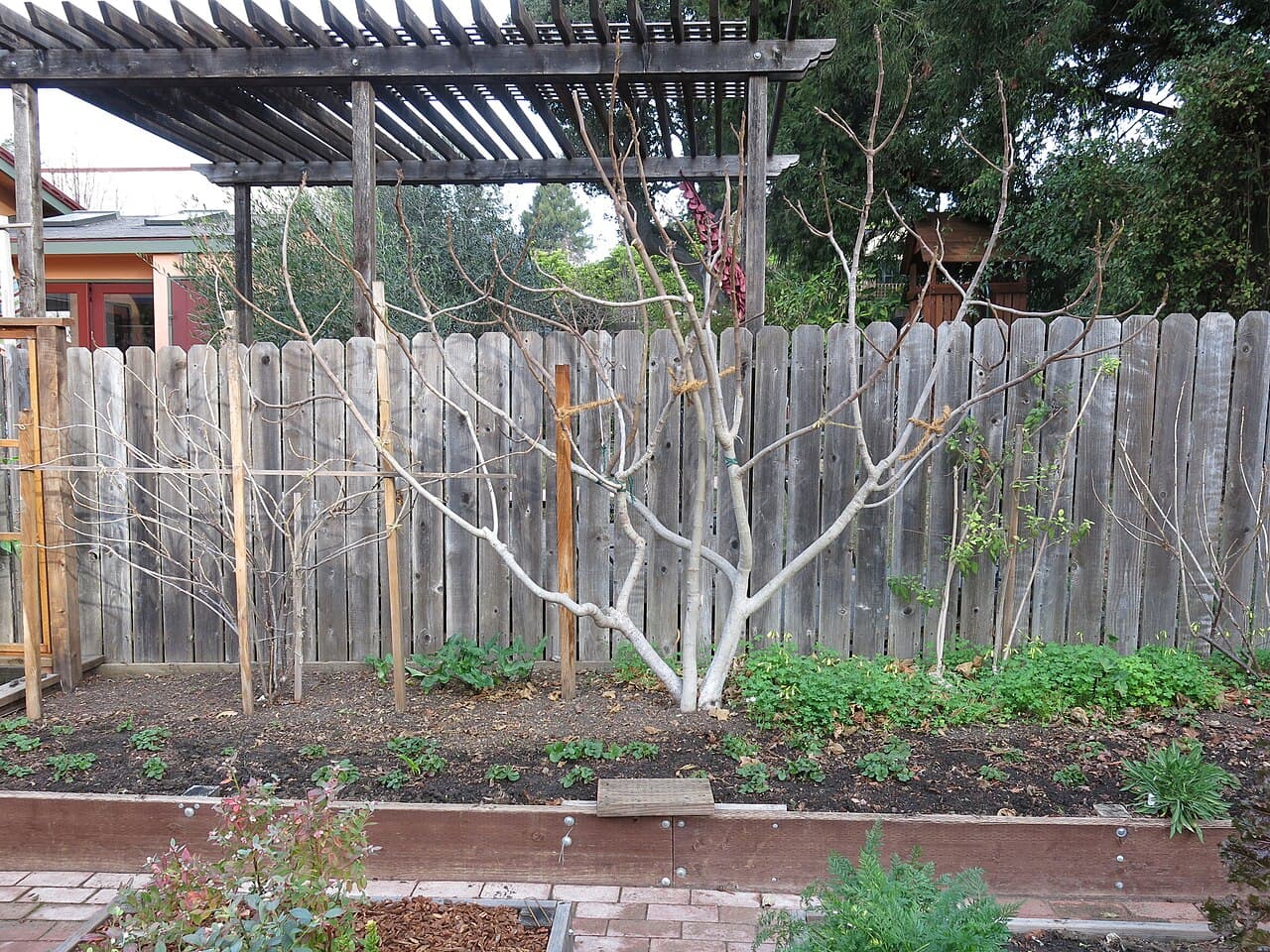
First, decide whether you need one
Raised beds earn their keep on wet or heavy ground. Virginia Cooperative Extension notes that soil in raised beds is better drained than soil outside the bed, and that it warms up faster in spring, allowing earlier planting.[1] If your soil already drains well, plants will grow successfully on flat ground,[2] and a plain in-ground bed costs far less.
To find out, Extension's Roanoke County office suggests a percolation test: dig a hole 6 to 10 inches deep, fill it several times to saturate the soil, then fill it again and time how long it takes to drain. If it takes longer than 10 hours, a raised bed is probably necessary.[2]
Older city and suburban lots raise one more question. Urban areas are widely contaminated with lead from old paint, fuels and industry, and research found that a permeable layer of landscape plastic under new soil did not reduce lead in vegetables.[2] If you are building to get away from contaminated soil, the same publication recommends complete isolation from the underlying soil with a lead-free impermeable barrier with drainage holes, or adding generous amounts of compost to make the lead less available to plants.[2]
Size and height
Width matters more than length. Beds 4 feet wide, an arm's length from either side, let you reach the middle without stepping in.[1] Extension's intensive gardening guide suggests 3 to 4 feet wide and as long as you like, and working from the sides keeps the soil from being compacted.[3]
Height depends on drainage and on how far you want to bend. In most situations a 6- to 8-inch height will do, and side supports are not needed for beds less than 6 inches tall.[1] A bed 6 inches tall does not save your back much, while walls 2 feet tall give you a seat and limit bending.[2] Taller beds take more soil to fill and push harder on their sides, so they need sturdier corners.
Leave paths wide enough for a wheelbarrow and your mower between beds.
Choosing a material
- Untreated wood. The simplest frame, but untreated southern pine may only last a few years before rotting, while eastern redcedar heartwood resists decay and lasts longer.[2]
- Treated lumber. Arsenic compounds are banned from newer wood treatments, but chemicals in treated wood still leach into the adjacent soil, and vegetables should not touch the wood.[2] Virginia Tech recommends buying alkaline copper quaternary (ACQ) treated lumber rather than chromated copper arsenate (CCA).[1] CCA wood went into decks and playsets until manufacturers stopped making it for homeowner uses in December 2003,[6] so skip old salvaged boards. Do not burn the offcuts: EPA says not to burn CCA or other preservative-treated wood in a residential setting.[6]
- Concrete block. Blocks do not rot, but they eat growing room: a block bed with outside dimensions of 4 by 8 feet has 18 square feet inside, against 30 for a wooden bed the same size.[2] Setting them on 4 to 6 inches of compacted gravel keeps them from sinking, and each block weighs around 30 pounds.[2]
- Galvanized metal. Kits are light and quick to put together; most beds are galvanized steel 20 to 24 gauge thick.[2]
- Composite decking. Composite lumber lacks the lateral strength of wood and bends easily, and soil contact with it is not recommended by manufacturers.[2]
Filling and planting
Work out the soil you need before you order: length times width times depth, in feet, gives cubic feet, so a 4-by-8-foot bed filled 12 inches deep takes 32 cubic feet. Extension's advice is simply to measure the volume and buy enough soil to fill it.[2] You can import good garden soil or amend the existing soil with organic matter, which improves soil structure and helps heavy clay drain.[1] Either way, loosen the ground under the frame first, so the top 10 to 12 inches has a loose tilth.[3]
Take a soil sample a few months before you start a vegetable garden or flower bed, so lime and fertilizer have time to work.[4] For vegetable and flower gardens, sample 6 to 8 inches deep.[4]
When you plant, space everything at equal distances in every direction rather than in rows. The close spacing forms a nearly solid leaf canopy that acts as a living mulch, cutting water loss and keeping weeds down.[3]
Keeping the edges clean
The edge is where raised beds cause work. Perennial weeds such as bermudagrass can establish themselves under a wooden frame and keep invading the bed,[2] and a mower cannot reach the strip right against the wall. Wood chips or mulch in the paths keep that strip down, but do not spread them over landscape fabric: the mulch decomposes into soil and weeds eventually grow on top of the barrier.[2] For grass creeping in from the lawn, see why lawn edges keep growing into cracks.
Before you dig
Anytime you break ground, even to start a garden, Virginia 811 asks you to contact it at least 3 working days in advance.[5] It also stresses that there is no allotted depth before you need to call, because many utilities are buried just a few inches below the surface.[5] The marking is free.
Stop and call a pro if
- The bed would sit on a slope, so its downhill side holds back soil. That is a retaining wall, which is structural work.
- Utility marks run through the spot you picked. Move the bed rather than digging near the line.
- The yard is next to an old painted house or an older urban lot and you want the soil tested for lead before growing food.
- You want permanent irrigation tied into the house water supply. Virginia's contractor regulations treat landscape irrigation and outdoor sprinkler systems as their own licensed specialty.[7]
- The design calls for tall stone or block walls, regrading, or a drainage pipe to carry water away.
For what it costs to have one built, read what garden bed installation costs in Virginia. Browse the lawn and landscaping answers, see garden bed and planting services, or look up lawn and landscaping businesses around Blacksburg. To have beds built for you, describe the job once and local businesses quote it.
Common questions
- How deep should a raised garden bed be?
- Virginia Tech says a 6- to 8-inch height suffices in most situations, and roots can also grow down into the loosened ground below the frame. Go taller only if the site is very wet or you want to garden with less bending; a bed with 2-foot walls doubles as a seat.
- Is pressure-treated wood safe for a vegetable bed?
- Current treated lumber no longer uses arsenic, and Virginia Tech suggests ACQ-treated wood over the old CCA type. Chemicals can still leach into the soil next to the boards, so keep vegetables from touching the wood. Untreated eastern redcedar is the rot-resistant alternative.
- Do I need to put anything under a raised bed?
- Usually not. Remove the sod and loosen the soil so water drains down. A barrier only helps if the soil underneath is contaminated with lead, and then it has to be an impermeable, lead-free one with drainage holes, not landscape fabric.
- What soil should I fill a raised bed with?
- Good garden soil, or your own soil mixed with organic matter such as compost. Measure the bed first: length times width times depth, in feet, gives the cubic feet to order. Test the finished soil before adding fertilizer.
- Do I have to call 811 to build a raised bed?
- If you dig at all, yes. Virginia 811 asks homeowners to contact it at least 3 working days before breaking ground, with no minimum depth, because many utility lines are buried only a few inches down. The locate service is free.
Sources
- [1] Container and Raised-Bed Gardening (426-020), Virginia Cooperative Extension, Virginia Tech. Checked October 26, 2026.
- [2] Comparison of Raised Bed Methods, Materials, and Costs (SPES-425), Virginia Cooperative Extension, Roanoke County Office and Virginia Tech. Checked October 26, 2026.
- [3] Intensive Gardening Methods (426-335), Virginia Cooperative Extension, Virginia Tech. Checked October 26, 2026.
- [4] Soil Sampling for Residential Areas (452-129), Virginia Cooperative Extension, Virginia Tech. Checked October 26, 2026.
- [5] Homeowners, Virginia 811. Checked October 26, 2026.
- [6] Chromated Arsenicals (CCA), U.S. Environmental Protection Agency. Checked October 26, 2026.
- [7] 18VAC50-22-30. Definitions of specialty services, Virginia Administrative Code, Board for Contractors. Checked October 26, 2026.
Want a pro to handle it?
Describe the job once. Licensed local businesses send quotes, and you pay only when you book one.
Get a quote from a local pro