How much does it cost to have whole-house Wi-Fi installed in Virginia?
It depends on whether you need only a mesh kit or also cabling. When we checked on October 27, 2026, NETGEAR listed a two-satellite Orbi mesh kit at $299.99, $599.99 or $1,799.99, depending on the model. Labor for cabling varies with the number of runs and how hard they are to reach, so get at least three written bids.
Free to ask. Local shops send quotes, and you pay only when you book one.
By Kasra Taheri, Founder, LoclisPublished
Researched and drafted with AI, then checked claim by claim against the sources listed below before it was published. Prices and rules change; the dates beside each source say when it was last checked.
Step by step
Read when to stop and call a pro, further down this page, before you start.
Step 1: List the weak rooms
Walk the house with a phone speed test and list the rooms and floors where the signal is poor.
Step 2: Check the kit's coverage
Compare the house's size and floors with the mesh kit's estimated coverage in square feet, and note how many satellites it needs.[1]
Step 3: Price the equipment
Price the kit and any add-on satellites from the maker's own page, and write down the date you looked.[1]
Step 4: Decide which links to wire
Mark the satellites that could use an Ethernet cable instead of a wireless link; those runs are the labor you would be paying for.[2]
Step 5: Get three written bids
Ask for at least three written bids using identical plans and specifications.[6]
Step 6: Check the licence
Look up each contractor's licence and class on the DPOR site before comparing prices.[6]
Step 7: Limit the deposit
Agree to a deposit of no more than 10% or $1,000, whichever is less.[6]
What drives the price
There is no single Virginia price for whole-house Wi-Fi, because the bill is two separate things: equipment and, sometimes, labor. A plug-in mesh kit has a price you can check today. Cabling through your walls does not, and any honest figure depends on your house.
Equipment: what a mesh kit costs
Prices below come from the maker's own page and move with sales. When we checked on October 27, 2026, NETGEAR listed its Orbi 370 Series dual-band WiFi 7 mesh kit, with one router and two satellites, at $299.99,[1] its Orbi 770 Series tri-band WiFi 7 kit with a router and two satellites at $599.99,[1] and its Orbi 970 Series quad-band WiFi 7 kit with a router and two satellites at $1,799.99.[1] Each of those prices was a sale price, with list prices of $349.99, $699.99 and $1,999.99.[1]
Extra coverage is bought a unit at a time: the same page showed a Nighthawk tri-band WiFi 6E add-on satellite at $89.99 and an Orbi 860 Series add-on satellite at $289.99.[1]
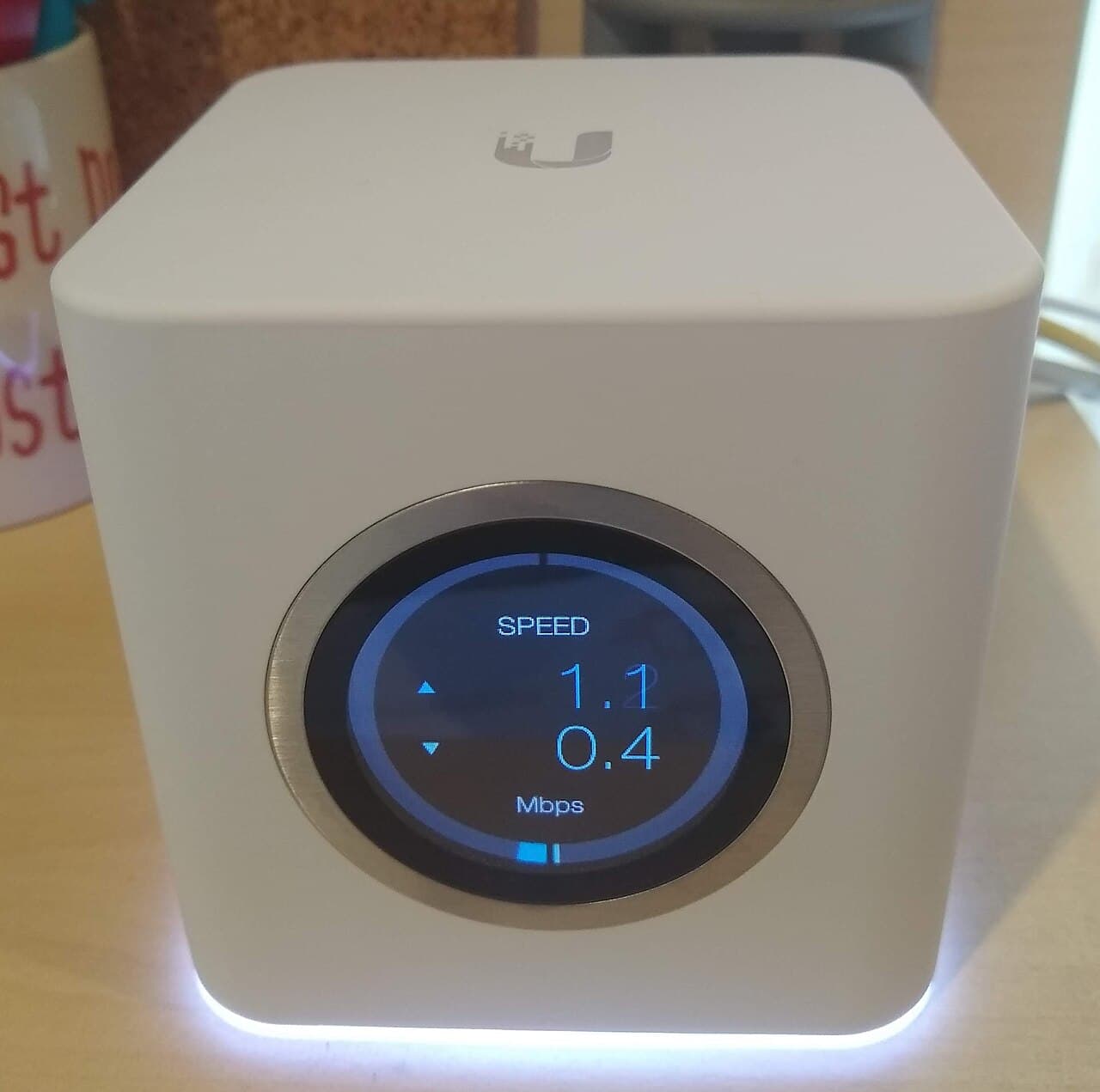
How many units you need depends on the house. Mesh kits include a WiFi mesh router and 1-4 mesh satellite units,[1] and NETGEAR says: "Always check the mesh system's estimated WiFi coverage in sq. ft."[1] A brick, wide or multi-floor home is where you might need more satellite units for denser or wider WiFi coverage.[1]
Labor: when installation costs money
Setting up a kit yourself costs nothing. Paying for installation makes sense when you want cabling between floors or to the far end of the house, because a wired link between units is better than a wireless one: TP-Link describes its system as one that seamlessly blends wired and wireless backhaul between units for faster speeds and lower latency.[2]
We have not found a dated price for that labor from a Virginia primary source, so treat any figure you see online as a guess. What moves the bill:
- Number of cable runs, and whether each goes to a satellite, a TV or a desk.
- How hard the path is: finished walls, a brick house, a basement ceiling or an attic.
- Equipment: who supplies the router, satellites or ceiling access points.
- Wall plates, patch cables and testing, if the quote includes them.
- Trip, minimum charge and cleanup, which small jobs pay disproportionately.
What the licence rules mean for the quote
Cabling is its own specialty in Virginia's contractor regulations. The Board for Contractors defines it as installation, repair, improvement, or removal of electronic or communications systems annexed to real property including telephone wiring, computer cabling.[3] If the work you are considering is valued at $1,000 or more, a valid Virginia Contractor's License is required for the license category in which the contractor is to work.[6] The state's Class C licence covers a contract of over $1,000 but less than $30,000, so a small cabling job can fall in that class: Class C contractors perform or manage construction, removal, repair, or improvements when the total value referred to in a single contract or project is over $1,000 but less than $30,000.[4]
A permit is usually not part of the cost. The building code exempts installation of wiring and equipment that (i) operates at less than 50 volts, (ii) is for broadband communications systems,[5] with exceptions such as plenum spaces and fire-rated construction.
How to compare quotes
DPOR's advice is blunt: "It is advisable to get at least three written bids or estimates using identical plans and specifications so you can compare prices and contractors."[6] Put the room list and the number of runs in writing, and ask each bidder to price the same list. Ask whether the quote includes the equipment, a wall plate for each run, testing and cleanup.
Limit your deposit to 10% down or $1,000, whichever is less.[6]
Stop and call a pro if
- The quote asks for cable through a fire-rated wall or ceiling, such as between a garage and the house.
- New outlets or circuits are in the scope. That is electrical work, so ask the contractor how it will be licensed and permitted.
- A contractor will not show a licence number for a job of $1,000 or more.[6]
- A bid is far below the others and does not list the same runs or equipment.
Getting help in Virginia
If you are deciding who should do the setup, read whether to hire someone to set up a mesh system and how to get good Wi-Fi in every room. For smart-home costs more broadly, see what smart home installation costs in Virginia, browse security and smart home pros, or see more smart home answers.
When you are ready, describe your cabling job once and licensed local pros quote it.
Common questions
- Is a mesh kit enough, or do I need someone to install Wi-Fi?
- For most homes a plug-in kit is enough, and the equipment is the main cost. Pay for installation when you want cable run through walls or ceilings so the satellites connect by Ethernet instead of wirelessly.
- How many mesh satellites do I need?
- It depends on the house. NETGEAR says its kits include a router and 1-4 satellite units, and that a brick, wide or multi-floor home may need more satellites. Check the kit's estimated coverage in square feet against your own floor area.
- Do I need a licence for Wi-Fi cabling in Virginia?
- If the work is valued at $1,000 or more, yes. The DPOR guide says a valid Virginia Contractor's License is required for the license category in which the contractor is to work. The Board for Contractors lists electronic and communications work, including computer cabling, as its own specialty.
- Does Wi-Fi cabling need a building permit?
- Usually not for the low-voltage cabling itself. The building code exempts wiring and equipment that operates at less than 50 volts and is for broadband communications systems, except in a plenum or where it penetrates fire-rated or smoke-protected construction. Ask your contractor to confirm for your locality.
- How much deposit is reasonable?
- DPOR advises limiting your deposit to 10% down or $1,000, whichever is less. Tie later payments to finished work.
Sources
- [1] Mesh WiFi Systems for Seamless Whole-Home Coverage, NETGEAR. Checked October 27, 2026.
- [2] How Does Deco Whole Home Mesh Benefit Your Home WiFi, TP-Link. Checked October 27, 2026.
- [3] 18VAC50-22-30, Definitions of specialty services (Board for Contractors Regulations), Virginia Administrative Code, Virginia General Assembly. Checked October 27, 2026.
- [4] Va. Code § 54.1-1100, Definitions, Code of Virginia, Virginia General Assembly. Checked October 27, 2026.
- [5] 13VAC5-63-80. Section 108 Application for permit (Virginia Uniform Statewide Building Code), Virginia Administrative Code, Virginia General Assembly. Checked October 27, 2026.
- [6] What You Should Know Before You Hire a Contractor, Virginia Board for Contractors, DPOR. Checked October 27, 2026.
Want a pro to handle it?
Describe the job once. Licensed local businesses send quotes, and you pay only when you book one.
Get a quote from a local pro