How much does it cost to move belongings into a storage unit in Virginia?
There is no set Virginia price. The cost is the unit rent plus the move itself, and the move depends on whether you drive a rental truck or hire a crew, how much you own, and how far you carry it. For household goods moves under 31 road miles, DMV's property carrier permit carries no tariff requirement, so compare written quotes on one inventory.
Free to ask. Local shops send quotes, and you pay only when you book one.
By Kasra Taheri, Founder, LoclisPublished
Researched and drafted with AI, then checked claim by claim against the sources listed below before it was published. Prices and rules change; the dates beside each source say when it was last checked.
Step by step
Read when to stop and call a pro, further down this page, before you start.
Step 1: Size the load
Work out roughly how much you are storing by listing the large pieces and counting boxes, so every quote starts from the same list.
Step 2: Choose a unit near both ends
Compare facilities by distance to your home as well as by rent, since every extra mile adds time or fuel to each trip.
Step 3: Decide who does the work
Choose between a rental truck and your own labour, labour-only help with a rental truck, or a full-service mover.
Step 4: Ask each mover for a written estimate
Give each company the same inventory and ask for the hourly rate, crew size, minimum hours, travel charge and every fee in writing.
Step 5: Price the truck and the fuel
If you will drive, ask the rental company for the daily rate, mileage charge and fuel policy, and allow for fuel at the truck's own mileage.[3]
Step 6: Add the coverage
Ask your insurer how your policy treats belongings stored away from home, and compare it with what the facility or mover offers.[4]
Step 7: Add up the full cost
Total the first month of rent, any fees at move-in, the move itself and coverage, then compare the totals.
There is no single Virginia price for moving into a storage unit. The cost has two parts: the unit's rent, which the facility sets, and the move itself, which depends on how you do it and how much you own. For the move, get written quotes from several companies on the same inventory and compare them line by line.
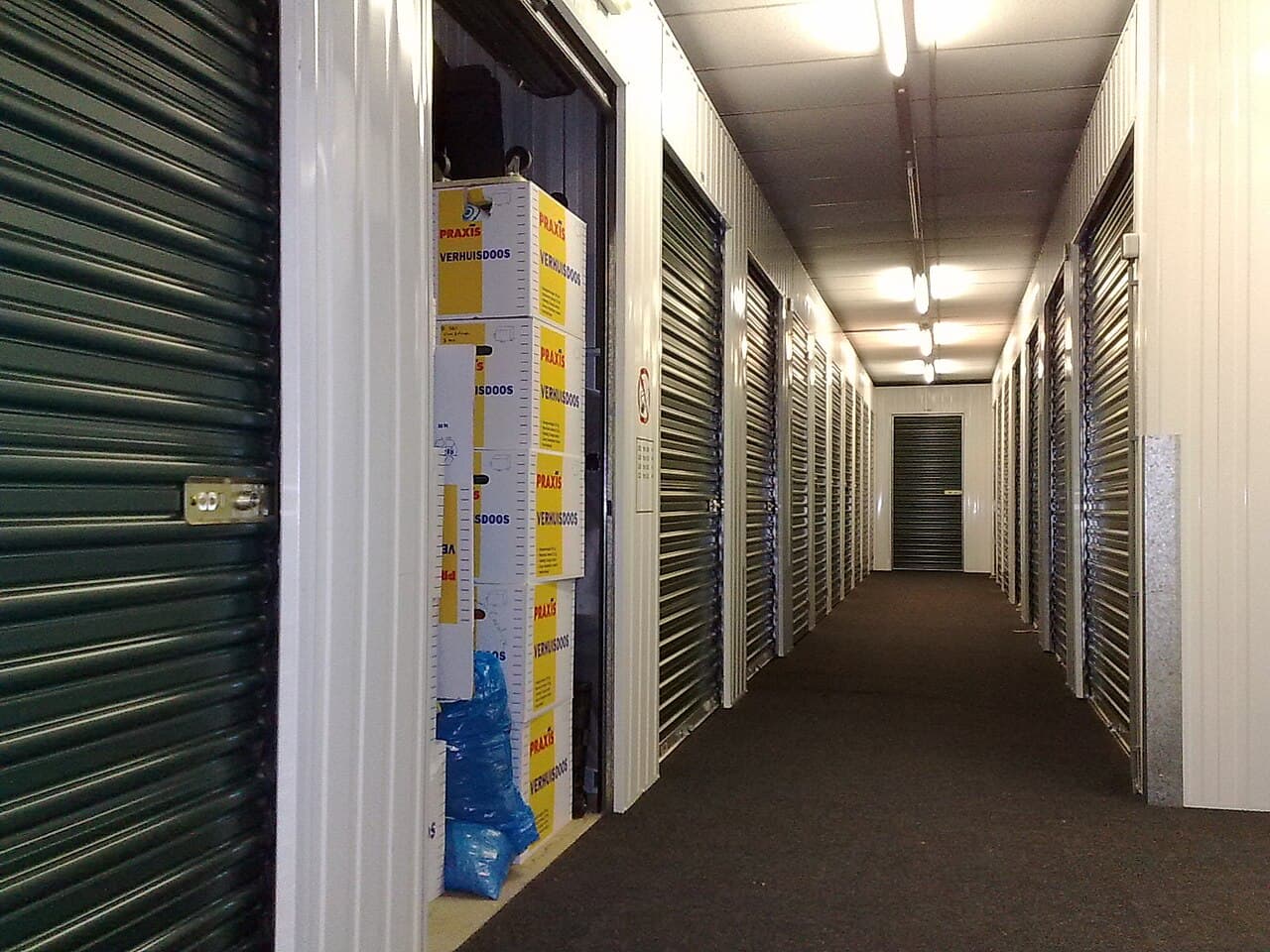
What moves the price
A move into storage is usually short, so the price is mostly time and handling:
- How much you own. A few boxes and a couch are a very different job from a three-bedroom house. The bigger the unit, the more labour it takes to fill.
- Who does the lifting. Renting a truck and loading it yourself costs a truck, fuel and your time. Hiring labour-only help adds an hourly rate. A full-service mover adds the truck, the crew and travel.
- Truck size and fuel. A 10-foot rental truck holds up to 402 cu. ft. and is rated at about 12 miles per gallon,[3] so a small unit may need one trip and a big one several. The truck's size, the distance and the number of trips decide your fuel bill.
- Access at both ends. Stairs, elevators, long carries from the street and a unit at the back of the building all add crew time.
- Packing and materials. Boxes, blankets and tape are extra, and a mover who packs charges for the time.
- Heavy items. Pianos, safes and very large pieces often cost extra or need a specialist; see how much piano moving costs in Virginia.
- Coverage. Stored belongings need insurance, and so does the move; see below.
Ask for a written minimum charge. Small jobs often cost close to the same as moderate ones.
What Virginia's rules cover
The state's pricing rules depend on distance. For DMV, household goods includes goods moved "between a residence and a storage facility with the intent to later transport to a residence."[1] A mover with a property carrier permit may carry household goods only if they are delivered to a place that is less than 31 road-miles from where they were picked up, and the permit has a tariff and time schedule requirement of none.[1] So for most storage moves, the company sets its own price.
For deliveries over 30 miles, the carrier must charge the rates listed in the tariff filed with DMV.[2]
Whatever the distance, ask for the estimate in writing.
Insurance: two things to price
First, your belongings in the unit. A homeowners policy provides more limited coverage for personal property if it is stolen or damaged away from home,[4] so ask your agent how it treats storage. Ask the facility what proof of cover it wants and whether it sells a plan; any plan's price is part of your monthly cost.
Second, the move. Ask any mover what it pays if an item is lost or broken, and what higher coverage costs. If you drive the truck yourself, find out whether the rental's protection covers your cargo and what your own auto policy does not.
How to get a quote you can compare
Make one list: the rooms, the large furniture, a count of boxes, and anything heavy, fragile or awkward. Note stairs, elevators and parking at both ends. Send the same list to every mover and ask for the hourly rate, crew size, minimum hours, travel time, materials and coverage in writing, then compare totals, not hourly rates.
Do not forget the move-in costs on the storage side. Ask the facility about the first month's rent, any admin fee and a lock, and read the rental agreement before you sign. For packing the unit, see how to pack a storage unit so you can find things later; for the general cost of in-state moves, see how much local movers cost in Virginia.
Stop and call a pro if
- A company quotes over the phone without seeing or listing anything. That price is a guess; ask for a written estimate based on your inventory.
- A mover asks for full payment up front with nothing in writing. Keep looking.
- You are moving a piano, a safe, a pool table or something that needs more than two people. Get a specialty quote rather than guessing.
- The move is over 30 miles. Ask whether the company files a tariff with DMV and which rates apply.
Getting quotes on Loclis
Browse more junk removal and moving answers or the moving and storage listings. When you are ready, describe your move once and local movers will quote it.
Common questions
- Does Virginia regulate what movers charge to move me into storage?
- Only for longer moves. DMV's household goods definition covers goods moved between a residence and a storage facility, and a carrier delivering over 30 miles must charge the rates in its filed tariff.[^dmv-household-goods] For moves under 31 road miles there is no tariff requirement.[^dmv-property-carrier]
- Is it cheaper to rent a truck and move myself?
- Often, for a small load, because you pay for the truck and fuel rather than a crew's hours. You then carry the lifting, the driving and any damage yourself, so compare it against a quote that includes labour.
- Does my homeowners or renters policy cover things in storage?
- Possibly, in a limited way. The State Corporation Commission says a homeowners policy provides more limited coverage for personal property that is stolen or damaged away from home.[^scc-homeowners] Ask your insurer before you move.
- Will a mover give me a binding price?
- Ask, and ask for it in writing. A price over the phone without an inventory is a guess, so give each company the same list and request the hourly rate, crew size, minimum hours, travel time and fees on paper.
- What should I do before I pick a unit size?
- Inventory what you are storing, then compare it with each facility's size guide and ask staff to confirm what fits.
Sources
- [1] Property Carrier, Virginia Department of Motor Vehicles. Checked October 27, 2026.
- [2] Household Goods Carrier, Virginia Department of Motor Vehicles. Checked October 27, 2026.
- [3] 10ft Moving Truck Rental, U-Haul. Checked October 27, 2026.
- [4] Virginia Homeowners Insurance Guide, Virginia State Corporation Commission, Bureau of Insurance. Checked October 27, 2026.
Want a pro to handle it?
Describe the job once. Licensed local businesses send quotes, and you pay only when you book one.
Get a quote from a local pro