How do I pack a storage unit so I can find things later?
Decide what you will need to reach, then load the unit in layers: big, rarely used pieces along the walls, the things you will want again nearest the door. Leave an aisle about one or two feet wide down the middle, label every box on at least two sides, and keep an inventory of what is in which box.
Free to ask. Local shops send quotes, and you pay only when you book one.
By Kasra Taheri, Founder, LoclisPublished
Researched and drafted with AI, then checked claim by claim against the sources listed below before it was published. Prices and rules change; the dates beside each source say when it was last checked.
Step by step
Read when to stop and call a pro, further down this page, before you start.
Step 1: Sort by how often you will need it
Set aside the items you may want to reach and pack your least-used items for the back.
Step 2: Clean and dry everything
Clean furniture and other items before storing them and let them dry completely, since mould will not grow without moisture.[1]
Step 3: Pack boxes heavy at the bottom
Put heavier items in smaller boxes and lighter items in larger boxes, heavy items first and the rest of the space filled with lighter ones.
Step 4: Label and list
Label every box on at least two sides and write or photograph an inventory of the contents.
Step 5: Load the big pieces first
Place large furniture and appliances along the walls first, tallest toward the back and shorter items nearer the door.
Step 6: Leave an aisle
Keep a walkway about one or two feet wide down the middle of the unit.
Step 7: Face labels to the walkway
Stack boxes with the labels facing the aisle, heavier boxes at the bottom, and keep the stacks stable rather than tall.
Step 8: Draw a map
Before you close the door, sketch where each group of boxes and furniture went and keep the sketch with your inventory.
Pack the unit in layers and write down what went where. Put big, rarely used pieces along the walls, keep the things you may want again nearest the door, leave a walkway down the middle, and label every box. Twenty minutes of planning at move-in saves hours of unstacking later.
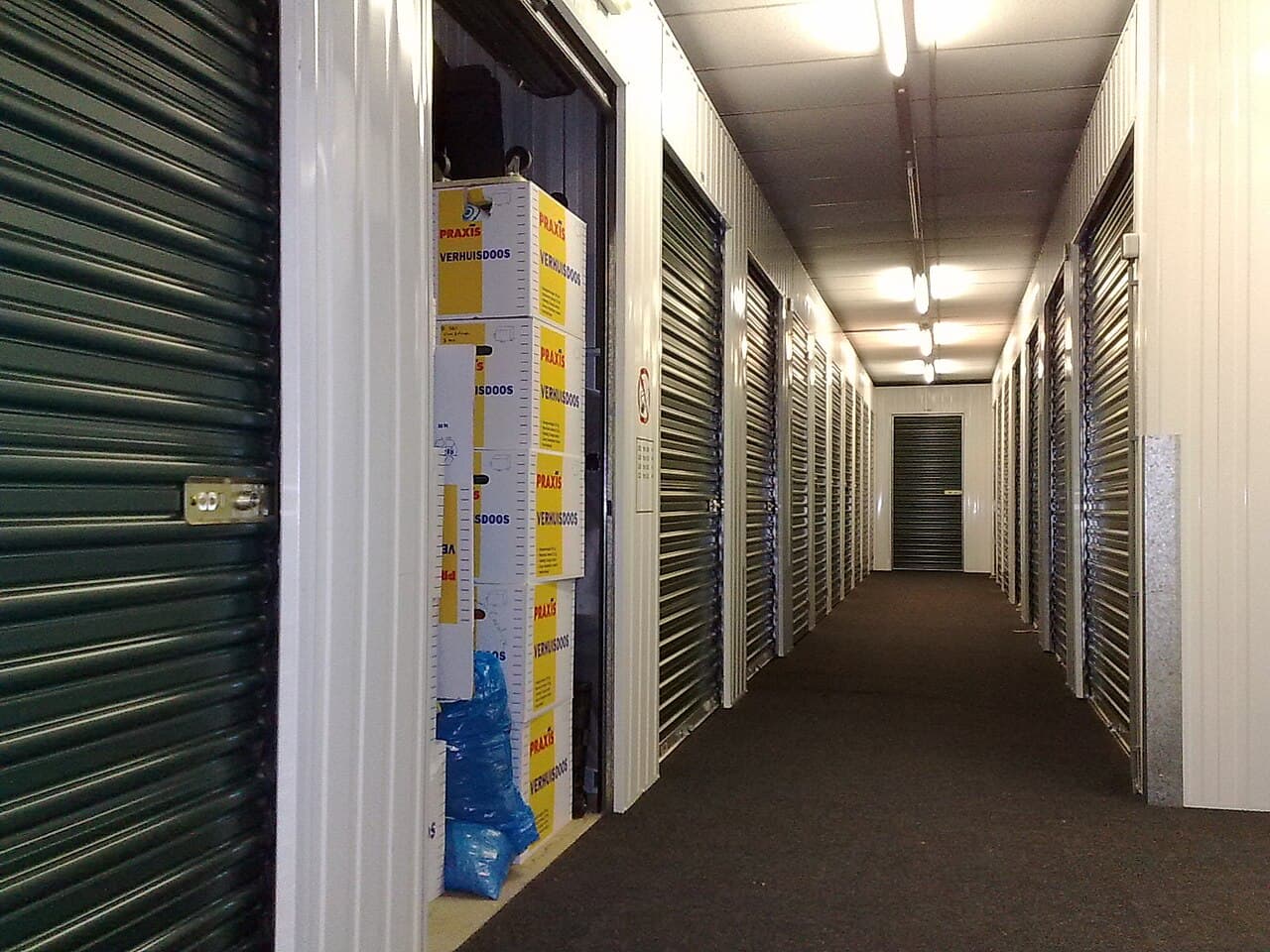
Plan before the first box goes in
Start by sorting what you are storing by how often you will need it. The rule is simple: least-used items go in the back and most-used near the front. Seasonal decorations, a child's outgrown clothes and winter gear all belong near the door; a spare dining set does not.
Then make a list. Labels on boxes help, but a list lets you search without opening anything. Keep a printed or digital inventory of your boxes and their contents. A photo of each box in your phone's camera roll works well. It matters for insurance too, because a claim is far easier to document when you know what was in the unit.
Pack the boxes so they stack
Use boxes of a uniform size where you can, because they stack in even rows. Put heavier items in smaller boxes and lighter items in larger boxes, so no box becomes too heavy to lift off a stack. Inside each box, the heavy things go at the bottom and the gaps get filled with something light so nothing shifts.
Label every box on at least two sides, so you can read it however it ends up facing. Name the room and the contents, not just "kitchen". "Kitchen: pots, baking sheets" tells you whether to open it.
Take furniture apart where it comes apart. Removing legs from couches and kitchen tables, disassembling bed frames entirely, removing couch cushions and separating sectionals shrinks each piece's footprint. Put the screws and bolts for each piece in a small bag with a label of which furniture set it belongs to, and keep the bags in a labelled box rather than taped to the furniture.
Clean, dry and cover what you store
Clean furniture and household items first, and make sure your furniture and items have time to dry completely before they go in. Mould needs moisture, and EPA says of molds that none of them will grow without water or moisture,[1] so damp fabric is what turns into mould in a closed unit; food residue draws pests. If anything got wet, EPA advises you to dry water-damaged areas and items within 24-48 hours to prevent mold growth.[1] Cover upholstery and mattresses with breathable blankets or sheets or a mattress bag. Don't use plastic wrap on couches or chairs, as it can trap moisture.
Keep paper, photographs and anything you cannot replace out of damp spots. Damp air is what grows mould,[1] which is one reason people with photos, leather or wood furniture choose a climate-controlled unit.
Load in layers
Put the big, heavy things in first, along the walls. Store the taller and bulkier items closest to the walls, with the tallest items in the back and the shorter items towards the door. That gives you a clear view of the whole unit from the doorway.
Build box stacks on top of that, and always stack from heavy to light. Flat-topped furniture such as a table or a desk can carry boxes too, provided the stack is stable and not top-heavy. Keep stacks low enough that you can take a box off the top without reaching.
Leave an aisle and face the labels out
Leave an aisle down the middle, about one or two feet wide. Label all your boxes and face the labels towards the small walkway so you can read them from where you stand. If you will visit often, leave extra room around the things you will want most.
When the door is about to close, sketch the layout on the back of your inventory: which wall holds the mattresses, where the winter boxes are, which stack has the tax papers. A sketch is a map you will actually use in a year.
What not to put in the unit
Read your rental agreement for the prohibited list. Fuel, gas cylinders, hazardous liquids and food are commonly barred. Empty-looking propane tanks still count. Take the mower and the gas can home or dispose of them separately.
Stop and call a pro if
- You have a piano, a safe, a pool table or other very heavy pieces. Ask for a specialty mover's quote; see how movers move a piano safely.
- You cannot lift what has to go on a high stack. Hire loading help or a mover instead of risking your back.
- The unit is damp, smells musty or shows pests. Move your things out and tell the facility before you load anything.
- The unit will hold hazardous liquids, fuel or gas cylinders. The facility will not allow them; EPA's advice is to contact your local environmental, health, or solid waste agency about household hazardous waste collection.[2]
Getting help in Virginia
If the move itself is more than you want to take on, see how much it costs to move belongings into storage in Virginia, how much professional packers cost and how to pack dishes for a move. Browse more junk removal and moving answers or the moving and storage listings.
When you want loading help, describe your move once and local movers will quote it.
Common questions
- Where should the things I will need most go?
- Near the door. Pack your most-used items near the front and your least-used items in the back, so a visit for the holiday decorations does not mean unloading half the unit.
- How wide should the aisle be?
- About one or two feet down the middle, which is enough to walk in and reach the boxes on either side.
- Is it fine to wrap a couch in plastic?
- It is better not to. Plastic wrap on couches or chairs can trap moisture; use a breathable blanket or sheet instead.
- What are you not allowed to store in a unit?
- Facility rules differ, and commonly fuel, gas cylinders, hazardous liquids, food and living plants or animals are barred. Read your own rental agreement for the list.
- How do I keep paper and photographs safe in storage?
- Keep them off the floor and away from leaks, in containers sized so they do not have to be folded, and out of damp, hot spaces. Damp is what grows mould, so a climate-controlled unit is worth considering for photos and papers.
- Do I need to keep an inventory?
- Yes. It saves searching, and a list with photos is what you will want if you ever have to document a loss.
Sources
- [1] A Brief Guide to Mold, Moisture and Your Home, U.S. Environmental Protection Agency. Checked October 27, 2026.
- [2] Household Hazardous Waste (HHW), U.S. Environmental Protection Agency. Checked October 27, 2026.
Want a pro to handle it?
Describe the job once. Licensed local businesses send quotes, and you pay only when you book one.
Get a quote from a local pro