How much does it cost to run a gas line in Virginia?
There is no standard price: a gas line is quoted job by job, and the cost turns on how far the line runs, how easy the route is, how many appliances it feeds, whether it is buried outside, and whether the gas company must upgrade the meter. The permit fee is set by each county or city.
Free to ask. Local shops send quotes, and you pay only when you book one.
By Kasra Taheri, Founder, LoclisPublished
Researched and drafted with AI, then checked claim by claim against the sources listed below before it was published. Prices and rules change; the dates beside each source say when it was last checked.
This is a job for a licensed pro in Virginia
This page explains what the work involves, the permits, what a licensed pro does and what drives the cost. It does not give step-by-step instructions, because this work needs a licence, a permit or both, and doing it wrong can injure someone. Before you hire, check the licence on Virginia's DPOR record.
There is no standard price for a gas line in Virginia: each line is quoted for its own route, and two houses on the same street can need very different jobs. What you can know in advance is what moves the price, what the permit costs where you live, and what a complete quote should include.
What drives the price
Length and route. A short branch to a range in a kitchen over an open basement is the simple case. A run across a finished house, through a crawlspace, or up into an attic takes more labour, and any wall or ceiling that has to be opened has to be patched afterwards. Ask whether drywall repair and painting are in the price or left to you.
How many appliances the line feeds. The pipe has to be sized for everything it serves. A line for one dryer is smaller than a trunk line that will also feed a future furnace, water heater and generator. Planning ahead can cost a little more now and save a second run later.
Pipe material. The line may be rigid steel pipe or flexible corrugated stainless steel tubing (CSST), and the two may be priced differently. The quote should name which one is used. Columbia Gas says CSST should be bonded,[6] so ask whether bonding is included.
Outdoor and buried runs. A line to a grill, fire pit, pool heater, detached garage or standby generator usually means a trench, and the trench means locates. Virginia 811 is free and asks homeowners to contact it three days before digging.[7] If Columbia Gas is also bringing in a new service line, all private underground facilities must be marked before Columbia Gas schedules construction of a new service line, and it suggests a private line locating company for that.[4] A private locate, hand digging near existing lines and restoring the lawn all add cost. Ask whether they are included.
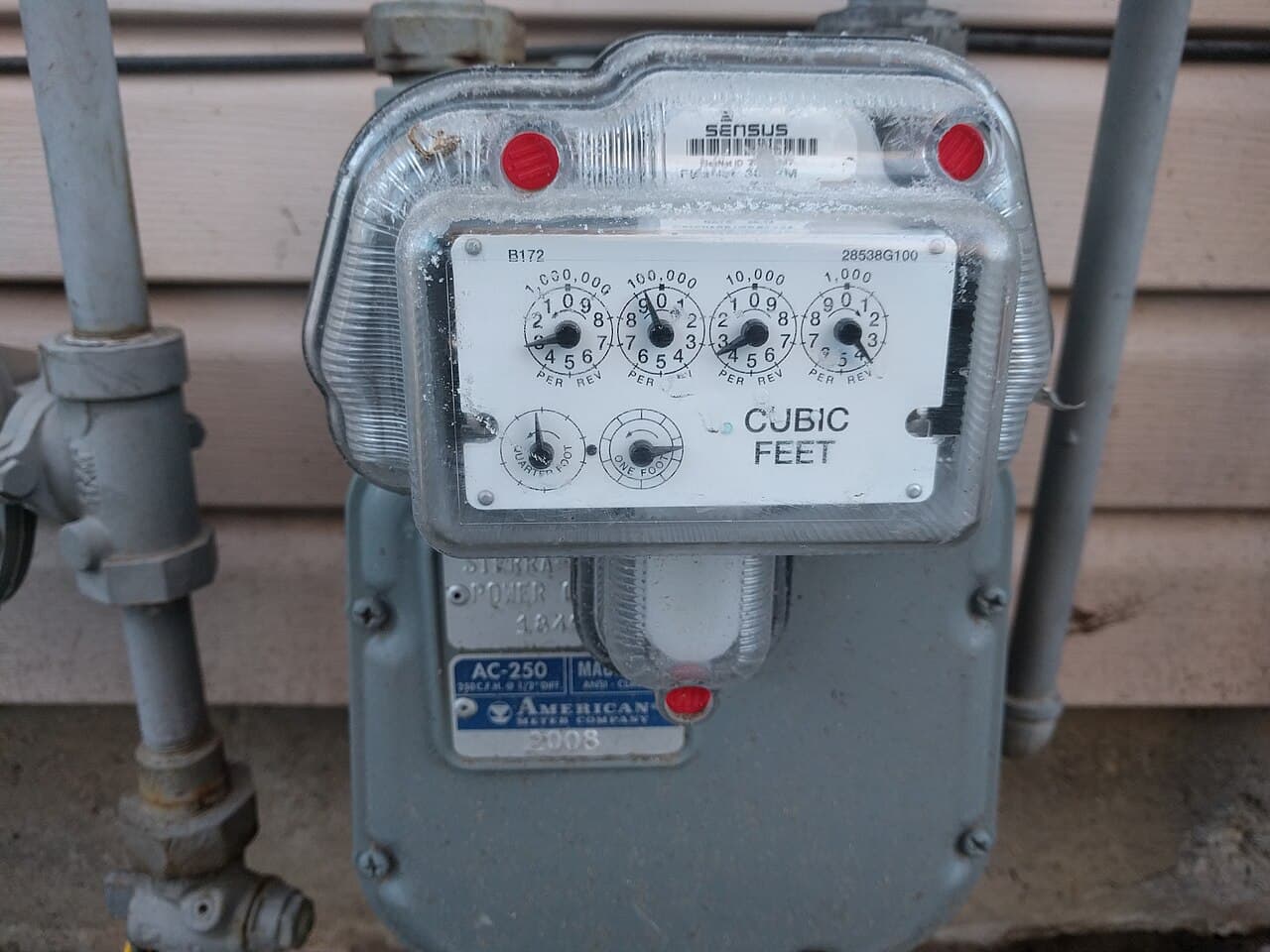
The meter and the service line. A big new load can outgrow what the gas company delivers. Columbia Gas of Virginia asks customers adding equipment to call first so it can confirm there is enough gas pressure,[6] and its New Business team handles right-sizing meters and service lines and meter upgrades.[4] If your home has no gas service at all yet, Columbia Gas of Virginia says that once you hire a contractor, it installs the service line and meter.[5] Other gas companies may work differently, so ask your utility early what, if anything, it charges for its part.
Hookup, testing and start-up. Connecting the appliance, checking for leaks and starting it up should be in the quote. So should a new appliance connector and shut-off valve where they are needed.
The permit and inspection. Virginia's building code requires a permit before work starts on fuel supply systems.[3] Fees are set locally.
What the permit costs
Permit fees are set by each county or city. Two examples:
- Spotsylvania County's over-the-counter residential packet for mechanical work, updated August 2025, lists $100 per trade plus a 2% building surcharge and a $45 processing fee, or $147.00 for a single trade,[1] for jobs such as a furnace or water heater replacement.[1] The packet does not list new gas piping as a job of its own, so ask the county which permit and fee apply to a new line.
- In Montgomery County, when we checked on October 26, 2026, residential plumbing and mechanical trade permits were each $0.03 per square foot of gross building area, with a $45 minimum,[2] plus a 2% state levy and a 2% technology fee with a $10 minimum.[2] The same schedule listed a re-inspection fee of $50,[2] which is a reason to want the work right the first time.
Your contractor normally pulls the permit and builds the fee into the price. Check that the quote says so.
What can offset the cost
If the new line is for a new heating appliance or water heater, ask about utility rebates. Columbia Gas also offers rebates on high-efficiency furnaces, boilers and water heaters installed by a participating contractor.[5] If another company supplies your gas, ask it whether it offers rebates before you buy the appliance.
When to call a licensed pro
For the whole job, including the quote. The business you hire needs a Virginia contractor licence in a class large enough for the contract. A Class C licence covers a single contract over $1,000 but less than $30,000.[8] It also needs a specialty that covers gas, such as the gas fitting contracting (GFC) specialty, which covers the installation, repair, improvement, or removal of gas piping and appliances.[9] Homeowners have a narrow exemption: an owner working on no more than one primary residence that he owns, for his own use, during any 24-month period is exempt from the contractor licensing chapter,[10] but an owner relying on that exemption must still comply with the Uniform Statewide Building Code,[10] so the permit and inspection still apply. Our answer on who can install a gas line in Virginia goes through the licences and that exemption, and you can check any licence on DPOR's lookup.
Stop and call your gas company's emergency line, from outside, if you smell gas at any point. See what to do if you smell gas in your house.
Comparing quotes
Virginia's Board for Contractors advises that you get at least three written bids based on the same specifications,[11] and that you keep the deposit to 10% of the price or $1,000, whichever is less.[11] It also reminds homeowners: "Virginia law requires all licensed contractors to provide a written contract for residential work."[11] And it advises that you hold back the final payment until the job is completely finished,[11] which for a gas line means after it passes inspection.
A quote you can compare names the appliances served, the route and pipe material, the permit, trenching and restoration, meter coordination, and the hookup. For the steps behind each item, read what running a new gas line involves. Loclis lists DPOR-licensed businesses with their licence number and class: see plumbers in Blacksburg or more plumbing answers.
Describe the gas line you need once and licensed local businesses send quotes you can compare side by side.
Common questions
- Is there an average price for running a gas line in Virginia?
- Not one worth relying on. The jobs range from a few feet of pipe to a stove beside an existing line to a long trench out to a generator, so a single average says little about yours. Written quotes for your own route are the only reliable number.
- How much is a gas line permit in Virginia?
- Each locality sets its own fee and names its own permit, so ask your county or city which permit covers new gas piping. For a sense of scale, in Montgomery County, when we checked on October 26, 2026, plumbing and mechanical trade permits were $0.03 per square foot with a $45 minimum, plus a state levy and technology fee. Spotsylvania County's mechanical packet, updated August 2025, lists $100 per trade plus a 2% building surcharge and a $45 processing fee, which comes to $147.00 for a single trade, for jobs such as a furnace or water heater replacement, but does not list new gas piping as a job of its own.
- Does the gas company charge to upgrade my meter?
- Ask your gas company before you sign with a contractor. A large new load can mean a bigger meter or service line, and the utility does that part. Columbia Gas of Virginia handles it through its New Business team.
- Why do gas line quotes vary so much?
- Quotes may assume different routes, pipe sizes, materials or amounts of wall and yard repair, and some include the appliance hookup and permit while others do not. Ask each contractor to price the same scope so you can compare them.
- Can I save money by running the line myself?
- Virginia's contractor law has a narrow exemption for an owner working on no more than one primary residence that he owns and uses, but the building code, the permit and the inspection still apply, and a mistake can cause a leak, fire or carbon monoxide. The gas companies say to leave it to a qualified professional, and Loclis only takes quotes from licensed businesses for gas work.
Sources
- [1] Residential Permit Application, Mechanical Only (Over-the-Counter), updated 8-2025, Spotsylvania County Community Development. Checked October 26, 2026.
- [2] Permit & Inspection Fees, Montgomery County, Virginia, Building Permits & Inspections. Checked October 26, 2026.
- [3] 13VAC5-63-80, Virginia Uniform Statewide Building Code, Section 108 Application for permit, Virginia Administrative Code, Legislative Information System. Checked October 26, 2026.
- [4] Construction and Renovation, Columbia Gas of Virginia. Checked October 26, 2026.
- [5] How to convert to natural gas, Columbia Gas of Virginia. Checked October 26, 2026.
- [6] Appliance Installation: How to safely install your appliances, Columbia Gas of Virginia. Checked October 26, 2026.
- [7] Virginia 811 home page: homeowners, Virginia 811. Checked October 26, 2026.
- [8] Va. Code § 54.1-1100, Definitions, Code of Virginia, Virginia General Assembly. Checked October 26, 2026.
- [9] 18VAC50-22-30, Definitions of specialty services, Virginia Administrative Code, Legislative Information System. Checked October 26, 2026.
- [10] Va. Code § 54.1-1101, Exemptions, Code of Virginia, Virginia General Assembly. Checked October 26, 2026.
- [11] What You Should Know Before You Hire a Contractor, Virginia Board for Contractors, DPOR. Checked October 26, 2026.
Want a pro to handle it?
Describe the job once. Licensed local businesses send quotes, and you pay only when you book one.
Get a quote for Plumbing Repair