What does running a new gas line involve?
A licensed gas fitter or plumber plans the route and pipe size from the meter to the new appliance, checks with the gas company that the meter and service can carry the extra load, pulls a permit, runs and connects the piping, and has it inspected before the appliance is started. Buried runs need an 811 locate first. In Virginia it is licensed, permitted work.
Free to ask. Local shops send quotes, and you pay only when you book one.
By Kasra Taheri, Founder, LoclisPublished
Researched and drafted with AI, then checked claim by claim against the sources listed below before it was published. Prices and rules change; the dates beside each source say when it was last checked.
This is a job for a licensed pro in Virginia
This page explains what the work involves, the permits, what a licensed pro does and what drives the cost. It does not give step-by-step instructions, because this work needs a licence, a permit or both, and doing it wrong can injure someone. Before you hire, check the licence on Virginia's DPOR record.
Running a new gas line is a job for a licensed gas fitter or plumber, and it follows a predictable path: confirm the supply can carry the new appliance, design the route and pipe size, get a permit, run and connect the piping, pass inspection, then start the appliance. Knowing the stages helps you read a quote, ask the right questions and spot a shortcut.
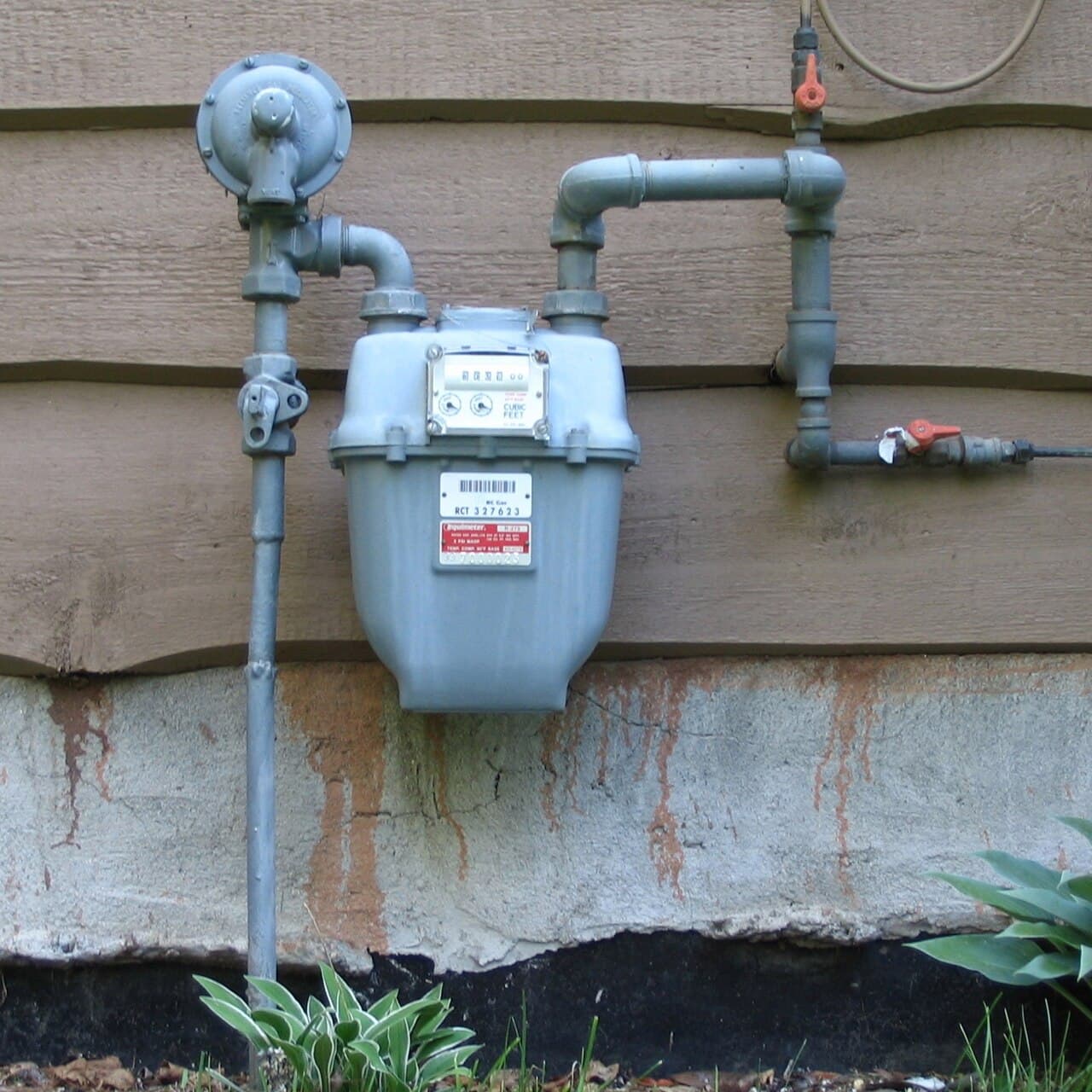
Where your part of the gas system starts
Every new line starts at the meter. Columbia Gas of Virginia owns the line up to and including the gas meter, and the homeowner owns the lines from the meter to the gas appliances.[3] Virginia Natural Gas describes the same split, and adds that your side covers piping indoors and outdoors, above and below ground.[6] So a new line to a range, dryer, generator, fire pit or pool heater is your piping, built by your contractor, on your property.
That ownership matters later too. Columbia Gas notes that buried customer-owned lines can serve pool heaters, generators or other outdoor appliances,[3] and those are the lines that get forgotten when someone digs. Ask for a sketch of the new route for your records.
What the job usually includes
A load check with the gas company. Adding equipment can outgrow the supply. Columbia Gas of Virginia offers to check that you have enough gas pressure before new natural gas equipment is added,[1] and asks to hear from you before a natural gas generator goes in, because those units come in a range of sizes.[1] If the answer is no, its New Business team handles right-sizing meters and service lines when usage is added, and meter upgrades.[2] A good contractor raises this early, because a meter upgrade can set the schedule.
A design. The fitter adds up what every gas appliance in the house will burn, picks a route from the meter or an existing branch, and sizes the pipe so the farthest appliance still gets enough gas. Routes usually run through a basement, crawlspace or attic, or outside along the foundation. The quote should name the pipe material and where the line will run.
A permit. Virginia's building code requires a permit before work starts on fuel supply systems.[7] Localities name the permit differently. Fairfax County puts it plainly: "If your project includes the installation of new gas piping along with the appliance, you must apply for a Residential Plumbing permit instead of a Household Appliance permit."[8] Ask your contractor which permit your city or county uses and whose name it is in.
The piping and the connections. Ask which pipe material the fitter plans to use. Where the plan includes flexible corrugated stainless steel tubing (CSST), Columbia Gas says corrugated stainless steel tubing should be bonded, which can reduce the risk of fire or other hazard if the home is struck by lightning.[1] At the appliance end, Virginia Natural Gas says each appliance should have a shut-off valve on the house piping before its connector.[5] It adds that connectors should not be more than six feet long, should never run through a wall, floor or ceiling,[5] and recommends solid piping, not a flexible connector, for a water heater or furnace.[5] If an old appliance is being swapped at the same time, flexible connectors should not be reused and should be replaced along with the appliance.[1]
Digging, for outdoor runs. A buried line to a detached garage, grill or generator means excavation, and Virginia law says no one may begin any excavation without first submitting a locate request to the notification center.[10] That is Virginia 811. Your own buried gas piping needs finding too: Virginia Natural Gas says locating customer-owned gas piping, like repairs and inspections, should only be done by a plumbing contractor, heating contractor or other qualified professional.[6] If the job also needs a new service line from Columbia Gas, all private underground facilities must be marked before Columbia Gas schedules construction of a new service line, and it suggests a private line locating company for that.[2] And when digging near buried gas piping, the piping should be located in advance and the excavation done by hand.[6]
Inspection and start-up. In Fairfax County, once a permit is issued, the county must be told when each stage of construction that needs an inspection is reached.[9] Ask which inspections your locality requires and when, so nothing is covered up before it has been seen. After the line passes, the appliance is connected and started, and a qualified professional should confirm that the equipment is properly vented and adjusted and has enough fresh air for safe combustion.[1]
If your home runs on propane
Many homes beyond the reach of a gas main use a propane tank instead. The job is much the same, with the propane supplier in the conversation about tank size and regulators. One difference is safety-critical: propane is heavier than air, so a leak may collect in low spaces and near the floor.[4] Ownership follows the same idea. In Columbia Gas's own propane systems, the property owner owns the house line, including any pipe beyond the meter.[4]
When to call a licensed pro
From the first sketch. Virginia's tradesman rules define gas fitting broadly: "Gas fitting-related work includes the installation, repair, improvement, or removal of industrial gas, fuel gas, gaseous hydrogen, liquefied petroleum or natural gas piping, tanks, chimneys and vents, direct vents, equipment, and appliances annexed to real property."[11] Under the Code of Virginia, as a general rule no individual may work as a tradesman without a licence, though someone working under the supervision of a tradesman licensed in that specialty does not need one.[12] The gas companies agree on the practical side; Columbia Gas says "a qualified professional should perform all work on natural gas lines and equipment inside the home."[1] Our answer on who can install a gas line in Virginia explains which licences to look for and the narrow exemption for owners working on their own home.
Call before any work at all if you smell gas, hear hissing near a line, or find an uncapped pipe. Leave the house first and read what to do if you smell gas.
Getting it quoted
A useful quote names the appliances the line will serve, the route, the pipe material, whether a meter upgrade is needed, who pulls the permit, and whether trenching and restoring the yard are included. For the price side, see what it costs to run a gas line in Virginia; for a new gas water heater on the line, see what replacing a water heater involves. Loclis lists DPOR-licensed businesses with their licence number and class: look up plumbers in Blacksburg or browse more plumbing answers.
Describe the gas line you need once and licensed local businesses quote it.
Common questions
- Do I need a permit to run a new gas line in Virginia?
- Yes. The Uniform Statewide Building Code requires a permit before work starts on fuel supply systems, and the inspections that come with it. Fairfax County, for example, asks for a residential plumbing permit when new gas piping goes in with an appliance.
- Who owns the gas line to my house?
- In general the gas company owns and maintains the service line up to and including the meter, and you own everything after it, including any buried lines to outdoor appliances. Columbia Gas of Virginia and Virginia Natural Gas both describe the split this way.
- Does adding a gas appliance mean a bigger meter?
- Sometimes. A large new load such as a whole-house generator can be more than the existing meter or service line carries. Call your gas company before the job is designed; Columbia Gas, for one, offers to check that the pressure is enough and handles meter and service upgrades.
- Do I need to call 811 for a gas line in my own yard?
- Yes, before any digging. Virginia law requires a locate request before excavation. Gas piping you own, such as an existing run to a grill or pool heater, is your responsibility to find: Virginia Natural Gas says locating it should be done by a plumbing contractor, heating contractor or other qualified professional.
- Is a propane line handled differently from natural gas?
- The work is similar and is still licensed and permitted, but the supply is a tank, not a utility main, so your propane supplier is part of the planning. Propane is heavier than air, which matters for where a leak would collect.
Sources
- [1] Appliance Installation: How to safely install your appliances, Columbia Gas of Virginia. Checked October 26, 2026.
- [2] Construction and Renovation, Columbia Gas of Virginia. Checked October 26, 2026.
- [3] Know your gas lines and their locations, Columbia Gas of Virginia. Checked October 26, 2026.
- [4] Important propane safety information, Columbia Gas of Virginia. Checked October 26, 2026.
- [5] Appliance Connectors, Virginia Natural Gas. Checked October 26, 2026.
- [6] Pipeline Safety, Virginia Natural Gas. Checked October 26, 2026.
- [7] 13VAC5-63-80, Virginia Uniform Statewide Building Code, Section 108 Application for permit, Virginia Administrative Code, Legislative Information System. Checked October 26, 2026.
- [8] Household Appliance (HAPL) permit, Residential, Fairfax County Land Development Services. Checked October 26, 2026.
- [9] Residential Plumbing permit, Fairfax County Land Development Services. Checked October 26, 2026.
- [10] Va. Code § 56-265.17, Notification required prior to excavation or demolition, Code of Virginia, Virginia General Assembly. Checked October 26, 2026.
- [11] 18VAC50-30-10, Definitions (Tradesman Rules and Regulations), Virginia Administrative Code, Legislative Information System. Checked October 26, 2026.
- [12] Va. Code § 54.1-1129, Necessity for licensure, Code of Virginia, Virginia General Assembly. Checked October 26, 2026.
Want a pro to handle it?
Describe the job once. Licensed local businesses send quotes, and you pay only when you book one.
Get a quote for Plumbing Repair