How often should gas lines be inspected?
Have your gas appliances and their connections checked once a year by a qualified technician, usually at the fall heating tune-up. Buried gas piping you own, such as lines to a pool heater or generator, should be inspected periodically for leaks and corrosion. Add a check when you move in, replace or move an appliance, or plan to dig, and call at once if you smell gas.
Free to ask. Local shops send quotes, and you pay only when you book one.
By Kasra Taheri, Founder, LoclisPublished
Researched and drafted with AI, then checked claim by claim against the sources listed below before it was published. Prices and rules change; the dates beside each source say when it was last checked.
This is a job for a licensed pro in Virginia
This page explains what the work involves, the permits, what a licensed pro does and what drives the cost. It does not give step-by-step instructions, because this work needs a licence, a permit or both, and doing it wrong can injure someone. Before you hire, check the licence on Virginia's DPOR record.
Have your gas appliances and the gas connections to them checked once a year by a qualified technician, most easily at the fall heating tune-up. The buried gas piping you own, such as a line to a pool heater, grill or generator, should also be inspected periodically for leaks and corrosion. Add a check whenever you buy a house, replace or move a gas appliance, or plan to dig, and treat any gas smell as an emergency.
Every year: the appliances and their connections
Once a year is the advice from Virginia Natural Gas and from federal agencies. Virginia Natural Gas recommends having natural gas appliances and equipment cleaned and/or inspected for safety once a year by a certified natural gas contractor or HVAC technician.[4] ENERGY STAR recommends annual pre-season check-ups, with the heating system checked in the fall,[9] and says a typical check-up should include checking "all gas (or oil) connections, gas pressure, burner combustion and heat exchanger."[9] It explains why: "Improperly operating gas (or oil) connections are a fire hazard and can contribute to health problems."[9] The U.S. Fire Administration also advises having heating equipment and chimneys cleaned and inspected each year by a professional.[10]
In practice, book the furnace or boiler tune-up each fall and ask the technician to look at the connections to the water heater, range, dryer and any gas fireplace while they are there. Our answer on how often a boiler should be serviced covers the heating side.
Periodically: the piping you own
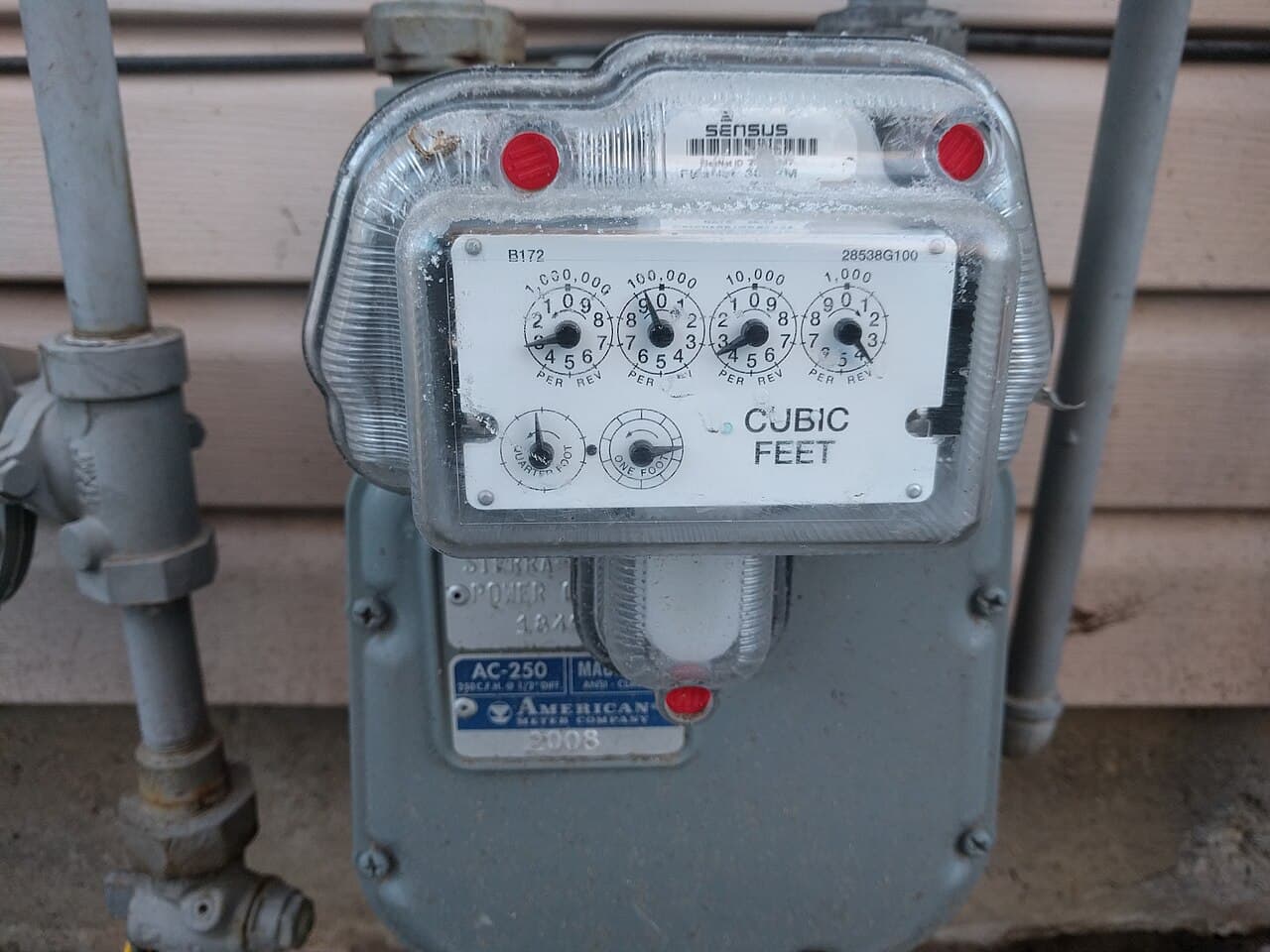
Who inspects what depends on which side of the meter it is on. Columbia Gas of Virginia owns and regularly inspects the lines up to and including the gas meter, while the owner owns, and should regularly inspect, the lines from the meter to the gas appliances.[2]
Buried lines are the ones federal rules single out. Under the pipeline safety regulations, a gas operator that does not maintain a customer's buried piping must tell the customer so once in writing,[1] along with this advice: buried gas piping should be periodically inspected for leaks, periodically inspected for corrosion if the piping is metallic, and repaired if any unsafe condition is discovered.[1] The same rule says plumbing contractors, heating contractors and, where applicable, the gas operator can help locate, inspect and repair it.[1] That notice rule does not cover branch lines that serve yard lanterns, pool heaters or other secondary equipment,[1] but those lines still need attention: Columbia Gas advises having your outside gas lines inspected periodically for leaks and corrosion by a qualified professional.[2]
Columbia Gas spells out the risk: buried customer lines that are not regularly inspected and maintained could be affected by corrosion and leaks, and subject to dig-in by excavation.[2] Virginia Natural Gas adds a reminder worth taking literally: "Don't forget that you may have gas lines extending to yard lights, grills, pool heaters and garage or workshop heaters."[3] It also notes that where there is more than three feet between the meter and the home, Virginia Natural Gas monitors that primary line, but the owner is still responsible for repairs.[3]
"Periodically" is not a set number of years, so agree a schedule with a licensed contractor based on the pipe's age and material. Metal lines in the ground, older homes and lines that have never been checked are the ones to move up the list.
Your gas company does its own checks too. Virginia Natural Gas periodically surveys its mains, service lines and meter sets, as federal and state regulations require.[5] If Virginia Natural Gas leaves a door hanger or postcard because it could not reach the meter, it is trying to finish that maintenance check, and the company says the notice does not mean there is an issue at your home.[5] If you are not sure a notice is genuine, check it with your gas company before letting anyone in.
At these moments, not on a calendar
- When you move in. Columbia Gas says to have all natural gas appliances, equipment and connectors checked by a qualified professional before you move into a new property.[7]
- When an appliance is replaced or moved. Virginia Natural Gas says connectors should be replaced whenever an appliance is replaced or moved from its location.[6] It also warns that if an appliance is more than 20 years old, there is a good chance it has an uncoated brass connector, and only a qualified contractor can safely tell.[6]
- Before anyone digs. Columbia Gas advises that you have the location of your outside gas lines from your meter to your natural gas appliances marked before any excavation.[2]
- When something looks wrong. "A gas flame should burn bright blue. A yellow or orange flame could indicate improper combustion or venting."[4] Columbia Gas adds soot around a burner on a gas stove, or a furnace or water heater fan that often kicks on and off.[8]
If your home has flexible corrugated stainless steel tubing (CSST), ask the inspector to confirm the bonding. Columbia Gas says corrugated stainless steel tubing should be bonded.[8]
What you can do between inspections
Most of the care is about leaving gas lines alone. Columbia Gas puts it this way: "Natural gas lines and appliances should never be tampered with, hung on, or used for any purpose other than their intended use."[7] It also says to never use or store highly flammable materials in the same room as a gas or heat-producing appliance.[7] Keep the meter area clear of plants and stored items so it can be read and reached, and keep your carbon monoxide alarms working. If you ever smell gas, leave and call; see what to do if you smell gas in your house.
When to call a licensed pro
For every inspection and any repair it turns up. Under the Code of Virginia, the natural gas fitter provider licence covers the incidental repair, testing, or removal of natural gas piping, and no individual may do that work without a licence.[11][12] If a qualified professional finds an unsafe condition, it should be repaired immediately or the gas shut off until the repair is made and a safety inspection is completed.[2] See who can install or repair a gas line in Virginia for the licences to look for, and what running a new gas line involves if a repair turns into a replacement.
Loclis lists DPOR-licensed businesses with licence number and class: see plumbers in Blacksburg or more plumbing answers.
Ask for a gas line inspection once and licensed local businesses quote it.
Common questions
- Does the gas company inspect the gas lines in my house?
- It inspects its own system up to and including the meter, and sometimes surveys service lines and meter sets on your property. The piping after the meter is the owner's responsibility, so its inspection is up to you and your contractor.
- Is a gas line inspection part of a furnace tune-up?
- A good heating tune-up includes the gas connections and gas pressure at the furnace, along with burner combustion and the heat exchanger. It does not usually cover buried lines to outdoor appliances or every branch in the house, so ask for those separately.
- Do buried gas lines to my grill or pool heater need inspecting?
- Yes. Columbia Gas of Virginia advises having the outside lines from your meter to your gas appliances inspected periodically for leaks and corrosion by a qualified professional. The federal notice rule on buried piping does not cover branch lines to pool heaters and other secondary equipment, so these lines are easy to overlook until someone digs near them.
- Should I have the gas lines checked when I buy a house?
- Columbia Gas of Virginia recommends having all gas appliances, equipment and connectors checked by a qualified professional before you move into a new property. It is also a good time to find out where any buried lines run.
- What are signs I need a gas inspection sooner?
- A gas smell, which is an emergency, plus a yellow or orange flame, soot around a burner, a pilot light that keeps going out, or an appliance more than about 20 years old that may still have an old brass connector.
Sources
- [1] 49 CFR § 192.16, Customer notification, Electronic Code of Federal Regulations, U.S. Department of Transportation (PHMSA). Checked October 26, 2026.
- [2] Know your gas lines and their locations, Columbia Gas of Virginia. Checked October 26, 2026.
- [3] Pipeline Safety, Virginia Natural Gas. Checked October 26, 2026.
- [4] Safety Precautions, Virginia Natural Gas. Checked October 26, 2026.
- [5] Meter Maintenance, Virginia Natural Gas. Checked October 26, 2026.
- [6] Appliance Connectors, Virginia Natural Gas. Checked October 26, 2026.
- [7] How to maintain your natural gas appliances, Columbia Gas of Virginia. Checked October 26, 2026.
- [8] Appliance Installation: How to safely install your appliances, Columbia Gas of Virginia. Checked October 26, 2026.
- [9] Maintenance Checklist, ENERGY STAR, U.S. Environmental Protection Agency. Checked October 26, 2026.
- [10] Heating fire safety, U.S. Fire Administration, FEMA. Checked October 26, 2026.
- [11] Va. Code § 54.1-1128, Definitions, Code of Virginia, Virginia General Assembly. Checked October 26, 2026.
- [12] Va. Code § 54.1-1129, Necessity for licensure, Code of Virginia, Virginia General Assembly. Checked October 26, 2026.
Want a pro to handle it?
Describe the job once. Licensed local businesses send quotes, and you pay only when you book one.
Get a quote for Plumbing Repair