How much does a lawn treatment program cost in Virginia?
Virginia sets no price for a lawn treatment program, so quotes follow lawn size, number of visits, products and whether weed control is bundled in. As one yardstick, Henrico County Extension's March 2022 example put one fall feeding at about $3.19 per 1,000 square feet in fertilizer. Ask for written quotes that list each visit.
Free to ask. Local shops send quotes, and you pay only when you book one.
By Kasra Taheri, Founder, LoclisPublished
Researched and drafted with AI, then checked claim by claim against the sources listed below before it was published. Prices and rules change; the dates beside each source say when it was last checked.
Step by step
Read when to stop and call a pro, further down this page, before you start.
Step 1: Measure the lawn
Split the lawn into rectangles, multiply length by width for each, and add them up; quotes and fertilizer amounts are both priced by area.
Step 3: Write down the program you want
For a cool-season lawn, list fall feedings in September, October and November, spring preventer only if crabgrass is a problem, and spot weed control as needed.[2]
Step 4: Price the DIY version
Work out pounds of fertilizer from the nitrogen percentage and your square footage to see what the same feedings cost.[2]
Step 5: Get two or three written quotes
Ask each company for price per visit, number of visits, products, and what weed control and a soil test include.[8]
Step 6: Compare visit by visit
Match each quote's visits against your list and question any heavy spring feeding.[1]
Virginia has no set price for a lawn treatment program. What you pay is whatever the company quotes, and that depends on your lawn's size, how many visits the program includes, which products go on and whether weed control is bundled with feeding. The useful numbers are the ones you can check: what the do-it-yourself version of a sound program costs, what a quote should spell out, and what the licence requirements add to a company's overhead.
What a program is made of
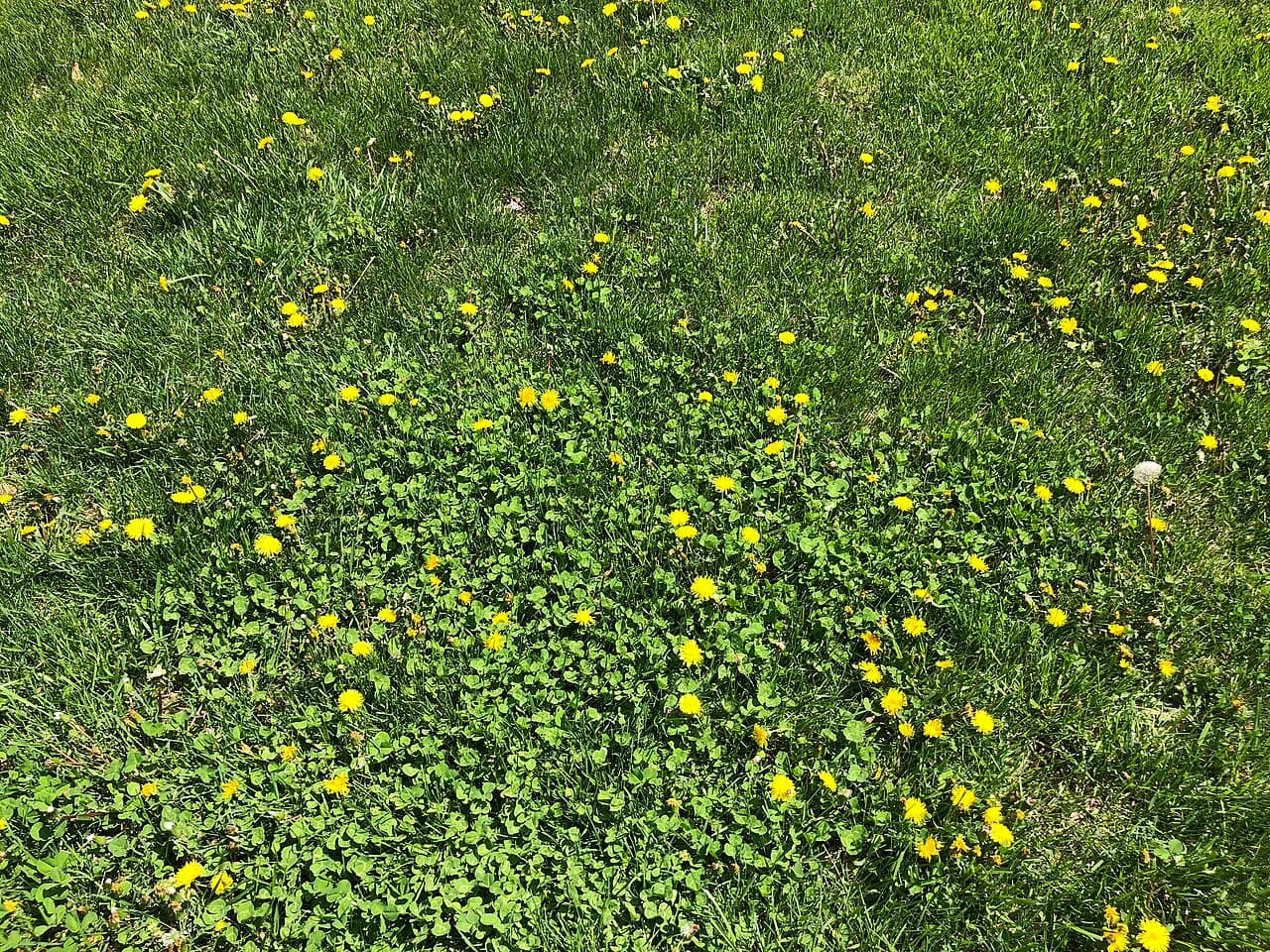
A treatment program is a calendar of visits, and each visit is either feeding or weed control. Henrico County Extension's simple weed plan puts crabgrass preventer in mid-March, spot treatments of broadleaf weeds in April and May and again in October and November, and fertilizer in September, October and November.[2] That is roughly the shape of what a good company sells for a cool-season lawn such as tall fescue, whatever it calls the tiers.
Price rises with the number of visits, so ask what each one is for and compare the list with that calendar. Tall fescue needs about 2.7 pounds of nitrogen per 1,000 square feet a year,[2] and Virginia Tech's guide advises applying it mostly in the fall, with no more than one pound of water-soluble nitrogen in a single application.[1] It also warns that excessive spring nitrogen applications reduce summer stress tolerance and can increase weed and disease pressure.[1] A program heavy on spring feeding is one to question.
The do-it-yourself price of the same program
Fertilizer is the clearest cost to measure. In the March 2022 revision of Henrico County Extension's SMART Lawns booklet, a 14-pound bag of 32-0-4 fertilizer listed at $15.99 worked out to $3.19 for each 0.9 pound of nitrogen, the amount one fall feeding puts on 1,000 square feet.[2] An 8,000-square-foot lawn needs about 22 pounds of that 32-0-4 per feeding, or 66 pounds over the three fall feedings.[2] Those are one county's 2022 figures, so treat them as a way to calculate your own, not a current shelf price.
Weed control is different. Virginia Tech's 2026 guide says a typical professional liquid broadleaf weed killer costs about $100 for a one-gallon minimum and treats two to four acres, about eight to 16 average lawns.[1] Matching that amount of active ingredient with consumer products would take 17 to 34 quart containers costing $260 to $520.[1] Professionals pay far less per treated lawn for the same amount of active ingredient, which is part of what you pay a company for.
A soil test belongs in any budget. A routine soil test from the Virginia Tech Soil Testing Lab cost $10 per sample for in-state samples when we checked on October 27, 2026.[3] The report can show you do not need some of the lime, phosphorus or potassium a package might include.[9]
What drives a company's quote
- Lawn size. Measure the lawn yourself in square feet before you call anyone, since product and time both scale with area.
- Number and type of visits. Feeding visits, preventer visits and spot-spray visits are priced differently.
- Products. Fertilizers with more than 50 percent slowly available nitrogen usually cost more, but that nitrogen is less likely to run off or leach.[2]
- Crabgrass history. In a lawn with persistent crabgrass problems, two to three applications of preventer may be needed to extend control through the season.[1]
- Licensing and insurance. A company that applies weed killer for pay needs a pesticide business licence and a certified commercial applicator.[5] VDACS requires proof of insurance of at least $100,000 for property damage, $100,000 for injury to or death of one person, and $300,000 per occurrence.[4] A contractor-applicator permit to apply fertilizer for profit carries a $50 annual fee.[6] These are real costs behind the quote, so ask a company that bids far below the others how it covers them.
How to compare quotes
EPA suggests getting bids from two or three companies and looking at value more than price.[8] Ask each to put in writing the price per visit, the number of visits, the products and nitrogen rate for each, whether weed control is included, and whether a soil test is. EPA also says a company should inspect your premises and outline a recommended control program that names the pests, the active ingredients, the form of the pesticide and how it is applied, and the nonchemical alternatives.[8]
Compare programs visit by visit, not by the annual total. If you cannot tell what a visit is for, ask.
Stop and call a pro if
- You do not want to apply pesticide yourself. Virginia Tech's rule of thumb is that if you do not enjoy working in your lawn, hire a professional.[1]
- A company cannot show a pesticide business licence. VDACS posts a list of licensed pesticide businesses you can check.[7]
- The lawn is large or sloped, and spreading product evenly by hand would take most of a day.
- Weeds cover most of the lawn. A renovation may be a better use of money than a treatment plan.
Getting help in Virginia
Related reading: how much lawn fertilization costs in Virginia, whether lawn care treatment programs are worth it and whether a lawn care company needs a licence. Browse all lawn and landscaping answers or the lawn and landscaping directory.
When you are ready, describe the lawn once and local lawn care businesses quote it.
Common questions
- Why do lawn treatment quotes differ so much?
- Companies measure square footage differently, use different products and bundle different visits. One quote may include crabgrass preventer, broadleaf control and a soil test while another covers only feeding. Compare line by line.
- Is a lawn treatment program cheaper than doing it myself?
- For fertilizer alone, doing it yourself is usually cheaper if you own a spreader. For weed control, Virginia Tech notes professional products cost far less per treated lawn than consumer ones.
- How many visits should a program include?
- Extension's plan for a cool-season lawn has three fall feedings, a spring preventer when crabgrass is a problem, and spot weed control in spring and fall. Ask what each additional visit is for.
- Do companies have to be licensed to spray weed killer in Virginia?
- Yes. No one may apply or recommend a pesticide commercially without a pesticide business licence and a certified commercial applicator on staff.
- Should I ask for a soil test?
- Yes. A routine test costs little and can show you do not need some nutrients that a standard package includes.
Sources
- [1] 2026 Pest Management Guide: Home Grounds and Animals, Chapter 5: Lawn (456-018, ENTO-634-E), Virginia Cooperative Extension, Virginia Tech. Checked October 27, 2026.
- [2] SMART Lawns (revised March 2022), Virginia Cooperative Extension, Henrico County Office. Checked October 27, 2026.
- [3] Sample Submission: Soil Tests and Their Cost, Virginia Tech Soil Testing Lab. Checked October 27, 2026.
- [4] Pesticide Business License, Virginia Department of Agriculture and Consumer Services. Checked October 27, 2026.
- [5] Code of Virginia § 3.2-3924. Annual business license required, Virginia General Assembly (Legislative Information System). Checked October 27, 2026.
- [6] Code of Virginia § 3.2-3608. Contractor-applicator permit, Virginia General Assembly (Legislative Information System). Checked October 27, 2026.
- [7] Pesticides (Office of Pesticide Services), Virginia Department of Agriculture and Consumer Services. Checked October 27, 2026.
- [8] Choosing a Pest Control Company (EPA 735-F-05-010), U.S. Environmental Protection Agency. Checked October 27, 2026.
- [9] Lawn Fertilization in Virginia (430-011), Virginia Cooperative Extension, Virginia Tech. Checked October 27, 2026.
Want a pro to handle it?
Describe the job once. Licensed local businesses send quotes, and you pay only when you book one.
Get a quote from a local pro