How much does soffit and fascia replacement cost in Virginia?
There is no fair single price, because the bill is set by how many feet are damaged, what is hidden behind the boards, the material, the height of the eaves and whether old paint must be handled lead-safely. Expect rot in rafter tails, gutter removal and roof-edge work to add the most. Compare written quotes built on the same scope from licensed contractors.
Free to ask. Local shops send quotes, and you pay only when you book one.
By Kasra Taheri, Founder, LoclisPublished
Researched and drafted with AI, then checked claim by claim against the sources listed below before it was published. Prices and rules change; the dates beside each source say when it was last checked.
Step by step
Read when to stop and call a pro, further down this page, before you start.
Step 1: Walk the eaves
Walk around the house and photograph every stretch of damaged soffit and fascia, noting which side of the house and roughly how many feet.
Step 2: Probe for hidden rot
Where you can reach safely from the ground, push a small screwdriver into the fascia, since decay can sit inside a board that looks sound.[1]
Step 3: Note the height
Mark which eaves are one storey up and which are two storeys or over a slope, deck or porch roof.
Step 4: Check the year built
A house built before 1978 means a paid contractor who disturbs the paint must be lead-safe certified.[3]
Step 5: Pick a material
Decide on wood, cellular PVC, or vinyl soffit with aluminum fascia covers before asking for prices, so every bid covers the same thing.
Step 6: Note animals and vents
Tell bidders about any animal damage or nests and whether the soffit is vented, since both change the scope.
Step 7: Ask for three written bids
Send the same written scope and photos to at least three licensed contractors so the prices can be compared.[7]
Step 8: Ask how extra rot is priced
Get a written price per foot of fascia and per rafter tail for rot found once the old boards come off.
Step 9: Check each licence
Look up every bidder on DPOR's website and confirm the licence is current and covers the work.[7]
Step 10: Limit the deposit
Keep the deposit to no more than 10 percent of the price or $1,000, whichever is less, unless custom items must be ordered.[7]
Step 11: Sign a full written contract
Make sure the contract lists materials, gutter work, painting, cleanup, start and finish dates, and the total price.[7]
No honest single number covers soffit and fascia replacement in Virginia, because the price is set by your house: how many feet are damaged, what the rot has reached behind the boards, what goes back up, how high the eaves are, and whether old paint has to be handled lead-safely. What you can control is the quote. Describe the job the same way to several licensed contractors, ask how hidden damage will be priced, and the numbers you get back will mean something.
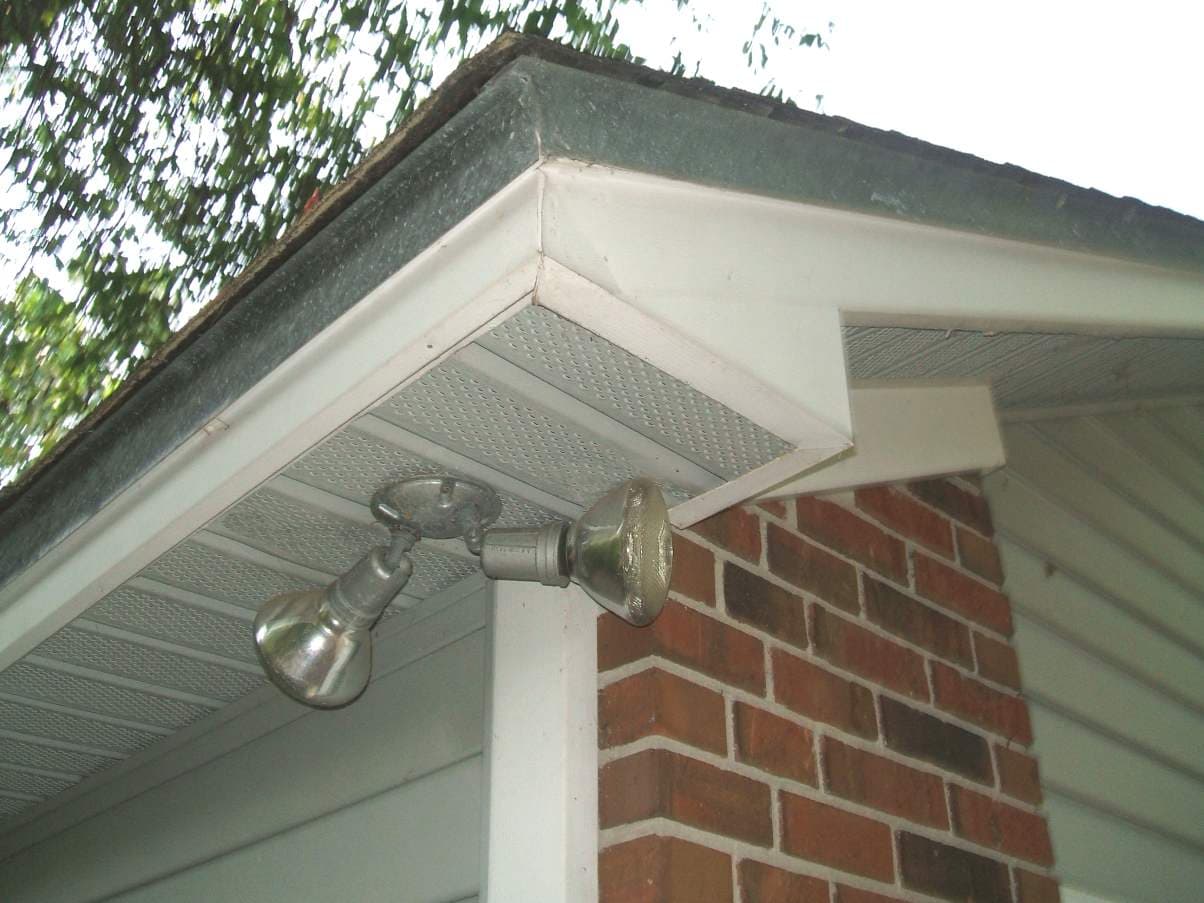
What moves the price
Hidden rot. This is the largest unknown. Fascia rots from joints, corners and the edge behind the gutter, and decay often sits in the center of a board while the surface still looks sound.[1] Once the old fascia is off, a contractor may find soft rafter tails or a rotted edge of roof decking. Rafter repair is framing work and can turn a trim job into a much larger one, so a careful bid prices it separately per rafter tail or per foot.
Gutters. Fascia cannot come off with a gutter hanging on it. Taking gutters down and rehanging them, or replacing old ones while the eave is open, is part of the real cost. Ask whether a bid includes it.
Height and access. A one-storey eave reached from a ladder is quick work. Second-storey eaves, steep lots, and eaves over porch roofs or decks mean taller ladders, scaffolding or a lift, more setup and more crew time.
Material. Like-for-like wood is usually the least expensive board, but quality matters: Finger-jointed lumber is common for fascia boards, and paint on it often fails at the joints.[1] Cellular PVC does not swell or shrink with moisture the way wood does,[2] which suits eaves that stay damp. It has its own rules: long runs of three or more 18-foot boards need extra fastening or planned joints to control movement,[2] and Versatex limits paint on its trim to colors with a light reflective value of 55 or greater.[2] Vinyl soffit comes solid or vented; ask which is going up and whether it matches what is there now. Aluminum fascia covers over wood are common, but they belong over sound, primed wood, not rot.
Attic ventilation. Soffits are often where the attic draws in air. Ask whether the existing soffit is vented, whether the new soffit will be, and whether insulation inside the attic is blocking the vents. Changing solid soffit to vented panels, or clearing blocked vents from inside, adds some cost and is worth pricing as a separate line.
Animal damage. If squirrels, birds or bats got in through the soffit, the repair may wait until the animals are out, and a wildlife business may bill separately for removal, cleanup and exclusion.
Lead-safe work on older houses. Under the EPA's Renovation, Repair and Painting Rule, anyone paid to disturb paint in a home built before 1978 must be certified, including sole proprietors.[3] Minor repairs that disturb 20 square feet or less of exterior paint are exempt,[3] but a run of old painted fascia is often more than that. Containment and cleanup take time, so expect a higher price on an older house, and be wary of a bid that ignores the rule.
Permits and approvals
Most soffit and fascia jobs carry no permit fee. The Uniform Statewide Building Code lists installation or replacement of trim, and application of paint, among the ordinary repairs that need no permit application.[4] A building official may still require a permit for exempt work in a special flood hazard area,[4] and rafter or framing repair is not on the exempt list, so ask your building department if the scope grows.
Licences, bids and deposits
The Board for Contractors says that if the work you are considering is valued at $1,000 or more, a valid Virginia Contractor’s License is required;[7] by hiring a licensed contractor you become eligible to receive monetary compensation from the Contractor Transaction Recovery Fund,[7] while with an unlicensed one the Board for Contractors may not be able to help you resolve a complaint.[7] Virginia sorts contractors by job size: Class C contractors take jobs over $1,000 but less than $30,000; Class B contractors take jobs of $30,000 or more but less than $150,000.[5] Home improvement contracting (HIC) covers repairs and improvements to dwellings,[6] which takes in soffit and fascia repair on a house, while roofing contracting (ROC) covers roofing system components when they are installed as part of a roofing project.[6] For more on who to call, see roofer or siding contractor for soffit and fascia, and how to check a contractor's licence.
The Board for Contractors' advice is to get at least three written bids built on identical specifications, and to be wary of any bid substantially lower than the others.[7] Its rule of thumb is a deposit of no more than 10 percent of the total price or $1,000, whichever is less,[7] or up to 30 percent when custom-made items or special orders are involved.[7] "Virginia law requires all licensed contractors to provide a written contract for residential work."[7] Read before signing, because any bid or estimate you sign may become the contract.[7]
What to ask for in a written quote
- Every stretch of soffit and fascia being replaced, by side of the house, with its length.
- The material for each, by brand or species, and whether soffit will be solid or vented.
- Primer on all faces and cut ends of new wood, and the paint, with the number of coats.
- Whether gutters come down and go back up, or are replaced, and at what price.
- A price per additional foot of fascia and per rafter tail for rot found during the work.
- For a pre-1978 house, the firm's EPA lead-safe certification and how it will contain and clean up.
- Cleanup and disposal, start and finish dates, and any workmanship warranty in writing.
Doing part of it yourself
A short run of rotted fascia on a one-storey eave is within reach of a handy owner, and doing it yourself saves the labor, which is most of the bill on small jobs. See how to replace a rotted fascia board. Keeping the new work sound is cheaper still; see how to keep soffits and fascia from rotting.
Stop and call a pro if
- Rafter tails, sub-fascia or roof decking are soft, or the roof edge sags.
- The damage is on a second-storey eave or anywhere a ladder cannot stand firmly.
- Animals are living in the soffit or attic.
- The house was built before 1978 and the work will disturb a large area of paint.
Getting it priced on Loclis
On Loclis you describe the soffit and fascia job once, with photos and the list above, and licensed local businesses quote it. A business that needs to see it first can offer an estimate visit, free or paid, and a paid visit's fee comes off its price. Browse soffit and fascia businesses, find exterior pros around Blacksburg, or read more exterior answers.
Common questions
- Why do soffit and fascia quotes vary so much?
- Because contractors are guessing at different things: how far the rot goes, whether rafter tails need repair, whether gutters come down, what material goes back up, and how lead paint will be handled on an older house. Give every bidder the same written scope and ask each one for a unit price for extra rot, and the numbers become comparable.
- Is it cheaper to cover old fascia with aluminum?
- Covering is often quicker than replacing, but only over sound wood. A cover fastened over soft fascia hides the rot rather than stopping it. Ask any bidder who proposes wrapping how they will check and replace soft wood first.
- Does soffit and fascia work need a permit in Virginia?
- Usually not for boards and covers. The Uniform Statewide Building Code lists installing or replacing trim and painting among the repairs that need no permit application. A building official can still require a permit in a special flood hazard area, and rafter or framing repair is not on the exempt list, so ask your building department if the scope grows.
- Does the contractor need a licence for a small soffit repair?
- The Board for Contractors says a Virginia contractor's licence is required when the work is valued at $1,000 or more. With an unlicensed contractor, the Board for Contractors may not be able to help with a complaint, and only work by a licensed contractor makes you eligible for the Contractor Transaction Recovery Fund, so a licensed business is the safer choice even for small jobs.
- Should soffit and fascia be replaced when I get a new roof?
- It is often the cheapest time, because the gutters come down and the roof edge is open anyway. A roofer's licence covers roofing system components installed as part of the roofing project. Ask for the soffit and fascia work as a separate line in the roofing contract so you can compare it.
Sources
- [1] Chapter 16: Finishing Wood, Wood Handbook (FPL-GTR-282), USDA Forest Service, Forest Products Laboratory. Checked October 27, 2026.
- [2] VERSATEX Installation Guidelines (Rev 12/23), Versatex Building Products. Checked October 27, 2026.
- [3] Lead Renovation, Repair and Painting Program: Contractors, U.S. Environmental Protection Agency. Checked October 27, 2026.
- [4] 13VAC5-63-80. Section 108 Application for permit (Virginia Uniform Statewide Building Code), Virginia Administrative Code (Virginia General Assembly). Checked October 27, 2026.
- [5] Code of Virginia § 54.1-1100. Definitions, Code of Virginia (Virginia General Assembly). Checked October 27, 2026.
- [6] 18VAC50-22-30. Definitions of specialty services (Board for Contractors Regulations), Virginia Administrative Code (Virginia General Assembly). Checked October 27, 2026.
- [7] What You Should Know Before You Hire a Contractor, Virginia Department of Professional and Occupational Regulation, Board for Contractors. Checked October 27, 2026.
Want a pro to handle it?
Describe the job once. Licensed local businesses send quotes, and you pay only when you book one.
Get a quote for Roofing