How do I keep soffits and fascia from rotting?
Keep water off them and air moving behind them. Clean and check gutters at least twice a year, make sure the roof edge has a drip edge, keep paint and caulk intact so no bare wood or end grain is exposed, keep soffit vents open on both sides, and probe the fascia once a year so small soft spots are fixed before they spread.
Free to ask. Local shops send quotes, and you pay only when you book one.
By Kasra Taheri, Founder, LoclisPublished
Researched and drafted with AI, then checked claim by claim against the sources listed below before it was published. Prices and rules change; the dates beside each source say when it was last checked.
Step by step
Read when to stop and call a pro, further down this page, before you start.
Step 1: Clean gutters twice a year
Clear gutters and downspouts before and after the wet season, and more often under trees, so they never overflow onto the fascia.[2]
Step 2: Watch the gutters in the rain
From the ground during a heavy rain, look for water spilling over the front or running down behind the gutter.[2]
Step 3: Check the slope
Make sure gutters fall at least 1/16 inch per foot toward the downspouts so water does not sit against the fascia.[3]
Step 4: Look for a drip edge
Check from a ladder or with binoculars that a metal drip edge laps over the top of the fascia, and ask a roofer to add one if it is missing.
Step 5: Probe the fascia once a year
Push a small screwdriver into the fascia at joints, corners and the bottom edge, where decay usually starts.[1]
Step 6: Touch up bare wood promptly
Spot-prime and paint any bare or cracked areas soon, so water cannot get into the wood.[2]
Step 7: Keep joints and end grain sealed
Re-caulk open joints and corners in the fascia, and keep any exposed end grain painted or sealed.[1]
Step 8: Wash mildew off the soffits
Clean mildew with a commercial cleaner or dilute bleach and powdered detergent, scrub gently and rinse with the hose pointed down.[1]
Step 9: Keep the soffit vents open
Clear paint, debris and nests from soffit vents outside so air can flow into the attic.
Step 10: Check the vents from the attic
Make sure insulation is not covering the soffit vents at the eaves; rafter vents keep a channel open.[4]
Step 11: Trim branches back
Keep tree branches away from the roof, gutters and walls so the eaves dry and debris stays out of the gutters.[2]
Step 12: Fix small rot early
Replace a short soft section of fascia as soon as you find it, and fix the water source at the same time.
Soffits and fascia rot when water reaches the wood and stays there, so keeping them sound comes down to three habits: keep the gutters and roof edge shedding water away from the boards, keep paint and caulk intact so no bare wood or end grain is exposed, and keep air moving through the soffit so the attic side dries. Add a once-a-year check with a screwdriver, and small problems get fixed while they are still small.
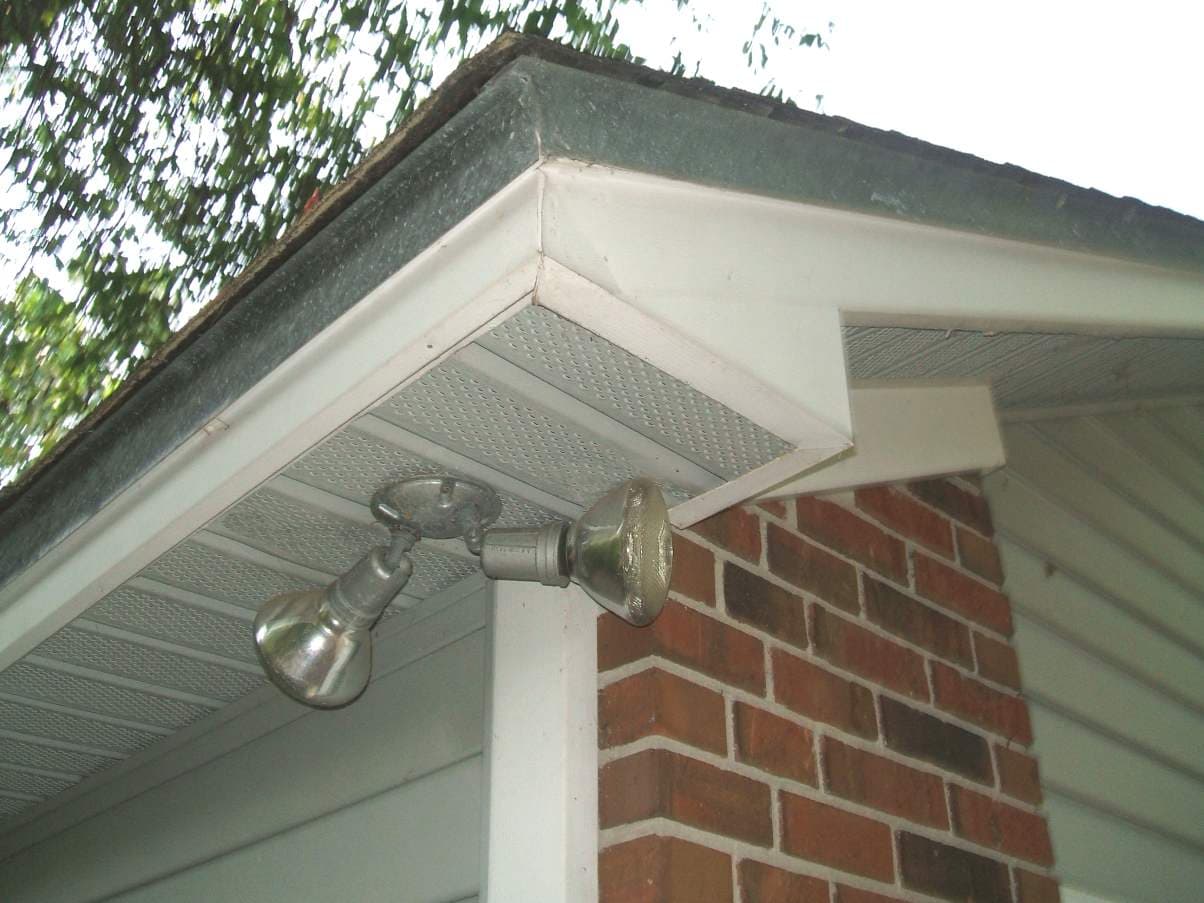
Why soffits and fascia rot
The Forest Products Laboratory puts it in one line: "All decay, and most exterior paint failures, start with moisture."[1] At the eaves, water comes from three directions. It overflows from clogged or sagging gutters onto the face of the fascia. It runs back under the shingle edge onto the top of the fascia when there is no drip edge. And it comes from inside, when warm, moist air from the house condenses in an attic that does not vent well.
The boards are also built with weak points. Fascia has joints and corners full of end grain, and liquid water enters wood 10 to 100 times faster through the end grain than through the other faces.[1] Soffits stay shaded and damp: "Dew forms on parts of structures that cool rapidly, such as eaves, soffits, and ceilings of carports and porches."[1]
Keep the gutters working
Gutters are the first line of defense, and the EPA's moisture advice starts there: "Clean and repair roof gutters regularly."[5] The National Park Service's maintenance schedule suggests checking roof drainage every 6 months, before and after the wet season and during heavy rain.[2] Under oaks and pines in much of Virginia, that may mean more often.
You do not need a ladder to tell whether gutters are working. The Park Service notes that gutters and downspouts can be safely observed from the ground during rainy weather.[2] Water sheeting over the front, or dripping from behind the gutter, means a clog, a bad slope or a gap at the fascia. Gutters should slope at least 1/16 inch per foot of run toward the downspouts,[3] so water drains instead of sitting against the board. For a sagging gutter, the Park Service offers a simple fix: "If gutter edges sag, consider inserting wooden wedges between the fascia board and the back of the gutter to add support."[2] For more, see why gutters overflow and how to clean gutters safely from a ladder.
Protect the top edge
A metal drip edge along the roof's lower edge sheds water past the top of the fascia instead of letting it run back behind the shingles and onto the board. From the ground or a short ladder, look for a strip of metal that laps over the top of the fascia; if it is missing, bent or rusted through, water has an easy path to the wood. Adding or replacing drip edge is roof-edge work, so it is a job for a roofer.
Keep the paint and end grain sealed
"Paint only slows the penetration of water, it does not stop it."[1] That makes the details matter. The Forest Products Laboratory's advice is to "Seal all end-grain surfaces"[1] so keep the ends of fascia boards, corner miters and the joints between boards painted or caulked. Touch up cracked or peeling paint promptly rather than waiting for the next full repaint, and probe any spot where paint keeps failing, because soft wood will not hold paint.
Soffits usually need washing more than painting. "If paint is sound, but discolored with mildew, wash it. It does not need repainting."[1] The lab recommends a commercial mildew cleaner or a dilute solution of household bleach with powdered detergent, scrubbing gently and rinsing with the hose pointed down.[1] It adds a warning: "Do not use liquid detergent because it may contain ingredients that react with bleach to give toxic fumes."[1] It also warns never to mix bleach with ammonia or with cleansers that contain ammonia.[1]
On an older house, scrape with care. The EPA notes: "If your home was built before 1978, it may have lead-based paint"[7] and its lead-safe practices include to mist the surface before scraping or sanding and clean up with a HEPA vacuum.[7] EPA also recommends that homeowners hire a lead-safe certified contractor for any renovation, repair or painting project in a pre-1978 home.[7]
Let the soffit breathe
Soffit vents let air move through the attic, which keeps the roof edge drier from the inside. They only work if they are open. Outside, clear paint drips, debris and nests from them. Inside, ENERGY STAR's guide says the most common mistake homeowners make when adding insulation is blocking airflow at the eaves,[4] and it recommends rafter vents, also called insulation baffles, to keep the soffit vents clear.[4] It also notes that an attic that stays cold in winter reduces the chance of ice dams at the gutters,[4] which is another way water ends up in fascia.
Branches and materials
"Trim tree branches away from walls."[2] Branches over the roof drop leaves into gutters, keep the eaves shaded and wet, and give squirrels a path into the soffit; see why birds or squirrels get into soffits. Leave large limbs and anything near power lines to a tree service.
When a board does need replacing, the material can help. Cellular PVC such as Versatex does not swell or shrink with moisture the way wood does,[6] which suits fascia that stays damp. Aluminum covers over wood fascia cut down on painting, but only over sound, primed wood; a cover over rot hides it while it spreads.
Stop and call a pro if
- The fascia is soft over more than a short section, or the rafter ends behind it are soft.
- You see stains or damp insulation in the attic near the eaves, or ice dams form along the gutters in winter.
- The roof has no drip edge, or the drip edge is bent or rusted through.
- The eaves are above the first storey, or the work would mean getting on the roof.
- The house was built before 1978 and the paint is peeling over a large area; EPA recommends a lead-safe certified contractor there.
Getting help
For a small repair, see how to replace a rotted fascia board; for trim around windows and doors, see how to keep exterior trim from rotting. If you need a contractor, read what soffit and fascia replacement costs. Browse soffit and fascia businesses or gutter cleaning businesses, find exterior pros around Blacksburg, or read more exterior answers. When repairs are due, describe the soffit or fascia repair once and licensed local businesses will quote it.
Common questions
- How often should I check my soffits and fascia?
- Look them over every time you clean the gutters, at least twice a year, and probe the fascia with a screwdriver once a year. Check again after big storms, and watch the gutters during a heavy rain to see whether water is spilling onto the boards.
- Will wrapping fascia in aluminum stop it from rotting?
- It keeps sun and rain off sound wood, but it does not stop water that gets in from an overflowing gutter or behind the drip edge, and it hides rot while it spreads. Wrap only sound, primed wood, and keep checking the gutters and drip edge above it.
- Why do my soffits get mildew and black spots?
- Soffits are shaded and cool off quickly at night, so dew forms on them and feeds mildew. Wash it off with a commercial mildew cleaner or a dilute bleach solution with powdered detergent; if the paint underneath is sound, it does not need repainting.
- Do soffit vents help prevent rot?
- They let air move through the attic, which helps the roof edge dry from the inside. The vents only work if they are open outside and not buried under insulation inside.
- What material lasts longest for fascia?
- Cellular PVC does not absorb moisture the way wood does, and vinyl soffit with aluminum fascia covers needs less painting than wood. Well-primed and painted wood also lasts when the gutters and drip edge keep water off it. Whatever the material, water control matters more than the board.
Sources
- [1] Chapter 16: Finishing Wood, Wood Handbook (FPL-GTR-282), USDA Forest Service, Forest Products Laboratory. Checked October 27, 2026.
- [2] Preservation Brief 47: Maintaining the Exteriors of Small and Medium Size Historic Buildings, National Park Service. Checked October 27, 2026.
- [3] Gutters and Downspouts (Building America Solution Center), Pacific Northwest National Laboratory for the U.S. Department of Energy. Checked October 27, 2026.
- [4] A Do-It-Yourself Guide to Sealing and Insulating with ENERGY STAR (July 2016), ENERGY STAR, U.S. Environmental Protection Agency. Checked October 27, 2026.
- [5] A Brief Guide to Mold, Moisture and Your Home, U.S. Environmental Protection Agency. Checked October 27, 2026.
- [6] VERSATEX Installation Guidelines (Rev 12/23), Versatex Building Products. Checked October 27, 2026.
- [7] Lead-Safe Renovations for DIYers, U.S. Environmental Protection Agency. Checked October 27, 2026.
Want a pro to handle it?
Describe the job once. Licensed local businesses send quotes, and you pay only when you book one.
Get a quote for Roofing