How much does a sprinkler system cost in Virginia?
There is no single Virginia price, and we found no official Virginia source with a dated installed cost. Price depends on zones, yard size, soil, backflow assembly, controller and permit. As of October 27, 2026, Chesterfield County lists its irrigation companion meter at $940. Get at least three itemized written bids from licensed contractors.
Free to ask. Local shops send quotes, and you pay only when you book one.
By Kasra Taheri, Founder, LoclisPublished
Researched and drafted with AI, then checked claim by claim against the sources listed below before it was published. Prices and rules change; the dates beside each source say when it was last checked.
Step by step
Read when to stop and call a pro, further down this page, before you start.
Step 1: Sketch the yard
Draw the lawn, beds, drives and walks, and mark where the water meter and hose bibs are.
Step 2: Decide what you want
Note which areas need spray heads and which need drip, and whether you want a rain sensor and a WaterSense labeled controller.[6]
Step 3: Look up each bidder's licence
Check every contractor on DPOR's license lookup before you take a bid seriously.[8]
Step 4: Get three written bids
Ask at least three contractors to bid on the same plan and specifications.[7]
Step 6: Compare line by line
Compare zone count, backflow assembly, controller, permit, restoration and warranty before you look at the total.
There is no single Virginia price for an in-ground sprinkler system, and we found no official Virginia source that publishes a dated installed price, so we do not quote one. What can be priced from official sources are the local fees around the job: when we checked on October 27, 2026, Chesterfield County Utilities listed its residential companion meter for irrigation at $940.[1] The system itself is priced by the contractor after a site visit, and the way to get a number you can trust is to compare itemized written quotes.
What drives the price
Number of zones and yard size. Each zone needs its own valve, wire run and pipe, and heads are spaced to overlap, so a bigger or more complicated lawn costs more. Beds that need drip lines are usually separate zones from the lawn.
Soil, rock, slope and obstacles. Trenching through clay or rocky soil, around tree roots, under a driveway or walk, or across a slope takes longer. Ask whether crossings under hard surfaces are bored or cut, and who restores them.
The backflow assembly. Every system needs one. The Virginia Residential Code requires the potable water supply to lawn irrigation systems to be protected against backflow by an atmospheric vacuum breaker, a pressure vacuum-breaker assembly or a reduced pressure principle backflow prevention assembly.[3] Chesterfield County says a pressure vacuum breaker cannot be used where backpressure may develop in the downstream piping, for example where the system has downstream zone valves, elevated piping, pumping equipment or an auxiliary source of water.[4] A reduced pressure assembly protects against both, so the type changes parts, installation and testing cost.
The controller and sensors. EPA says replacing a standard clock-based controller with a WaterSense labeled irrigation controller can save an average home up to 15,000 gallons of water annually.[6] Whether a quote includes a rain sensor or a WaterSense labeled controller is one of the biggest differences between two bids that look similar.
Permit and inspection. Fees are set locally. Prince William County says a Limited Service and Repair Permit and inspection are required for the backflow prevention device on residential applications,[5] and Chesterfield says the installation of all backflow prevention assemblies requires an auxiliary plumbing permit.[4] Ask each bidder whether the permit fee and the inspection are in the price.
A separate irrigation meter. In some localities you can add a second meter so outdoor water is not billed for sewer. Chesterfield describes a residential companion meter for this purpose, with only water consumption charges applying and no wastewater charges since outside water does not enter the wastewater system.[2] When we checked on October 27, 2026, Chesterfield listed it at $940 and said the current anticipated installation date was approximately 120 days from application.[1][2] Getting one also needs a county backflow permit. Check with your own water utility whether it offers one.
Testing. Chesterfield says the backflow assembly must be tested upon installation, after repair, when relocated, and annually as a minimum.[4] Testing is a yearly cost, so ask what the contractor charges for it.
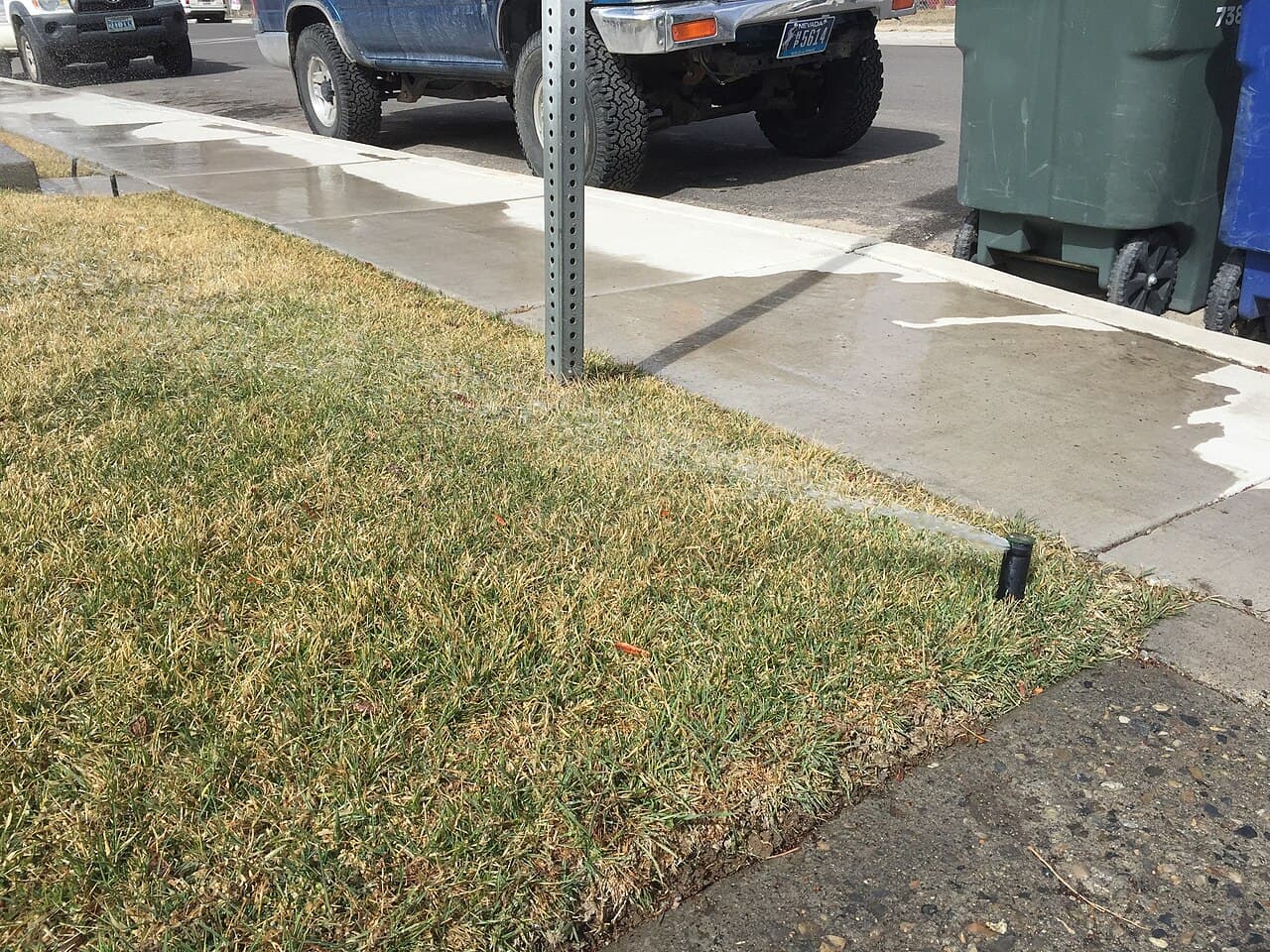
Getting quotes you can compare
DPOR advises getting at least three written bids or estimates using identical plans and specifications so you can compare prices and contractors.[7] Do not automatically accept the lowest, and be sure you understand the reasons for any variations in price.[7] Ask each bidder to put in writing:
- the number of zones and a sketch of head locations
- the backflow assembly type and who installs, permits and tests it
- the controller model and any rain sensor
- whether the permit, inspection and 811 request are included
- how the trenches and any crossings will be restored
- the warranty on parts, labor and winterization
Virginia law requires all licensed contractors to provide a written contract for residential work.[7] If the work is valued at $1,000 or more, a valid Virginia Contractor's License is required for the license category in which the contractor is to work.[7]
Steps to price your own job
Follow the steps at the top of this page to collect and compare quotes. The installation itself is work for a licensed contractor, as what installing an in-ground sprinkler system involves explains, and whether you need a permit or backflow preventer is worth settling before you sign.
Stop and call a pro if
- A bidder offers to skip the permit or the backflow device. Backflow prevention assemblies on irrigation systems are required by law.[4]
- You plan to dig the trenches or tie into the water line yourself. You must contact Virginia 811 at least 3 working days prior to excavation,[9] and the water-line tie-in needs a permit and, in Chesterfield, a tested backflow assembly.
- The bid is $1,000 or more and the bidder has no licence on DPOR's lookup.[8]
- A quote has no written scope, zone count or backflow assembly listed. Ask for it in writing before paying a deposit.
Getting help in Virginia
Check the licence of every bidder, and read whether you need a sprinkler system at all. Browse irrigation answers or irrigation businesses.
When you are ready, describe the irrigation job once and licensed local contractors can quote it.
Common questions
- How much does it cost to put in a sprinkler system in Virginia?
- It depends on zones, yard size, soil, the backflow assembly, the controller and local permit fees, so contractors price it after a site visit. We do not quote a figure because no Virginia government source publishes a dated installed price. Get at least three written bids on the same specification.
- Is a separate irrigation meter worth it?
- It can be, where your utility offers one, because only water consumption charges apply and not wastewater charges. Chesterfield County listed its residential companion meter at $940 when we checked on October 27, 2026. Ask your own utility.
- Is the backflow preventer included in the price?
- It should be, but confirm it in writing. Chesterfield County says backflow prevention assemblies on irrigation systems are required by law, and many localities require a permit and an annual test.
- Why are two sprinkler bids so different?
- Usually the scope differs: zone count, head type, controller, rain sensor, backflow assembly, permit and lawn restoration. Ask each bidder for the same written specification.
- Does the yearly backflow test cost extra?
- Usually yes. Chesterfield requires testing upon installation and annually as a minimum, and the tester must hold a DPOR backflow prevention device worker certificate. Ask what the contractor charges.
Sources
- [1] Rates and Fees, Chesterfield County Utilities. Checked October 27, 2026.
- [2] Meter Technology: Residential Companion Meter for Irrigation Systems, Chesterfield County Utilities. Checked October 27, 2026.
- [3] Cross Connection Control and Backflow Prevention Program, Fairfax County Land Development Services. Checked October 27, 2026.
- [4] A Guide to Selecting, Installing and Maintaining Backflow Preventers in Residential Irrigation Systems, Chesterfield County Utilities Department. Checked October 27, 2026.
- [5] Lawn Irrigation System Requirements, Prince William County Building Development Division. Checked October 27, 2026.
- [6] WaterSense Labeled Controllers, U.S. Environmental Protection Agency, WaterSense. Checked October 27, 2026.
- [7] What You Should Know Before You Hire a Contractor, Virginia Board for Contractors, DPOR. Checked October 27, 2026.
- [8] License Lookup, Virginia Department of Professional and Occupational Regulation. Checked October 27, 2026.
- [9] Homeowners FAQ, Virginia 811. Checked October 27, 2026.
Want a pro to handle it?
Describe the job once. Licensed local businesses send quotes, and you pay only when you book one.
Get a quote from a local pro