How long does an in-ground sprinkler system last?
No agency publishes a service life for a whole system, because parts age on different clocks. Freezing is the main threat to buried pipe, mowers break heads, and the backflow assembly must be tested yearly and overhauled about every five years. Winterize each fall, check zones each spring and keep the tests current.
Free to ask. Local shops send quotes, and you pay only when you book one.
By Kasra Taheri, Founder, LoclisPublished
Researched and drafted with AI, then checked claim by claim against the sources listed below before it was published. Prices and rules change; the dates beside each source say when it was last checked.
Step by step
Read when to stop and call a pro, further down this page, before you start.
Step 1: Winterize before the first freeze
Have the lines drained or blown out before freezing weather, because water left in lines and valves freezes and expands.[1] Air blowout is pressurized work, so follow the winterizing guide linked below or hire a pro if you lack the equipment.
Step 2: Restart in spring and run each zone
Run one zone at a time and watch for broken, tilted or clogged heads.
Step 3: Replace damaged heads
Replace any head cut by a mower or damaged by a vehicle.[3]
Step 4: Check valve boxes
Check that connections in valve boxes are secure and that the valves can shut.[2]
Step 5: Look for pooling
Between cycles, look for water pooling on the surface, a possible sign of an underground leak.[2]
Step 6: Book the annual backflow test
Hire a certified tester to test the backflow assembly each year at a minimum.[4]
Step 7: Plan the overhaul
Ask the tester about overhauling the assembly every five years, as the manufacturer recommends.[4]
There is no single number
A residential sprinkler system does not die on one date. Pipe, valves, heads, the controller and the backflow assembly wear on different clocks, and the biggest factors are freezing, mowers and whether anyone looks after the system. No agency publishes a service life for a whole system, so treat any flat figure with caution and ask your installer for a written warranty and a parts schedule instead.
What can be said with confidence is which parts need attention and when. Here is that list, part by part.
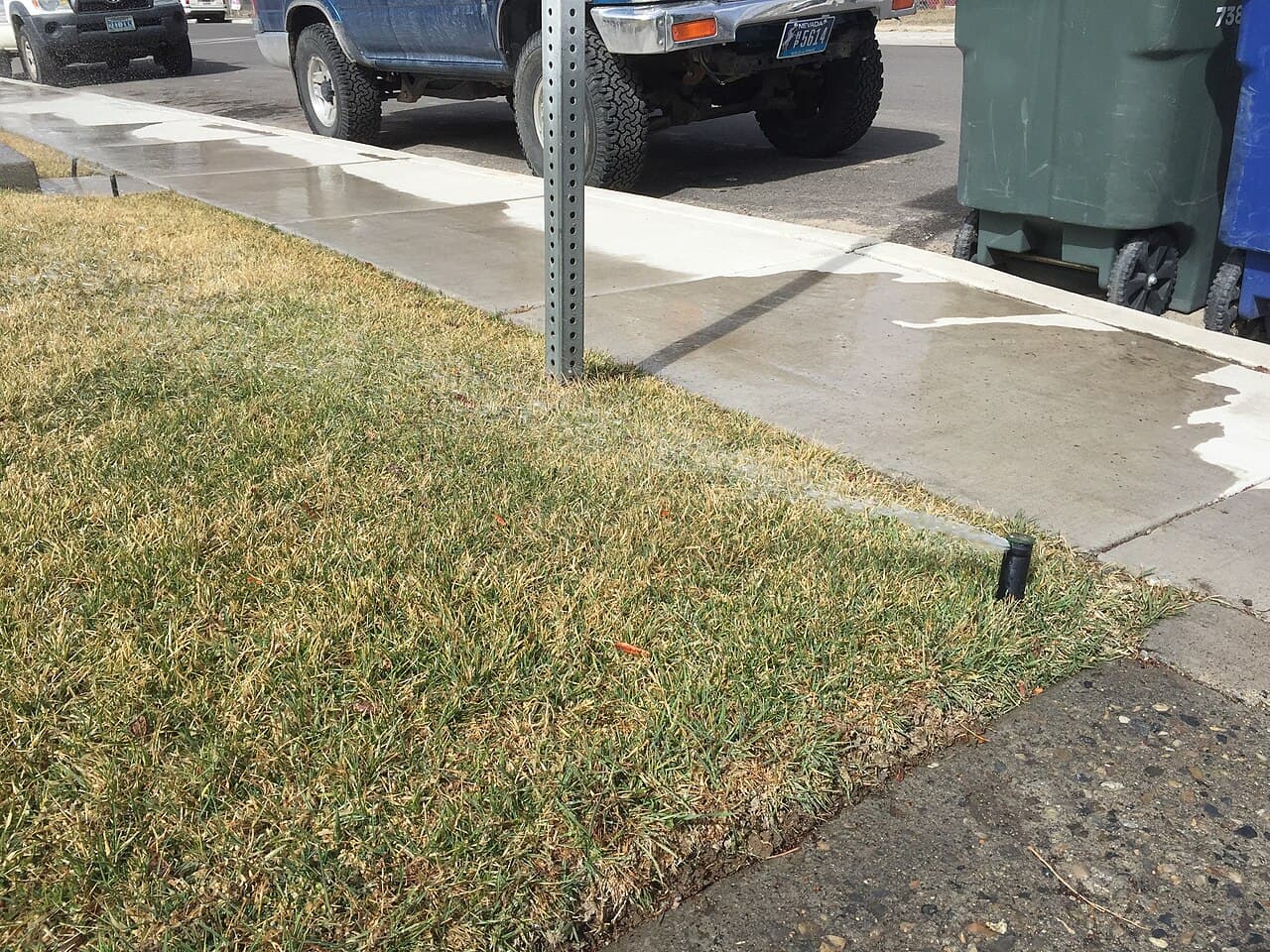
Buried pipe and valves: freezing is the main risk
Most of a system is buried, and winter is what kills it early. Richmond's Department of Public Utilities explains the mechanism: When water is left inside your sprinkler lines, valves or backflow device, it freezes and expands.[1] It adds that in most yards, sprinkler lines aren’t buried deep enough to be protected from the cold[1]. Have the lines drained or blown out before the first hard freeze; if you do not have the right equipment, hire a pro. See how to winterize a sprinkler system.
Valves fail more quietly. WaterSense says to Check the connections inside valve boxes to make sure all the valves and other components are securely connected and that the valves can shut.[2] A valve that will not close fully can seep all season without any sign on the surface.
Heads and nozzles: the parts you will replace
Spray heads sit at lawn level and take the abuse. Rain Bird notes that For heads that obviously have been cut with a lawnmower or damaged by a vehicle, you may need to replace them entirely.[3] A broken head is not harmless either: Running an irrigation system with broken and damaged sprinkler heads can cause overflowing and flooding of water on the landscape.[2] WaterSense warns: Missing or broken sprinkler heads can be hard to find because most irrigation systems run overnight or early in the morning.[2] You will not notice unless you watch a cycle. Our guide to replacing a broken sprinkler head covers the swap.
Replacement is also a chance to upgrade: the same manufacturer says consider upgrading to a new high-efficiency model[3].
The backflow assembly: the part with a schedule
The backflow assembly is the one component with published intervals. Chesterfield County's guide says the assembly Must be tested upon installation, after repair, when relocated, and annually as a minimum[4]. Fairfax County likewise says assemblies are required to be tested annually by a Virginia State Certified and Fairfax County Authorized Tester[5].
Chesterfield's guide adds: It is recommended by the manufacturer that the backflow prevention assembly be overhauled (replacement of internal rubber components, as a minimum) every five years.[4] Testing and overhaul are work for a certified tester or plumber, not for the homeowner. See whether you need a permit or backflow preventer.
The controller: replace for function, not age
A controller does not wear out like a pipe, but old ones lack features that save water. WaterSense explains that A WaterSense labeled irrigation controller uses local weather data or monitors the level of moisture in the soil to automatically adjust your irrigation schedule.[2] If yours still runs a fixed calendar, an upgrade may pay back through lower use.
A yearly routine that adds years
A system that is winterized each fall, started up each spring, walked once a month and tested every year will usually outlast one that is ignored. The routine is short:
- Have the lines drained or blown out before the first freeze.
- In spring, run each zone and look for broken, tilted or clogged heads.
- Look for pooling between cycles.
- Book the annual backflow test.
- Ask for the five-year overhaul on the backflow assembly.
Stop and call a pro if
- Water pools on the lawn or a zone stays wet. Between irrigation cycles, look for areas of the landscape with water pooling on the surface; that could be a sign of an underground leak.[2]
- A pipe or fitting has cracked after a freeze. Buried repairs belong to a licensed contractor.
- The backflow assembly fails its test or needs an overhaul.
- Repairs are coming every season. Weigh repair against replacement.
Getting help in Virginia
Before a replacement, compare what a new system costs in Virginia and what installation involves. Browse irrigation answers or irrigation businesses.
When you are ready, describe the irrigation job once and licensed local contractors can quote it.
Common questions
- Is there an official lifespan for a sprinkler system?
- No agency publishes one for a whole residential system. Parts age differently: heads get damaged by mowers, buried lines are at risk from freezing, and the backflow assembly has a testing and overhaul schedule. Ask your installer for the warranty terms in writing.
- What shortens the life of a sprinkler system the most?
- Freezing water. Richmond's utilities department says water left in lines, valves or the backflow device freezes and expands, and that in most yards the lines are not buried deep enough to be safe from the cold. Winterizing each fall is the biggest single habit.
- How often does the backflow preventer need testing?
- Chesterfield County says at installation, after repair, when relocated, and annually as a minimum. Fairfax County says its assemblies are tested annually by a Virginia certified, county-authorized tester.
- When should I replace the whole system instead of repairing it?
- When repairs come every season, or a major section has failed, ask for a written quote for both options. Our repair-or-replace answer walks through the comparison.
- Does a smart controller extend the life of the system?
- It does not wear the pipes less, but a weather or soil-moisture controller adjusts the schedule automatically, which cuts overwatering.
Sources
- [1] Winterize Your Sprinkler System Before It's Too Late (posted October 29, 2025), City of Richmond Department of Public Utilities. Checked October 27, 2026.
- [2] Sprinkler Spruce-Up, U.S. Environmental Protection Agency, WaterSense. Checked October 27, 2026.
- [3] 3 Simple Repairs and Upgrades for Your Pop-Up Sprinklers This Spring, Rain Bird Corporation (manufacturer). Checked October 27, 2026.
- [4] A Guide to Selecting, Installing and Maintaining Backflow Preventers in Residential Irrigation Systems, Chesterfield County Utilities Department. Checked October 27, 2026.
- [5] Cross Connection Control and Backflow Prevention Program, Fairfax County Land Development Services. Checked October 27, 2026.
Want a pro to handle it?
Describe the job once. Licensed local businesses send quotes, and you pay only when you book one.
Get a quote from a local pro