What does installing an in-ground sprinkler system involve?
A licensed contractor designs zones, has utilities marked through Virginia 811, trenches and buries the pipe, ties into the water line through a backflow preventer, sets valves, heads and a controller, and has the backflow assembly tested. Localities require permits for the backflow device. Hire a licensed irrigation or plumbing contractor and get three written bids.
Free to ask. Local shops send quotes, and you pay only when you book one.
By Kasra Taheri, Founder, LoclisPublished
Researched and drafted with AI, then checked claim by claim against the sources listed below before it was published. Prices and rules change; the dates beside each source say when it was last checked.
This is a job for a licensed pro in Virginia
This page explains what the work involves, the permits, what a licensed pro does and what drives the cost. It does not give step-by-step instructions, because this work needs a licence, a permit or both, and doing it wrong can injure someone. Before you hire, check the licence on Virginia's DPOR record.
An in-ground sprinkler system is a small plumbing and landscape construction job: a licensed contractor plans zones, trenches the yard after utilities are marked, ties into the home's drinking-water line through a backflow preventer, buries the pipe and valves, sets the heads, wires a controller, then has the backflow assembly tested. Backflow prevention assemblies on irrigation systems are required by law,[2] and Virginia licenses the people who may do this work.
What a contractor does, in order
Design and zones. The contractor walks the lawn and beds, measures water pressure and flow, and divides the yard into zones so each valve runs heads that put out water at a similar rate. Lawn spray heads, rotors and drip lines for beds do not share a zone. A drawing of the zones and head locations is worth asking for.
Utility locates. Trenching comes before anything is buried, and you must contact Virginia 811 at least 3 working days prior to excavation to give the member utilities enough time to mark their lines.[1] Using Virginia 811's services is always free.[1]
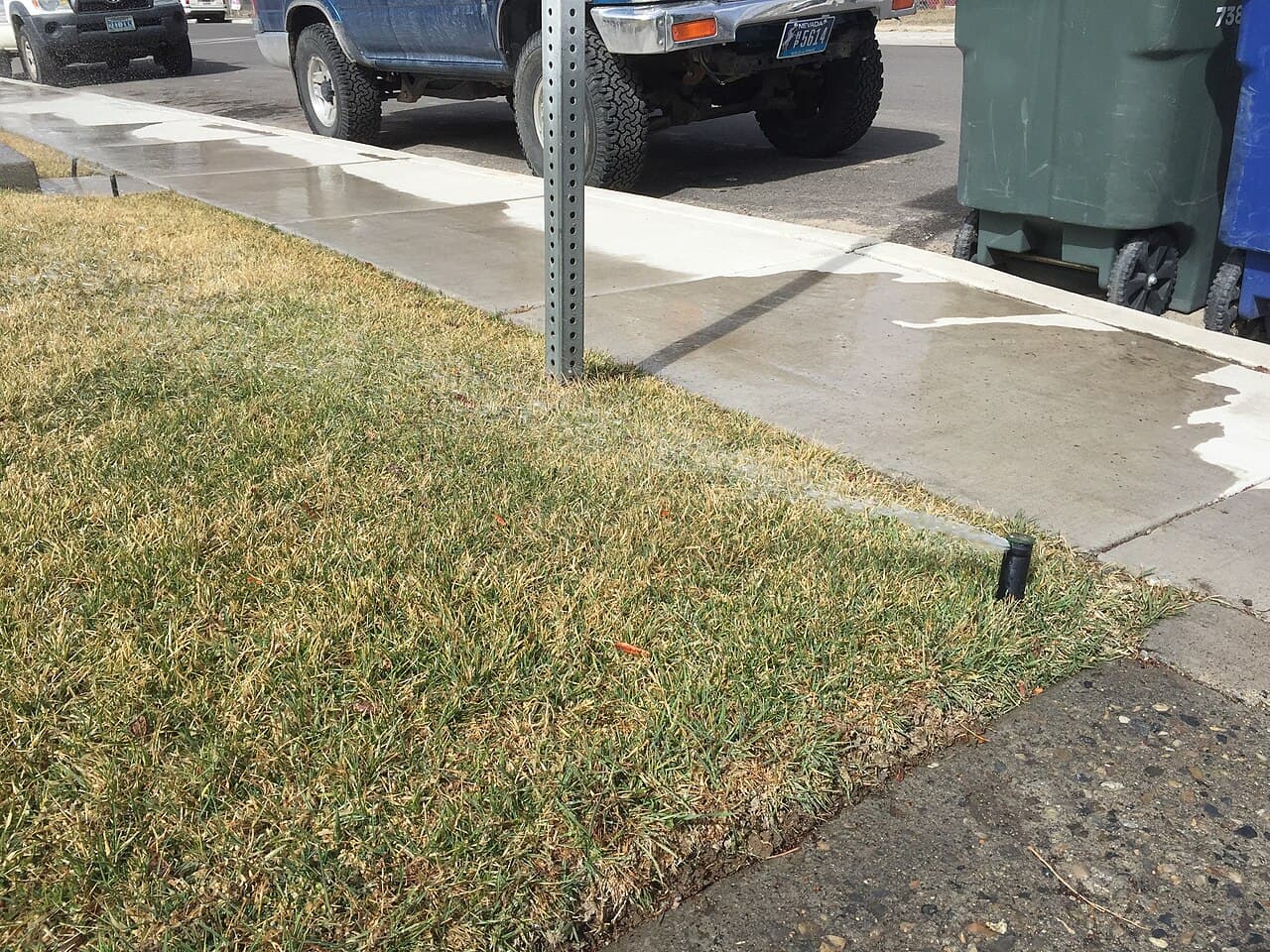
Tie-in and backflow protection. The system draws from the potable supply, so it needs a device that keeps lawn water from flowing back into the house. The Virginia Residential Code requires the potable water supply to lawn irrigation systems to be protected against backflow by an atmospheric vacuum breaker, a pressure vacuum-breaker assembly or a reduced pressure principle backflow prevention assembly.[3] Where chemicals are introduced into the system, it must be a reduced pressure principle assembly.[3] Localities add detail. Chesterfield County, for example, says the attachment must be made downstream of (after) the water meter,[2] and that the water supply pipe between the meter and the backflow assembly must be installed 24 inches deep.[2] It also says a "blow-off" used for pumping pressurized air into the pipes to drain them for winter is not allowed before the backflow assembly.[2]
Trenching, pipe and valves. Pipe is laid below the surface, valves are grouped in a box, and heads are placed to overlap. Most of the lawn damage from a job comes here, so ask how the contractor will protect the turf and restore the trench.
Controller. The controller is wired to the valves and set to a schedule. EPA says WaterSense labels weather-based and soil moisture-based controllers that tailor watering to conditions,[5] and that replacing a standard clock-based controller with a WaterSense labeled one can save an average home up to 15,000 gallons of water annually.[5] Put the controller model in the written scope.
Permit, inspection and testing. Prince William County says a Limited Service and Repair Permit and inspection are required for the backflow prevention device on residential applications.[4] Chesterfield requires an auxiliary plumbing permit for the installation of all backflow prevention assemblies.[2] Chesterfield also says the assembly must be tested upon installation, after repair, when relocated, and annually as a minimum.[2] Details differ by locality, so see whether you need a permit or backflow preventer for a lawn sprinkler system.
What it costs and what changes the price
Zone count, yard size, soil and rock, slope, the type of backflow assembly, the controller, the permit and a separate irrigation meter all move the price. How much a sprinkler system costs in Virginia covers the drivers and what to put in a written quote.
Who is allowed to install it
Virginia has a licence specialty for this work. It defines landscape irrigation contracting as the installation, repair, improvement, or removal of irrigation sprinkler systems or outdoor sprinkler systems.[6] The specialty may install backflow prevention devices incidental to its work when the installer has received formal vocational training approved by the board that included instruction in installing them.[6] The PLB (plumbing) and H/H classifications also provide for this function,[6] and DPOR notes that if the work is valued at $1,000 or more, a valid Virginia Contractor's License is required for the license category in which the contractor is to work.[9]
Testing is a separate trade. A backflow prevention device worker is an individual who maintains, repairs, tests or inspects cross connection control devices,[8] and Chesterfield says the people who test backflow assemblies must hold a valid Tradesman Certificate as a Backflow Prevention Device Worker from DPOR.[2]
When to call a licensed pro
For the whole job. A system needs a licensed contractor in an irrigation or plumbing classification, a permit where your locality requires one, and a certified tester for the backflow assembly. Under Virginia law a Class C contractor performs work over $1,000 but less than $30,000 in a single contract, and a Class B contractor work of $30,000 or more but less than $150,000.[7] Check the licence on DPOR's lookup before you sign.[10]
Get at least three written bids using identical plans and specifications so you can compare prices and contractors.[9] Also read whether you need a sprinkler system at all. Browse irrigation answers or irrigation businesses.
When you are ready, describe the irrigation job once and licensed local contractors can quote it.
Common questions
- Can I install an in-ground sprinkler system myself?
- Not as a casual project. The system ties into your drinking-water line and needs a backflow assembly, which many localities permit and inspect, and trenching needs a free call to Virginia 811 first. If the work is valued at $1,000 or more, Virginia requires a licensed contractor.
- How long does a sprinkler installation take?
- A typical yard is often a matter of days once the permit and utility marks are in place. Waiting for the permit, the 811 locate or a companion meter is usually what takes longest.
- Do I need to call 811 before the contractor trenches?
- Yes. Virginia 811 says to contact it at least 3 working days prior to excavation, and the service is free. A good contractor will file the request, but confirm it has been done.
- Who tests the backflow preventer?
- A tester certified by DPOR as a backflow prevention device worker. Chesterfield County requires testing at installation and at least annually.
- What should be in a sprinkler quote?
- The zone count and a head layout, the backflow assembly type, the controller model, who pulls the permit, how the lawn will be restored, and the warranty. Compare at least three quotes written to the same specification.
Sources
- [1] Homeowners FAQ, Virginia 811. Checked October 27, 2026.
- [2] A Guide to Selecting, Installing and Maintaining Backflow Preventers in Residential Irrigation Systems, Chesterfield County Utilities Department. Checked October 27, 2026.
- [3] Cross Connection Control and Backflow Prevention Program, Fairfax County Land Development Services. Checked October 27, 2026.
- [4] Lawn Irrigation System Requirements, Prince William County Building Development Division. Checked October 27, 2026.
- [5] WaterSense Labeled Controllers, U.S. Environmental Protection Agency, WaterSense. Checked October 27, 2026.
- [6] 18VAC50-22-30, Definitions of specialty services, Virginia Administrative Code, Board for Contractors. Checked October 27, 2026.
- [7] Va. Code § 54.1-1100, Definitions, Code of Virginia, Virginia General Assembly. Checked October 27, 2026.
- [8] Va. Code § 54.1-1128, Definitions (Tradesmen), Code of Virginia, Virginia General Assembly. Checked October 27, 2026.
- [9] What You Should Know Before You Hire a Contractor, Virginia Board for Contractors, DPOR. Checked October 27, 2026.
- [10] License Lookup, Virginia Department of Professional and Occupational Regulation. Checked October 27, 2026.
Want a pro to handle it?
Describe the job once. Licensed local businesses send quotes, and you pay only when you book one.
Get a quote from a local pro