How much does stair repair cost in Virginia?
There is no single Virginia price for stair repair, and we found no public source that dates one. A loose tread or squeak is a small job; a cracked stringer, rot or a rebuilt flight is a large one. The price follows the damage, the number of steps and the finish. Get at least three written bids on identical scopes and compare line by line.
Free to ask. Local shops send quotes, and you pay only when you book one.
By Kasra Taheri, Founder, LoclisPublished
Researched and drafted with AI, then checked claim by claim against the sources listed below before it was published. Prices and rules change; the dates beside each source say when it was last checked.
Step by step
Read when to stop and call a pro, further down this page, before you start.
Step 1: Photograph every problem
Take clear photos of each loose, cracked or squeaking step, the railing and the underside of the stair if you can see it, so every bidder prices the same staircase.
Step 2: Count and describe the steps
Write down how many steps there are, whether the stair is straight, open or curved, and whether treads are wood, carpeted or painted.
Step 3: Do not pry or cut anything open
Look, but leave structure alone. A permit is required before work involving any structural component.[3]
Step 4: Check each bidder's licence
Look up every contractor in the DPOR licence lookup before accepting a quote.[1]
Step 5: Collect at least three written bids
Give each bidder the same description and ask for the same scope.[1]
Step 6: Ask for itemised lines
Request separate prices for treads, risers, stringer or structural repair, railing, finish and the permit if one applies.
Step 7: Agree the deposit and payments in writing
Keep the first payment small and tie later payments to finished work.[1]
The honest answer
There is no single price for stair repair in Virginia, and no public source we found dates one, so we will not print a number that would be out of date or wrong for your house. What we can do is show what moves the price and how to get quotes you can compare.
The range is wide because "stair repair" covers four very different jobs: a squeak or loose tread, a worn or cracked tread, a damaged railing, and structural damage to the stringers or supports. The first is small. The last is the one that makes bids differ by thousands.
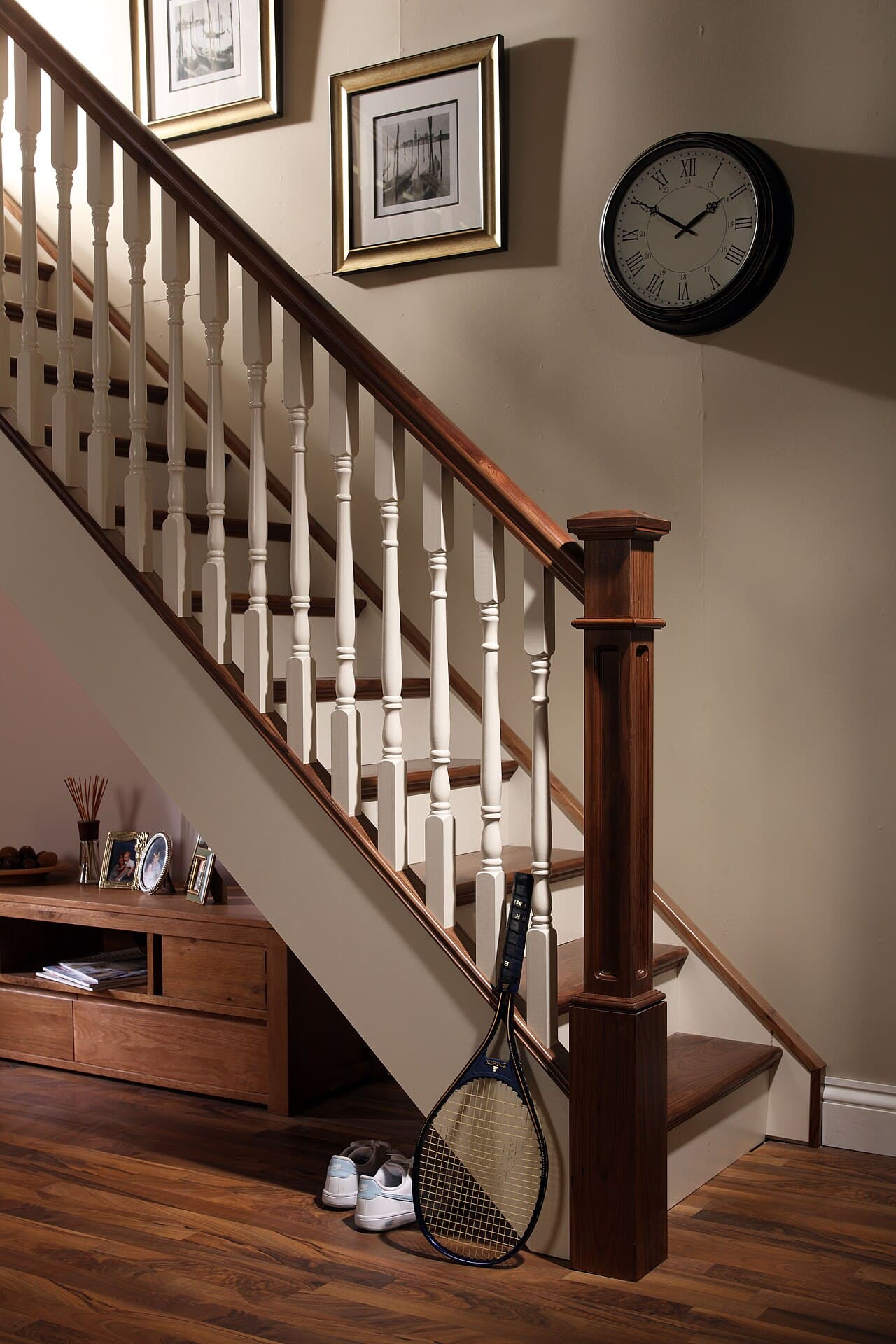
What moves the price
The kind of damage. A loose or squeaking step is a quick fix, as in how to fix a squeaky stair. Cracked treads, split risers and rotted wood take materials and finishing. A failing stringer means supporting the stair while damaged framing is repaired, which is carpentry, not trim work.
How many steps, and what shape. Straight stairs are quicker to work on than open, curved or winding ones, where every part is cut to fit. A long flight, a landing or a tight, finished space also adds time.
The material and finish. Painted pine, stained oak and carpet over plywood all cost different amounts to match. Matching an old stain is slower than painting.
Access. A stair with an open underside is easy to inspect and repair. One behind a finished ceiling may need drywall cut and patched to reach the framing.
The railing. Loose balusters and newel posts are priced separately from the treads, and rails can have their own code limits; see Virginia's building code rules for stair railings.
Permit and inspection. A permit is required before work involving any structural component,[3] while "Installation or replacement of floor finishes" and "Installation or replacement of cabinetry or trim" are on the code's list of ordinary repairs that need none.[3] If your repair needs a permit, ask whether the fee is in the quote.
Who may do the work
Virginia's Board for Contractors defines finish carpentry as the installation, repair, and finishing of cabinets, sash casing, door casing, wooden flooring, baseboards, countertops, and other millwork.[4] That fits treads, risers and trim. Framing repairs belong to a framing contractor, whose specialty covers the construction, removal, repair, or improvement to any framing or rough carpentry necessary for the construction of framed structures.[4]
The size of the contract sets the licence class: Class C covers a single contract over $1,000 but less than $30,000, and Class B a contract of $30,000 or more, but less than $150,000.[2] Most stair repairs fall in the first group. A smaller job may be done by someone who does not need a Class C licence, so check the DPOR lookup and ask what covers the work.
How to get quotes you can compare
DPOR recommends at least three written bids or estimates using identical plans and specifications.[1] Describe the same job to each bidder, with photos, a step count and a note of anything you suspect underneath. Then ask for separate lines for the tread work, any structural repair, the railing, the finish and the permit.
When the totals differ, ask why. Do not automatically accept the lowest.[1] A bid that leaves out the structural repair, or assumes you will paint, is not the same job as one that includes them.
Stop and call a pro if
- The stair sags, bounces or pulls from the wall. That points to the stringers or supports, and a permit is required before work involving any structural component.[3]
- Wood is soft, dark or damp. Rot spreads, and the cause (a leak, an exterior step in the wet) has to be fixed too.
- The railing moves. A loose handrail is a fall hazard, not a cosmetic problem.
- A bidder asks for a large payment up front. Compare what you were quoted with DPOR's guidance on deposits and payment schedules.
Getting help in Virginia
Browse home repair answers and stair repair businesses, then describe the stair once and licensed local carpenters quote it.
Common questions
- Why does stair repair cost so differently from one house to the next?
- Because the same words cover very different jobs. Tightening a squeaky tread is minutes of work; replacing a rotted stringer means supporting the stair, cutting out damaged framing and often a permit. Access, the number of steps and the finish add to it.
- Do I need a permit to repair a stair?
- Not for ordinary repairs such as refinishing or replacing a tread surface. Virginia's building code lists the installation or replacement of floor finishes, and of cabinetry or trim, among the repairs that need none, but requires a permit before work involving any structural component. Ask your local building department when in doubt.
- Is a handyman allowed to repair stairs?
- For small jobs, often. Virginia's contractor licensing turns on the size of the contract: a Class C licence covers a single contract over $1,000 but less than $30,000. Anything structural is better with a licensed carpenter or framing contractor. Check the licence in the DPOR lookup.
- Should I take the lowest bid?
- Not automatically. DPOR says not to accept the lowest bid by default and to make sure all bids rest on the same specifications. A low price that leaves out the structural repair or the permit is not low.
- How big a deposit is reasonable?
- Keep it small and tie later payments to finished work. DPOR's guide suggests no more than 10% of the price or $1,000, whichever is less, with exceptions for custom-made items.
Sources
- [1] What You Should Know Before You Hire a Contractor, Virginia Board for Contractors, DPOR. Checked October 27, 2026.
- [2] Va. Code § 54.1-1100, Definitions (contractors), Code of Virginia, Virginia General Assembly. Checked October 27, 2026.
- [3] 13VAC5-63-80. Section 108 Application for permit (Virginia Uniform Statewide Building Code), Virginia Administrative Code, Virginia General Assembly. Checked October 27, 2026.
- [4] 18VAC50-22-30, Definitions of specialty services (Board for Contractors Regulations), Virginia Administrative Code, Virginia General Assembly. Checked October 27, 2026.
Want a pro to handle it?
Describe the job once. Licensed local businesses send quotes, and you pay only when you book one.
Get a quote for Home Repair