How do I fix a squeaky stair?
A stair squeaks when a tread rubs against a riser or stringer. Find the noisy step, then stop the movement: from underneath, glue and screw a small wood block or shim into the gap; from above, drive a screw at an angle through the tread into the riser. Fill the hole and test. If the stringer is cracked or rotted, call a pro.
Free to ask. Local shops send quotes, and you pay only when you book one.
By Kasra Taheri, Founder, LoclisPublished
Researched and drafted with AI, then checked claim by claim against the sources listed below before it was published. Prices and rules change; the dates beside each source say when it was last checked.
Step by step
Read when to stop and call a pro, further down this page, before you start.
Step 1: Find the noisy step
Walk the stairs slowly, with a helper if you can, and mark each step that squeaks with a strip of painter's tape. Note whether the sound comes from the front edge, the back or one side.
Step 2: Look from underneath if you can
If the underside is open, such as an unfinished basement stair, have a helper step on the marked tread while you watch which joint moves: tread to riser, tread to stringer or riser to stringer.
Step 3: Close the gap from below
Spread wood glue on a thin shim and tap it into the gap until it is snug, without lifting the tread. Where a joint only rubs, glue and screw a small wood block across it, using screws short enough not to poke through the tread.
Step 4: Fix from above when the underside is closed
Drill a pilot hole near the back edge of the tread and drive a screw through the tread into the riser below, angled slightly toward it. Add a second screw at a different angle where the joint is long.
Step 5: Use a carpet-stair kit under carpet
On carpeted stairs, use a fastener made for squeaky stairs and follow the manufacturer's directions, so no visible screw is left in the carpet.
Step 6: Hide the repair
Sink the screw heads just below the surface, fill the holes with wood filler, sand lightly and touch up the finish.
Step 7: Test and repeat
Walk the whole staircase again. A step that still squeaks usually has a second loose joint, so check the same step from the other side.
The short fix: stop the rubbing
A stair squeaks because two pieces of wood rub when you step: the tread against a riser, or the tread against a stringer, the angled board that carries the steps. Glue dries, nails loosen and wood shrinks and swells, so a joint that was tight years ago now has a little play. Every reliable fix does the same thing: it removes the gap or fastens the joint so it cannot move.
Most squeaks take one step and a few minutes. Start by finding exactly which step, and which joint of that step, is moving.
Find the noisy step
Walk the stairs slowly and mark each squeaking step with painter's tape. Squeaks near the front edge point to the tread-and-riser joint under the nosing; squeaks at the back or on one side often mean the tread is rubbing a stringer.
If you can see the underside of the stair, such as in an unfinished basement, ask a helper to step on the marked tread while you watch from below. The joint that opens and closes is the one to fix.
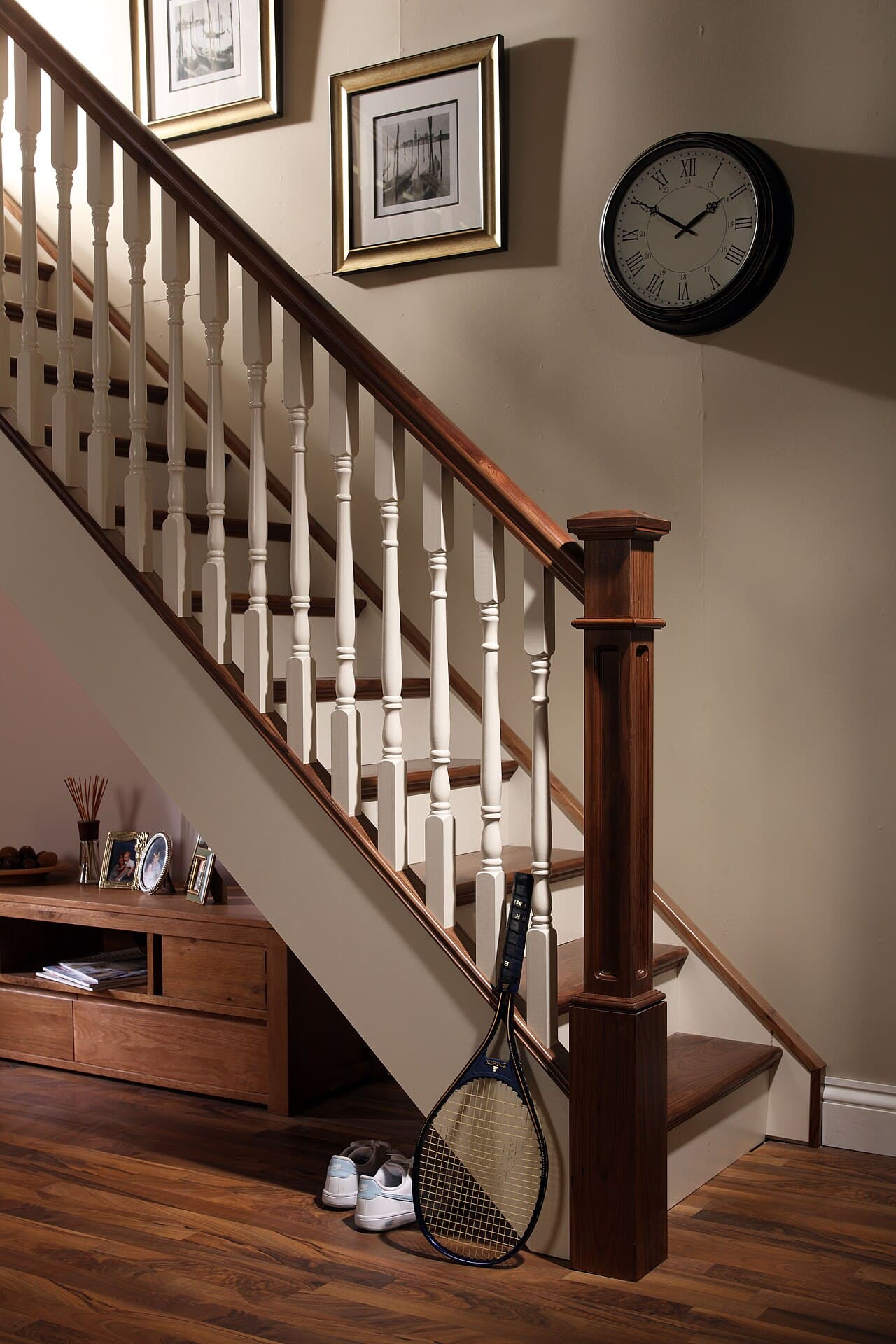
Fixing it from below
This is the cleanest repair because nothing shows. Where there is a visible gap between the tread and the riser or stringer, spread wood glue on a thin shim and tap it in until it is snug. Do not drive it hard enough to lift the tread. Where a joint only rubs, glue and screw a small block of wood across it, with screws short enough that they cannot come through the top of the tread.
Let the glue set before anyone uses the stairs.
Fixing it from above
When the underside is behind a ceiling, work from the top. Drill a pilot hole near the back edge of the tread and drive a screw through it into the riser below, angled slightly toward the riser so it pulls the parts together. A second screw at a different angle helps on a wide tread. Pilot holes matter: hardwood splits if you skip them.
Sink the heads just below the surface, fill the holes with wood filler and touch up the finish. On carpeted stairs, use a fastener made for squeaky stairs and follow its instructions so nothing is left showing in the carpet. Tightening a tread does not need a permit in Virginia in practice: the building code's list of ordinary repairs that need none includes "Installation or replacement of floor finishes" and "Installation or replacement of cabinetry or trim".[1]
Older houses and paint
If the house was built before 1978, the paint on old stairs may contain lead. The EPA says repair work in a pre-1978 home with lead-based paint can easily create dangerous lead dust.[2] It adds that the RRP Rule does not apply to homeowners doing RRP projects in their own pre-1978 homes,[2] but it does require that anyone paid to perform work that disturbs painted surfaces in homes, childcare facilities and preschools built before 1978 be certified.[2] Avoid dry sanding or prying painted parts apart, keep children away from the dust and clean up with a damp cloth.
Stop and call a pro if
- A stringer, post or the stair's support looks cracked, split, rotted or sagging. In Virginia a permit is required before work involving any structural component,[1] and cutting or replacing framing is not a screw-and-glue job.
- The stair bounces, leans or pulls away from the wall. That is movement in the structure, not a squeak.
- The wood is soft, damp or stained. Squeaking can be the first sign of rot or a leak.
- A tread is cracked or a riser has split. Replacing it is carpentry work.
- The railing or balusters move at the same time. That is a safety issue; see what Virginia's building code says about stair railings.
Who to hire in Virginia
Virginia's Board for Contractors defines finish carpentry as the installation, repair, and finishing of cabinets, sash casing, door casing, wooden flooring, baseboards, countertops, and other millwork,[3] which suits treads, risers and trim. Damaged supports belong with a framing contractor, whose specialty covers the construction, removal, repair, or improvement to any framing or rough carpentry necessary for the construction of framed structures.[3] DPOR advises collecting at least three written bids or estimates using identical plans and specifications.[4]
For prices, read how much stair repair costs in Virginia, browse home repair answers or home repair businesses.
When you are ready, describe the stair once and licensed local carpenters quote it.
Common questions
- Why do stairs squeak?
- Wood moves. Treads, risers and stringers expand and shrink with the seasons, glue dries out and nails work loose, so two surfaces that were once tight rub against each other when you step. The fix is to stop that rubbing, not to hide the sound.
- Can I fix a squeaky stair from above?
- Yes, when the underside is covered. Drill a pilot hole through the tread, drive a screw at a slight angle into the riser below, then fill and touch up the hole. It is quick but leaves a visible repair, so on a finished hardwood stair many people prefer to work from below when they can.
- Do I need a permit to fix a squeaky stair?
- Not for tightening or refinishing a tread. Virginia's building code requires a permit before work that involves any structural component, and lists the installation or replacement of floor finishes, and of cabinetry or trim, among the ordinary repairs that need none. Replacing a stringer is a different job, so ask your local building department.
- Is it safe to sand or pry old stair parts in an older house?
- Be careful. The EPA says repair work in a pre-1978 home with lead-based paint can easily create dangerous lead dust. Its rule generally does not apply to homeowners working on their own pre-1978 home, but it does apply to anyone paid to disturb painted surfaces, which is worth asking a contractor about.
- Who should I hire if the stair needs more than screws?
- A finish carpenter for treads, risers and trim, or a framing contractor if the stringers or supports are damaged. Both are defined in the Board for Contractors' regulations. Ask for the licence number, and compare written quotes.
Sources
- [1] 13VAC5-63-80. Section 108 Application for permit (Virginia Uniform Statewide Building Code), Virginia Administrative Code, Virginia General Assembly. Checked October 27, 2026.
- [2] Lead Renovation, Repair and Painting Program, U.S. Environmental Protection Agency. Checked October 27, 2026.
- [3] 18VAC50-22-30, Definitions of specialty services (Board for Contractors Regulations), Virginia Administrative Code, Virginia General Assembly. Checked October 27, 2026.
- [4] What You Should Know Before You Hire a Contractor, Virginia Board for Contractors, DPOR. Checked October 27, 2026.
Want a pro to handle it?
Describe the job once. Licensed local businesses send quotes, and you pay only when you book one.
Get a quote for Home Repair