Why is my stair railing loose?
A stair railing loosens because the screws or bolts holding it have backed out of worn wood, the wood around them has dried or rotted, or the post or bracket has lost its grip on the structure. Find where it moves, tighten or re-anchor that connection, and test it. If a post or the wall behind it is soft or moving, call a pro.
Free to ask. Local shops send quotes, and you pay only when you book one.
By Kasra Taheri, Founder, LoclisPublished
Researched and drafted with AI, then checked claim by claim against the sources listed below before it was published. Prices and rules change; the dates beside each source say when it was last checked.
Step by step
Read when to stop and call a pro, further down this page, before you start.
Step 1: Find the moving joint
Push and pull the rail at several points and watch where it moves: at the wall brackets, at a newel post, at a baluster, or at the base of a post.
Step 2: Tighten the visible fasteners
Snug up loose screws, bolts and bracket screws with the right driver. Stop when the part is firm, because over-tightening strips the hole.
Step 3: Re-anchor stripped holes
Where a screw spins without gripping, remove it, glue a few toothpicks or a short wooden dowel into the hole, let the glue set, trim flush and drive the screw again into fresh wood.
Step 4: Find the stud behind a wall rail
A wall-mounted handrail needs its brackets in solid framing. If a bracket sits in drywall alone, move it to a stud.
Step 5: Reglue a loose baluster
Where a baluster rattles in its socket, work wood glue into the joint, or add a small finish nail through the tread or rail at an angle, then wipe off the squeeze-out.
Step 6: Check hardware for rust
Replace a bracket, screw or bolt that is rusted, bent or cracked with one of the same size, in a corrosion-resistant finish if the rail is outdoors.
Step 7: Test with your full weight
Lean on the rail along its length and at each post. It should not flex or click. Repeat after a week, because a fix that holds only briefly points to a deeper problem.
Start by finding what moves
A loose stair railing is nearly always one of three things: a fastener that has backed out, wood that has worn or rotted around the fastener, or a post that has lost its anchor to the structure. The fix depends on which, so before you pick up a tool, push and pull the rail at several points and watch exactly where the movement starts.
Most loose rails turn out to be the first kind. Stairs flex a little with every step and the rail takes the pull, so screws loosen over the years. That is a repair you can do in an afternoon.
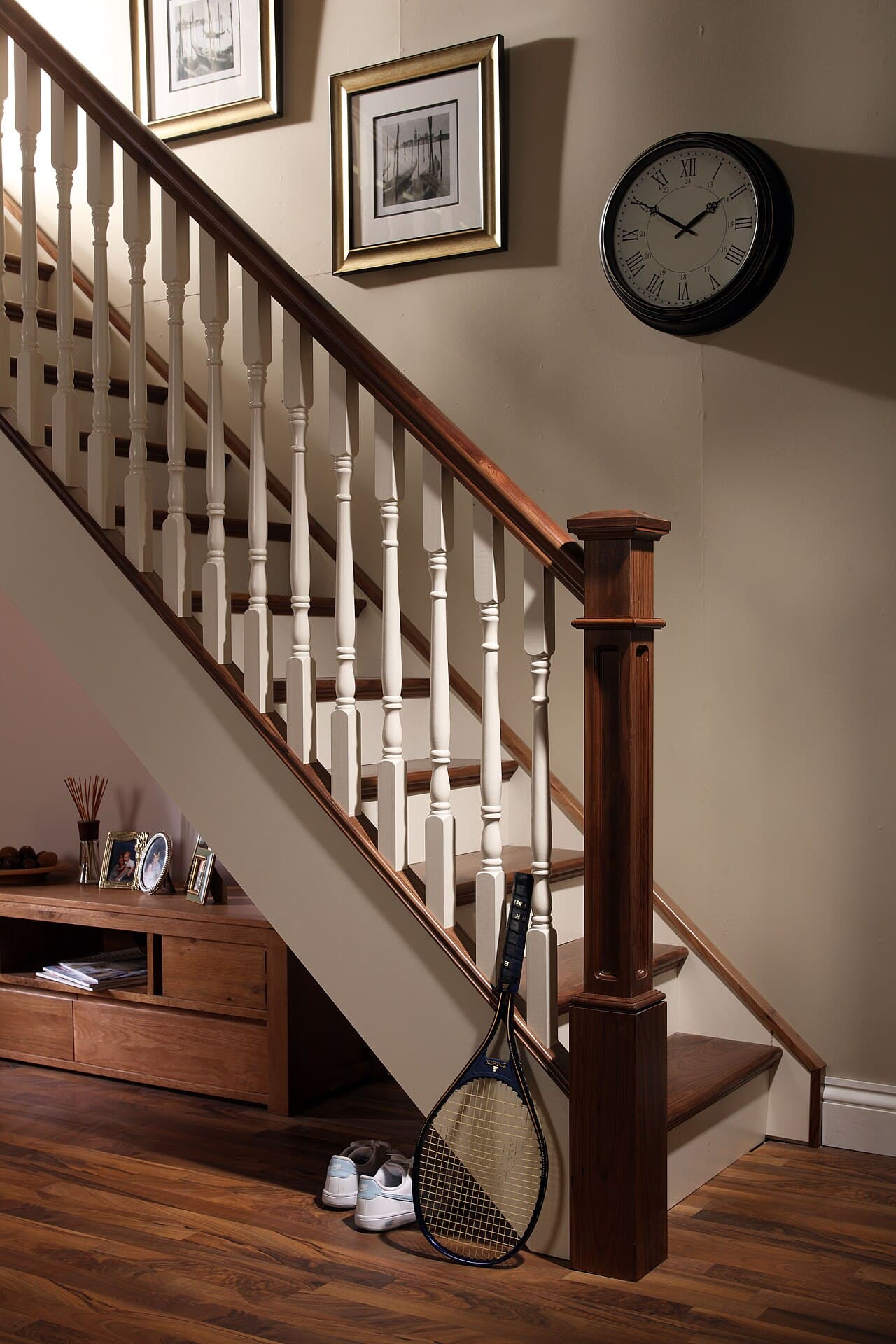
Tighten, then re-anchor
Snug up every visible screw, bolt and bracket first. Use the right driver and stop when the part is firm; a screw turned past tight strips its hole and holds less than before.
If a screw spins without gripping, the hole is stripped. Take the screw out, glue a few toothpicks or a short dowel into the hole, let the glue set, trim it flush and drive the screw again into fresh wood. For a wall-mounted handrail, check what the bracket is screwed into. A bracket held by drywall alone will never stay tight; it belongs in a stud. Any rail should also be firm along its whole length, because it exists to catch someone who is falling.
A baluster that rattles in its socket usually just needs glue worked into the joint, with a small angled finish nail if the fit is sloppy.
Why the wood lets go
Where screws will not hold even in a new hole, the wood itself has often failed. Rot is the usual cause on exterior stairs and in damp entries. The USDA Forest Products Laboratory puts it this way: "The organisms that can degrade wood are principally fungi",[4] and they need moisture to grow, so a post that stays wet at its base is a post that is losing strength. Press a screwdriver tip into the base of the post. If it sinks in or the wood crumbles, replacing a screw will not help.
Outdoors, hardware matters too. Fairfax County's deck guide, which covers decks rather than indoor stairs, says: "Handrail and connecting hardware material shall be decay and corrosion resistant."[1] Choosing hardware that way is sensible for any exterior rail you are repairing.
When the post is the problem
A newel post that rocks at the bottom is attached to the floor or stair framing, and the connection has loosened. A sound post carries load into the framing, not into a few screws in the finish floor, so tightening what you can see will not cure it.
Re-anchoring a post often means working into the stair framing from below or replacing the post's fastening. That is carpentry, and where it involves a structural component, Virginia requires a permit.[3]
Stop and call a pro if
- The newel post rocks at its base or the floor around it is soft, cracked or stained.
- The wood is rotted, spongy or crumbling where the post, rail or baluster meets the stair.
- The rail pulls out of the wall along with the plaster or drywall, or there is no stud where the bracket must go.
- Several balusters are loose or missing, or the rail moves along its whole length.
- The fix will not hold. A repair that loosens again within weeks points to movement in the stair structure.
- The work means cutting or replacing a post, stringer or framing. Virginia requires a permit before work involving any structural component.[3]
A railing is also a legal duty for the owner. Virginia's maintenance code says: "Buildings, structures, and systems shall be maintained and kept in good repair",[2] so a rail that gives way is something to fix promptly, not wait out.
Related reading and hiring
To see what the building code expects of a rail in the first place, including the height and graspability rules, read what Virginia's building code says about stair railings. For stairs that also creak, see how to fix a squeaky stair, and for pricing a larger fix, how much stair repair costs in Virginia. You can also browse home repair answers or home repair businesses.
When you are ready, describe the railing once and licensed local carpenters quote it.
Common questions
- Why does a stair railing get loose over time?
- Every step on the stairs pulls and pushes on the rail, and wood shrinks and swells with the seasons. Screws back out, glue in the joints dries out, and the holes that hold the fasteners wear oversize. A rail that moves a little today moves more next year, which is why it is worth fixing early.
- How do I know whether it is a simple fix or a structural one?
- Look at what moves. If it is a bracket, a screw or a single baluster, it is usually a simple fix. If the whole newel post rocks at its base, the floor or stair structure under it is soft or the post has lost its anchor, and that is a job for a carpenter.
- Do I need a permit to tighten or re-glue a railing?
- Ordinary tightening and gluing is repair, not a permit job. Virginia's building code requires a permit before work that involves any structural component, so ask your local building department before replacing a post or changing how the rail is anchored.
- Is a loose railing a code problem?
- It can be. The Virginia Maintenance Code says buildings, structures and systems shall be maintained and kept in good repair. A railing that cannot hold a person who grabs it is not in good repair, and it is a real fall risk before it is anything else.
- Can I just add a few more screws?
- Only if there is solid wood or framing to grip. Extra screws into a hole that is already stripped, or into drywall, just give a false sense of safety. Re-anchor the stripped hole first, and land new screws in a stud or the solid core of a post.
Sources
- [1] Typical Deck Details, Version 2021.0 (1/5/2024), Fairfax County Land Development Services. Checked October 28, 2026.
- [2] 13VAC5-63-470, Virginia Maintenance Code, Section 103 Application of code, Virginia Administrative Code, Virginia General Assembly. Checked October 28, 2026.
- [3] 13VAC5-63-80. Section 108 Application for permit (Virginia Uniform Statewide Building Code), Virginia Administrative Code, Virginia General Assembly. Checked October 28, 2026.
- [4] Wood Handbook, Chapter 14: Biodeterioration of Wood, USDA Forest Service, Forest Products Laboratory. Checked October 28, 2026.
Want a pro to handle it?
Describe the job once. Licensed local businesses send quotes, and you pay only when you book one.
Get a quote for Home Repair