How do I keep wood stairs from wearing out?
Keep grit off the treads, protect the finish and keep the air steady. Sweep or vacuum often, put a walk-off mat at the entrance, skip wet and steam mops and oil-based wax, and keep indoor humidity in a steady range. Have the finish recoated before it wears through to bare wood, because recoating early can save money over the life of the floor.
Free to ask. Local shops send quotes, and you pay only when you book one.
By Kasra Taheri, Founder, LoclisPublished
Researched and drafted with AI, then checked claim by claim against the sources listed below before it was published. Prices and rules change; the dates beside each source say when it was last checked.
Step by step
Read when to stop and call a pro, further down this page, before you start.
Step 1: Trap grit at the door
Put a walk-off mat at the entrance that leads to the stairs, to trap dirt and moisture before it reaches the treads.[1]
Step 2: Sweep or vacuum often
Sweep or vacuum the treads regularly, nosings and corners included, to remove dirt and grit.[1]
Step 3: Clean the dry way
Wipe spills at once with a soft cloth, and do not use wet mops, steam mops, harsh chemicals, ammonia or abrasive cleaners.[1]
Step 4: Leave off wax and polish
Do not use oil-based wax or polish on the treads.[1] A slick tread is also a slip risk.
Step 5: Keep humidity steady
Hold indoor humidity at a consistent level, within the 35 to 55 percent range the manufacturer gives, to limit warping and gaps.[1]
Step 6: Watch the high-wear spots
Check the nosing and the middle of each tread twice a year, where feet land and push off, for dull patches in the finish.
Step 7: Recoat before bare wood shows
When the finish looks dull and worn but the wood is still sealed, have a professional recoat it, rather than waiting for a full refinish.[2]
Protect the finish, not just the wood
Wood stairs wear from the top down. The finish on the treads is what takes the foot traffic, and once it wears through, the wood itself starts to dull, dent and darken. So the habits that keep stairs looking good are the ones that protect the finish: keep grit off it, clean it gently and renew it before it is gone.
Bona, a flooring-finish maker, describes the process plainly: "Over time the top layer of your hardwood floor’s protective surface is slowly removed by the wear and tear of daily living."[2] You cannot stop that, but you can slow it a great deal.
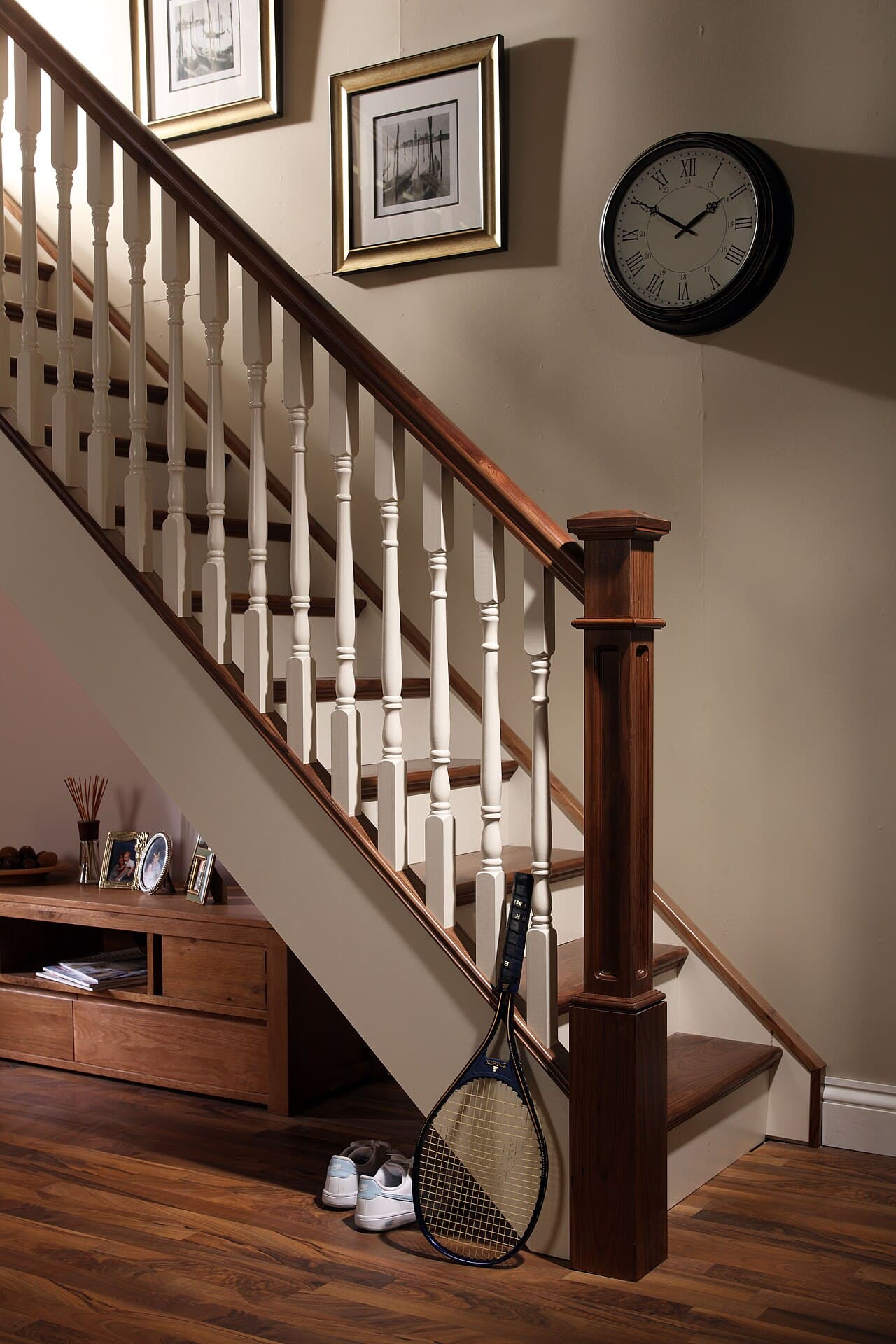
Keep grit off the treads
Grit works like sandpaper under a shoe. The simplest protection is at the door that leads to the stairs: Shaw Floors advises to "Place walk-off mats at entrances to trap dirt and moisture."[1] Take shoes off at the foot of the stairs if you can.
Then clean often and dry. Shaw's care sheet says to "Sweep or vacuum regularly to remove dirt and grit."[1] On stairs that means the corners and the back of each tread, where grit collects, and a vacuum with a soft brush attachment is gentler on the nosing than a stiff broom.
Clean gently and never wax
Water and harsh cleaners are the second cause of early wear. Shaw's list of things to avoid starts with "Don't use wet mops or steam mops."[1] Wipe spills up at once with a soft cloth instead. The same sheet warns against cleaners that attack the finish: "Don't use harsh chemicals, ammonia, or abrasive cleaners."[1]
Wax and polish are a trap on stairs. Shaw says: "Don't use oil-based wax or polish on your hardwood."[1] A waxed tread is slippery, and a slippery stair is the last thing you want.
Keep humidity steady
Wood swells in damp air and shrinks in dry air. That movement is what opens gaps between treads and risers and loosens joints, which is where squeaks start. Shaw's guidance is to "Maintain consistent humidity levels (35-55%) to prevent warping."[1] A humidifier in a dry Virginia winter and a dehumidifier or air conditioning in a muggy summer keep the range steadier. If the stairs are starting to squeak, see how to fix a squeaky stair.
Renew the finish before it fails
Maintenance finishes at some point. The cheapest renewal is a recoat, which Bona describes as lightly scuffing the existing finish with a buffer and putting another coat of finish on top. Its guide says: "Recoating hardwood floors is excellent preventative maintenance and can save you money over the life of your floor."[2] Refinishing, which strips the finish entirely, "can only be done a limited number of times throughout a floor’s life."[2] Both are best left to a floor professional on stairs, where the nosings and risers make sanding awkward and the results are on show.
In Virginia, this kind of work does not need a permit. The building code lists "Installation or replacement of floor finishes" among the work exempt from a permit, though it requires a permit before work involving any structural component.[3]
If the house was built before 1978, ask about lead. The EPA says any renovation, repair or painting project in a pre-1978 home with lead-based paint "can easily create dangerous lead dust,"[4] and that the RRP Rule requires that contractors performing RRP projects in pre-1978 homes, child care facilities, and preschools be lead-safe certified.[4] Do not dry sand old painted stairs.
Stop and call a pro if
- A tread is cracked, dished or worn through to bare wood. It needs repair or replacement, not another coat.
- A tread is loose, sagging or flexes underfoot. That points to a joint or support problem.
- The wood is soft, dark or stained near the edges or the wall. That can be moisture or rot.
- The railing or balusters move. See why a stair railing gets loose.
- The job means replacing treads, risers or a stringer. Virginia requires a permit before work involving any structural component.[3]
Related reading and hiring
For what repair work costs, read how much stair repair costs in Virginia, and for the rules on handrails and guards, what Virginia's building code says about stair railings. Browse home repair answers or home repair businesses.
When you are ready, describe the stairs once and licensed local carpenters quote it.
Common questions
- What wears out wood stairs fastest?
- Grit and foot traffic. Every step grinds dirt into the finish, and the nosing and the middle of each tread take the most of it. Keeping grit off the stairs and keeping the finish intact protects the wood underneath.
- Should I put a rug or runner on the stairs?
- A runner can take the wear, but only if it is fastened securely and does not slip, since a loose runner is a fall hazard of its own. Check that it is anchored at every tread, and lift it now and then to check the wood underneath.
- What is the difference between recoating and refinishing?
- Recoating lightly scuffs the existing finish with a buffer and puts a fresh coat on top. Refinishing strips the finish completely before a new one goes on. Bona notes that refinishing can only be done a limited number of times throughout a floor's life, which is why recoating early is the better habit.
- Do I need a permit to refinish stairs?
- No. Virginia's building code lists the installation or replacement of floor finishes among work exempt from a permit. Replacing a tread or work that touches any structural component is different, so ask your local building department first.
- Is it safe to sand old stairs in an older house?
- Be careful. The EPA says renovation and repair work in a pre-1978 home with lead-based paint can easily create dangerous lead dust, and the RRP Rule requires contractors working in those homes to be lead-safe certified. Ask a contractor about it, and avoid dry sanding old painted surfaces yourself.
Sources
- [1] Hardwood Care, Shaw Floors. Checked October 28, 2026.
- [2] Recoat Hardwood Floors Guide, Bona. Checked October 28, 2026.
- [3] 13VAC5-63-80. Section 108 Application for permit (Virginia Uniform Statewide Building Code), Virginia Administrative Code, Virginia General Assembly. Checked October 28, 2026.
- [4] Lead-Safe Renovations for DIYers, U.S. Environmental Protection Agency. Checked October 28, 2026.
Want a pro to handle it?
Describe the job once. Licensed local businesses send quotes, and you pay only when you book one.
Get a quote for Home Repair