How much does well water testing cost in Virginia?
As of October 2026, a Virginia Household Water Quality Program county drinking water clinic charged $70 per kit for 28 bacteria and chemical tests, against more than $300 at a private lab by the program's own comparison. A bacteria-only test is cheaper, and your health department may test for free.
Free to ask. Local shops send quotes, and you pay only when you book one.
By Kasra Taheri, Founder, LoclisPublished
Researched and drafted with AI, then checked claim by claim against the sources listed below before it was published. Prices and rules change; the dates beside each source say when it was last checked.
Step by step
Read when to stop and call a pro, further down this page, before you start.
Step 1: Call your health department
Ask your local health department whether it tests private wells; the EPA says it may provide private well testing for free.[4]
Step 2: Ask your Extension office about a clinic
Ask your county Extension office when the next drinking water clinic is, where the analysis per kit is $70.[1]
Step 3: Choose the tests
Pick total coliform bacteria for every year, and lead, pH, nitrate and total dissolved solids for every 3 years.[3]
Step 4: Get written quotes
If you use a private lab, ask for a written price for the exact tests, how the sample is delivered, and the turnaround time.
Step 5: Ask about help
If cost is a barrier, email wellwater@vt.edu or call 540-231-9058 about financial assistance with the cost of analysis.[1]
A clinic costs far less than a commercial lab
As of October 2026, the Virginia Household Water Quality Program at Virginia Tech charged $70 per sample kit at its county drinking water clinics: the analysis per kit is $70, covering 28 chemical and bacteriological constituents.[1] The same program says comparable analysis at a private commercial lab would cost more than $300.[1]
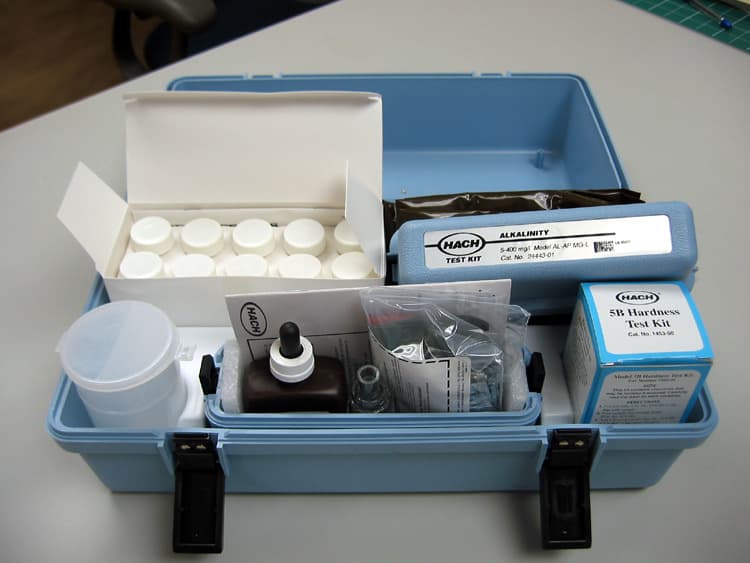
What the $70 covers: bacteria (total coliform and E. coli), nitrate, sulfate, iron, manganese, lead, copper, arsenic, fluoride, pH, total dissolved solids, hardness, sodium and a long list of other minerals and metals.[1] Results come back about 4-5 weeks after sample collection.[1]
What a private lab charges
Virginia does not publish a price list for private labs, so we cannot give you a figure for one. What drives their price:
- How many tests. A bacteria-only test covers far less than a full panel with metals.
- Which analytes. Each contaminant you add is another line on the quote.
- Turnaround. Ask whether faster results change the price.
- Collection and delivery. Ask whether you drop the sample off, ship it, or the lab collects it.
Ask each lab for a written price for the exact tests you want, not a package name. If you are buying a house, ask which tests the lender requires. Testing for total coliform and E. coli bacteria is standard practice; lead and nitrate are also recommended and required by some lenders.[2]
Why not test for everything
The program notes that if one were to test for all 94 contaminants that EPA has on its drinking water list for public supplies, it would likely cost upwards of $2000-3000.[2] A sensible plan costs much less. Test every year for total coliform bacteria, and every 3 years test for lead, pH, nitrate, total dissolved solids (TDS), and other contaminants of local concern.[3]
Free or help with the cost
The EPA says your local health department may provide private well testing for free.[4] Call before you pay for a test. The Household Water Quality Program also says it has funding through its partners at the Southeast Rural Community Assistance Project (SERCAP) to help cover the cost of analysis if you need financial assistance; the email is wellwater@vt.edu and the phone is 540-231-9058.[1]
What can cost more afterwards
The test is the cheap part. If bacteria are present, the cost is in finding the cause and treating it: a licensed well driller to shock chlorinate the well.[2] Shock chlorination should always be followed by a bacteria retest one to two weeks after the treatment.[5] Sometimes a continuous disinfection system such as ultraviolet light is added.[5] Get written quotes for each step, and ask what happens if the retest still shows bacteria.
Stop and call a pro if
- E. coli is found. Boiling water vigorously for three minutes will kill fecal coliform bacteria, and bottled water is the alternative, until the problem is fixed.[5] Call a licensed well driller. Do not allow anyone who is not a licensed well driller to work on your well.[2]
- A result is over a health limit. The EPA says to contact your public health department for specific steps and to have your well re-tested to confirm the contaminant's presence and concentrations.[4]
- A quote seems to include a treatment system before the cause is known. Ask for the retest result and the cause first.
Getting help in Virginia
See where to get well water tested in Virginia and how to test well water, and browse more inspection answers or inspection pros.
When you need a pro, describe the job once and Virginia pros quote it in writing.
Common questions
- How much is a well water test through a Virginia clinic?
- As of October 2026, the Virginia Household Water Quality Program's analysis was $70 per kit at its county drinking water clinics, covering 28 chemical and bacteriological constituents. Results come back about 4-5 weeks after sample collection.
- Can I get a free well water test?
- Possibly. The EPA says your local health department may provide private well testing for free. The Household Water Quality Program also has funding through SERCAP to help cover the cost of analysis if you need financial assistance.
- What makes a private lab test cost more?
- The number of tests, which analytes you add, turnaround time, and whether the lab collects the sample or you drop it off. Ask for a written price for the exact tests.
- Why not test for every contaminant?
- The Household Water Quality Program says testing for all 94 contaminants on EPA's public-supply list would likely cost upwards of $2000-3000. Most owners test bacteria every year and other core items every 3 years.
- Who pays for the test when buying a house?
- That is negotiated in the purchase contract. Virginia has no regulation requiring a test at sale, but testing is part of a standard contract, and some lenders require lead and nitrate tests. Ask your lender and agent early.
Sources
- [1] Virginia Household Water Quality Program: drinking water clinics, Virginia Cooperative Extension, Virginia Tech. Checked October 27, 2026.
- [2] Virginia Household Water Quality Program: Frequently Asked Questions, Virginia Cooperative Extension, Virginia Tech. Checked October 27, 2026.
- [3] 10 Tips for Well Owners (BSE-367), Virginia Cooperative Extension, Virginia Tech. Checked October 27, 2026.
- [4] Private Wells: Protect Your Home's Water, U.S. Environmental Protection Agency. Checked October 27, 2026.
- [5] Virginia Household Water Quality Program: Bacteria and Other Microorganisms in Household Water (442-662), Virginia Cooperative Extension, Virginia Tech. Checked October 27, 2026.
Want a pro to handle it?
Describe the job once. Licensed local businesses send quotes, and you pay only when you book one.
Get a quote from a local pro