How do I test my well water?
Collect a sample in the sterile bottle and kit from a certified lab or a Virginia Household Water Quality Program clinic, following its instructions and getting it back fast. Test every year for total coliform bacteria, nitrate, total dissolved solids and pH, and sooner after flooding, well repairs or a change in taste or smell.
Free to ask. Local shops send quotes, and you pay only when you book one.
By Kasra Taheri, Founder, LoclisPublished
Researched and drafted with AI, then checked claim by claim against the sources listed below before it was published. Prices and rules change; the dates beside each source say when it was last checked.
Step by step
Read when to stop and call a pro, further down this page, before you start.
Step 1: Decide what to test for
Start with total coliform bacteria, nitrates, total dissolved solids and pH.[3] Add lead and anything local land use or your symptoms point to.
Step 3: Get the sample kit
Collect the kit, bottles and instructions from the lab or clinic before you collect anything, and do not substitute your own container.
Step 4: Collect the sample as instructed
Take the sample from the tap and in the way the kit instructions say, and label the bottles as they direct.
Step 5: Ask for an E. coli follow-up
Ask the lab to test for E. coli or fecal coliform if total coliform is present.[1]
Step 6: Deliver it fast
Drop the sample off or ship it overnight; for bacteria, shipping overnight or dropping it off at the laboratory may be required.[1]
Step 7: Compare the results to EPA standards
Compare your results with the EPA drinking water standards for public systems.[4]
Step 8: Retest anything over the limit
If a contaminant exceeds a health standard, contact your health department and have the well re-tested to confirm it.[3]
Step 9: Keep the report
File the lab report with your well records so next year's results have something to be compared with.[4]
Test it through a lab, not from the tap
The reliable way to test well water is to collect a sample in the kit a lab gives you and send it in. Bacterial contamination in water cannot be seen, tasted, or smelled.[1] The only way to reliably determine if your water is contaminated with bacteria is to have a sample analyzed by a certified laboratory.[1]
With a private well, it is the homeowner’s responsibility to test the water. Testing once a year is a good idea.[2]
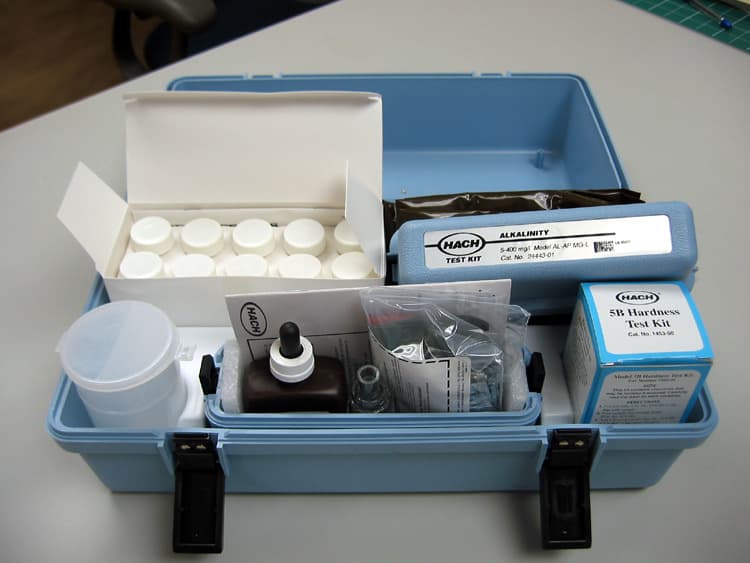
What to test for
The EPA's advice: "Test your private well annually for total coliform bacteria, nitrates, total dissolved solids, and pH levels."[3] Virginia Cooperative Extension splits it into two schedules: have your water tested every year for total coliform bacteria, and every 3 years test for lead, pH, nitrate, total dissolved solids (TDS), and other contaminants of local concern.[4]
Add tests for specific problems. Stained plumbing fixtures or laundry point to iron, copper or manganese, and an objectionable taste or smell can mean hydrogen sulfide or corrosion.[3] A new house or a nearby change in land use is a reason to ask the lab about more.
Test sooner when something changes
The EPA lists situations that call for a test immediately, including when conditions near your well have changed significantly (such as flooding or new construction), when you replace or repair any part of your well system, and when you notice a change in your water quality, such as odor, color or taste.[3] Virginia Cooperative Extension adds two more conditions. There is an infant or pregnant woman in the home.[1] The water supply system, including indoor plumbing, has been disassembled for service or repairs.[1]
Collecting the sample
Follow the kit's instructions exactly. Bacteria samples are the fussy ones, so read the instructions twice; they usually call for the sterile bottle supplied, not rinsing it, not touching the inside of the cap, and getting the sample to the lab quickly. For bacteria, shipping the sample overnight or dropping it off at the laboratory may be required.[1]
When you submit a bacteria sample, request that if total coliform are present, the sample be tested for fecal coliform or E. coli.[1] E. coli, a type of fecal coliform, means contamination from human or animal waste, which is a different level of concern from coliform alone.[1]
Where to take it
The Virginia Household Water Quality Program runs drinking water clinics through local Extension offices in around 70 Virginia counties every year.[5] The Virginia Department of Health also publishes a map of laboratories accredited by the Division of Consolidated Laboratory Services to conduct testing for total coliform.[6] The full list of places, with the clinic option, is in where to get well water tested in Virginia, and the cost is in how much well water testing costs.
Reading the report
The report lists what was found and may say whether it exceeds a standard. Compare your results with the drinking water standards for public systems set by the EPA, which are a good guide for a private well too.[4] Coliform bacteria are not uncommon: the Virginia Household Water Quality Program says "we find them in about 40% of those we test and E. coli in about 8-10%".[7]
If a contaminant exceeds a health standard, the EPA says to contact your public health department for specific steps and to have your well re-tested to confirm the contaminant's presence and concentrations.[3]
Keep every report. Make sure to keep records of your well installation, maintenance, information about treatment devices, and all water tests.[4]
Buying a house with a well
There are no regulations in Virginia requiring private water supplies be tested at the time of home or property sale but testing is part of a standard contract.[7] Testing for total coliform and E. coli bacteria is standard practice; lead and nitrate are also recommended and required by some lenders.[7] Ask your lender what is required.
Stop and call a pro if
- E. coli or fecal coliform shows up. Boiling water vigorously for three minutes will kill fecal coliform bacteria, and bottled water or water from another safe source is the alternative until the source of the contamination is found.[1] Then bring in a well pro.
- The well needs shock chlorination. The Household Water Quality Program recommends calling a water well systems provider (licensed well driller) to have them shock chlorinate the well for you.[7] Shock chlorination should always be followed by a bacteria retest one to two weeks after the treatment.[1]
- The well cap, casing or pump looks damaged. Do not allow anyone who is not a licensed well driller to work on your well.[7]
- A level is high for lead, nitrate or arsenic. Ask the lab and your health department what to do, then get treatment advice from a water treatment specialist rather than guessing at a filter.
Getting help in Virginia
More inspection answers and the inspection discover page cover related checks, and how to test for radon is the other test most well owners ask about.
If the results mean work on the well itself, describe the job and Loclis will match you with Virginia pros.
Common questions
- How often should I test my well water?
- The EPA says to test a private well annually for total coliform bacteria, nitrates, total dissolved solids and pH. Virginia Cooperative Extension suggests bacteria every year, and lead, pH, nitrate and total dissolved solids every 3 years. Test sooner after flooding, repairs to the well system, or a change in taste, color or smell.
- Can I use a hardware-store test kit?
- Not for bacteria. Bacterial contamination cannot be seen, tasted or smelled, and the only way to reliably determine it is to have a sample analyzed by a certified laboratory.
- What do I do if my well has E. coli?
- Boil water vigorously for three minutes or use bottled or other safe water, contact your health department, and have a licensed well driller look at the well. Shock chlorination is followed by a bacteria retest one to two weeks later.
- Do I need to test the water when I buy a house with a well?
- Virginia has no regulation requiring it at sale, but testing is part of a standard contract. Total coliform and E. coli testing is standard practice; lead and nitrate testing is also recommended and required by some lenders, so ask your lender.
- Why ask for an E. coli test as well?
- Most coliform bacteria do not cause disease, but their presence indicates that the water supply may be contaminated with other disease-causing organisms. E. coli, a type of fecal coliform, indicates contamination from human or animal waste, so ask that the lab test for it whenever total coliform is present.
Sources
- [1] Virginia Household Water Quality Program: Bacteria and Other Microorganisms in Household Water (442-662), Virginia Cooperative Extension, Virginia Tech. Checked October 27, 2026.
- [2] Private Well Water Information, Virginia Department of Health. Checked October 27, 2026.
- [3] Private Wells: Protect Your Home's Water, U.S. Environmental Protection Agency. Checked October 27, 2026.
- [4] 10 Tips for Well Owners (BSE-367), Virginia Cooperative Extension, Virginia Tech. Checked October 27, 2026.
- [5] Virginia Household Water Quality Program: drinking water clinics, Virginia Cooperative Extension, Virginia Tech. Checked October 27, 2026.
- [6] Septic System and Private Well Service Providers, Virginia Department of Health. Checked October 27, 2026.
- [7] Virginia Household Water Quality Program: Frequently Asked Questions, Virginia Cooperative Extension, Virginia Tech. Checked October 27, 2026.
Want a pro to handle it?
Describe the job once. Licensed local businesses send quotes, and you pay only when you book one.
Get a quote from a local pro