Where can I get my well water tested in Virginia?
Use a Virginia Household Water Quality Program drinking water clinic through your county Extension office (about 70 counties a year), a certified private lab, or your local health department, which the EPA says may test for free. Virginia's health department maps labs accredited for total coliform testing; check a lab's certification before you pay.
Free to ask. Local shops send quotes, and you pay only when you book one.
By Kasra Taheri, Founder, LoclisPublished
Researched and drafted with AI, then checked claim by claim against the sources listed below before it was published. Prices and rules change; the dates beside each source say when it was last checked.
Step by step
Read when to stop and call a pro, further down this page, before you start.
Step 1: Ask your Extension office about a clinic
Contact your local Extension office to find out whether a drinking water clinic is coming to your county.[1]
Step 2: Check the accredited lab map
If you need results sooner, look at the VDH map of labs accredited for total coliform testing.[3]
Step 3: Confirm the lab's certification
Ask the lab which tests it is certified for before you pay; the EPA says to use only certified laboratories.[5]
Step 4: Call your health department
Ask whether your local health department tests private wells, which the EPA says it may do for free.[5]
Step 5: Get the kit and written price
Request the kit, the delivery instructions and the full written price for the tests you want.
Step 6: Collect and return the sample
Collect the sample as the kit says and return it by the lab's deadline, by drop-off or overnight shipping.
Three places to get it done
You have three good options in Virginia: a Virginia Household Water Quality Program drinking water clinic through your county Extension office, a certified or accredited private lab, or your local health department. Start with the clinic if one is coming to your county, because it is the cheapest.
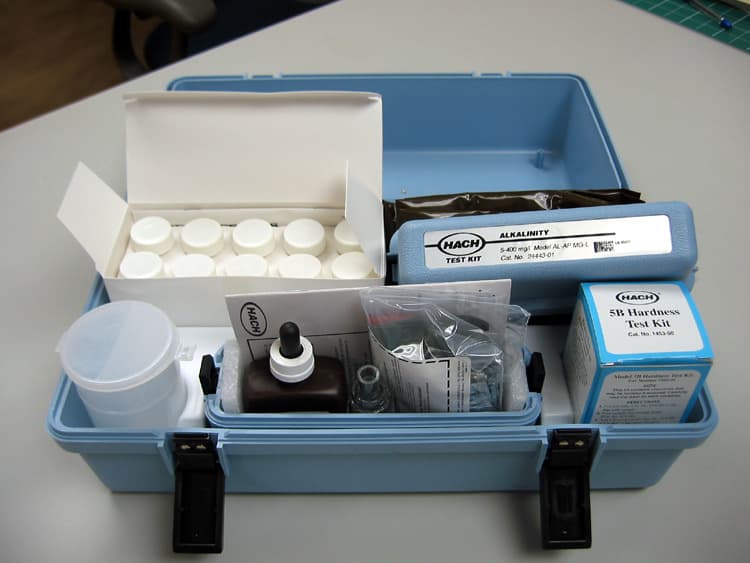
Drinking water clinics
The Virginia Household Water Quality Program offers water testing programs (drinking water clinics) in around 70 Virginia counties every year through local Virginia Cooperative Extension offices.[1] The clinics typically run from February - November each year.[2] The Virginia Department of Health also points owners to them: the program conducts well water testing clinics annually throughout the Commonwealth.[3]
How a clinic works: you pick up a kit locally, collect your sample on the collection day following the instructions and drop it off locally, and the sample goes to Virginia Tech for analysis.[1] Results are returned about 4-5 weeks after sample collection, by email, mail or at a local meeting.[1] The cost is covered in how much well water testing costs in Virginia.
If no clinic is scheduled soon, contact your local Extension office to let them know you are interested in participating in a drinking water clinic.[1] The labs at Virginia Tech are not equipped to handle individual analysis requests and are only contracted during scheduled clinics, but the program says it has an overnight shipping (UPS or FedEx) option if there is no program near you; contact the coordinator for a kit at wellwater@vt.edu or 540-231-9058.[1][4]
Certified private labs
The EPA puts it plainly: "Only use laboratories that are certified to do drinking water testing."[5] Virginia Cooperative Extension agrees: "Water tests should be conducted by an accredited lab."[6] The Virginia Department of Health publishes a map of laboratories accredited by the Division of Consolidated Laboratory Services to conduct testing for total coliform, and states that VDH does not endorse or recommend any particular laboratory.[3] The Household Water Quality Program also keeps a certified lab list on its website.[4]
Before you choose a lab, ask three things: which tests it is certified for (some labs are accredited for bacteria only), how it wants the sample delivered, and what the full written price is.
Your local health department
The EPA says your local health department may provide private well testing for free, and it can tell you what substances may be common in your area's groundwater.[5] Call the department for your county and ask what it offers; it varies by office.
If you are buying or selling
There are no regulations in Virginia requiring private water supplies be tested at the time of home or property sale but testing is part of a standard contract.[4] Testing for total coliform and E. coli bacteria is standard practice; lead and nitrate are also recommended and required by some lenders.[4] For a sale on a deadline, a private lab is usually the faster route, because clinic results take weeks.[1] Well completion reports for wells constructed after 1990 are public records and available through local health departments.[4]
Stop and call a pro if
- The result shows E. coli or fecal coliform. Boiling water vigorously for three minutes will kill fecal coliform bacteria, or use bottled water, until the cause is dealt with.[7] Call a licensed well driller. Do not allow anyone who is not a licensed well driller to work on your well.[4]
- A contaminant exceeds a health standard. Contact your public health department for specific steps and have the well re-tested.[5]
Getting help in Virginia
Once you have a lab or clinic, how to test well water walks through collecting the sample. Browse inspection answers and inspection pros for related checks.
If the report means work on the well, describe the job and Virginia pros will quote it.
Common questions
- Does my county have a well water clinic?
- The Household Water Quality Program holds clinics in around 70 Virginia counties each year, typically from February to November. If none is scheduled, tell your local Extension office you are interested; the program hopes to offer clinics in every county at least every other year.
- Can the health department test my well?
- The EPA says your local health department may provide private well testing for free. Offerings vary, so call the one for your county.
- How do I know a lab is certified?
- Ask the lab which tests it is certified for. VDH publishes a map of labs accredited by the Division of Consolidated Laboratory Services for total coliform, and the Household Water Quality Program keeps a certified lab list on its website.
- What if no clinic is near me?
- Contact your local Extension office, or the program coordinator at wellwater@vt.edu or 540-231-9058. The program says it has an overnight shipping option if there is no program near you.
- Is a test required to sell a house with a well in Virginia?
- There are no regulations in Virginia requiring one, but testing is part of a standard contract, and some lenders require lead and nitrate tests. Ask your lender.
Sources
- [1] Virginia Household Water Quality Program: drinking water clinics, Virginia Cooperative Extension, Virginia Tech. Checked October 27, 2026.
- [2] Virginia Household Water Quality Program: Water Testing Events, Virginia Cooperative Extension, Virginia Tech. Checked October 27, 2026.
- [3] Septic System and Private Well Service Providers, Virginia Department of Health. Checked October 27, 2026.
- [4] Virginia Household Water Quality Program: Frequently Asked Questions, Virginia Cooperative Extension, Virginia Tech. Checked October 27, 2026.
- [5] Private Wells: Protect Your Home's Water, U.S. Environmental Protection Agency. Checked October 27, 2026.
- [6] 10 Tips for Well Owners (BSE-367), Virginia Cooperative Extension, Virginia Tech. Checked October 27, 2026.
- [7] Virginia Household Water Quality Program: Bacteria and Other Microorganisms in Household Water (442-662), Virginia Cooperative Extension, Virginia Tech. Checked October 27, 2026.
Want a pro to handle it?
Describe the job once. Licensed local businesses send quotes, and you pay only when you book one.
Get a quote from a local pro