How often should I test my well water?
Test your well for total coliform bacteria every year, and add nitrate, total dissolved solids and pH yearly, as the EPA advises, or every 3 years along with lead, as Virginia Cooperative Extension advises. Test sooner after flooding, repairs, a new baby or pregnancy, or any change in taste, smell or color.
Free to ask. Local shops send quotes, and you pay only when you book one.
By Kasra Taheri, Founder, LoclisPublished
Researched and drafted with AI, then checked claim by claim against the sources listed below before it was published. Prices and rules change; the dates beside each source say when it was last checked.
Step by step
Read when to stop and call a pro, further down this page, before you start.
Step 1: Pick a testing month
Choose the same month every year to collect your bacteria sample, and put it on the calendar.
Step 2: Run the yearly panel
Test for total coliform bacteria, nitrates, total dissolved solids and pH.[2]
Step 3: Add the three-year panel
Every third year add lead and any contaminants of local concern.[1]
Step 4: Ask about local concerns
Ask your local health department what substances are common in your area's groundwater.[2]
Step 6: Inspect the well
Look at the well cap and casing each year for cracks, holes or corrosion.[1]
Step 7: File the reports
Keep every lab report with your well records.[1]
The short schedule
Test your well for bacteria every year, and add a wider panel every few years. Virginia Cooperative Extension puts it simply: have your water tested every year for total coliform bacteria, and every 3 years test for lead, pH, nitrate, total dissolved solids (TDS), and other contaminants of local concern.[1]
The EPA sets the bar a little higher. Test your private well annually for total coliform bacteria, nitrates, total dissolved solids, and pH levels.[2] The Virginia Department of Health says it is the homeowner's responsibility to test the water, and that testing once a year is a good idea.[3]
If you want one rule that satisfies all three: run bacteria, nitrate, TDS and pH every year, add lead every third year, and add anything your local health department or lab flags as common in your area. The EPA suggests contacting your local health department to find out what substances may be common in your area's groundwater.[2]
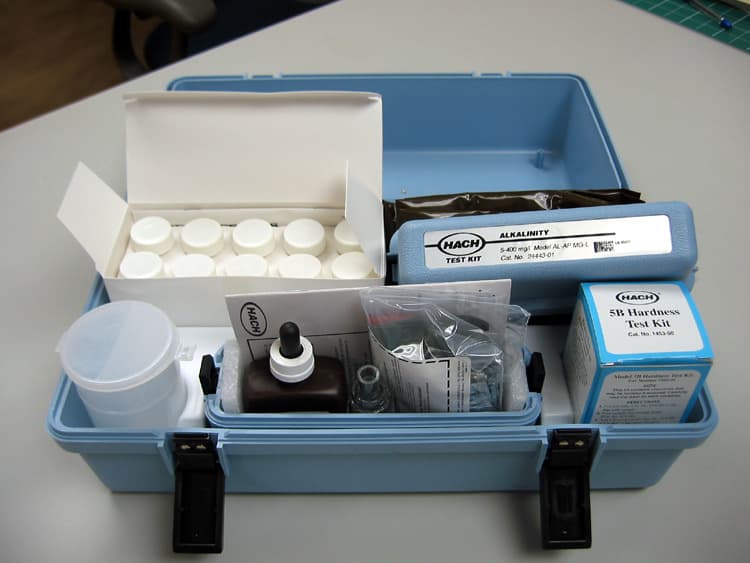
Test sooner when something changes
A yearly test is the floor. The EPA says to test your private well immediately if conditions near your well have changed significantly (flooding, land disturbances, and new construction or industrial activity), if you replace or repair any part of your well system, or if you notice a change in your water quality (odor, color, taste).[2]
Virginia Cooperative Extension adds bacteria tests for these situations:[4]
- There is an infant or pregnant woman in the home.
- Prior to purchasing a new home that is reliant on a private water supply.
- Flooding occurs near the well, spring, or cistern.
- Any person or animal becomes sick from a suspected waterborne disease.
- The water supply system, including indoor plumbing, has been disassembled for service or repairs.
The EPA also says you may want to test more frequently if small children or elderly adults live in your house or if someone in your house is pregnant or nursing.[2] If the test follows shock chlorination, wait: shock chlorination should always be followed by a bacteria retest one to two weeks after the treatment.[4] A new well must be tested too, which Extension notes is required by Virginia law 12 VAC 5-630-370.D.[4]
Springs need more attention
A spring is not a well. Springs are very susceptible to contamination, so be sure to test your spring every year for coliform bacteria.[1] Continuous treatment for bacteria is often required to ensure spring water is safe to drink.[1]
Check the well itself, too
Testing tells you what is in the water. The well structure explains why. Extension advises you to inspect your well annually for any cracks, holes, or corrosion, to ensure your well cap is secure, and, every three years or if you suspect a problem, to have your well inspected by a licensed well drilling contractor with a Water Well and Pump (WWP) classification.[1]
Selling or buying
There are no regulations in Virginia requiring private water supplies be tested at the time of home or property sale but testing is part of a standard contract, according to Extension.[5] Buyers should still test before closing.
Make it a habit
Pick a month, and book the test then every year. Keep the lab reports together. Extension's advice is to make sure to keep records of your well installation, maintenance, information about treatment devices, and all water tests.[1] A run of reports shows whether a number is creeping up long before it crosses a limit.
For how to collect the sample, read how to test well water. To find a lab or clinic, see where to get well water tested in Virginia, and for budgeting, what well water testing costs in Virginia. If the water already smells or tastes off, start with why well water smells or tastes strange.
Stop and call a pro if
- A result is over a health limit or shows E. coli. Have the well re-tested to confirm the contaminant's presence and concentrations, and contact your health department.[2]
- The well has flooded. Stay away from the well pump while flooded to avoid electric shock.[2] Do not drink or wash from the flooded well to avoid becoming sick.[2]
- The cap is cracked, missing or corroded, or the casing is damaged. Do not allow anyone who is not a licensed well driller to work on your well.[5]
- Bacteria keep coming back after shock chlorination. Consider calling a water well systems provider (licensed well driller) to have them shock chlorinate the well for you.[5]
Getting help in Virginia
More inspection answers and the inspection discover page cover related checks. If a result means work on the well, describe the job and Loclis will match you with Virginia pros.
Common questions
- How often should I test my well water?
- At least once a year for total coliform bacteria, which Virginia Cooperative Extension and the EPA both recommend. Extension adds lead, pH, nitrate and total dissolved solids every 3 years, while the EPA puts nitrates, total dissolved solids and pH on the yearly list.
- Should I test my well after a flood?
- Yes. Flooding near the well is on Extension's list of reasons to test for bacteria. The EPA says do not drink or wash from the flooded well, and to stay away from the pump while it is flooded.
- Do I need to test after a well repair?
- Yes. The EPA says to test immediately if you replace or repair any part of your well system. Extension says to retest for bacteria one to two weeks after shock chlorination.
- Is a yearly test enough if I have a baby?
- Extension lists an infant or pregnant woman in the home as a reason to test for bacteria. The EPA says you may want to test more frequently when small children or elderly adults live in the house or someone is pregnant or nursing. Ask your health department or lab how often is right for you.
- Do I need to test a new well?
- Yes. Extension notes that a new well must be tested, citing Virginia law 12 VAC 5-630-370.D.
- Do I have to test my well when I sell the house?
- Virginia has no regulation requiring it at sale, according to Extension, but testing is usually part of a standard contract. Ask your agent what the contract requires.
Sources
- [1] 10 Tips for Well Owners (BSE-367), Virginia Cooperative Extension, Virginia Tech. Checked October 27, 2026.
- [2] Private Wells: Protect Your Home's Water, U.S. Environmental Protection Agency. Checked October 27, 2026.
- [3] Private Well Water Information, Virginia Department of Health. Checked October 27, 2026.
- [4] Virginia Household Water Quality Program: Bacteria and Other Microorganisms in Household Water (442-662), Virginia Cooperative Extension, Virginia Tech. Checked October 27, 2026.
- [5] Virginia Household Water Quality Program: Frequently Asked Questions, Virginia Cooperative Extension, Virginia Tech. Checked October 27, 2026.
Want a pro to handle it?
Describe the job once. Licensed local businesses send quotes, and you pay only when you book one.
Get a quote from a local pro