How much does a whole-house air purifier cost in Virginia?
There is no set Virginia price. In a Trane article dated March 20, 2026, checked on October 26, 2026, its CleanEffects whole-home air cleaner retailed for roughly $1,000 or more before installation and could cost several thousand dollars installed; Trane says its QuikBox or Slimfit filter may be a more cost-effective option. Your quote depends on the unit, your ductwork, the installation and the replacement filters.
Free to ask. Local shops send quotes, and you pay only when you book one.
By Kasra Taheri, Founder, LoclisPublished
Researched and drafted with AI, then checked claim by claim against the sources listed below before it was published. Prices and rules change; the dates beside each source say when it was last checked.
Step by step
Read when to stop and call a pro, further down this page, before you start.
Step 1: Read your current filter
Pull the filter you have now and note its length, width, thickness and MERV rating before you call anyone.[5]
Step 2: Price the cheap option first
Ask whether your system can take a MERV 13 filter in its existing slot, since most furnaces and HVAC systems can.[5]
Step 3: Decide what you want removed
Know whether you are after particles such as dust, pollen and smoke, or gases and odors, because most filters target one or the other.[5]
Step 4: Ask about ozone
Ask whether an electronic or ionizing model emits ozone, and pass on any unit that intentionally produces it.[5]
Step 5: Get itemized written quotes
Ask two or three licensed HVAC businesses to quote the same unit, installation, any duct changes and the warranty in writing.
Step 7: Check the licence
Look each business up on DPOR's License Lookup before you sign.[10]
There is no set Virginia price for a whole-house air purifier: HVAC businesses price each job, and the total depends mostly on which unit you choose and how hard it is to fit into your ductwork. For a reference point: in a Trane article dated March 20, 2026, which we checked on October 26, 2026, Trane's product manager said its CleanEffects whole-home air cleaner "will retail for roughly $1,000 or more, depending on the size and application need" before installation,[1] and the same article says the CleanEffects "can cost several thousand dollars installed".[1] Simpler cabinets cost less: in Trane's words, "The QuikBox or Slimfit filter may be a more cost-effective option".[1]
What you are paying for
A whole-house air purifier, as Carrier describes it, is installed directly into your home's heating and cooling system to filter the air throughout your entire home.[3] Trane says the price varies with what product(s) you choose, your current HVAC system, the complexity of installation, where you live[2] and more. In practice, the main cost drivers are:
- The type of unit. Some units, such as Trane's QuikBox, are a cabinet that holds a replaceable filter in the system's ductwork. Electronic units work differently: Trane says its CleanEffects uses "a powerful, patented ifD corona field to charge incoming air, causing particles to adhere to the CleanEffects collection cells as air passes through."[2]
- The installation. The installer fits the unit into the ductwork, sometimes with new duct sections, and an electronic model also needs a power connection. A cramped closet, an odd-sized return or a system that needs duct changes adds labour.
- The filters. This is the cost that keeps coming. Trane's QuikBox comes in MERV 11 and MERV 13 tiers and uses a 4.7-inch filter that is replaced every 6 months.[1] AprilAire says its Model 5000 electronic air purifier needs maintenance once a year to replace the filter and wipe off internal components.[4] Trane says the CleanEffects filter is vacuumed every 2 to 9 months instead of replaced.[1]
- Electricity. A central filter works only when the system is operating.[5] Running the fan more for extra filtration helps, but the EPA warns that longer run times increase electricity costs and may also result in less reliable humidity control during the cooling season.[5]
The cheaper options to price first
A better filter in the slot you have. The EPA says: "Most furnaces and HVAC systems can accommodate a MERV 13 filter without creating equipment problems, provided that the filter is replaced frequently."[5] If yours cannot, an HVAC technician can also modify the system to use a higher efficiency filter[5] without a full purifier. See which MERV rating to use.
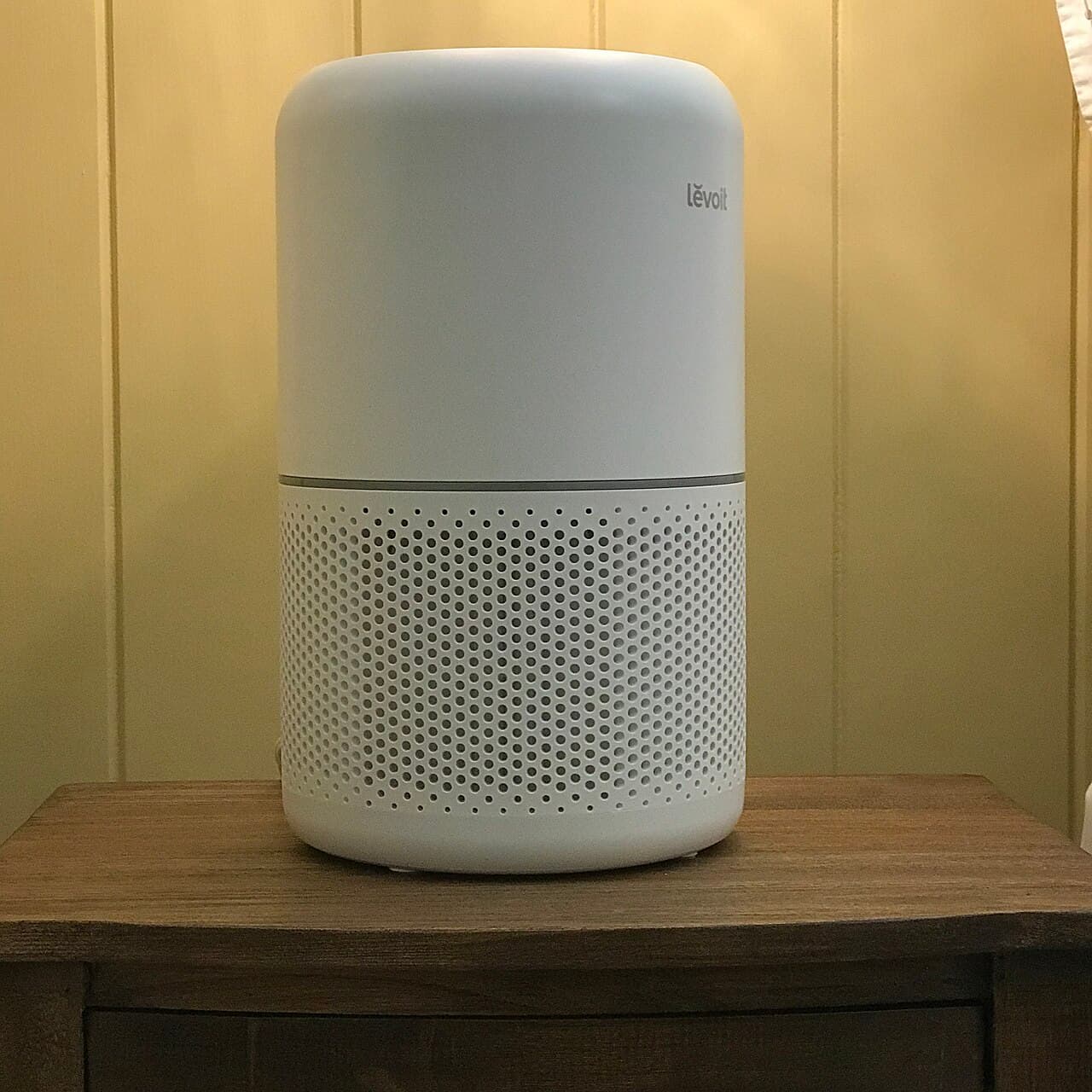
Portable units for the rooms you use most. The EPA's advice is that if your forced air system cannot accommodate a high-efficiency (MERV 13 or higher) filter, consider using a portable air cleaner.[6] Choose one with a clean air delivery rate (CADR) large enough for the room.[5]
What a purifier will and will not do
Be clear about what you are buying. The EPA notes that most filters are designed to filter either particles or gases,[5] and air cleaners are generally not designed to remove gaseous pollutants.[8] A whole-house filter is good at dust, pollen, dander and smoke particles; it will not do much for paint fumes or cooking smells.
On health, the EPA is measured: several studies using portable HEPA air cleaners have demonstrated small improvements in cardiovascular and respiratory health,[5] and filtration does not replace the need to control pollutants and ventilate.[5] It also says filters do not address the cause of mold and musty odors.[5] If the house smells damp, spend the money on the moisture first. The order of operations is in how to improve indoor air quality at home.
Ozone. The EPA says electrostatic precipitators, ionizers, UV lights without adequate lamp coatings, and plasma air cleaners may have the potential to emit ozone,[5] and "Ozone, a lung irritant, is produced indirectly by ion generators and some other electronic air cleaners".[7] According to the EPA, the California Air Resources Board and the Association of Home Appliance Manufacturers keep lists of air cleaners tested and shown to emit little or no ozone.[5] Ask for the model's ozone test results. And note that EPA does not certify or recommend specific brands or models of air filters or portable air cleaners,[5] so an "EPA approved" sales pitch is a red flag.
What to ask for in a written quote
- The make and model, its MERV rating or test results, and its ozone status.
- The filter size, the price of a replacement filter, and how often it needs changing or cleaning.
- Exactly what installation includes: duct modifications, any electrical connection, haul-away of old parts.
- The warranty on the unit and on the labour.
- The business's DPOR licence number. In Virginia, the Board for Contractors regulates individual tradesmen in heating, ventilation and air conditioning (HVAC),[9] and you can check any business on DPOR's License Lookup.[10]
Get at least two quotes for the same unit, so you are comparing installation, not just equipment.
Stop and call a pro if
- You would have to cut into ductwork or wire anything. Fitting a purifier cabinet or an electronic unit is a job for a licensed HVAC business; your part is the filter change.
- The system struggles after a filter upgrade. Weak airflow, rooms that stop cooling, or a system that runs much longer than before are signs to have a technician check whether your blower can handle the new filter.
- The air handler has water in it or smells musty. That is a drain or moisture problem, not a filtration problem.
Finding an installer
Loclis lists DPOR-licensed HVAC businesses with their licence number and class. Look up HVAC businesses in Blacksburg or another town, browse indoor air quality services, or read all heating and cooling answers.
To get prices for your house, describe the job once and licensed local HVAC businesses quote it.
Common questions
- Is a whole-house air purifier worth it?
- It depends on what you need. The EPA says filtration is a useful supplement to source control and ventilation but does not replace them, and studies of portable HEPA units show health improvements that are usually small. If someone in the house has allergies or asthma, or you get wildfire smoke, better filtration is easier to justify; if the problem is dampness, fix the moisture first.
- Is a MERV 13 filter cheaper than a whole-house purifier?
- Usually, because it goes in the slot you already have, while Trane's March 20, 2026 article put its CleanEffects whole-home unit at roughly $1,000 or more before installation. The EPA says most furnaces and HVAC systems can take a MERV 13 filter without equipment problems if it is replaced frequently. Ask your technician to confirm before you switch.
- Do electronic air purifiers produce ozone?
- Some can. The EPA says electrostatic precipitators, ionizers, some UV lights and plasma air cleaners may emit ozone, a lung irritant, and that you should avoid any unit that produces it on purpose. Ask the installer for the model's ozone test results.
- Does a whole-house purifier run all the time?
- Only when the system fan is moving air. The EPA notes that a central system filters only when it is operating, and running the fan longer for more filtration raises electricity costs and can weaken humidity control in summer.
- Can I install one myself?
- A whole-house unit is fitted into the ductwork of your heating and cooling system, and electronic models also need power. That is work for a licensed HVAC business; changing the filter afterwards is a homeowner job.
- Will a purifier get rid of a musty smell?
- No. The EPA says filters do not address the cause of mold and musty odors, which come from water or moisture in the house. Find and fix the moisture first.
Sources
- [1] Air Purifier Benefits: Q and A (published March 20, 2026), Trane. Checked October 26, 2026.
- [2] Trane's Best Air Purifiers for a Whole Home Solution, Trane. Checked October 26, 2026.
- [3] Whole House Air Purifiers, Carrier. Checked October 26, 2026.
- [4] AprilAire 5000 Whole-House Electronic Air Purifier, AprilAire. Checked October 26, 2026.
- [5] Guide to Air Cleaners in the Home, U.S. Environmental Protection Agency. Checked October 26, 2026.
- [6] Do ducted air source heat pumps filter fine particles out of indoor air?, U.S. Environmental Protection Agency. Checked October 26, 2026.
- [7] What are ionizers and other ozone generating air cleaners?, U.S. Environmental Protection Agency. Checked October 26, 2026.
- [8] Improving Indoor Air Quality, U.S. Environmental Protection Agency. Checked October 26, 2026.
- [9] Tradesmen, Virginia Department of Professional and Occupational Regulation. Checked October 26, 2026.
- [10] License Lookup, Virginia Department of Professional and Occupational Regulation. Checked October 26, 2026.
Want a pro to handle it?
Describe the job once. Licensed local businesses send quotes, and you pay only when you book one.
Get a quote for HVAC Repair