What MERV rating filter should I use?
The EPA recommends at least MERV 13, or as high a rating as your system fan and filter slot can accommodate. Most home furnaces and HVAC systems can take a MERV 13 filter without problems if it is changed often. Buy the exact size printed on your old filter, make sure it fits snugly, and ask a technician if airflow drops after you upgrade.
Free to ask. Local shops send quotes, and you pay only when you book one.
By Kasra Taheri, Founder, LoclisUpdated
Researched and drafted with AI, then checked claim by claim against the sources listed below before it was published. Prices and rules change; the dates beside each source say when it was last checked.
Step by step
Read when to stop and call a pro, further down this page, before you start.
Step 1: Find the filter
Look for the filter slot where the return duct meets the furnace or air handler, or behind a large return grille in a wall or ceiling.
Step 2: Switch the system off
Turn the system off at the thermostat so the blower is not pulling air while the filter is out.
Step 3: Read the old filter
Write down the length, width and thickness printed on the frame, and its MERV or other rating.[2]
Step 5: Check the fit
Slide the new filter in; it should fit snugly with no gaps around the edge and without being bent or crushed.[2]
Step 6: Mind the airflow arrow
Where the frame has an airflow arrow, point it toward the blower, then close any filter door and switch the system back on.
Step 7: Watch the first weeks
Check that air still comes strongly from the vents and that the system is not running noticeably longer than before.
Step 8: Set a reminder
Replace the filter on the maker's schedule, typically every 60 to 90 days, and sooner if it comes out heavily soiled.[2] A monthly look in peak heating and cooling season helps you catch that.
Use a MERV 13 filter if your system can take one, and otherwise the highest rating that fits. That is the EPA's advice: choose a filter with at least a MERV 13 rating, or as high a rating as your system fan and filter slot can accommodate.[1][2] It is a realistic target for most homes. In the EPA's words, "Most furnaces and HVAC systems can accommodate a MERV 13 filter without creating equipment problems, provided that the filter is replaced frequently."[2]
What the MERV number means
MERV stands for Minimum Efficiency Reporting Value. It rates an air filter's ability to capture particles between 0.3 and 10 microns,[1] and the higher the MERV rating, the better the filter is at trapping specific sizes of particles.[1] The EPA's table shows how quickly performance climbs:
- MERV 1 to 4 filters capture less than 20% of particles from 3.0 to 10.0 microns.[1]
- MERV 8 filters capture at least 20% of particles from 1.0 to 3.0 microns and at least 70% from 3.0 to 10.0 microns.[1]
- MERV 11 filters capture at least 20% of the smallest particles tested, 0.30 to 1.0 microns, and at least 65% from 1.0 to 3.0 microns.[1]
- MERV 13 filters capture at least 50% of particles from 0.30 to 1.0 microns, at least 85% from 1.0 to 3.0 microns and at least 90% from 3.0 to 10.0 microns.[1]
- MERV 16 filters capture at least 95% across all three size ranges.[1]
MERV 13 is where the EPA draws its line. For the small particles of greatest health concern (PM 2.5), its advice is to use the highest-rated filter your system fan and filter slot can accommodate,[2] and it notes that filters with a MERV of 13 and above are required to demonstrate at least 50% removal efficiency for the smallest particles tested.[2] Smoke is a common reason to care: the EPA says the biggest health threat from smoke is from fine particles, and that portable air cleaners and high-efficiency HVAC system filters can remove smoke particles from the air.[5]
HEPA is a separate scale. HEPA filters are rated differently, not by MERV,[1] and they are common in portable air cleaners rather than furnace slots.
Store ratings. You will also see FPR and MPR on packaging. The EPA explains that MERV is based on a national consensus standard. The FPR and MPR rating methods are proprietary.[2] Higher is better on every scale, but MERV is the one you can compare across brands.
Can your system handle it?
The honest answer is that you often cannot tell from the equipment, because HVAC systems are not commonly labeled with any filter recommendations.[2] The EPA's advice is to ask a professional: "The technician can determine the most efficient filter that your system can use. An HVAC technician can also modify the system to use a higher efficiency filter."[2] In Virginia, the Board for Contractors regulates individual tradesmen in heating, ventilation and air conditioning (HVAC),[7] so the person giving that advice should be licensed.
Signs a filter is too much for your blower are usually easy to spot: noticeably weaker air from the vents, rooms that stop reaching the thermostat setting, or a system that runs much longer than it used to. If you see those after an upgrade, go back to your old rating and ask a technician.
Thickness is another option to ask about. Filters commonly come in thicknesses of 1 to 5 inches,[2] and a thick filter needs a cabinet built for it: Trane's QuikBox air cleaner comes in MERV 11 and MERV 13 tiers with a 4.7-inch filter replaced every 6 months,[4] for example. Ask your technician whether a cabinet like that suits your system.
Getting the size and fit right
Buy the exact nominal size printed on your old filter's frame. The EPA says the right filter fits snugly so air does not leak around the filter and you do not have to bend or crush the filter to make it fit.[2] A gap around the edge lets dusty air bypass even the best filter.
Keeping it working
A filter that catches more may also fill up sooner, so the schedule matters. Manufacturers typically recommend replacement every 60 to 90 days,[2] and if you notice that filters appear heavily soiled when you replace them, you should consider changing them more frequently.[2] The longer routine is in how often to change your furnace filter.
Remember that HVAC filters work to filter the air only when the system is operating.[3] Running the fan on "on" instead of "auto" filters more air, but the EPA notes that longer run times increase electricity costs and may also result in less reliable humidity control during the cooling season.[2]
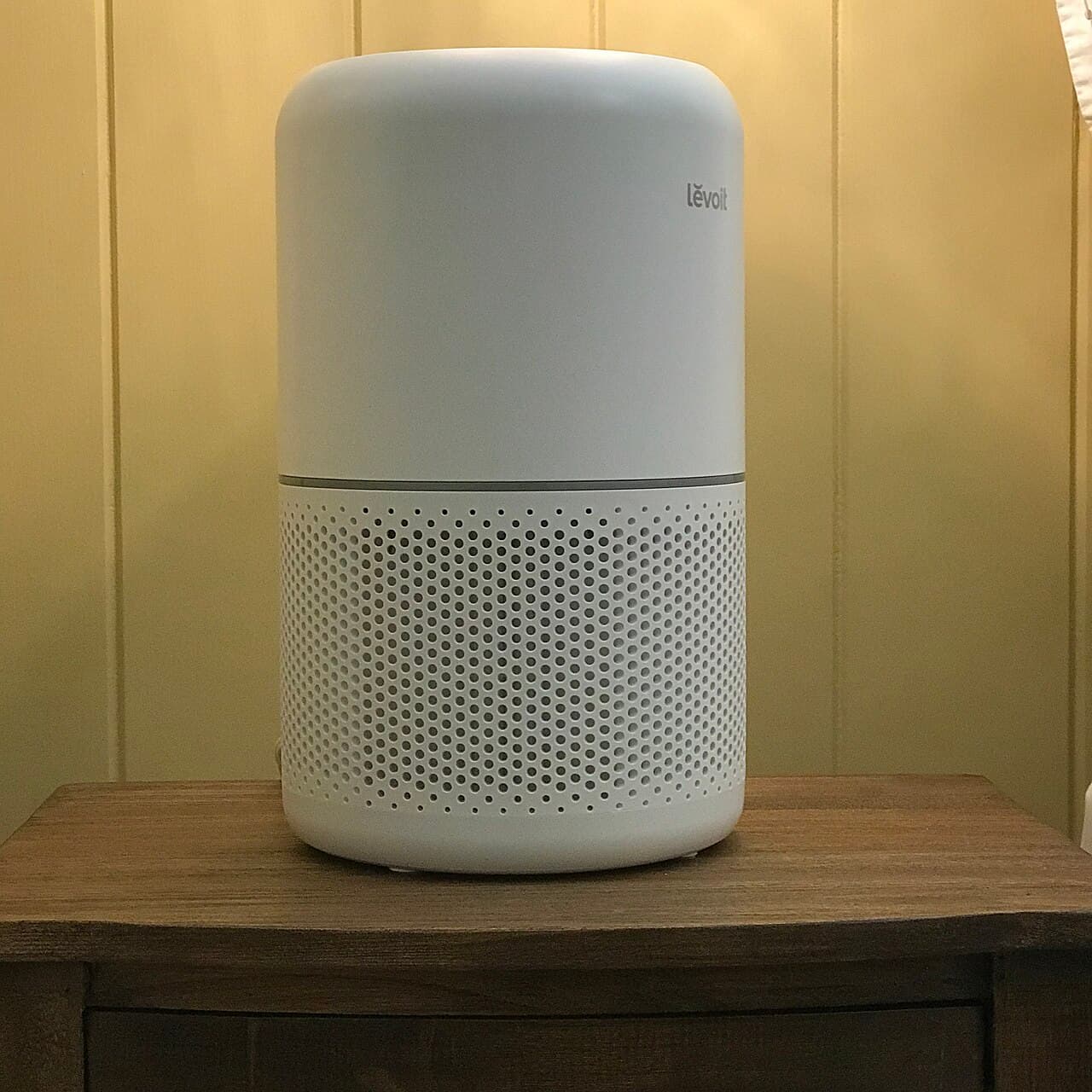
When the central filter cannot go higher. The EPA's suggestion: If your forced air system cannot accommodate a high-efficiency (MERV 13 or higher) filter, consider using a portable air cleaner[3] in the rooms you use most. The same goes for homes without ducts: Most window air conditioners and wall-mounted units are intended for temperature control rather than air filtration.[2]
What to avoid. The EPA says to avoid portable air cleaners and furnace/HVAC filters that intentionally produce ozone,[2] and that filters do not address the cause of mold and musty odors.[2] For a musty smell, look for water, starting with the condensate drain.
Stop and call a pro if
- You smell gas, or burning, at the furnace. Columbia Gas of Virginia says a sulfur or rotten-egg-like odor could mean a gas leak: get out immediately, do not use anything that could cause a spark, like a phone, light switch, appliance or flashlight, and call 911 and your gas company from a safe location away from the building.[6] For a burning smell or scorch marks, leave the system off and call an HVAC technician.
- The filter slot is inside the furnace cabinet behind a panel you have to unscrew, or you cannot find the filter at all. Ask a technician to show you, or to add an easier filter rack.
- Airflow drops or the system runs much longer after an upgrade. The blower may not suit that filter; a technician can check it or modify the system.
- The filter or the cabinet is wet. That is usually a drain problem.
- You want a thick media cabinet or a whole-house air cleaner added. That means cutting into ductwork, which is a job for a licensed HVAC business. Prices are in what a whole-house air purifier costs.
Finding a technician
Loclis lists DPOR-licensed HVAC businesses with their licence number and class. Look up HVAC businesses in Blacksburg, browse indoor air quality services, or read all heating and cooling answers. For the bigger picture, see how to improve indoor air quality at home.
If something is wrong beyond the filter, describe it once and licensed local HVAC businesses quote it.
Common questions
- Is MERV 13 too restrictive for my furnace?
- Usually not. The EPA says most furnaces and HVAC systems can take a MERV 13 filter without equipment problems, provided it is replaced frequently. Because systems are rarely labelled with a filter recommendation, ask your technician at the next check-up, and watch for weak airflow after you switch.
- Is MERV 8 good enough?
- For larger dust it does a fair job: the EPA's table has MERV 8 catching at least 70 percent of particles from 3.0 to 10.0 microns. For the small particles of greatest health concern, the EPA recommends the highest rating your system can take, since MERV 13 and above must catch at least half of the smallest particles tested. It also says the biggest health threat from smoke is its fine particles.
- How do MERV, FPR and MPR compare?
- They are different scales. The EPA says MERV comes from a national consensus standard while FPR and MPR are proprietary store and brand ratings. For every scale, a higher number means better capture, but compare filters on MERV when you can.
- Should I buy a HEPA filter for my furnace?
- Usually not for a standard slot. HEPA filters are rated separately from MERV and are common in portable air cleaners. If you want HEPA-level cleaning, a portable unit in the bedroom, or a system an HVAC contractor designs for it, is the normal route.
- How often should I change a MERV 13 filter?
- Follow the maker's instructions. The EPA says manufacturers typically recommend 60 to 90 days, and sooner if the filter comes out heavily soiled. Thick media filters often last longer; Trane's 4.7-inch QuikBox filter, for example, is replaced every 6 months.
- Will a higher MERV filter help with a musty smell?
- No. The EPA says filters do not address the cause of mold and musty odors, which come from moisture. Find the water first; a clogged condensate drain is a common source.
Sources
- [1] What is a MERV rating?, U.S. Environmental Protection Agency. Checked October 26, 2026.
- [2] Guide to Air Cleaners in the Home, U.S. Environmental Protection Agency. Checked October 26, 2026.
- [3] Do ducted air source heat pumps filter fine particles out of indoor air?, U.S. Environmental Protection Agency. Checked October 26, 2026.
- [4] Air Purifier Benefits: Q and A, Trane. Checked October 26, 2026.
- [5] Wildfires and Indoor Air Quality (IAQ), U.S. Environmental Protection Agency. Checked October 27, 2026.
- [6] Report Gas Leaks, Columbia Gas of Virginia. Checked October 27, 2026.
- [7] Tradesmen, Virginia Department of Professional and Occupational Regulation. Checked October 26, 2026.
Want a pro to handle it?
Describe the job once. Licensed local businesses send quotes, and you pay only when you book one.
Get a quote for HVAC Repair