Who should I call to test my indoor air quality?
It depends on what you suspect, because there is no single test for everything. For radon, Virginia law requires a tester listed by the National Radon Proficiency Program or National Radon Safety Board, or one meeting another approved proficiency measure, though a do-it-yourself kit is fine for screening. For stale air, humidity or dusty vents, call a licensed HVAC contractor. For hidden mold, hire an experienced mold professional.
Free to ask. Local shops send quotes, and you pay only when you book one.
By Kasra Taheri, Founder, LoclisUpdated
Researched and drafted with AI, then checked claim by claim against the sources listed below before it was published. Prices and rules change; the dates beside each source say when it was last checked.
Step by step
Read when to stop and call a pro, further down this page, before you start.
Step 1: Write down what you notice
Note the symptom or smell, which rooms, and whether it fades when you are away from home, so whoever you call knows where to look.[7]
Step 2: Check the humidity
Put a humidity meter in the main living area; readings above 60 percent point to a moisture or HVAC problem.[5]
Step 3: Look for water and mold
Check under sinks, around the water heater, in the basement or crawl space and at the indoor unit's drain pan for leaks, stains or growth.[5]
Step 4: Run a radon screening test
Close up the house for 12 hours, then leave an approved short-term kit for at least 48 hours in the lowest lived-in level, at least 20 inches off the floor.[3]
Step 5: Follow up a high result
If the first result is 4.0 to 9.9 pCi/L, run a long-term test before deciding on mitigation; at 10.0 or above, run a second short-term test.[3]
Step 6: Fit carbon monoxide alarms
Put a battery or plug-in CO alarm certified to UL 2034 in the hallway near every separate sleeping area.[9]
Step 7: Check a radon pro's listing
Search the NRPP or NRSB list by ZIP code and confirm the tester or mitigator is currently certified.[2]
Step 8: Check an HVAC business's licence
Look the business up on DPOR's License Lookup before you book a visit.[12]
Step 9: Get it in writing
Ask for a written scope and price before any testing, cleaning or treatment, and ask to be shown any contamination the company says it found.[6]
Who to call depends on what you are worried about, because "indoor air quality" is not one test. Radon, mold, humidity, carbon monoxide and chemical fumes are each measured differently, and some have no official limit to measure against. Use the guide below to match the problem to the right person, and do the cheap screening yourself first.
Radon: a certified radon tester (or a kit)
Radon testing has its own rule in Virginia law. Under Va. Code § 32.1-229.01, "No person shall conduct or offer to conduct any radon screening, testing, or mitigation in the Commonwealth unless he (i) is listed as a professional by either the National Radon Proficiency Program or the National Radon Safety Board"[1] or meets another measure the EPA or the Board of Health accepts.[1] The Virginia Department of Health says certification means taking an approved training course, passing a proctored exam and applying to one of the two organizations, with renewal every two years,[4] and both lists can be searched by ZIP code.[2]
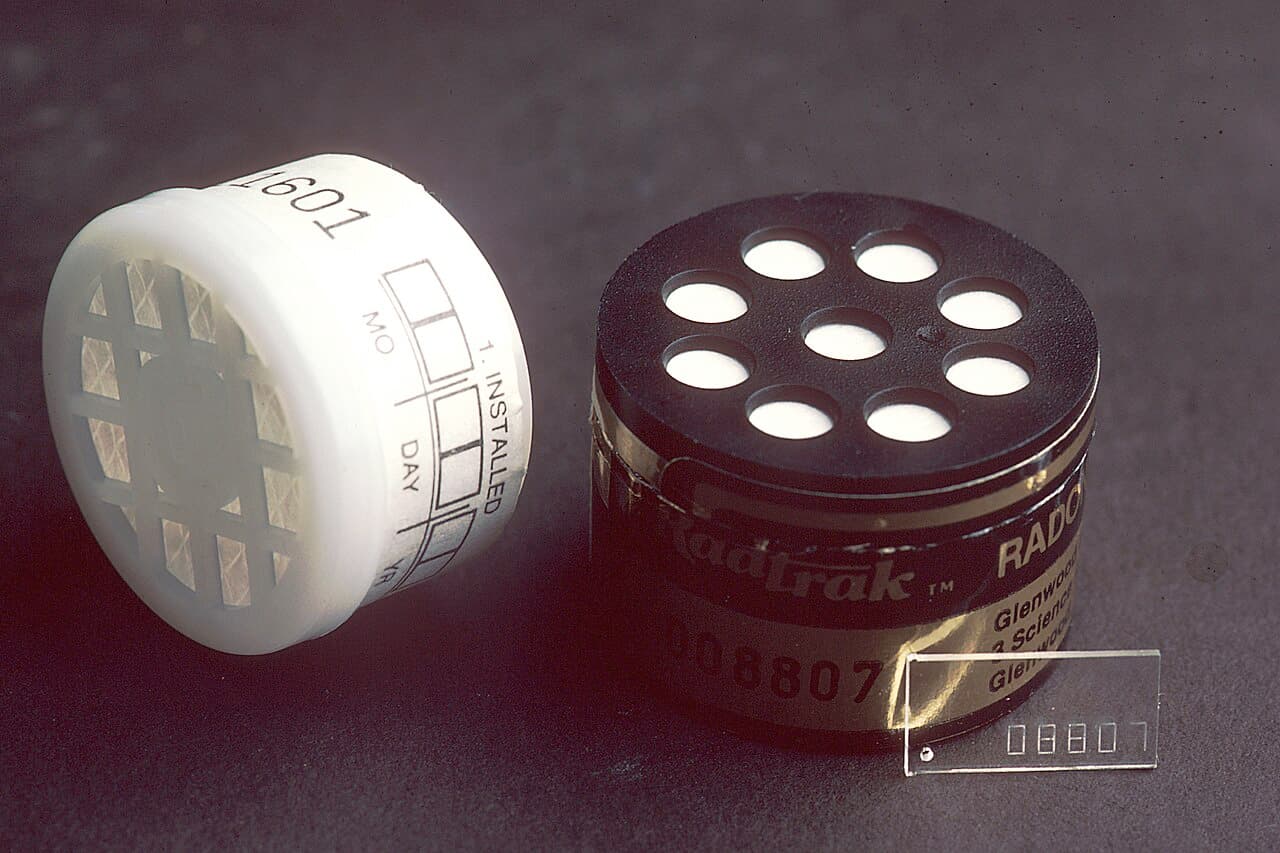
You do not need a professional to screen your own home. VDH says you may hire one, especially if you are buying or selling a home.[2] For a do-it-yourself short-term test, VDH lists the key conditions as 12 hours of closed-house conditions before and during the test, a minimum 48-hour test period, the lowest occupied level, and a spot at least 20 inches off the floor.[3]
What it costs. When we checked on 26 October 2026, VDH's testing page said a professional radon test will usually cost between $100-200, depending on the test device used.[2] Fixing a high result costs more. When we checked on 26 October 2026, VDH's testing page (last updated October 22, 2026) put a typical sub-slab system at $800-1200, with crawl spaces or homes with several sections needing mitigation at $2000 or more,[2] and its FAQ page (last updated December 17, 2025) said a professionally installed radon reduction system typically ranges from $800 to $2,500.[3]
Reading the result. Four picocuries per liter of air has been identified by EPA as the recommended action level.[3] A first result between 4.0 and 9.9 calls for a long-term follow-up test; if the first test was 10.0 pCi/l or above, a second test of short term duration should be taken.[3] If you do need mitigation, VDH says that in most cases, elevated radon levels can be reduced below 2 pCi/l.[3]
Stale air, humidity, dust and odd airflow: a licensed HVAC contractor
When the air feels heavy, humidity stays high, rooms are uneven or the vents blow dust, the heating and cooling system is the place to start. An HVAC technician can check the filter and blower, measure humidity, look at the ducts and drain pan, and tell you whether fresh-air ventilation or a dehumidifier makes sense. In Virginia, the Board for Contractors regulates individual tradesmen in heating, ventilation and air conditioning (HVAC),[12] so check the business on DPOR's License Lookup before the visit.
The same contractor, or the company that supplies your fuel, handles combustion appliances. If you suspect a furnace, water heater or other fuel-burning appliance, the EPA says to contact qualified appliance service people to have your appliances inspected and adjusted if needed,[10] and notes that in some areas, the local fuel company may be able to inspect and adjust the appliance.[10] A battery or plug-in carbon monoxide alarm certified to the current UL 2034 standard[9] is your own early warning in the meantime; a hard-wired one is a job for a licensed electrician.
Mold: usually no test, sometimes an experienced pro
If you can see it, you probably do not need a test. The EPA says in most cases, if visible mold growth is present, sampling is unnecessary,[5] and because no EPA or other federal limits have been set for mold or mold spores,[5] a lab result cannot tell you whether a house "passes."
Where testing does make sense, the EPA's standard is high: "Sampling for mold should be conducted by professionals who have specific experience in designing mold sampling protocols, sampling methods, and interpreting results."[5] Suspect hidden mold if a building smells moldy but you cannot see the source, or if you know there has been water damage and people in the house are reporting health problems.[5] In that case, the EPA's advice is direct: If you believe that you may have a hidden mold problem, consider hiring an experienced professional.[5]
Duct cleaners: be careful what you are sold
Duct cleaning companies often pitch air testing. The EPA's guidance is to ask the service provider to show you any mold they say exists,[6] to talk to at least three different service providers and get written estimates,[6] and to remember that EPA neither establishes duct cleaning standards nor certifies, endorses, or approves duct cleaning companies.[6] It also warns: "Do not hire duct cleaners who make sweeping claims about the health benefits of duct cleaning".[6]
Chemical smells: start with the source
No federally enforceable standards have been set for VOCs in non-industrial settings,[8] so a general "chemical test" rarely changes what you do. One exception is formaldehyde, which the EPA calls one of the few indoor air pollutants that can be readily measured.[8] For new-paint, new-furniture or stored-chemical smells, removing the source and airing the house out usually does more than a test. See how to improve indoor air quality at home.
Clues that help whoever you call
The EPA points out that symptoms from indoor air often look like a cold, so time and place matter: If the symptoms fade or go away when a person is away from the area,[7] look for a source in that area. Write down when it happens, which rooms, and what was running.
Stop and call a pro if
- A CO alarm sounds or several people feel unwell at once. The EPA says to get fresh air immediately, open windows and doors, turn off any combustion appliances and leave the house,[10] then call for help and have the appliances checked.
- You smell gas. Columbia Gas of Virginia says a sulfur or rotten-egg-like odor could mean a gas leak: get out immediately, do not use anything that could cause a spark, like a phone, light switch, appliance or flashlight, and call 911 and your gas company from a safe location away from the building.[11] An air test is not the answer to a gas smell.
- Your radon screening comes back at 4 pCi/L or higher. Book the follow-up test, then a certified mitigator.
- You see mold over more than a small area, or smell it with no visible source. Call an experienced mold professional.
- Someone's health seems to track the house. The EPA says if family members are experiencing unusual or unexplained symptoms or illnesses that you think might be related to your home environment, you should discuss the situation with your doctor.[6]
Finding the right business
Loclis lists DPOR-licensed businesses with their licence number and class. Browse radon testing, mold testing and indoor air quality services, look up HVAC businesses in Blacksburg, or read all heating and cooling answers. If the house simply feels heavy, start with why a house feels stuffy.
If the problem points to your heating and cooling system, describe it once and licensed local HVAC businesses quote it.
Common questions
- Is there one company that tests for everything?
- Not really. Radon testers, HVAC contractors and mold professionals each measure different things, and some pollutants, such as most VOCs, have no federal limit to test against. Start with what you suspect and call the specialist for that.
- Do radon testers need a licence in Virginia?
- Yes, in effect. Va. Code § 32.1-229.01 bars anyone from offering radon screening, testing or mitigation in Virginia unless they are listed by the National Radon Proficiency Program or the National Radon Safety Board, or meet another measure the EPA or the Board of Health accepts.
- Can I test for radon myself?
- Yes. The Virginia Department of Health says testing is simple and inexpensive with a do-it-yourself kit approved by NRPP or NRSB, placed in the lowest lived-in level. It suggests a professional test especially when you are buying or selling a home.
- Should I pay for a mold test?
- Usually not if you can see the mold. The EPA says sampling is unnecessary in most cases when growth is visible, and since there are no federal mold limits, a test cannot show whether a house meets a standard. Spend the money on finding and fixing the moisture.
- Does a duct cleaning company count as an air quality tester?
- No. The EPA says it does not certify duct cleaners, that duct cleaning has never been shown to prevent health problems, and that you should be wary of sweeping health claims. Ask any company to show you the contamination before you pay for cleaning.
- What if someone in the house feels sick?
- Talk to a doctor. The EPA says unexplained symptoms you think are related to your home should be discussed with your doctor, and if you suspect carbon monoxide, get everyone outside first.
Sources
- [1] Va. Code § 32.1-229.01. Companies listed as proficient to perform radon screening, testing, or mitigation; compliance, Code of Virginia, Virginia General Assembly. Checked October 26, 2026.
- [2] Radon Testing and Mitigation, Virginia Department of Health. Checked October 26, 2026.
- [3] Radon Frequently Asked Questions, Virginia Department of Health. Checked October 26, 2026.
- [4] Radon Professionals, Virginia Department of Health. Checked October 26, 2026.
- [5] A Brief Guide to Mold, Moisture and Your Home, U.S. Environmental Protection Agency. Checked October 26, 2026.
- [6] Should You Have the Air Ducts in Your Home Cleaned?, U.S. Environmental Protection Agency. Checked October 26, 2026.
- [7] Introduction to Indoor Air Quality, U.S. Environmental Protection Agency. Checked October 26, 2026.
- [8] Volatile Organic Compounds' Impact on Indoor Air Quality, U.S. Environmental Protection Agency. Checked October 26, 2026.
- [9] What about carbon monoxide detectors?, U.S. Environmental Protection Agency. Checked October 26, 2026.
- [10] What do I do if I suspect that combustion appliances are affecting my health?, U.S. Environmental Protection Agency. Checked October 26, 2026.
- [11] Report Gas Leaks, Columbia Gas of Virginia. Checked October 27, 2026.
- [12] Tradesmen, Virginia Department of Professional and Occupational Regulation. Checked October 26, 2026.
Want a pro to handle it?
Describe the job once. Licensed local businesses send quotes, and you pay only when you book one.
Get a quote for HVAC Repair