How do I improve indoor air quality at home?
Work in the order the EPA recommends: cut the sources of pollution first, bring in more outdoor air second, and filter what is left. In practice that means fixing leaks and keeping humidity below 60 percent, running kitchen and bath fans that vent outside, using a MERV 13 furnace filter if your system can take one, testing for radon and fitting carbon monoxide alarms.
Free to ask. Local shops send quotes, and you pay only when you book one.
By Kasra Taheri, Founder, LoclisUpdated
Researched and drafted with AI, then checked claim by claim against the sources listed below before it was published. Prices and rules change; the dates beside each source say when it was last checked.
Step by step
Read when to stop and call a pro, further down this page, before you start.
Step 1: Clear out old chemicals
Throw away partially full containers of old paint, solvents and fuels safely, and buy only as much as you will use right away.[4]
Step 2: Fix leaks and dry wet spots
Fix plumbing leaks as soon as you find them and dry wet materials within 24 to 48 hours so mold does not get started.[3]
Step 3: Measure the humidity
Set a small humidity meter in your main living area and aim for below 60 percent, ideally 30 to 50 percent.[3]
Step 4: Run the exhaust fans
Run the kitchen fan while cooking and the bath fan during and after showers, and check that both vent outside rather than into the attic.[5]
Step 5: Air out dusty or smelly jobs
Open windows or work outdoors when painting, sanding or stripping, as long as the outdoor air is clean.[1]
Step 6: Upgrade the furnace filter
Use a MERV 13 filter, or as high a rating as your system fan and filter slot can take, and change it on schedule.[2]
Step 7: Add a room air cleaner
For a bedroom or living room, pick a portable air cleaner whose clean air delivery rate (CADR) suits the room size.[2]
Step 8: Skip ozone makers
Do not buy an air cleaner or filter that intentionally produces ozone, a lung irritant.[2]
Step 10: Fit carbon monoxide alarms
Put a battery or plug-in CO alarm certified to UL 2034 in the hallway near every separate sleeping area.[9]
Step 11: Book the yearly heating check
Have a trained professional inspect and tune up a fuel-burning furnace, its flue and the chimney once a year.[10]
The most effective way to improve the air in your home is to deal with what is polluting it, then bring in fresh air, then filter whatever is left. The EPA lists those as the three basic strategies, source control, better ventilation, and air cleaning or filtration,[1] and says source control is usually the most effective of the three.[1] An air purifier helps, but it does its best work after the first two jobs are done.
Start with what is putting pollution in the air
Some indoor pollution blows in from outdoors, but others come from indoor sources and activities such as cooking, cleaning, secondhand smoke, building materials, consumer products and home furnishings.[2] Chemicals are a big part of it: EPA studies found that levels of several organics average 2 to 5 times higher indoors than outdoors.[4]
The fixes are mostly free:
- Clear out the paint shelf. Because gases can leak even from closed containers,[4] the EPA suggests you throw away partially full containers of old or unneeded chemicals safely[4] and buy only as much paint, stripper or fuel as you will use soon. Ask your county or city whether it holds household hazardous waste collection days, rather than putting them in the trash.
- Use products as labelled. Follow the label's ventilation directions and never mix household care products unless the label tells you to.[4]
- Vent the cooking. The EPA recommends an exhaust fan vented to outdoors over gas stoves.[10] Any range hood that actually goes outside is worth running when you cook.
- Keep dust down. Regular vacuuming, washing bedding and keeping pets out of bedrooms usually cut the dust and dander your filter has to catch.
Keep moisture in check
Mold and dust mites need damp. The EPA's advice is to keep indoor humidity below 60 percent, ideally between 30 and 50 percent,[3] and you can check it with a small, inexpensive moisture or humidity meter sold at many hardware stores.[3]
When water gets in, move fast: the EPA says to dry water-damaged areas and items within 24-48 hours to prevent mold growth.[3] Keep air conditioning drip pans clean and the drain lines unobstructed and flowing properly[3] (here is how to clear a clogged condensate drain). Condensation can be a sign of high humidity,[3] so wet windows on a cold morning are worth noticing.
If your air conditioning alone cannot keep humidity down in summer, a dehumidifier may be the answer. Virginia Cooperative Extension notes that many homes in hot-humid and mixed-humid climates require mechanical dehumidification.[5]
Bring in fresh air
Most home heating and cooling systems, including forced air heating systems, do not mechanically bring fresh air into the house.[1] Outdoor air comes in through leaks and open windows, which is why a well-sealed house can feel stale.
- Use the fans you already have. Virginia Cooperative Extension says most building codes require bath and kitchen exhaust fans to vent to the outside, not into an attic or crawl space, and that nearly all exhaust fans in standard construction are ineffective if they do not vent outside.[5] Check where yours go, and consider a fan with a humidistat or timer[5] so it runs long enough after a shower.
- Air out messy jobs. The EPA says ventilation matters most during short activities that raise pollution, such as painting, paint stripping, heating with kerosene heaters, cooking, welding, soldering or sanding.[1]
- Watch the outdoor air. The EPA cautions against relying on open windows where there may be outdoor sources of pollutants, such as smoke.[1] On a heavy pollen or smoke day, keep them shut and let the filter work.
For steady fresh air, a whole-house ventilation system brings in a controlled amount of outdoor air through the ductwork. Virginia Cooperative Extension says each type must be correctly sized by a qualified or licensed HVAC company.[5]
Filter what is left
The furnace filter. If you upgrade, the EPA says to choose at least MERV 13, or as high a rating as your system fan and filter slot can accommodate.[2] Remember that a central filter only cleans air while the system runs, which the EPA puts at usually less than 25% of the time during heating and cooling seasons.[2] See which MERV rating to buy.
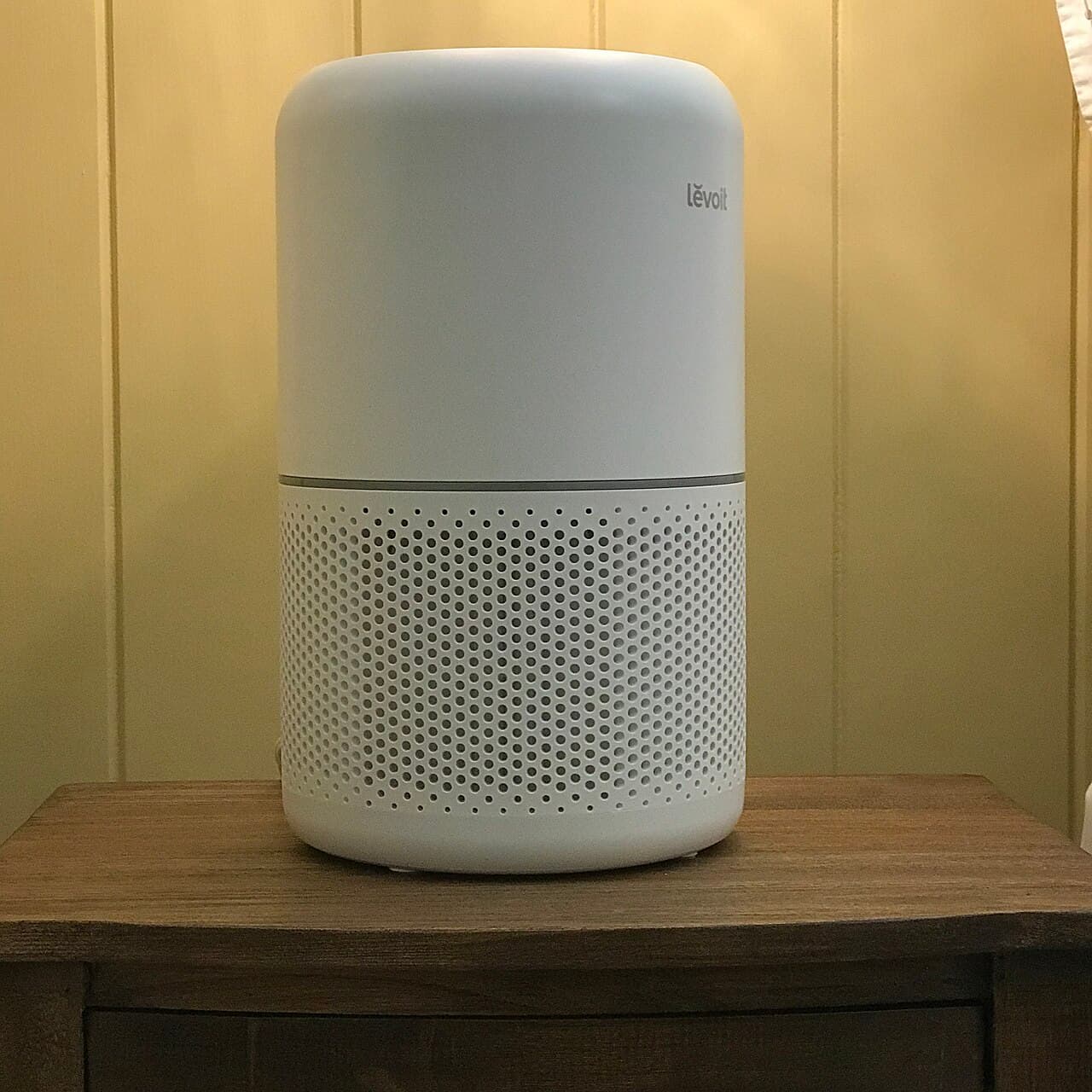
A portable air cleaner. For the room you sleep in, the EPA suggests a unit with a clean air delivery rate (CADR) large enough for the room.[2] Most filters are designed to filter either particles or gases,[2] so a plain HEPA unit will catch dust and smoke particles but not paint fumes.
What to skip. Avoid air cleaners and filters that intentionally produce ozone, a lung irritant.[2] And EPA does not recommend using air cleaners to reduce levels of radon;[1] radon needs its own fix. Houseplants are not a substitute either: "There is currently no evidence, however, that a reasonable number of houseplants remove significant quantities of pollutants in homes and offices."[1]
If you are weighing a system that mounts in the ductwork, see what a whole-house air purifier costs in Virginia.
Test for the two you cannot sense
Radon. The Virginia Department of Health says high radon test results have been found in every Virginia county,[8] including those marked low risk, and the only way to know if your house has an elevated radon level is to test.[6] Place the kit in the lowest lived-in level of the home,[6] at least 20 inches above the floor and well away from outside walls, fans, windows and damp rooms such as bathrooms and laundry rooms.[7] Most homes test at their highest radon levels in the winter,[6] so this is a good season to do it. When we checked on 26 October 2026, VDH was offering a limited supply of short-term, do-it-yourself test kits for a $4 shipping fee.[6]
Carbon monoxide. Carbon monoxide is an odorless, colorless and toxic gas.[10] The EPA calls a CO alarm a back-up to, but not a replacement for, proper installation, use and maintenance of fuel-burning appliances.[9] Buy a battery or plug-in alarm certified to the current UL 2034 standard and put it in the hallway near every separate sleeping area.[9]
Stop and call a pro if
- You smell gas near the stove, furnace or water heater. Columbia Gas of Virginia says a sulfur or rotten-egg-like odor could mean a gas leak: get out immediately, do not use anything that could cause a spark, like a phone, light switch, appliance or flashlight, and call 911 and your gas company from a safe location away from the building.[12]
- A CO alarm goes off, or several people get headaches or dizziness at home. The EPA says to get fresh air immediately, open windows and doors, turn off any combustion appliances and leave the house,[11] then get medical help and have the appliances inspected before you go back to normal use.
- The mold is bigger than a small patch. The EPA says homeowners can usually handle it themselves if the moldy area is less than about 10 square feet;[3] beyond that, or after a lot of water damage, hire an experienced professional.
- The vents smell musty. Do not run the HVAC system if you know or suspect that it is contaminated with mold,[3] and call an HVAC contractor.
- Your radon result is 4 pCi/L or higher. The EPA recommends that if the initial screening result was from 4.0 pCi/l to 9.9 pCi/l, a second test of long-term duration should be taken.[6] VDH says radon testers and mitigators working in Virginia must be certified by the National Radon Safety Board or the National Radon Proficiency Program.[7]
- You want fresh-air ventilation or a whole-home dehumidifier added. That is ductwork and wiring for a licensed HVAC company.
- You want hard-wired or interconnected CO and smoke alarms. Those are wired into a household circuit, which is a job for a licensed electrician.
Getting help
Not sure who handles what? Start with who to call to test your indoor air, or if the house just feels heavy, why a house feels stuffy. Loclis lists DPOR-licensed HVAC businesses with their licence number and class: look up HVAC businesses in Blacksburg, browse indoor air quality services and radon testing, or read all heating and cooling answers.
If the problem is in your heating and cooling system, describe it once and licensed local HVAC businesses quote it.
Common questions
- Do houseplants clean the air?
- Not in any useful amount. The EPA says there is currently no evidence that a reasonable number of houseplants remove significant quantities of pollutants in homes, and it warns that overwatered, damp soil can grow microorganisms that bother people with allergies.
- Is a portable air purifier enough on its own?
- No. The EPA treats filtration as a supplement to source control and ventilation, not a replacement. A purifier sized for the room helps with particles such as dust, pollen and smoke, but most do little for gases unless they carry a large activated carbon filter, and none of them fixes a moisture or radon problem.
- What humidity should I keep my house at?
- The EPA's target is below 60 percent relative humidity, ideally between 30 and 50 percent. A cheap humidity meter tells you where you are; condensation on windows, walls or pipes is a sign the air is too damp.
- Does opening windows help in winter?
- Briefly, yes, especially while you paint, sand or cook something smoky. Virginia Cooperative Extension cautions that open windows are an unreliable way to ventilate a whole house and can let in moisture, so for steady fresh air in a tight house, talk to an HVAC company about mechanical ventilation.
- Should I test for radon even if my county is low risk?
- Yes. The Virginia Department of Health says high radon results have been found in every Virginia county, including those designated low risk, and that the only way to know your own level is to test.
- Do I need a carbon monoxide alarm if I have an all-electric house?
- Yes. The CPSC, as quoted by the EPA, recommends that every home should have a carbon monoxide alarm. A battery or plug-in unit certified to UL 2034, in the hallway near the bedrooms, needs no wiring.
Sources
- [1] Improving Indoor Air Quality, U.S. Environmental Protection Agency. Checked October 26, 2026.
- [2] Guide to Air Cleaners in the Home, U.S. Environmental Protection Agency. Checked October 26, 2026.
- [3] A Brief Guide to Mold, Moisture and Your Home, U.S. Environmental Protection Agency. Checked October 26, 2026.
- [4] Volatile Organic Compounds' Impact on Indoor Air Quality, U.S. Environmental Protection Agency. Checked October 26, 2026.
- [5] ENERGY SERIES: What about Ventilation? (2908-9024), Virginia Cooperative Extension, Virginia Tech. Checked October 26, 2026.
- [6] Radon Frequently Asked Questions, Virginia Department of Health. Checked October 26, 2026.
- [7] Radon Testing and Mitigation, Virginia Department of Health. Checked October 26, 2026.
- [8] Radon Risk Maps for Virginia, Virginia Department of Health. Checked October 26, 2026.
- [9] What about carbon monoxide detectors?, U.S. Environmental Protection Agency. Checked October 26, 2026.
- [10] Carbon Monoxide's Impact on Indoor Air Quality, U.S. Environmental Protection Agency. Checked October 26, 2026.
- [11] What do I do if I suspect that combustion appliances are affecting my health?, U.S. Environmental Protection Agency. Checked October 26, 2026.
- [12] Report Gas Leaks, Columbia Gas of Virginia. Checked October 27, 2026.
Want a pro to handle it?
Describe the job once. Licensed local businesses send quotes, and you pay only when you book one.
Get a quote for HVAC Repair