How often should air ducts be cleaned?
There is no set schedule. EPA does not recommend routine duct cleaning, only cleaning as needed, and suggests considering it for substantial visible mold growth in hard-surface ducts, vermin in the ducts, or ducts clogged with dust and debris or releasing particles from the supply registers. What keeps ducts clean between those events is regular filter changes, dry ducts and a yearly check of the system.
Free to ask. Local shops send quotes, and you pay only when you book one.
By Kasra Taheri, Founder, LoclisPublished
Researched and drafted with AI, then checked claim by claim against the sources listed below before it was published. Prices and rules change; the dates beside each source say when it was last checked.
Step by step
Read when to stop and call a pro, further down this page, before you start.
Step 1: Check the filter monthly
Look at the filter every month and change it when it is dirty, or at least every three months.[2]
Step 2: Use the right filter
Use the highest efficiency filter the system's manufacturer recommends, and make sure it fits with no gaps around it.[1]
Step 3: Book the yearly check-ups
Have a contractor check the cooling system in spring and the heating system in fall.[3]
Step 4: Ask for the coil and drain pan
At each check-up, ask the technician to clean the cooling coil and drain pan and confirm the pan drains.[1]
Step 5: Look inside once a year
Take one supply register off each year and shine a flashlight into the duct to see whether dust is building up or anything else is in there.
Step 6: Vacuum the grilles
Vacuum return grilles and supply registers when they look dusty, and wash the covers when vacuuming no longer gets them clean.
Step 7: Watch the humidity
Keep indoor humidity below 60 percent, ideally 30 to 50 percent, with a meter in the main living area.[5]
Step 8: Fix leaks fast
Dry any leak or spill near the air handler or ducts within 24 to 48 hours.[5]
Step 9: Protect vents during projects
Before sanding or drywall work, cover the supply and return registers and leave the system off until the dust is cleaned up.[1]
Step 10: Clean for a reason
Consider a duct cleaning for substantial visible mold growth in hard-surface ducts, vermin in the ducts, or ducts clogged with dust and debris or releasing particles from the supply registers; wet or moldy duct insulation needs replacing, not cleaning.[1]
There is no schedule for duct cleaning. EPA does not recommend that air ducts be cleaned except on an as-needed basis because of the continuing uncertainty about the benefits of duct cleaning under most circumstances.[1] It also says plainly that Duct cleaning is not considered to be a necessary part of yearly maintenance of your heating and cooling system,[1] which instead consists of regular cleaning of drain pans and heating and cooling coils, regular filter changes and yearly inspections of heating equipment.[1] Clean the ducts when something specific calls for it, and keep up the maintenance that stops it from coming to that.
When the ducts do need cleaning
EPA's guide names three triggers. They are worth checking for once a year, when you change a filter or before a tune-up:
- Visible mold. There is substantial visible mold growth inside hard surface (e.g., sheet metal) ducts or on other components of your heating and cooling system.[1]
- Pests. Ducts are infested with vermin, e.g. (rodents or insects).[1]
- Heavy debris. Ducts are clogged with excessive amounts of dust and debris and/or particles are actually released into the home from your supply registers.[1]
A light film of dust is not one of them: EPA notes that a light amount of household dust in your air ducts is normal.[1] EPA does say you may consider an occasional cleaning simply because ducts get dirty over time, and adds: Provided that the cleaning is done properly, no evidence suggests that such cleaning would be detrimental.[1] That makes it a choice, not a schedule. EPA also warns homeowners: Do not hire duct cleaners who recommend duct cleaning as a routine part of your heating and cooling system maintenance.[1] A company that pushes a fixed cleaning schedule is selling, not diagnosing.
When one of the triggers does appear, find out why before anyone cleans. If the conditions causing the mold growth in the first place are not corrected, mold growth will recur.[1] Our answer on whether duct cleaning is worth it covers how to choose a company, and what it costs in Virginia covers the quote.
The maintenance that keeps ducts clean
Filters
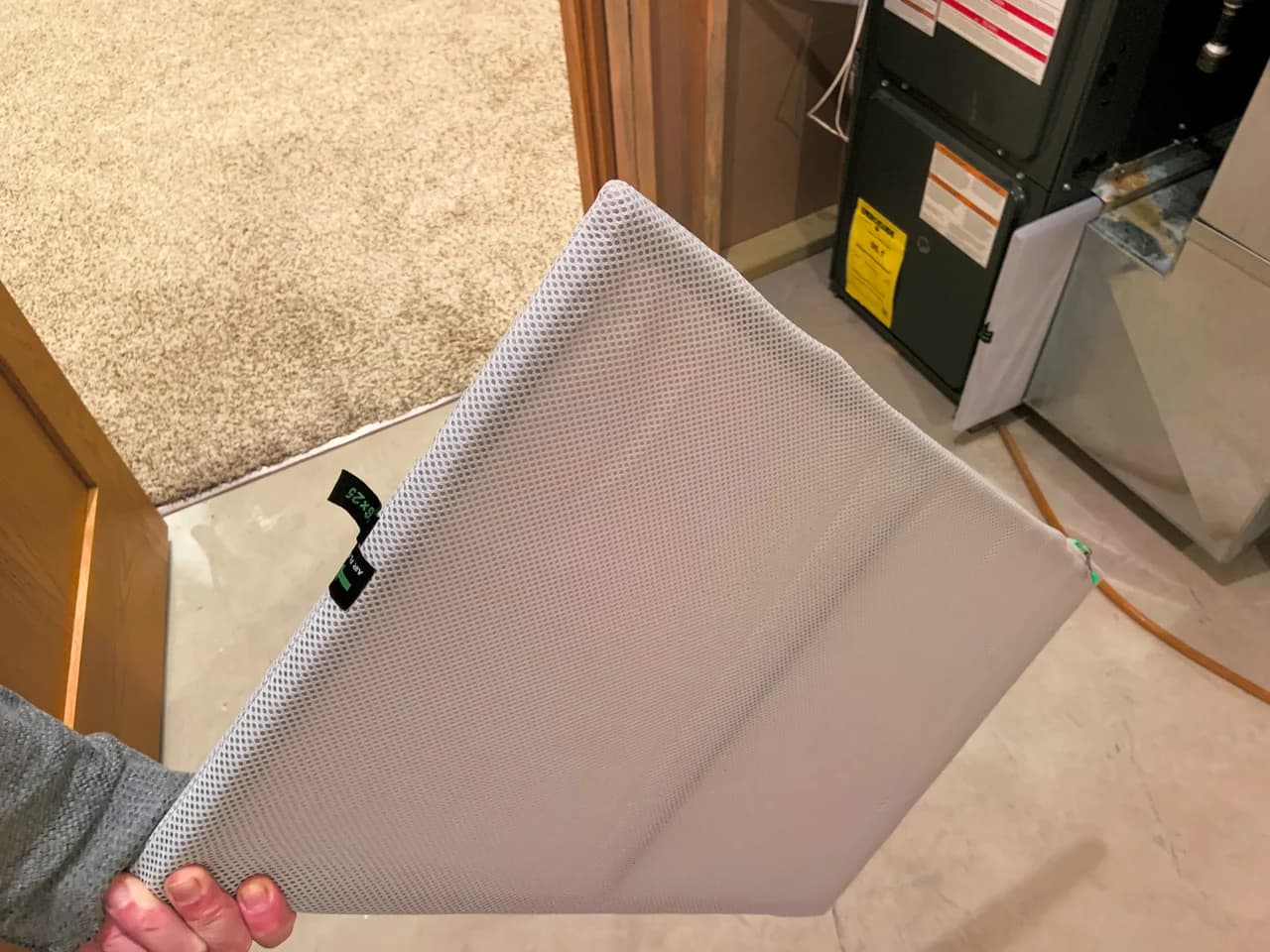
ENERGY STAR says to Check your filter every month,[2] especially in the heavy heating and cooling months, and to Change your filter if it's dirty—or at least every three months.[2] EPA adds to Use the highest efficiency air filter recommended by the manufacturer of your heating and cooling system,[1] and to be sure that air cannot bypass filters through gaps around the filter holder.[1] More on that in how often to change the furnace filter.
A yearly check-up
ENERGY STAR recommends annual pre-season check-ups and suggests you check the cooling system in the spring and the heating system in the fall.[3] For fuel-burning equipment it is a safety step as well. EPA's indoor air guidance says to Have a trained professional inspect, clean and tune-up central heating systems (furnace, flues and chimneys) annually,[4] and its duct guide says a fuel-burning furnace, stove or fireplace should be inspected for proper functioning and serviced before each heating season to protect against carbon monoxide poisoning.[1]
At that visit, be sure to ask the service provider to clean cooling coils and drain pans.[1] The cost of a visit is covered in what an HVAC tune-up costs in Virginia.
Keeping the ducts dry
Water, not dust, is what turns ducts into a cleaning job. EPA says Controlling moisture is the most effective way to prevent biological growth in air ducts,[1] and that condensation (which occurs when a surface temperature is lower than the dew point temperature of the surrounding air) on or near cooling coils of air conditioning units is a major factor in moisture contamination of the system.[1]
- Watch the drain pan. The presence of substantial standing water and/or debris indicates a problem requiring immediate attention.[1]
- Seal and insulate ducts outside the living space. EPA says to Make sure ducts are properly sealed and insulated in all non-air-conditioned spaces (e.g., attics and crawl spaces),[1] and ENERGY STAR lists among the signs of poorly performing ducts that your ducts are located in an attic, crawlspace, or the garage.[7]
- Hold humidity down. Virginia Cooperative Extension notes that Fungi (molds) grow in air over 60% relative humidity,[6] and EPA's target is to keep indoor humidity below 60 percent (ideally between 30 and 50 percent) relative humidity.[5]
- Dry leaks quickly. If wet or damp materials or areas are dried 24-48 hours after a leak or spill happens, in most cases mold will not grow.[5]
- Look after a whole-house humidifier. If the furnace has one, EPA says to operate and maintain the humidifier strictly as recommended by the manufacturer.[1]
Dust from projects
Before sanding, drywall or demolition, EPA says to seal off supply and return registers and do not operate the heating and cooling system until after cleaning up the dust.[1] Between projects, vacuum and wash the grilles as described in how to clean vents and return grilles.
Stop and call a pro if
- You find mold, droppings or nests inside a duct, on the coil or in the drain pan.
- Duct insulation is wet or smells musty. EPA says if the insulation gets wet or moldy it cannot be effectively cleaned and should be removed and replaced.[1]
- Insulation or wrap around the register boot is damaged or crumbling. Leave it alone. EPA lists asbestos-containing materials (e.g., insulation, register boots, etc.)[1] among the things to check for, and says such materials should not be disturbed or removed except by specially trained and equipped contractors.[1]
- Debris blows out of the supply registers when the fan starts.
- The drain pan holds standing water or water is leaking around the air handler.
- Black, greasy marks show up on registers and you heat with a fuel-burning furnace. Have a licensed HVAC technician inspect the furnace, as EPA recommends for fuel-burning furnaces before each heating season.[1]
Getting help
If the house is dusty even though the ducts look fine, see why a house stays dusty with clean ducts. Loclis lists DPOR-licensed businesses with their licence number and class: browse duct cleaning services, HVAC businesses in Blacksburg, or all heating and cooling answers.
When a check turns up a real problem, describe the job once and local businesses quote it.
Common questions
- Is every three to five years a good rule for duct cleaning?
- EPA sets no interval at all. It does not recommend routine cleaning, only cleaning as needed, and suggests considering it for substantial visible mold growth in hard-surface ducts, vermin in the ducts, or ducts clogged with dust and debris or releasing particles from the supply registers. It tells homeowners not to hire cleaners who sell duct cleaning as routine maintenance, though it also says a properly done occasional cleaning has not been shown to be harmful.
- Should I clean the ducts after moving into a house?
- Only if you find a reason. Look inside a few registers, change the filter and book a tune-up. Clean if you find mold, droppings or nests, or heavy debris, and fix the cause first.
- What about after a renovation?
- Prevention is easier than cleaning. EPA says to seal off supply and return registers during dusty work and not to run the system until the dust is cleaned up. If the system did run during sanding or demolition and dust now blows from the registers, that is a reason to clean.
- Do pets or smokers mean ducts need cleaning more often?
- They put more dust and odour into the air, so check the filter more often and change it when it clogs, as EPA advises. Clean the ducts when you can see heavy buildup or debris coming out of the supply registers, not on a calendar.
- How often should the furnace and AC be serviced?
- Yearly. ENERGY STAR recommends annual pre-season check-ups, cooling in spring and heating in fall, and EPA recommends that fuel-burning furnaces be inspected and serviced before each heating season to protect against carbon monoxide poisoning.
Sources
- [1] Should You Have the Air Ducts in Your Home Cleaned? (EPA 402-K-97-002), U.S. Environmental Protection Agency. Checked October 26, 2026.
- [2] A Guide to Energy-Efficient Heating and Cooling, ENERGY STAR (U.S. EPA). Checked October 26, 2026.
- [3] Maintenance Checklist, ENERGY STAR (U.S. EPA). Checked October 26, 2026.
- [4] Indoor Particulate Matter, U.S. Environmental Protection Agency. Checked October 26, 2026.
- [5] A Brief Guide to Mold, Moisture and Your Home, U.S. Environmental Protection Agency. Checked October 26, 2026.
- [6] Energy Series: What about Moisture? (2908-9020), Virginia Cooperative Extension, Virginia Tech. Checked October 26, 2026.
- [7] Duct Sealing, ENERGY STAR (U.S. EPA). Checked October 26, 2026.
Want a pro to handle it?
Describe the job once. Licensed local businesses send quotes, and you pay only when you book one.
Get a quote for HVAC Repair